
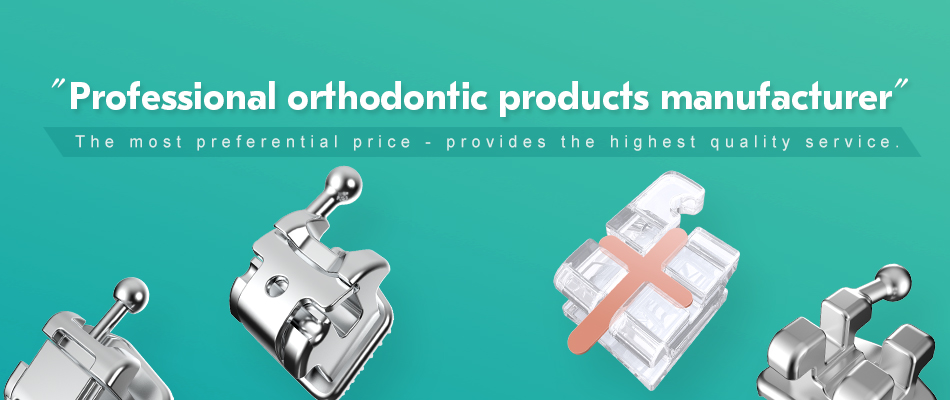

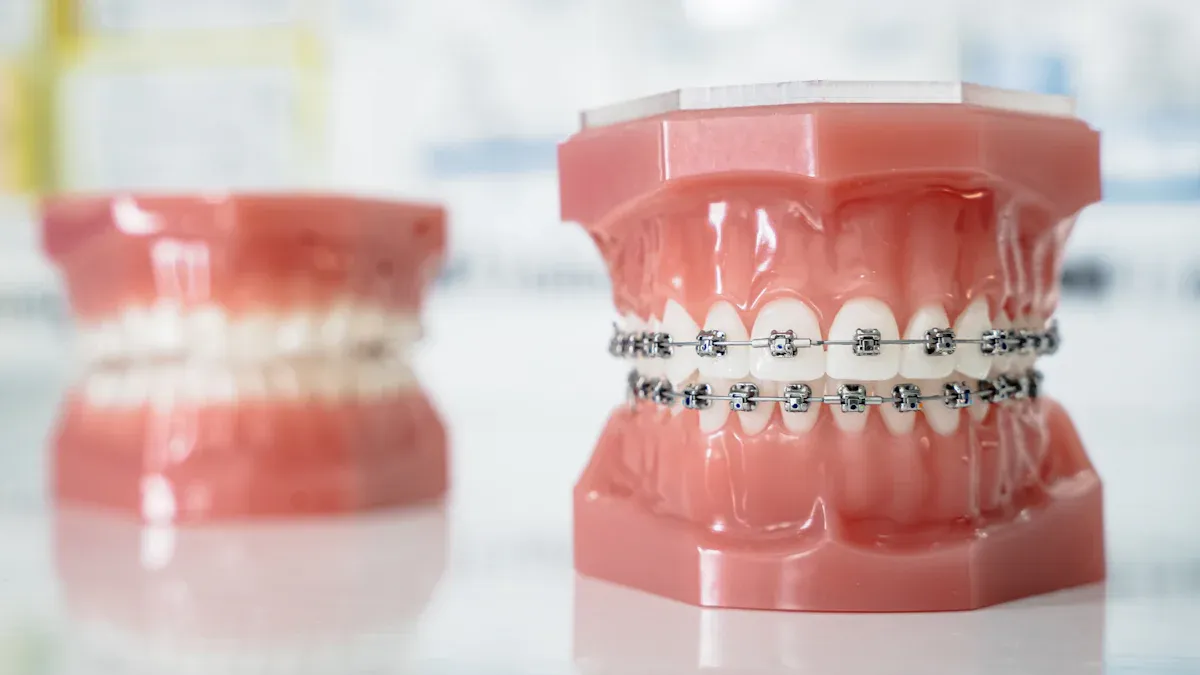
Yes, Ceramic Self Ligating Brackets effectively balance aesthetics and treatment efficiency. They offer a compelling option for patients seeking Aesthetic Orthodontics. These innovative Orthodontic Brackets combine discreet appearance with streamlined treatment. An OEM Dental Instruments Supplier provides transparent orthodontic brackets for adults, ensuring both visual appeal and effective tooth movement. This article explores how these brackets achieve this balance.
Key Takeaways
- Ceramic self-ligating brackets look good and work well. They blend with your teeth, so they are hard to see.
- These braces move teeth smoothly. They can make your treatment faster and need fewer visits to the orthodontist.
- Ceramic self-ligating brackets offer a good choice. They give you a nice smile without being too noticeable.
The Aesthetic Appeal of Ceramic Brackets
Blending Seamlessly with Natural Teeth
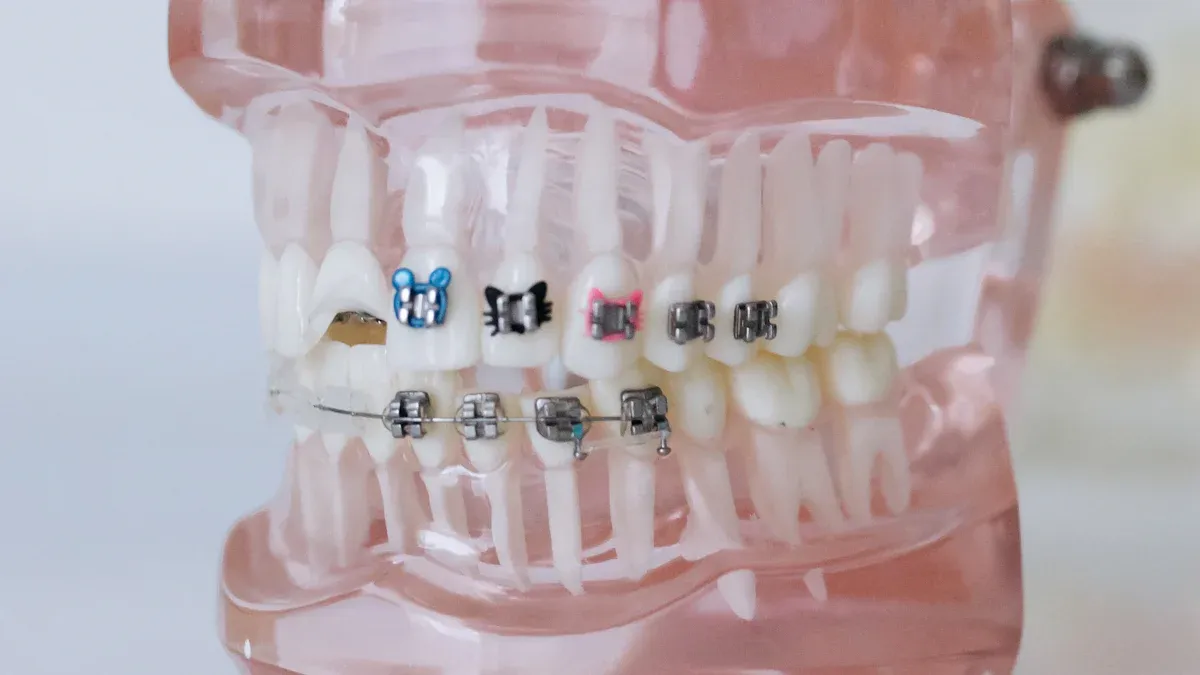
Ceramic brackets offer a significant aesthetic advantage over traditional metal braces. Manufacturers craft these brackets from translucent or tooth-colored materials. This design allows them to blend in with the natural shade of a patient’s teeth. The discreet appearance makes them a popular choice for adults and adolescents who prefer a less noticeable orthodontic treatment. Patients can smile confidently throughout their treatment journey. The material’s ability to mimic natural tooth enamel ensures the brackets remain inconspicuous.
Discretion for Social and Professional Confidence
The discreet nature of ceramic brackets provides substantial psychological benefits, especially for adult patients. A confident smile significantly enhances professional opportunities. Individuals with straight, healthy-looking teeth often appear more competent, trustworthy, and approachable. Orthodontic care helps patients present their best selves in professional settings. This leads to greater career success and satisfaction. Misaligned teeth can cause self-consciousness and anxiety in professional environments. Orthodontic treatment addresses these concerns by improving dental alignment. Patients feel more comfortable with their appearance. This results in reduced anxiety and greater ease in navigating social situations. It also boosts their willingness to participate in group activities or public speaking. Discreet orthodontic options like ceramic braces allow most adults to complete treatment without interfering with their professional life. Many patients find modern braces integrate easily into daily routines. They do not negatively impact confidence or appearance. A straight, symmetrical smile significantly boosts self-esteem. Adult patients feel more comfortable and confident in both social and professional environments.
The Efficiency Advantages of Self Ligating Brackets
Reduced Friction for Smoother Tooth Movement
Self Ligating Brackets offer distinct advantages in treatment efficiency. These innovative brackets do not rely on elastic ties or ligatures. Instead, they incorporate a built-in clip or door mechanism. This mechanism securely holds the archwire in place. This design significantly reduces friction between the bracket and the archwire. Lower friction allows the archwire to slide more freely through the bracket slots. This promotes smoother and more consistent tooth movement. Patients often experience less discomfort. The reduced friction also helps teeth move into their correct positions more efficiently.
Potentially Shorter Treatment Times and Fewer Appointments
The design of Self Ligating Brackets can lead to potentially shorter treatment times. Some studies have explored this benefit. One study reported a 2.06 months reduction in treatment time with self-ligating brackets; however, this difference was not statistically significant. Another study found a difference in treatment duration of 2.25 months. This difference was also not statistically significant. This study concluded that self-ligating brackets did not lead to a reduction in treatment time.
Despite varying findings on treatment duration, self-ligating brackets are frequently promoted for their capacity to decrease the number of required visits. This can help offset their higher cost. Patients using self-ligating brackets may require fewer adjustments. The wire can move more freely within the brackets. This often leads to shorter appointments. These appointments focus on wire changes, minor refinements, and progress checks. Traditional brackets require replacing numerous ligatures.
| Bracket Type | Appointment Frequency |
|---|---|
| Self-Ligating | Every 8 to 10 weeks |
| Traditional Brackets | Every 4 to 6 weeks |
This table illustrates the potential difference in appointment frequency.
How Ceramic Self-Ligating Brackets Deliver Both
Integrating Visual Discretion with Enhanced Mechanics
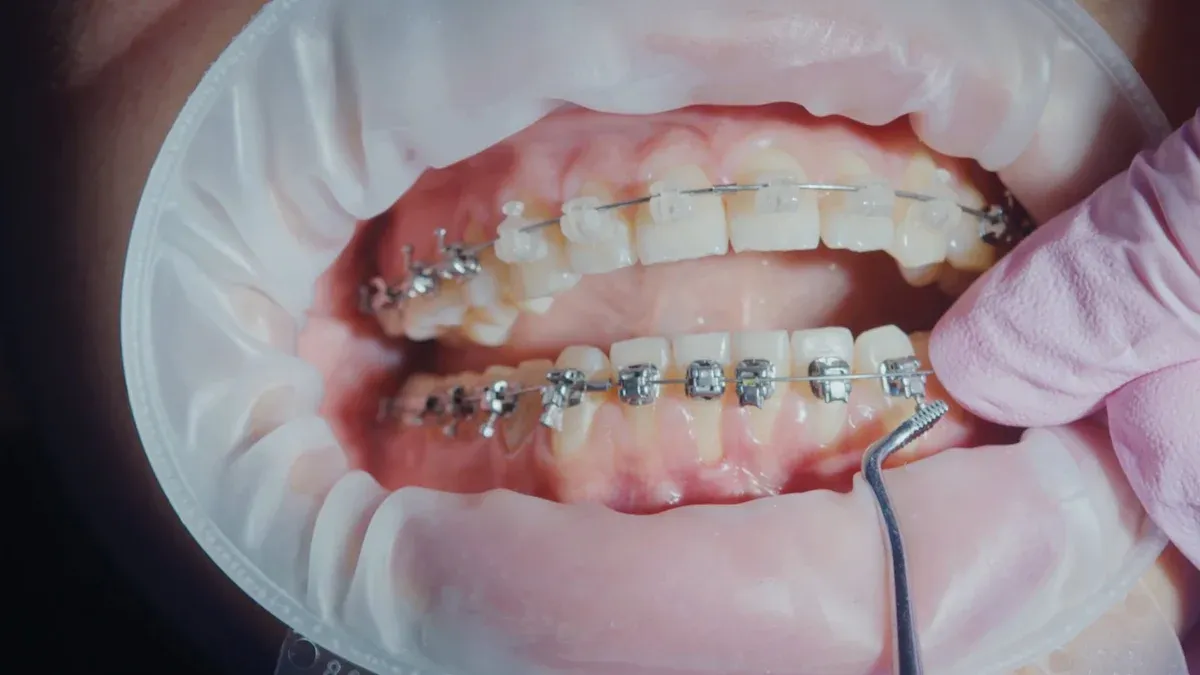
Ceramic self-ligating brackets represent a significant advancement in orthodontics. They skillfully integrate the aesthetic appeal of ceramic materials with the mechanical efficiency of self-ligating technology. This combination offers patients a discreet yet highly effective treatment option. Manufacturers craft these brackets from advanced ceramic materials, such as monocrystalline and polycrystalline alumina. These materials provide a translucent appearance, allowing the brackets to merge with the natural color of teeth. This makes them less noticeable than traditional metal braces. Modern ceramic brackets are also customizable to patient needs, further enhancing their desirable aesthetic appearance. Innovations in ceramic technology have led to more robust and stain-resistant clear brackets, maintaining their visual discretion throughout treatment.
Beyond aesthetics, these brackets incorporate sophisticated mechanical features. Self Ligating Brackets feature an integrated sliding clip or door mechanism. This design eliminates the need for elastic ties or ligatures. This integrated clip secures the archwire, significantly reducing friction at the wire-bracket interface. Reduced friction enhances the efficiency of tooth movement. It allows for smoother and more consistent force application. The design includes a rhodium coating on the cobalt-nickel clip for increased strength and durability. A strong mechanical bond on the bracket base is achieved through alumina spheres, ensuring reliable attachment. Furthermore, a unique guide rail provides stable and consistent force during clip operation, contributing to precise tooth positioning. The secure mechanical bond, achieved through an integrated portal, allows adhesive to flow through for precise, durable bonding. This ensures superior bond strength without chemical enhancers. A torque-in-base design provides accurate slot alignment, improving finishing for precise control in aligning and positioning teeth.
The Best of Both Worlds for Orthodontic Patients
Ceramic self-ligating brackets truly offer the best of both worlds for orthodontic patients. They provide a solution for individuals who prioritize a discreet appearance without compromising treatment effectiveness. Patients benefit from the visual discretion of ceramic materials, which boosts their social and professional confidence throughout their orthodontic journey. They can smile, speak, and interact without feeling self-conscious about their braces. Simultaneously, the self-ligating mechanism delivers enhanced mechanical efficiency. This can lead to potentially shorter treatment times and fewer appointments. The reduced friction also contributes to greater patient comfort, as teeth move more smoothly into their correct positions. This innovative bracket system aligns with the modern patient’s desire for both form and function, making the path to a straighter smile more appealing and efficient.
Patient Experience with Ceramic Self Ligating Brackets
Comfort and Oral Hygiene Benefits
Patients often report a positive experience with ceramic self-ligating brackets, particularly regarding comfort and oral hygiene. The design of these brackets contributes to a more comfortable treatment journey. Patients using ceramic brackets reported an average comfort level of 3.14 on a scale of 1 to 4, where 4 signifies high comfort. This indicates patients generally experienced a satisfactory level of comfort with ceramic brackets during their orthodontic treatment. While this data refers to ceramic brackets generally, the self-ligating mechanism further enhances comfort by reducing friction.
Oral hygiene also becomes simpler with these advanced brackets. Ceramic Self Ligating Brackets facilitate easier oral hygiene primarily because they eliminate the need for elastic ties. Traditional braces use elastic ties, which can trap food particles and make cleaning difficult. Self-ligating brackets, however, use a built-in mechanism, such as a sliding door or gate, to secure the archwire. This design reduces the number of components to clean around, allowing for more effective brushing and flossing. This simplifies the overall cleaning process for patients.
The Impact on Daily Life and Self-Esteem
The discreet nature of ceramic self-ligating brackets significantly impacts a patient’s daily life and self-esteem. Many individuals, especially adults, feel self-conscious about wearing traditional metal braces. Ceramic brackets blend seamlessly with natural teeth, making them far less noticeable. This visual discretion allows patients to maintain their confidence in social and professional settings. They can smile, speak, and interact without feeling embarrassed about their orthodontic appliance.
This enhanced self-esteem extends beyond mere appearance. Patients often feel more comfortable participating in activities they might otherwise avoid. The ability to undergo orthodontic treatment discreetly empowers individuals. They focus on achieving a healthier, straighter smile without the social anxieties sometimes associated with visible braces. This positive psychological impact contributes significantly to overall patient satisfaction throughout the treatment period.
Addressing Common Concerns and Considerations
Durability and Stain Resistance of Modern Ceramics
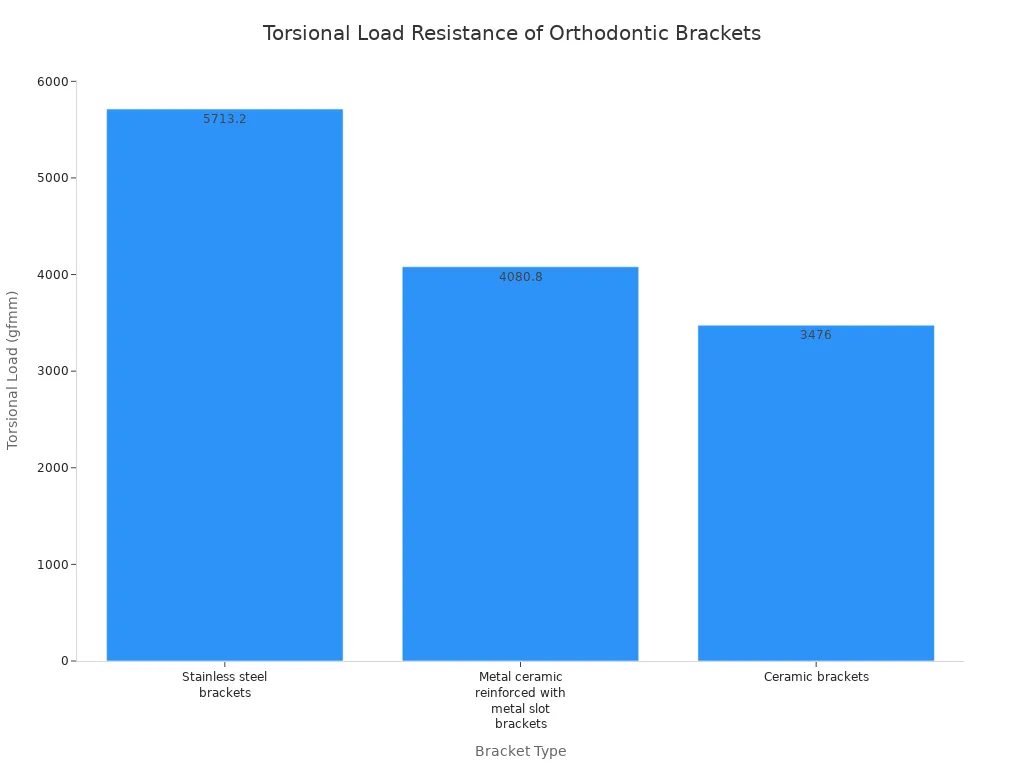
Patients often inquire about the durability and stain resistance of ceramic brackets. Modern ceramic materials, such as monocrystalline and polycrystalline alumina, have significantly improved. They offer enhanced strength and maintain their aesthetic appeal throughout treatment. However, ceramic brackets generally exhibit lower resistance to torsional load compared to their metal counterparts.
| Bracket Type | Torsional Load (gfmm) |
|---|---|
| Stainless steel brackets | 5713.2 |
| Metal ceramic reinforced with metal slot brackets | 4080.8 |
| Ceramic brackets | 3476 |
Stainless steel brackets show significantly higher resistance to torsional load than ceramic brackets. This includes those with and without metal slot reinforcement. A clinical trial also found ceramic brackets had more failures in an overall analysis compared to metallic brackets. Higher failure rates for ceramic brackets occurred in the posterior sector and the lower arch. Orthodontists inform patients that ceramic brackets might lead to delays due to their higher failure rate.
Understanding the Investment: Cost vs. Value
Ceramic self-ligating brackets typically represent a higher initial investment than traditional metal braces. Patients consider the long-term value proposition. These brackets offer improved aesthetics, blending with natural tooth color. This is popular among image-conscious consumers. Technological advancements in ceramic materials lead to brackets that are more durable and less prone to staining. This enhances patient satisfaction and reduces the need for frequent replacements. The streamlined procedures and potentially shorter treatment times also contribute to their value. They eliminate the need for additional ligatures, reducing chair time and improving patient comfort. Patients often experience fewer appointments and easier maintenance. The growing aesthetic consciousness and demand for efficient treatment drive the popularity of these advanced options.
Suitability for Diverse Orthodontic Cases
Ceramic self-ligating brackets suit many orthodontic cases. However, specific situations may contraindicate their use. Ceramic brackets are highly abrasive. They can cause significant enamel wear on opposing teeth. This occurs particularly on maxillary incisal edges and buccal cusps of posterior teeth. This wear can lead to dentinal hypersensitivity by exposing coronal dentin. Therefore, cases with heavy occlusal contacts or where enamel wear is a concern require careful consideration. Orthodontists may need to implement temporary disocclusion measures.
Other contraindications include:
- Severe skeletal malocclusions requiring surgical intervention.
- Complex jaw discrepancies.
- Patients unwilling or unable to maintain good oral hygiene.
- Cases demanding very precise rotational control, where traditional braces might offer superior performance.
The Technology Behind Ceramic Self Ligating Brackets
Advanced Ceramic Materials for Strength and Aesthetics
Modern ceramic brackets utilize advanced materials for both strength and aesthetic appeal. Manufacturers craft these brackets from high-performance ceramics. For example, lithium disilicate material, like the IPS e.max system, shows superior fracture toughness and flexural strength. This material allows dental technicians to customize dental restorations in form and aesthetics. They use heat-pressing or machining technology. Heat-pressing technology enables complex shapes and offers a cost-effective method for custom fabrication.
As a representative glass-ceramic material, lithium disilicate material IPS e.max system (Ivoclar Vivadent AG, Schaan, Liechtenstein) reveals a higher fracture toughness and flexural strength, and allows dental technicians to customize dental restorations in terms of form and esthetics by heat-pressing or machining technology. Heat-pressing technology allows a more complex shape and less cost for custom fabrication, such as crowns, veneers or bridges, etc.
The manufacturing process involves several steps to enhance these properties:
- Customized Design and Fabrication: Utilizes CAD technology, 3D printing, and heat-pressing with multi-color lithium disilicate materials to create personalized brackets.
- Material Selection: Employs lithium disilicate for its high fracture toughness and flexural strength, enhancing durability.
- Heat-Pressing Technology: Facilitates complex shapes and cost-effective custom fabrication.
- Multi-color and Multi-transparency Materials: Provides a wide range of color options and controllable optical properties to match individual tooth appearances.
- Polishing and Glazing: Procedures applied after grinding to ensure a smooth, high-integrity surface and slot.
Ceramic brackets minimize lattice defects in their crystalline structure. This contributes to their durability and makes them less prone to breakage. While polycrystalline ceramic materials can be molded, single-crystal ceramic brackets require non-conventional machining techniques. These include diamond saws, YAG lasers, and ultrasonics. These methods create complex forms with accuracy, despite being time-consuming and costly.
The Innovative Self-Ligating Mechanism
The innovative self-ligating mechanism is central to the efficiency of Self Ligating Brackets. This design eliminates the need for elastic bands. Instead, a specialized clip mechanism holds the archwire. This advanced system effectively reduces friction. The wire moves more freely, resulting in a smoother and often quicker treatment process. This indicates improved tooth movement efficiency.
Self-ligating mechanisms come in two main types: active and passive.
| Feature | Active Self-Ligating Braces (ASLB) | Passive Self-Ligating Braces (PSLB) |
|---|---|---|
| Archwire | Thicker archwire | Smaller archwire |
| Pressure/Force | Delivers more pressure, applies active force | Maximizes space, reduces friction, doesn’t press on archwire |
| Effectiveness | More efficient tooth movement, effective for complex cases | Less intrusive, preferred for milder cases, less effective than active |
| Mechanism | Sliding spring clip mechanism | Simple sliding mechanism |
This design allows the archwire to move more freely within the brackets. It applies a consistent, low-friction force. This freedom of movement facilitates more efficient tooth alignment. It also reduces pressure on teeth and roots. This leads to less discomfort and potentially faster initial alignment.
| Bracket Type | Frictional Resistance (grams) |
|---|---|
| Elastomeric ligatures | 66.78 |
| Metal ties | 53.28 |
| Active self-ligation | 31.0 |
| Passive self-ligation | 0.10 to 0.18 |

The self-ligating mechanism enhances tooth movement efficiency and reduces treatment times. It uses a sliding mechanism that minimizes friction between the brackets and the archwire. This design, which foregoes elastic bands, results in less additional pressure and greater comfort for patients throughout their treatment.
Comparing Ceramic Self-Ligating Brackets to Other Options
Versus Traditional Metal Braces
Ceramic self-ligating brackets offer distinct advantages over traditional metal braces. Patients often choose ceramic options for their superior aesthetics. Ceramic brackets blend with natural tooth color, making them less noticeable. Metal braces are highly visible. Both types effectively straighten teeth. However, the self-ligating mechanism in ceramic brackets can offer efficiency benefits. Traditional metal braces use elastic ties. These ties can create more friction. This friction can slow tooth movement. Ceramic self-ligating brackets reduce friction, potentially leading to smoother treatment.
Versus Clear Aligners
Clear aligners provide an almost invisible orthodontic solution. Patients can remove aligners for eating and cleaning. This offers convenience. However, aligners require strict patient compliance. Patients must wear them for 20-22 hours daily. Ceramic self-ligating brackets are fixed appliances. They work continuously. This eliminates compliance concerns. Aligners may not suit all complex orthodontic cases. Ceramic self-ligating brackets can effectively treat a wider range of malocclusions. They offer a discreet, fixed alternative.
Versus Conventional Ceramic Braces
Conventional ceramic braces share the aesthetic benefits of ceramic self-ligating brackets. Both options use tooth-colored materials. This makes them less visible than metal braces. The key difference lies in their mechanics. Conventional ceramic braces use elastic ligatures or metal ties. These ligatures hold the archwire in place. Self Ligating Brackets feature a built-in clip or door. This mechanism secures the archwire without ligatures. This design reduces friction. Reduced friction can lead to more efficient tooth movement. It may also mean fewer and shorter adjustment appointments.
Making an Informed Decision About Your Orthodontic Journey
Consulting with Your Orthodontist
Patients considering orthodontic treatment should always consult with a qualified orthodontist. This initial consultation forms the foundation of a successful treatment journey. The orthodontist conducts a thorough examination of the patient’s oral health, including teeth, gums, and jaw structure. They utilize diagnostic tools such as X-rays and 3D scans to assess the specific needs of each case. During this meeting, the orthodontist discusses various treatment options, including ceramic self-ligating brackets. They explain the benefits, potential challenges, and expected outcomes. Patients receive clear answers to their questions, allowing them to make an educated decision about their care. This professional guidance ensures patients choose the most appropriate and effective treatment for their unique situation.
Personalizing Your Treatment Plan
Orthodontists personalize each treatment plan to meet individual patient needs and goals. This customization involves considering several factors. These factors include the complexity of the malocclusion, the patient’s aesthetic preferences, and their lifestyle. For instance, a patient prioritizing discretion might find ceramic self-ligating brackets an ideal choice. The orthodontist designs the bracket placement and archwire progression specifically for the patient’s dental anatomy. They also establish a realistic timeline for treatment completion. A personalized plan ensures optimal results, addressing both functional and aesthetic concerns. This tailored approach maximizes treatment efficiency and patient satisfaction, leading to a confident, healthy smile.
Ceramic Self Ligating Brackets successfully balance aesthetics and treatment efficiency. They offer a discreet, effective, and comfortable path to a straighter smile. This aligns with modern patient desires for both form and function. Individuals considering orthodontic treatment should discuss these advanced options with their orthodontist. This helps determine the right fit for their specific needs and goals.
FAQ
Do ceramic self-ligating brackets stain easily?
Modern ceramic brackets resist staining well. Certain foods and drinks can cause temporary discoloration. Regular oral hygiene helps maintain their appearance.
Are ceramic self-ligating brackets more expensive than metal braces?
Yes, ceramic self-ligating brackets typically cost more initially. They offer aesthetic and efficiency benefits. Patients consider these advantages when evaluating the investment.
Can everyone use ceramic self-ligating brackets?
Most patients can use them. However, specific complex cases or severe bite issues may require alternative treatments. An orthodontist determines suitability.
Post time: Jan-22-2026