
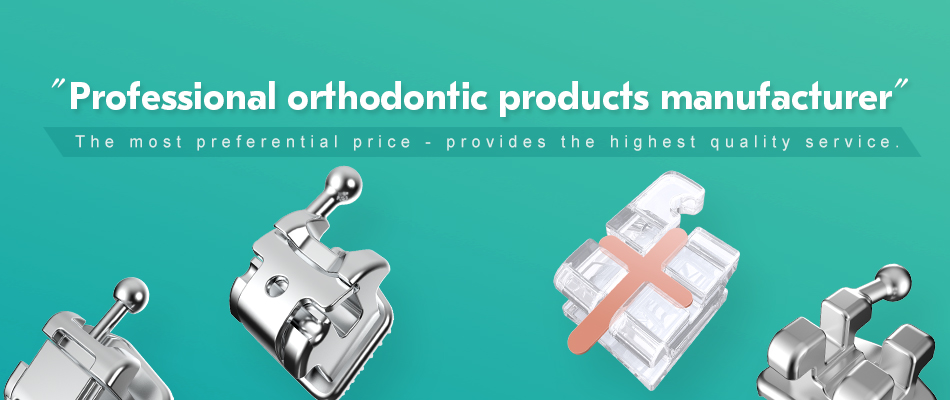

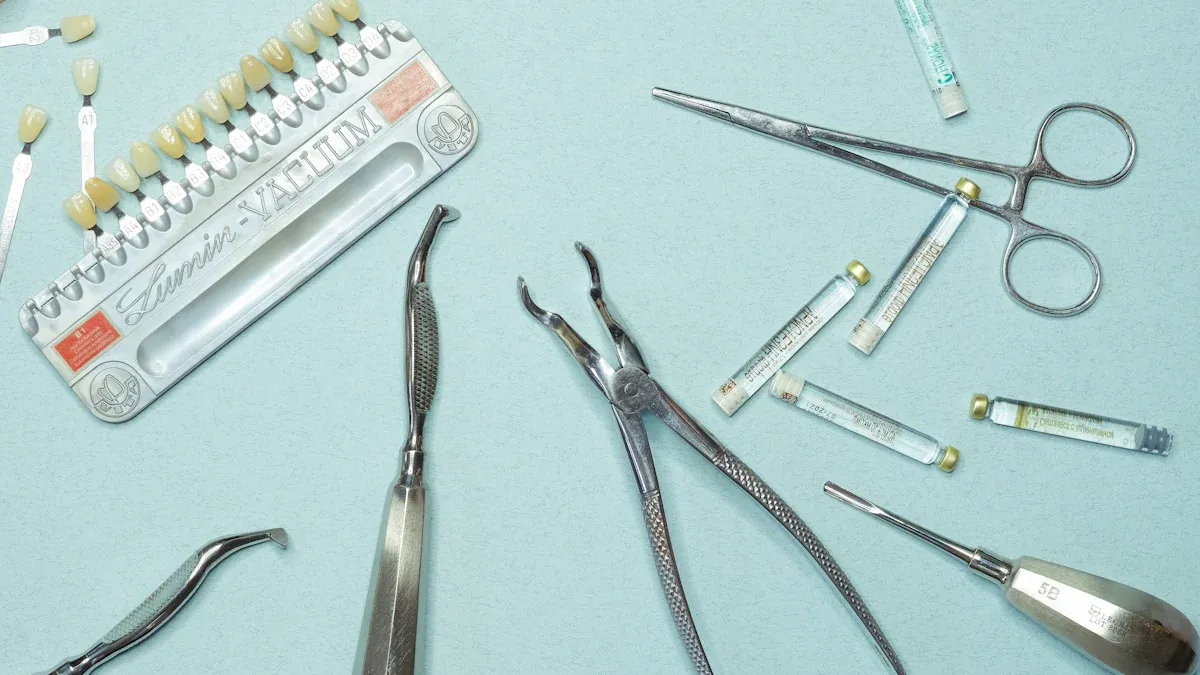
Yes, different materials significantly improve Dental Orthodontic Instruments durability. They offer varying levels of strength, corrosion resistance, and fatigue life. Choosing the best stainless steel grade for orthodontic hand instruments, for example, directly impacts their lifespan. Surgical Stainless Steel Instruments provide a baseline, but specialized materials enhance performance. Tungsten Carbide Orthodontic Tools offer superior hardness for cutting tasks. Understanding these material differences helps practitioners learn how to choose high-quality dental pliers? and other essential tools. This post explores how material choices directly impact these essential tools’ longevity and performance.
Key Takeaways
- Different materials make orthodontic tools last longer. Stronger materials resist damage from use and cleaning.
- Stainless steel is common, but adding tungsten carbide makes tools much harder. This helps them cut better and stay sharp.
- Titanium is great for tools that need to be flexible and resist rust. It is also safe for people with allergies.
- How tools are made affects how long they last. Processes like forging and heat treatment make tools stronger.
- Tools that resist rust and wear stay useful longer. Good surface treatments help protect them from damage.
Understanding Durability in Dental Orthodontic Instruments
Defining Instrument Durability
Instrument durability describes a tool’s capacity to endure repeated use, sterilization cycles, and environmental challenges without significant deterioration. It means the instrument keeps its original shape, function, and sharpness for a long time. A durable instrument resists wear, corrosion, and fatigue. It performs reliably throughout its expected service life. This quality ensures consistent performance in clinical environments.
Factors Influencing Instrument Lifespan
Several elements affect how long an orthodontic instrument remains functional. The material composition is a primary factor. Superior alloys provide better resistance to stress and corrosion. Manufacturing processes also play a vital role. Precision forging and appropriate heat treatment improve material strength. Additionally, proper handling and maintenance practices significantly extend an instrument’s life. Incorrect cleaning, sterilization, or storage can hasten wear and damage. The frequency of use also impacts lifespan; instruments used more often naturally experience greater wear.
Why Durability is Crucial for Clinical Efficiency
Durability is essential for clinical efficiency in orthodontics. Durable instruments reduce the need for frequent replacements, which saves costs for practices. They ensure consistent and precise performance during procedures, directly affecting treatment results. When instruments maintain their integrity, clinicians can trust their tools. This leads to smoother workflows and less chair time. Furthermore, robust Dental Orthodontic Instruments contribute to patient safety by minimizing the risk of breakage or malfunction during treatment. Investing in durable tools ultimately supports a more efficient and reliable clinical environment.
Common Materials for Dental Orthodontic Instruments and Their Durability
Stainless Steel Properties and Durability
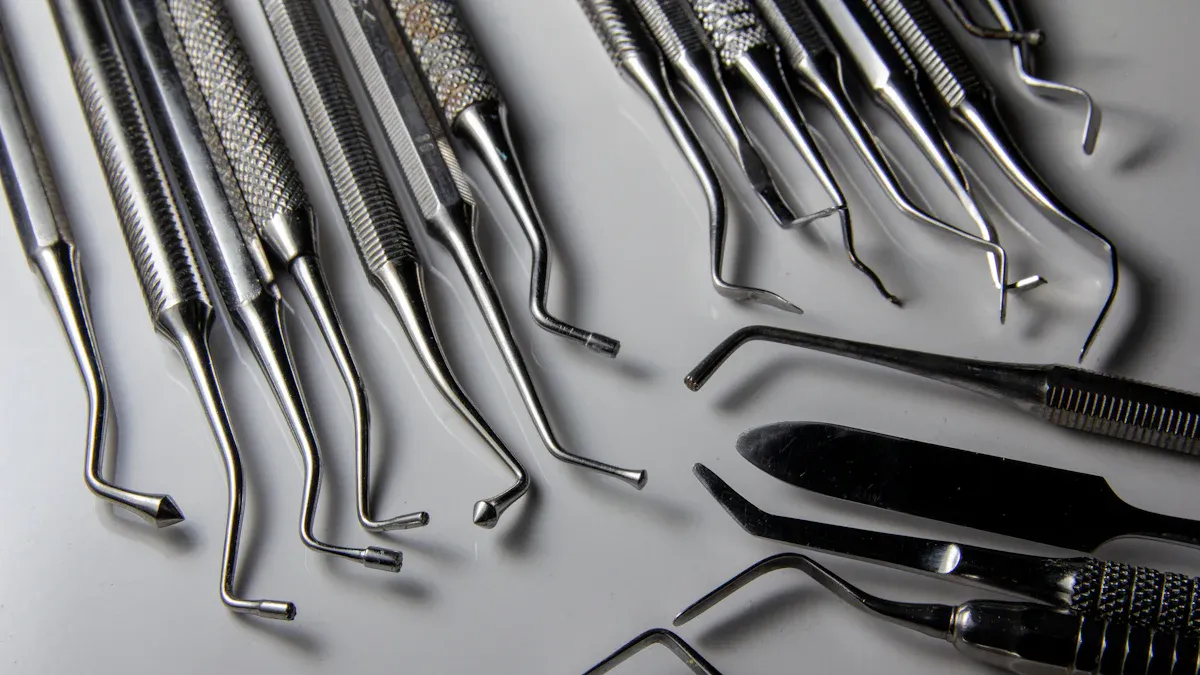
Stainless steel remains a foundational material for many Dental Orthodontic Instruments. Its widespread use comes from a balance of strength, cost-effectiveness, and corrosion resistance. Manufacturers often use specific grades of stainless steel, particularly the 300 series, for various orthodontic components. For example, companies like G & H Wire Company use A.J. Wilcock Australian wire (AJW) made from 300 series stainless steel. Ortho Technology’s TruForce SS (TRF) and Masel Ortho Organizers Inc.’s Penta-One wire (POW) both utilize AISI 304 stainless steel. Highland Metals Inc. also produces SS arch wires (SAW) from AISI 304, as does Dentaurum with its Remanium (REM).
Stainless steel alloys possess a Poisson’s ratio of 0.29, a measure of how much a material expands perpendicular to the direction of compression. These wires also show high hardness compared to other materials like titanium molybdenum alloys (TMA) and nickel-titanium (Ni-Ti) alloys. This hardness contributes to their durability and ability to withstand mechanical stress.
Medical-grade stainless steel is specifically engineered for medical devices. It meets stringent standards for excellent corrosion resistance. This resistance is crucial because instruments contact various chemical solutions and disinfectants. For dental applications, stainless steel must show wear resistance, strong biocompatibility, and high strength. It must also maintain its appearance after prolonged use in the oral cavity. Grades like 304 and 304L offer good corrosion resistance and mechanical properties. The 304L grade has lower carbon content, which reduces carbide precipitation during welding.
However, the oral environment presents unique challenges. Oral microorganisms can significantly accelerate corrosion of 316L stainless steel, for instance. Subgingival microbiota form multispecies biofilms on stainless steel surfaces. These biofilms lead to accelerated pitting corrosion through acidic metabolites and extracellular electron transfer. This microbiologically influenced corrosion (MIC) releases metal ions like chromium and nickel. Such release poses potential health risks and affects local and systemic health. Therefore, despite its inherent resistance, the oral cavity’s biological activity challenges the long-term performance of medical-grade stainless steel.
Tungsten Carbide Inserts for Enhanced Durability
Manufacturers often enhance the durability of stainless steel instruments by adding tungsten carbide inserts. Tungsten carbide is an extremely hard material. It significantly improves the performance of cutting and gripping surfaces on pliers and cutters. The inclusion of tungsten carbide tips in surgical wire cutters directly improves their durability and cutting precision. These inserts enhance hardness and wear resistance. They significantly extend the functional lifespan of the instrument. They also maintain cutting edge integrity over time.
Tungsten carbide inserts on the cutting edges of dental orthodontic pliers significantly enhance their durability. They improve the pliers’ ability to cut through both soft and hard wires with ease. This material is highly resistant to wear. It withstands the stress of cutting tougher materials. This directly contributes to improved cutting edge retention.
Titanium and Titanium Alloys for Longevity
Titanium and its alloys offer superior properties for specific Dental Orthodontic Instruments, especially where flexibility, biocompatibility, and extreme corrosion resistance are paramount.
- Low Modulus of Elasticity: Titanium’s modulus of elasticity is closer to that of bone. This benefits the proper distribution of mechanical stress. While titanium alloys generally have a higher modulus than pure titanium, specific beta alloys are engineered for a lower modulus. This makes them suitable for orthodontic applications requiring flexibility and continuous force.
- Corrosion Resistance in Oral Cavity: Titanium and its alloys show extremely high resistance to corrosion in physiological solutions. This holds true even with significant variations in pH and temperature, and exposure to various chemical agents in the oral cavity. A protective titanium oxide (TiO₂) film rapidly forms on the metal surface. This film spontaneously re-passivates if disturbed.
Here is a comparison of titanium alloys and stainless steel:
| Feature | Titanium Alloys (e.g., Ti-6Al-4V) | Stainless Steel |
|---|---|---|
| Biocompatibility | Superior; forms stable TiO₂ passive film, minimizes inflammation and immune rejection, excellent tissue response. | Generally good, but can release ions causing allergic reactions in some patients. |
| Corrosion Resistance | Excellent; TiO₂ passive layer resists body fluids, fluorides, and pH fluctuations, preventing pitting, crevice corrosion, or stress corrosion cracking. | Susceptible to corrosion in the oral environment, especially with pH changes and certain ions. |
| Strength-to-Weight Ratio | High; lower density (~4.5 g/cm³) with comparable or superior strength, reducing burden on supporting tissues and improving comfort. | Lower; higher density (~8 g/cm³) for similar strength, leading to heavier instruments. |
| Elastic Modulus | Can be tailored (e.g., β-alloys ~55-85 GPa, closer to bone) for lower stiffness and continuous forces in orthodontics. | Higher, leading to stiffer instruments. |
| Elastic Limit | High (especially β-alloys), allowing for a large deformation range, beneficial for orthodontic archwires. | Generally lower than specialized titanium alloys for orthodontic applications. |
| Formability | Good, particularly for β-titanium alloys used in archwires. | Good, but may not offer the same range of mechanical properties as specialized titanium alloys. |
| Allergenic Potential | Low; free from controversial elements like nickel (common allergen in stainless steel), making it suitable for sensitive patients. | Can cause nickel allergies in some patients. |
Titanium alloys find use in specific orthodontic applications:
- Orthodontic Archwires: Beta titanium alloys (e.g., TMA) are preferred. They offer a lower elastic modulus, providing softer, continuous forces. They also have a high elastic limit, allowing for a large deformation range. Their good formability and biocompatibility make them ideal. Clinicians commonly use them for fine adjustments in later stages of orthodontics.
- Orthodontic Brackets: Titanium metal brackets are primarily used for patients with nickel allergies. They offer good biocompatibility and sufficient strength.
Ceramic Materials in Specific Dental Orthodontic Instruments
Ceramic materials offer unique advantages for certain Dental Orthodontic Instruments, especially when aesthetics and specific mechanical properties are important. Manufacturers use ceramics to fabricate brackets and attachments in orthodontic treatments. Alumina and zirconia are common ceramic choices. They provide durable and aesthetically pleasing options compared to metal brackets. These materials blend well with natural tooth color, making them popular for patients who prefer less noticeable appliances.
However, the fracture toughness of ceramic brackets is a critical consideration. Fracture toughness describes a material’s ability to resist cracking. Monocrystalline brackets, such as Inspire ICE™, show high resistance to tie-wing fracture. This allows for greater force application without failure. In contrast, hybrid clear ceramic brackets, like DISCREET™, exhibit lower resistance to tie-wing fracture. Significant statistical differences in fracture strength exist across various bracket groups. This indicates that both the brand and the bracket structure influence tie-wing strength.
Surface condition and material thickness are also crucial factors. They influence the tensile strength of ceramics. Surface damage, such as scratching, significantly impacts single-crystal brackets. Polycrystalline brackets are less affected by such damage. Scott G.E., Jr. directly addressed the concept of fracture toughness in ceramic brackets in a key article titled ‘Fracture toughness and surface cracks–the key to understanding ceramic brackets’ (1988). This research highlights the importance of material science in designing reliable ceramic orthodontic components.
Specialty Alloys for Tailored Durability
Specialty alloys provide tailored durability for specific orthodontic needs. These advanced materials offer enhanced properties beyond standard stainless steel.
- 17-7 PH stainless steel features precipitation-hardening properties. It has a tensile strength of 500–1000 MPa and an elastic modulus of 190–210 GPa. Its hardness ranges from 150–250 HV, with an elongation of 10–20%. This alloy is low cost and widely available. It offers adequate strength and toughness for orthodontics. It is also easy to fabricate, being both weldable and formable.
- Stainless Steel Wires generally possess a tensile strength of 1000–1800 MPa and an elastic modulus of 180–200 GPa. They are strong, economical, and easy to bend. They provide high strength for space closure.
- Nickel-Titanium (NiTi) Wires exhibit a tensile strength of 900–1200 MPa and an elastic modulus of 30–70 GPa. Their key benefits include superelasticity, allowing up to 8% recoverable strain. They also provide continuous light force, making them ideal for initial alignment and patient comfort.
- Beta-Titanium (Ti-Mo, TMA) offers a tensile strength of 800–1000 MPa and an elastic modulus of 70–100 GPa. It is nickel-free, making it suitable for allergic patients. It is also formable and ideal for finishing stages of treatment.
- Cobalt-Chromium Orthodontic Wires are heat-treatable for strength adjustment. They have a tensile strength of 800–1400 MPa.
Beyond these, other advanced stainless steels offer superior performance:
- Custom 455® Stainless is a martensitic, age-hardenable alloy. It provides high strength (up to HRC 50), good ductility, and toughness. Manufacturers value it for small, intricate dental instruments. This is due to its minimal dimensional change during hardening, which maintains tight tolerances.
- Custom 465® Stainless is a premium martensitic, age-hardenable alloy. Engineers designed it for extreme strength and toughness, with tensile strength exceeding 250 ksi. It is ideal for orthodontic components facing high stress. It offers unparalleled reliability, superior fracture toughness, and high-stress corrosion cracking resistance.
Surgical-grade stainless steel forms the backbone for many durable orthodontic instruments. It offers excellent strength and hardness. Specific types include:
- Austenitic Stainless Steels: These are primary materials for many orthodontic components. Examples include AISI 302, AISI 304, AISI 316, AISI 316L, and AISI 304L. These compositions ensure integrity through repeated use and sterilization.
- Martensitic Stainless Steels: They provide high strength and hardness. They are suitable for instruments requiring sharp edges and robust construction.
- Precipitation-Hardening Stainless Steels (e.g., 17-4 PH): These offer superior mechanical properties. They are often preferred for orthodontic brackets.
Titanium and advanced alloys also provide enhanced performance characteristics:
- NiTi Alloys (Nickel-Titanium): Used for orthodontic wires due to superelasticity and shape memory. They return to their original shape and apply consistent forces.
- Titanium Molybdenum Alloy (TMA): It offers a balance of flexibility and strength.
- Titanium alloys: They provide superior biocompatibility and corrosion resistance. This is due to a stable titanium dioxide (TiO₂) passive film. This film minimizes inflammation and metal ion release. They have a high strength-to-weight ratio. They are lighter than stainless steel but offer comparable or superior strength. Beta titanium alloys in archwires offer lower elastic modulus, high elastic limit, and good formability for continuous forces. Titanium brackets are suitable for nickel-allergic patients. Titanium is also non-magnetic, which is advantageous for MRI compatibility.
How Material Properties Influence Dental Orthodontic Instruments Longevity
Material properties directly determine how long Dental Orthodontic Instruments remain effective. These properties dictate an instrument’s ability to withstand daily use, sterilization, and the harsh oral environment. Understanding these characteristics helps practitioners choose tools that offer reliable performance and a longer lifespan.
Corrosion Resistance and Instrument Life
Corrosion resistance is a critical material property for orthodontic instruments. It describes a material’s ability to resist degradation from chemical reactions with its environment. Instruments constantly encounter saliva, blood, disinfectants, and sterilization agents. These substances can cause corrosion, which weakens the instrument and compromises its function.
Passivation significantly enhances the corrosion resistance of stainless steel instruments. This chemical surface treatment removes iron particles from the surface. It creates a thin, protective oxide film. Immersion in weak acid solutions, such as citric or nitric acid, performs this process. Passivation is a cleaning method, not a coating. After cleaning, exposure to the atmosphere forms a natural oxide layer. This layer offers strong rust and wear-resistant properties. It makes medical devices, including orthodontic instruments, more resistant to corrosion. This extends their lifespan and maintains their appearance. Passivation eliminates contaminants and establishes a stable oxide layer. It improves instrument performance, reduces wear, and lessens the need for replacements. The process ensures instruments endure sterilization and regular use without degradation.
Electropolishing also improves the corrosion resistance of orthodontic appliances. This method smooths the surface without mechanical tools. It protects the surface layer from structural changes. This leads to uniform passivation. Uniform passivation shields the material from corrosion. It enhances biocompatibility and reduces surface irregularities. These irregularities can concentrate stress and initiate cracks. Studies show electropolishing improves anti-corrosion properties. Surfaces become more resistant to pitting corrosion compared to mechanically polished surfaces. For NiTi archwires, electropolishing decreases nickel content while increasing titanium. This reduces the risk of nickel hypersensitivity. It also enhances corrosion resistance and facilitates cleaning. It eliminates areas where bacteria can accumulate. Electropolishing reduces the percentage of iron and increases chromium on the surface. This contributes to forming a passive layer with increased corrosion resistance.
Despite these treatments, corrosion can still occur. Pitting corrosion was observed on 3-braided SS, 6-braided SS, and Dead Soft retainer groups in solutions during an evaluation. Conversely, Titanium Grade 1, Titanium Grade 5, and Gold retainer groups showed no physical corrosion damage. Diverse forms of corrosion, including localized corrosion, were observed on the inserts of orthodontic ligature cutters. This happened particularly with the ETM brand after autoclave sterilization and chemical disinfection. Hu-Friedy cutters, however, demonstrated high corrosion resistance.
Hardness and Wear Resistance for Functionality
Hardness and wear resistance are essential for maintaining an instrument’s functionality, especially for cutting and gripping tools. Hardness measures a material’s resistance to indentation or scratching. Wear resistance describes its ability to withstand surface degradation from friction or rubbing.
High hardness often correlates with better wear resistance. This is crucial for instruments that experience constant friction and pressure. Tungsten carbide, for example, has high hardness and low wear. This contributes significantly to instrument durability. Polycrystalline diamond (PCD) offers superior edge retention. It effectively cuts hard materials like ceramics and zirconia.
A study found diamond burs were significantly more efficient at sectioning lithium disilicate crowns compared to zirconia crowns. This is due to the material’s hardness. Harder materials like zirconia increase friction. This accelerates diamond grain wear and reduces tool life. The study noted that using 5YSZ zirconia, which has lower hardness than 3Y-TZP, resulted in less distinct differences in bur integrity and wear.
Research on polymeric materials for orthodontic appliances involved scratch tests using a Rockwell indenter. These scratch hardness measurements, obtained with a contact profilometer, showed a correlation with Shore hardness. However, the research indicated that the ranking of sliding wear resistance should be assessed independently. This suggests that while Rockwell indenters are used in hardness testing, the direct relationship between the Rockwell hardness scale and wear resistance is not explicitly detailed as a direct correlation in these findings. Different hardness measurement methods, such as indentation hardness (like Shore) and scratch hardness, can yield incomparable results due to their distinct measurement principles.
Tensile Strength and Fatigue Resistance
Tensile strength and fatigue resistance are vital for an instrument’s structural integrity and longevity. Tensile strength measures the maximum stress a material can withstand before breaking when stretched or pulled. Fatigue resistance describes a material’s ability to endure repeated cycles of stress without fracturing. Instruments undergo repeated bending, twisting, and cutting forces during use.
Cyclic loading significantly affects the fatigue resistance of materials. This is particularly true for instruments like endodontic files. Canal geometry plays a role. Increased angle and decreased radius of curvature significantly reduce cyclic fatigue resistance. Files exhibit lower fracture resistance in canals with more acute angles and low radius of curvature. This leads to greater compression and tensile forces. Instrument design factors, diameter, taper, operating speed, and torque can all contribute to fatigue failures.
Manufacturing processes also influence fatigue life. Work hardening during manufacturing can create areas of brittleness. This decreases fatigue life. Conversely, electropolishing may enhance fatigue resistance. It removes surface irregularities and residual stresses. Cyclic loading leads to crack initiation and transgranular crack growth through slipping bands. Understanding these factors helps engineers design instruments that resist fatigue and last longer.
Biocompatibility and Surface Finish Impact
Biocompatibility and surface finish significantly influence how long Dental Orthodontic Instruments remain safe and effective. Biocompatibility refers to a material’s ability to perform its intended function without causing an adverse reaction in the body. This is crucial because instruments directly contact oral tissues and saliva. The ANSI/ADA Standard No. 41, titled “Evaluation of Biocompatibility of Medical Devices Used in Dentistry,” provides a key framework for assessing these materials. The FDA mandates biocompatibility for medical devices that touch skin or oral tissue. This includes items like direct printed indirect bonding trays and denture bases used in orthodontics.
To achieve biocompatible classification, materials undergo rigorous testing based on ISO 10993-1:2009. These tests evaluate cytotoxicity, genotoxicity, and delayed hypersensitivity. Materials also undergo USP plastic class VI tests for irritation, acute systemic toxicity, and implantation. Sometimes, additional ISO testing, such as ISO 20795-1:2013 for denture base polymers, is necessary. These evaluations ensure the materials do not harm patients or cause allergic reactions.
The surface finish of an instrument also plays a vital role in its longevity and patient safety. A rougher surface enhances bacterial attachment. It increases surface free energy and provides more areas for bacteria to cling to. This prevents bacterial colonies from dislodging easily. Uneven surfaces on orthodontic appliances create additional sites where bacteria can hide. This can increase the bacterial load and favor harmful species like S. mutans. The porosity of bracket material also offers an ideal place for microbes to attach and form biofilms.
Studies show that streptococcal adhesion forces to orthodontic composite resins increase as the composite surfaces become rougher. This influence of surface roughness on adhesion forces grows stronger over time. Composite surface roughness affects adhesion forces with S. sanguinis more than with S. mutans. Many studies confirm a positive link between bacterial adhesion and submicron or micron scale roughness. Adhesion force between bacteria and surfaces with submicron scale roughness increases as roughness grows, up to a certain point. Bacteria even show more pronounced deformation when they attach to rougher surfaces. A smooth, polished surface on instruments helps prevent bacterial buildup. This reduces the risk of infection and makes instruments easier to clean and sterilize, extending their useful life.
Manufacturing Processes and Dental Orthodontic Instruments Durability
Manufacturing processes significantly influence the durability of instruments. The way a tool is formed and treated directly impacts its strength and longevity. Different techniques offer distinct advantages for creating robust and reliable instruments.
Forging Versus Stamping Techniques
Forging and stamping are two primary methods for shaping metal instruments. Forging involves shaping metal through localized compressive forces. This process refines the grain structure of the metal. It creates a stronger, more durable instrument. Forged instruments often exhibit superior fatigue resistance and impact strength. Stamping, conversely, uses a press to cut and form metal sheets. This method is generally more cost-effective for mass production. However, stamped instruments may have a less refined grain structure. This can make them more prone to stress fractures or bending under heavy use. Manufacturers often choose forging for instruments requiring high strength and precision.
Heat Treatment for Optimal Material Properties
Heat treatment is a crucial step in enhancing material properties. It involves heating and cooling metals under controlled conditions. This process alters the microstructure of the material. For nickel-titanium (NiTi) wires, manufacturers apply heat treatment to the distal ends. They must avoid excessive heating. Temperatures around 650 °C can lead to a loss of the material’s mechanical properties.
For stainless steel, specific heat treatments are common. Manufacturers might heat stainless steel for 20 minutes at 500 °F. Other processes involve heating for 10 minutes at 750 °F and 820 °F. Short annealing times at low temperatures also benefit stainless steel. Heat treatment significantly impacts hardness. For 316L stainless steel mini-implants, heat treatment decreased hardness from 0.87 GPa to 0.63 GPa. This indicates reduced resistance to plastic deformation. Heat treatment above 650°C on 18-8 stainless steel alloys can cause recrystallization and chromium carbide formation. These changes reduce mechanical properties and corrosion resistance. Low-temperature stress-relieving operations, between 400°C and 500°C for 5 to 120 seconds, establish property uniformity and reduce breakage.
Surface Coatings and Treatments for Enhanced Durability
Surface coatings and treatments provide an effective way to enhance instrument durability. These applications improve surface-dominated properties without affecting the bulk material’s mechanical properties. They increase resistance to corrosion, ion release, or wear.
Physical Vapor Deposition (PVD) is a common atomistic deposition process. It applies coatings with thicknesses from nanometers to thousands of nanometers. PVD includes categories like evaporation, arc vapor deposition, sputter deposition, and ion planting. Diamond-Like Carbon (DLC) coating is another surface modification. It offers low friction, extreme hardness, high wear resistance, and good biocompatibility. PVD coatings are widely used for wear-resistant thin films on medical devices. Acceptable PVD coatings for medical devices include TiN, ZrN, CrN, TiAlN, AlTiN, Blackbond, and Tetrabond. Zinc coatings applied using PVD technology improve the corrosion resistance of stainless steel orthodontic wires. This results in lower corrosion current density and higher polarization resistance in artificial saliva.
Choosing Materials for Specific Dental Orthodontic Instruments
Material Selection for Pliers and Cutters
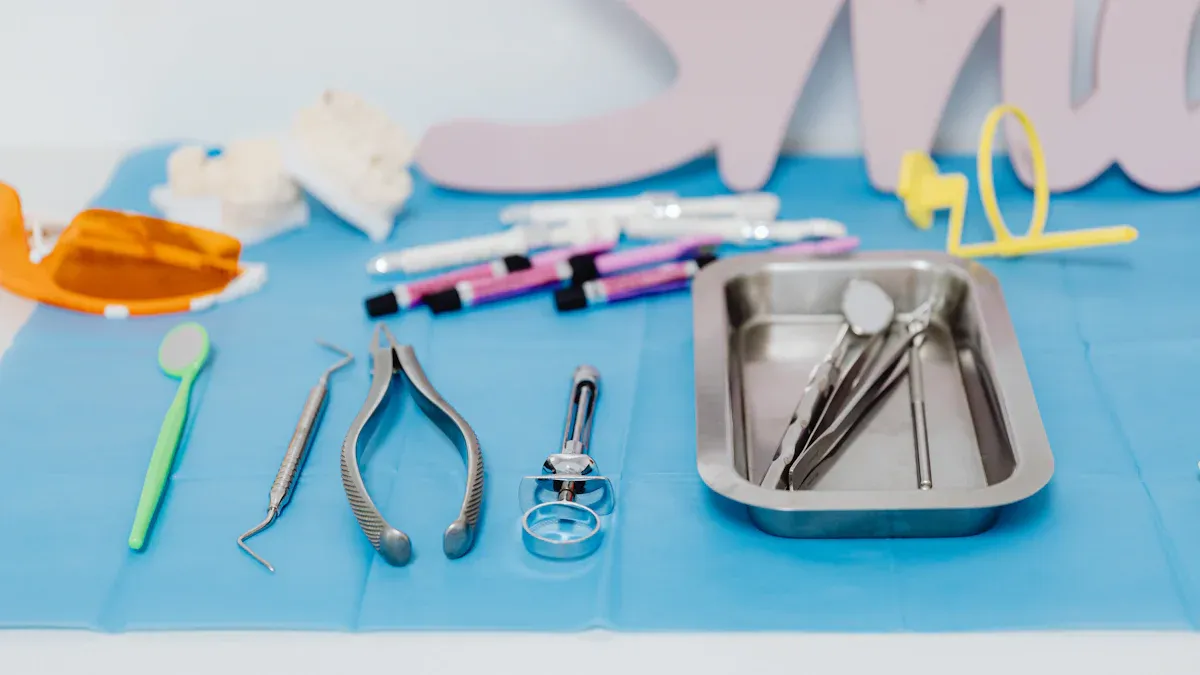
Pliers and cutters require materials that withstand significant force and frequent use. High-grade stainless steel is a common choice. It ensures corrosion resistance, durability, and compliance with sterilization protocols. This material provides the strength and resilience needed for these tools. Premium pliers often incorporate tungsten or titanium components. These additions offer enhanced strength and longevity, especially for cutting tasks. High-quality materials are essential for durability. They allow these instruments to withstand frequent use without deterioration.
Materials for Banding and Bracket Placement Instruments
Banding and bracket placement instruments demand precision and resilience. These tools must securely hold and position orthodontic components. Manufacturers typically use high-quality stainless steel for these instruments. This material provides the necessary stiffness and strength. It also resists corrosion from repeated sterilization cycles. The material choice ensures instruments maintain their shape and function over time. This allows for accurate and efficient placement of bands and brackets.
Material Considerations for Diagnostic and Auxiliary Instruments
Diagnostic instruments, such as explorers, require specific material properties to maintain tip integrity. Thin and flexible stainless steel is the primary material for dental explorers. This material contributes to their sharp tip. A single-piece steel construction maximizes tactile feedback. It ensures vibrations transfer effectively from the working end to the practitioner’s fingers. This differs from instruments with inserted tips. Proper maintenance is essential for accurate calculus detection. Practitioners should regularly examine the shank for bends or damage. They must also test for sharpness using a plastic testing stick. A dull explorer will glide, while a sharp one will catch. Replacing dull or damaged explorers prevents misinformation during root surface assessment. The tip’s resilience, or ‘stickiness,’ indicates sharpness and effective caries detection without excessive force. Flexible tips suit light-pressure enamel assessments to prevent damage. Stiffer constructions allow for firmer strokes during subgingival calculus exploration. Flexible metal is used for straight explorers to optimize tactile feedback. An uncomplicated design facilitates direct access and efficient sterilization. This reduces the risk of structural failure compared to instruments with complex bends.
The material composition of Dental Orthodontic Instruments primarily determines their durability. Strategic incorporation of materials like tungsten carbide, titanium, and specialty alloys significantly enhances instrument longevity and performance. Practitioners make informed choices by understanding these material differences. This improves instrument lifespan and efficiency in clinical practice.
FAQ
What makes an orthodontic instrument durable?
A durable orthodontic instrument resists wear, corrosion, and fatigue. It maintains its original shape and function over time. High-quality materials, precise manufacturing, and proper care all contribute to its longevity.
How do materials like tungsten carbide improve instrument life?
Tungsten carbide is extremely hard. Manufacturers use it for cutting and gripping surfaces. This material significantly enhances wear resistance and maintains sharp edges. It allows instruments to withstand repeated use and cutting tasks.
Why is titanium a good material for some orthodontic instruments?
Titanium offers excellent corrosion resistance and biocompatibility. It forms a protective layer that resists body fluids. Its flexibility and strength-to-weight ratio make it ideal for archwires and brackets, especially for patients with allergies.
How do manufacturing processes affect instrument durability?
Manufacturing processes like forging and heat treatment strengthen instruments. Forging refines the metal’s grain structure, making it stronger. Heat treatment alters the material’s microstructure, improving its hardness and resistance to stress.
What role does corrosion resistance play in instrument longevity?
Corrosion resistance prevents instruments from degrading due to chemicals or moisture. Passivation and electropolishing treatments create protective layers. These layers help instruments withstand sterilization and the oral environment, extending their useful life.
Post time: Dec-05-2025