
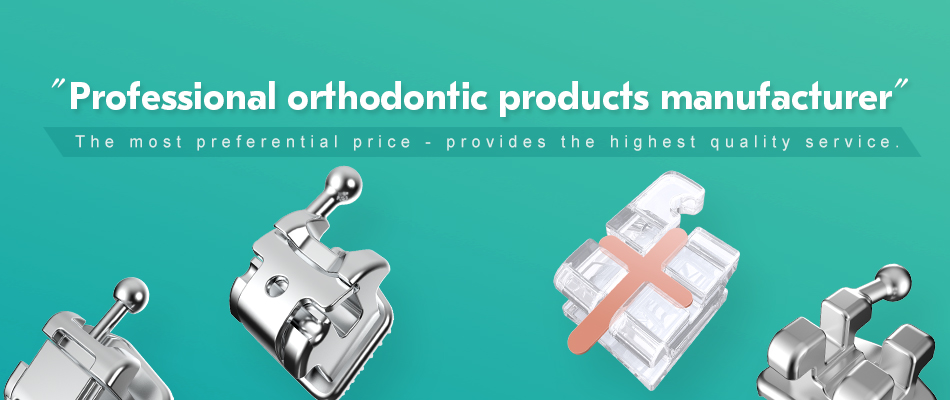


Yes, Chinese self-ligating brackets can indeed be a powerful 'secret weapon' for orthodontic practices. They offer a compelling balance of advanced technology, quality, and cost-efficiency. The self-ligating bracket market is experiencing significant growth, with projections showing a compound annual growth rate of approximately 7-9% over the next five years. This trend highlights the increasing adoption of this advanced orthodontic bracket system. Reputable companies, such as Ningbo Denrotary Medical Apparatus, stand out as a key orthodontic bracket manufacturer, driving innovation. These developments provide excellent orthodontic brackets for orthodontists seeking modern and efficient solutions.
Key Takeaways
- Chinese self-ligating brackets offer good technology and quality at a lower cost.
- Modern Chinese factories use advanced machines and strict quality checks to make reliable products.
- These brackets help orthodontic practices save money and make more profit.
- They use safe materials and precise engineering for better patient results.
- Look for important certifications like ISO, CE, and FDA to ensure product quality and safety.
The Evolution of Chinese Manufacturing for Orthodontic Self-Ligating Brackets
Beyond Stereotypes: A New Era of Precision and Technology
Many people once held certain ideas about products made in China. However, this view is now outdated. Chinese manufacturing has entered a new era. It focuses on precision and advanced technology. Factories now use state-of-the-art machinery. They also employ highly skilled engineers. This shift is very clear in the medical device industry. Orthodontic products, like self-ligating brackets, show this progress. Manufacturers prioritize strict quality control. They ensure every product meets global standards. This commitment means orthodontists receive reliable and high-performance tools. The days of questioning quality are largely behind us. Modern Chinese factories integrate automation and digital design. This approach leads to consistent product quality. It also allows for rapid innovation. They now compete globally on quality, not just price. This transformation ensures high-quality components for every orthodontic practice.
Significant Investment in Research and Development
Chinese companies are not just improving production. They are also investing heavily in research and development (R&D). This investment drives innovation. Manufacturers explore new materials and designs. They aim to create better orthodontic solutions. For example, Denrotary Medical, established in 2012, dedicates itself to orthodontic products. They have modern workshops and production lines. They also use advanced professional orthodontic equipment from Germany. This commitment to R&D helps them meet global medical regulations. It ensures their products, including self-ligating brackets, are at the forefront of technology. This focus on innovation benefits both practitioners and patients. Companies conduct extensive testing. They collaborate with universities and dental professionals. This ensures their products are both effective and safe. This dedication to R&D positions Chinese manufacturers as leaders in orthodontic technology. They constantly seek ways to enhance patient comfort and treatment efficiency.
Unpacking the Advantages of Chinese Self-Ligating Brackets
Cost-Effectiveness Without Compromising Quality
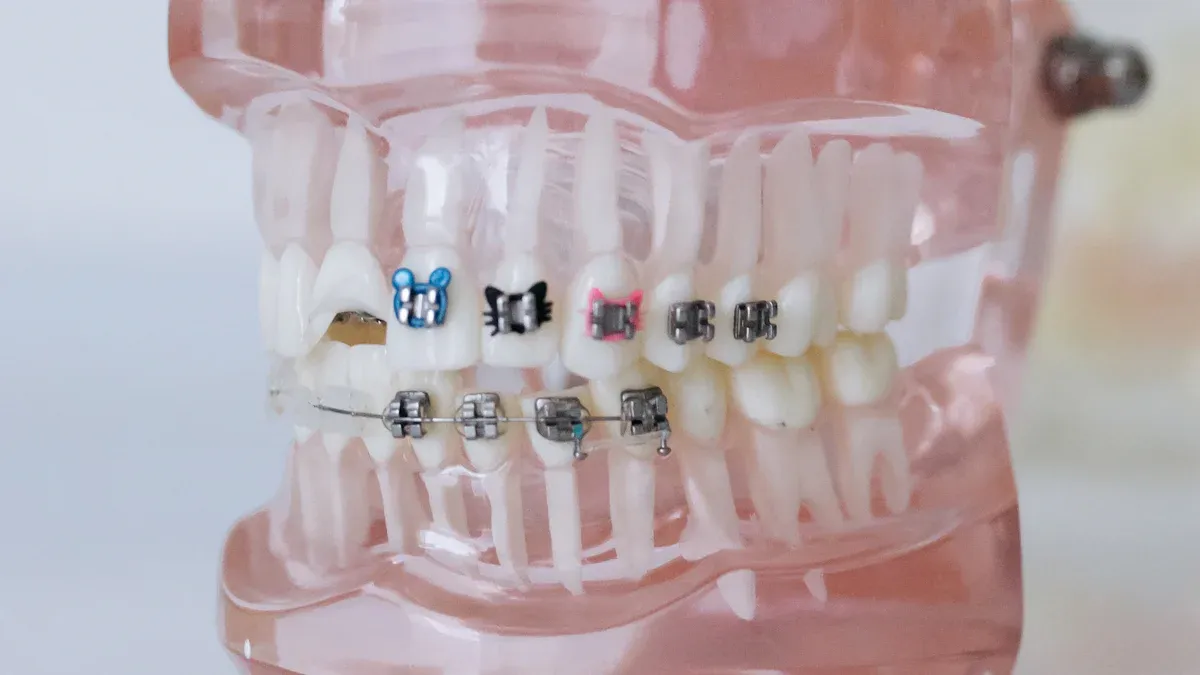
Many orthodontic practices look for ways to manage costs. Chinese manufacturers offer a significant advantage here. They provide cost-effective solutions without sacrificing quality. How do they achieve this? Factories in China often benefit from efficient production processes. They use economies of scale. This means they produce large quantities, which lowers the cost per unit. This efficiency allows them to offer competitive pricing. Orthodontic practices can then access advanced technology. They do not need to pay premium prices. This makes modern orthodontic treatments more accessible to a wider range of patients. It also helps practices improve their profitability. They can invest more in other areas of their business.
Advanced Material Science and Biocompatibility Standards
The materials used in orthodontic devices are crucial. They must be strong, durable, and safe for patients. Chinese manufacturers understand this requirement. They use advanced material science in their products. This includes medical-grade stainless steel and high-quality ceramics. These materials ensure the brackets perform well. They also meet strict biocompatibility standards. This means the materials are safe for use inside the human body. They do not cause adverse reactions. Many Chinese manufacturers adhere to international standards. These include ISO and CE certifications. Some even meet FDA requirements. This commitment to material science ensures patient safety. It also guarantees the longevity and effectiveness of the brackets.
Precision Engineering for Enhanced Clinical Outcomes
Precision is vital in orthodontics. Every bracket must fit perfectly. It must also guide teeth with exact force. Chinese manufacturers excel in precision engineering. They ensure optimal performance and patient comfort. Their manufacturing processes use state-of-the-art facilities. They also implement stringent quality control. This helps them meet high industry standards. For example, metal self-ligating brackets often boast an 'Industrial best 0022 precision error'. This metric highlights the extreme accuracy in their production. Such precise manufacturing leads to better clinical outcomes. Orthodontists can achieve more predictable results. Patients experience more efficient treatment. This level of accuracy helps reduce chair time. It also improves overall treatment success.
Scalability and Reliable Supply Chain for Consistent Demand
Orthodontic practices need a steady supply of materials. Chinese manufacturers offer excellent scalability. They also provide a reliable supply chain. This ensures you always have the products you need. Their large-scale production capabilities mean they can handle big orders easily. This is a huge benefit for growing practices.
Chinese suppliers have well-established supply chains. These chains include specialized industrial clusters. You can find these clusters in provinces like Guangdong, Zhejiang, Henan, and Jiangsu. These regions offer complete manufacturing ecosystems. They provide skilled labor, advanced machinery, and efficient logistics networks. This setup supports quick prototyping, precise engineering, and scalable production. For example, Guangdong, with cities like Foshan and Dongguan, is famous for dental equipment. Ningbo in Zhejiang excels in precision metalworking. Henan and Jiangsu offer cost-effective, large-scale production.
Many of these manufacturing hubs are near major ports. Shenzhen and Ningbo are good examples. This location helps with faster export cycles. It also reduces shipping costs. This means you get your orders more quickly and affordably.
Suppliers also focus on quality assurance and regulatory compliance. Most reputable suppliers have ISO 13485 certification. They also follow FDA or EU MDR regulations. This ensures their quality management systems are top-notch. It also helps them access global markets.
When you choose a supplier, consider their operational experience. Suppliers with over five years of experience often have refined processes. They also build stronger client relationships. For instance, Jiangyin Yonghao Machinery Co., Ltd. has 13 years of experience. Dongguan Shuangxin Industry Co., Ltd. has 14 years. These companies have proven their stability.
Look at their production capacity and infrastructure too. You can assess this by their factory area. Some factories range from 1,000 m² to over 6,000 m². Also, check their staff size. They typically have 30 to 130+ employees. This includes engineers, QA inspectors, and logistics coordinators.
Logistics and shipping capabilities are also important. Major suppliers offer worldwide shipping. They use air or sea freight. Many provide DDP (Delivered Duty Paid) services. This means they handle all customs and duties. One supplier states they deliver within 15 days after order confirmation. Another supplier mentions mass production takes 1-2 weeks, depending on the order size. Sample orders usually take 3-5 days. This shows their efficiency in fulfilling orders.
Leading Chinese Manufacturers of Self-Ligating Brackets
Denrotary Medical: A Pioneer in Orthodontic Production
Denrotary Medical, located in Ningbo, Zhejiang, has established itself as a leader in orthodontic products since 2012. They offer a diverse range of self-ligating brackets, catering to various clinical needs. For instance, their product line includes Passive – MS2, Active – MS1, and Spherical – MS3 options.
| Bracket Type | Material | Best For | Aesthetic Option |
|---|---|---|---|
| Metal | Stainless Steel | Complex cases | No |
| Ceramic | Advanced Ceramic | Discreet treatments | Yes |
Denrotary designs these brackets with patient comfort in mind, featuring a smooth, low-profile design. They use high-strength materials for durability and an easy-to-use clip system for quick wire changes. Their brackets are compatible with most archwire types. Denrotary achieves an industrial best 0.002 precision error, ensuring accurate tooth movement. They use 17-4 stainless steel materials for their passive self-ligating bracket system, which also includes a movable hook. This mechanism, with its built-in sliding door, secures the archwire without external ligatures. This design reduces friction, improves oral hygiene, enhances comfort, and may even shorten treatment times.
Yamei Ortho and DENRUM: Renowned for Self-Ligating Innovations
Yamei Ortho and DENRUM also stand out for their innovative contributions to self-ligating technology. Yamei Ortho, for example, offers unique features in its self-ligating brackets. They design their brackets with a mini shape, allowing for adjustable size and height. The unlocking mechanism moves downwards in the same direction, simplifying adjustments. Yamei Ortho provides ample ligation space on the wings and includes a bottom sliding ball hook. They also feature a 0.42*0.42 auxiliary hole for orthodontic wires. CNC machining processes their rectangle wire slots, making them bright and smooth on three sides. This significantly reduces friction between wires and the bracket slot. An 80 molybdenum mesh base and a ball spherical arc shape design on the hook increase bonding strength. Furthermore, a laser welding process joins all four sides of the bracket. They can also sandblast and laser mark the bracket base according to client requirements.
Other Key Players: Tianjin ZhengLi, Hangzhou Westlake, and SINO ORTHO
Beyond Denrotary, Yamei Ortho, and DENRUM, other significant Chinese manufacturers contribute to the self-ligating bracket market. Tianjin ZhengLi, Hangzhou Westlake, and SINO ORTHO are also key players. These companies consistently invest in technology and quality control. They offer a wide range of orthodontic solutions. Their commitment helps solidify China's position as a global leader in orthodontic manufacturing.
Ensuring Quality and Compliance: What to Look For
Essential Certifications and Regulatory Compliance (FDA, CE, ISO)
When you choose orthodontic products, certifications are not just fancy labels. They are crucial indicators of quality and safety. For medical devices, especially those used inside the body, ISO 13485 and CE certification are absolutely essential. These certifications show a manufacturer follows strict quality management systems. They also prove the products meet European health, safety, and environmental protection standards. For practices in North America, products must also be FDA-cleared or TGA-approved for use in target markets. Specifically, FDA 510(k) clearance and ISO 13485 certification are mandatory. A CE marking further enhances a product's international credibility.
Compliance with FDA, CE, and ISO standards is pivotal for orthodontic brackets. These stringent regulations cover many aspects. They include biocompatibility, material safety, and manufacturing practices. This ensures the materials are safe for patients. It also guarantees the production process is reliable. Many Chinese manufacturers have successfully passed CE certification under the EU Medical Device Directive. They also hold FDA certification from the US Food and Drug Administration. Furthermore, they achieve ISO 13485:2016 international medical device quality management system certification. This commitment to global standards gives you confidence in their products. Remember, customers must also comply with all economic sanctions and export controls laws. This includes those of the European Union. You cannot export, share, or use products in connection with persons located in countries subject to comprehensive U.S. sanctions.
Robust Quality Control Protocols and Testing Procedures
High-quality orthodontic brackets do not happen by accident. They result from robust quality control protocols and rigorous testing procedures. Manufacturers perform in-process inspections and testing at various production stages. This includes molding, assembly, and sterilization. These checks verify product conformity and ensure consistent quality. Before releasing products, they undergo final inspections. This guarantees all specified requirements are met.
Manufacturers conduct specific tests to ensure precision and durability. They perform slot height measurements at both the top and bottom of the slot. They also measure the angles between walls to ensure correct angulation. Slot taper analysis assesses the convergence or divergence of the slot. Wall linearity assessment checks the straightness of each slot wall. These detailed measurements ensure the brackets guide teeth precisely.
Beyond dimensional accuracy, manufacturers evaluate material biocompatibility. They ensure materials are safe for the oral environment and do not cause adverse reactions. Mechanical strength assessment confirms the structural integrity and durability of the brackets. This includes stress and fatigue testing. These tests simulate repetitive forces from chewing and orthodontic adjustments. This ensures the brackets maintain structural integrity without fracturing or deforming. The ANSI/ADA Standard No. 100 (adopted as ISO 27020:2019) provides globally recognized guidelines. It outlines requirements for orthodontic brackets and tubes. It includes functional dimensions, chemical ion release, and packaging specifications. It also details test methods to evaluate product performance. It specifically emphasizes mechanical strength, biocompatibility, and corrosion resistance.
Customization and OEM Capabilities for Unique Practice Needs
Chinese manufacturers offer impressive customization and OEM (Original Equipment Manufacturer) capabilities. This allows practices to tailor products to their unique requirements. You can often choose customized packaging. This helps reinforce your brand identity. Manufacturers also offer the option to purchase brackets individually or in full sets. This provides flexibility for inventory management.
Many manufacturers can sandblast and laser mark the bracket base according to client requirements. This allows for personalized branding or specific identifiers. This level of customization helps practices differentiate their offerings. It also ensures the products align perfectly with their clinical protocols. For OEM production, minimum order quantities (MOQ) can vary. Some manufacturers offer an MOQ as low as 10 sets. Others might require 100 sets. These flexible options make it easier for practices of all sizes to access customized solutions.
Real-World Impact: Transforming Orthodontic Practices with Chinese Self-Ligating Brackets

Improved Practice Efficiency and Patient Satisfaction
Chinese self-ligating brackets significantly improve how orthodontic practices operate. They also make patients much happier. Patients often experience less discomfort. This happens because of reduced friction and fewer adjustments needed. Many patients report less pain during the initial stages of treatment. This leads to a more positive experience overall. Higher satisfaction levels come from shorter treatment times and fewer appointments. Patients appreciate spending less time in the dental chair. Improved comfort and better oral hygiene throughout treatment also contribute to their happiness. For the practice, fewer appointments mean more efficient scheduling. This frees up valuable chair time. Staff can then focus on other important tasks. This boosts overall practice efficiency and allows for more patient care.
Strategic Cost Reduction for Enhanced Profitability
Chinese self-ligating brackets offer a clear path to save money. This directly impacts a practice's profitability. Practices can acquire high-quality materials at a lower price point. This allows for better profit margins on treatments. Alternatively, practices can offer more competitive pricing to patients. This strategy attracts more clients. Strategic cost reduction helps practices grow. It also makes advanced orthodontic care more accessible to a wider range of people. This balance of quality and affordability creates a win-win situation for both the practice and its patients.
Chinese self-ligating brackets offer a powerful mix of quality, innovation, and cost-effectiveness. Practices must source them diligently from reputable factories. These brackets become a strategic asset for modern orthodontic practices aiming to optimize their operations. Embracing these advancements can truly make them a 'secret weapon' for those ready to leverage their potential.
FAQ
Are Chinese self-ligating brackets truly high-quality?
Yes, they are. Modern Chinese manufacturers invest heavily in R&D and precision engineering. They use advanced materials and strict quality control. Many companies hold international certifications like ISO, CE, and even FDA clearance. This ensures their products meet global standards for safety and performance.
How do Chinese brackets offer cost savings without compromising quality?
Chinese manufacturers achieve cost-effectiveness through efficient production processes and economies of scale. They produce large quantities, which lowers the cost per unit. This allows them to offer competitive pricing while maintaining high quality standards. Practices can then access advanced technology affordably.
What certifications should we look for when sourcing Chinese self-ligating brackets?
Look for essential certifications like ISO 13485, CE marking, and FDA 510(k) clearance. These certifications confirm the manufacturer follows strict quality management systems and that products meet safety and performance standards. They ensure biocompatibility and reliable manufacturing practices.
Can we customize Chinese self-ligating brackets for our practice?
Absolutely! Many Chinese manufacturers offer excellent customization and OEM capabilities. You can often choose customized packaging to reinforce your brand. They also provide options for personalized branding or specific identifiers on the brackets themselves, like laser marking. This helps meet unique practice needs.
Do these brackets really improve patient satisfaction?
Yes, they often do. Patients experience less discomfort due to reduced friction and fewer adjustments. This leads to a more positive treatment experience. Shorter treatment times and fewer appointments also contribute to higher patient satisfaction. Patients appreciate spending less time in the dental chair.
Post time: Dec-17-2025