
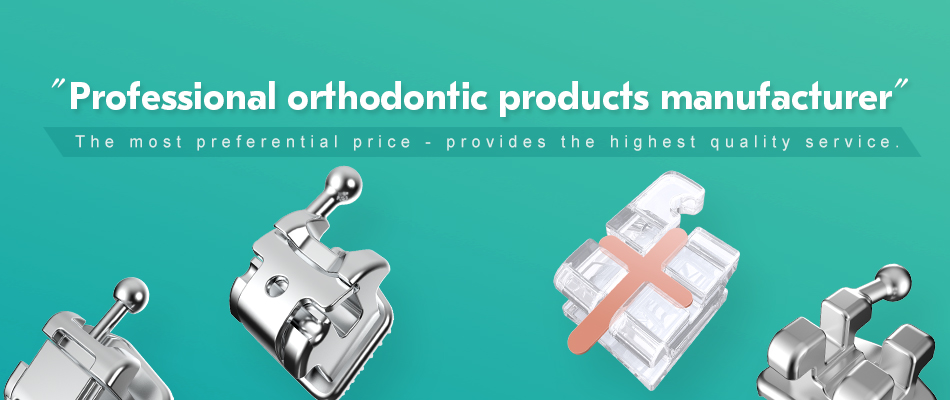


Digital manufacturing profoundly transforms orthodontics. This innovation redefines precision and personalization in dental care. Digital Orthodontics allows for unprecedented control over treatment outcomes. Engineers now design custom Orthodontic Brackets with extreme accuracy. This precision directly impacts factors like Debonding Strength and the performance of various materials, including Ceramic Brackets. Understanding “How do self-ligating brackets shorten treatment time by reducing friction?” becomes clearer with digitally optimized designs. This technological shift promises a new era for patient-specific orthodontic solutions.
Key Takeaways
- Digital tools now make custom braces. These braces fit each person’s teeth perfectly. This helps teeth move better and faster.
- 3D printing helps make these special braces. It makes them fit well and look good. This also makes treatment more exact.
- Custom braces can make treatment shorter. They also make it more comfortable. Patients feel better and get good results.
- New materials make braces stronger. They also help keep teeth healthy. This means better care for everyone.
Understanding Digital Manufacturing for Orthodontic Brackets
The Evolution from Traditional to Digital Fabrication
Traditional orthodontic bracket fabrication relied on physical methods. Clinicians took physical impressions, requiring manual handling and pouring of plaster models. This process involved multiple steps and often hours or days for completion. Digital fabrication, however, streamlines these steps significantly. It uses intraoral scanners for direct digital data capture. This eliminates physical impressions and plaster models. The digital approach reduces preparation time and manual labor.
The Digital Workflow for Custom Orthodontic Brackets
A digital workflow for custom orthodontic brackets begins with patient data acquisition. Intraoral scanners capture precise 3D models of the patient’s dentition. Software then processes this data. Treatment-planning platforms allow orthodontists to visualize tooth movement. They anticipate finishing needs and transfer plans with precision. Digital bonding platforms position brackets virtually. These platforms can then generate instructions for printing bonding trays. This bridges the gap for familiar bracket lines. Essential software components include Electronic Health Records (EHR) for patient management and CAD/CAM technology for design and manufacturing. Hardware like 3D printers and computers are central to managing these digital processes.
The Power of 3D Printing in Creating Orthodontic Brackets
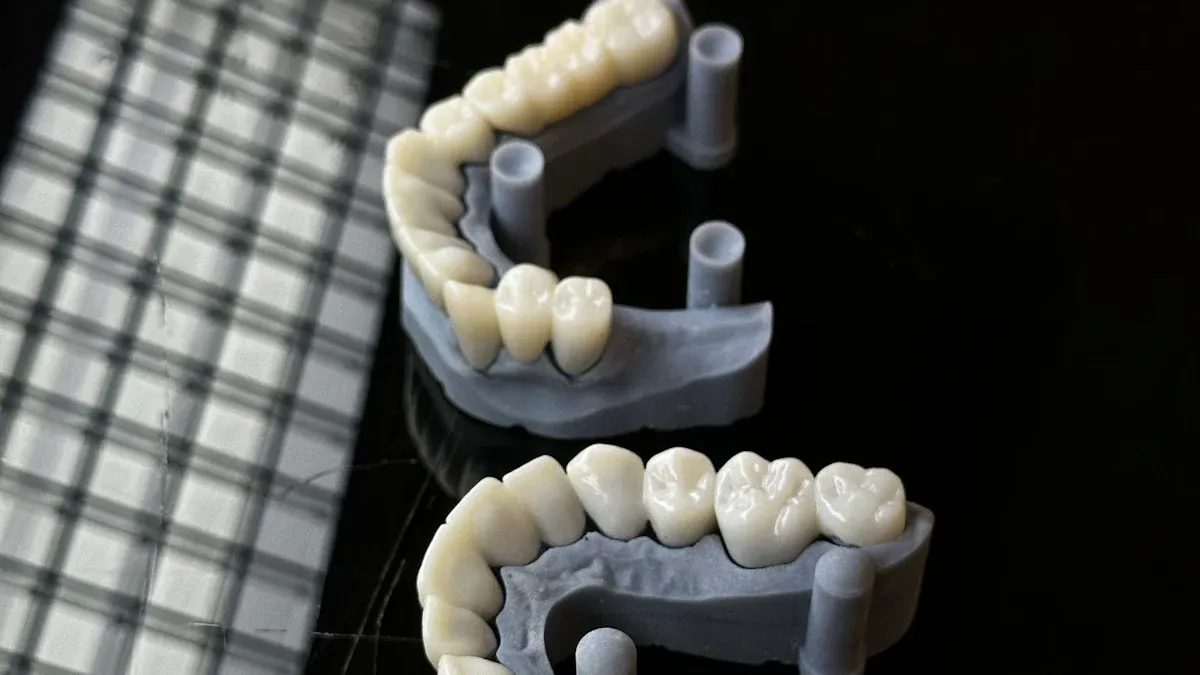
3D printing technology plays a crucial role in modern orthodontics. It allows for the creation of highly customized Orthodontic Brackets. Stereolithography offers high accuracy for detailed appliances. Laser Sintering produces durable orthodontic models. Fused Deposition Modeling provides a cost-effective option for rapid prototyping. PolyJet Technology enables multi-material printing for complex cases. This technology offers several advantages. It allows for patient-specific designs, enhancing treatment effectiveness. Patients experience improved comfort due to custom fit and smoother surfaces. The aesthetic appeal also improves with more discreet designs. 3D printing eliminates many manual steps, leading to faster production and delivery of appliances. This streamlines manufacturing processes and potentially lowers long-term costs.
Unprecedented Customization and Precision in Orthodontic Brackets
Tailoring Orthodontic Brackets to Individual Anatomy
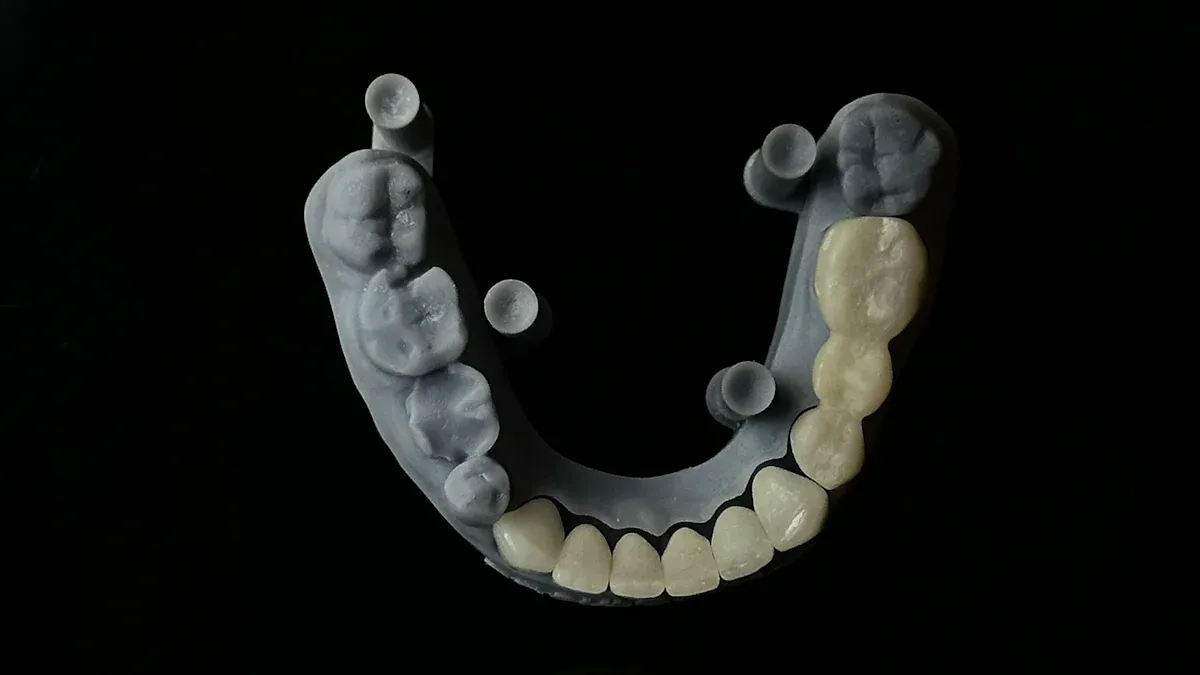
Digital manufacturing allows for the creation of truly unique orthodontic solutions. Clinicians now design each bracket to precisely fit a patient’s individual tooth anatomy. This approach moves beyond the limitations of generic, off-the-shelf brackets. Custom brackets offer significant advantages over these traditional options. They provide precision and efficiency, allowing for more controlled tooth movement and fewer adjustments. This often leads to shorter treatment times. Patients also experience enhanced comfort due to the custom fit and smoother design, which reduces irritation to gums and cheeks. Furthermore, custom brackets can improve aesthetics. Manufacturers can make them from clear or tooth-colored materials, making them less noticeable. The tailored design minimizes the need for frequent adjustments and applies optimal pressure. This potentially reduces risks like decalcification or root resorption. Ultimately, the combination of comfort, faster treatment, and better aesthetics results in greater patient satisfaction and improved compliance with treatment protocols.
Enhancing Treatment Predictability with Custom Orthodontic Brackets
Custom orthodontic brackets significantly enhance treatment predictability. They allow orthodontists to anticipate and control tooth movement with greater accuracy. Clinical studies demonstrate the superior outcomes achieved with these advanced systems.
| Bracket System | Outcomes | Predictability Enhancement |
|---|---|---|
| CAD/CAM Customized Brackets | Shorter treatment duration, less arch-wire bending, lower ABO scores | Improved treatment duration and efficiency |
| LightForce 3D-Printed Brackets | Significantly superior in average treatment times, scheduled appointments, and emergency appointments; fewer bracket debonding incidents | Enhanced treatment efficiency and reduced complications |
| Indirect Bonded Customized CAD/CAM Brackets vs. Direct Bonded SLBs | No significant difference in ABO scores, treatment duration, number of scheduled appointments, and archwire bends; minor effect on clinical efficiency | Minor effect on clinical efficiency, suggesting some predictability benefits |
These findings highlight the tangible benefits of customization. Beyond these systems, smart brackets with integrated sensors represent another leap forward. These devices collect real-time data on forces applied to teeth. This enables more precise adjustments and leads to more predictable outcomes. Orthodontists gain valuable insights for optimizing treatment plans. Additionally, 3D printing technology facilitates the design and manufacturing of brackets personalized to individual patients. This directly improves treatment accuracy and patient comfort.
Optimizing Biomechanical Forces with Personalized Orthodontic Brackets
Personalized orthodontic brackets play a crucial role in optimizing biomechanical forces. This optimization ensures desired tooth movement. Technologies like CAD/CAM and 3D printing enable the precise matching of the bracket base to the individual tooth anatomy. This customization, seen in systems such as Wiechmann’s Incognito and Insignia, ensures optimal force transmission for specific orthodontic movements. These advancements address challenges of conventional systems, including inaccurate bracket positioning and torque play. They allow for the direct fabrication of patient-specific brackets, potentially shortening treatment duration and reducing risks like white spot lesions.
AI-driven simulations further enhance the optimization of biomechanical forces for personalized orthodontic treatment. These technologies, including virtual scenario testing and digital twin modeling, allow orthodontists to customize treatment plans before intervention. They also enable dynamic adjustments based on real-time patient responses. AI-driven Finite Element Models (FEMs) predict how teeth will react to various forces, such as torque, angulation, and extrusion. This capability allows orthodontists to refine bracket placements. They minimize undesirable movements like tipping or root resorption and ensure optimal force application throughout the treatment process.
Personalized orthodontic approaches optimize biomechanical forces by integrating auxiliary mechanics. These mechanics regulate the moment-to-force (M/F) ratio. This prevents unwanted rotational tendencies during translational tooth movement. For instance, an optimized long-draw hook can achieve true bodily movement. This reduces alveolar bone stress and distributes PDL stress more evenly. Furthermore, applying specific couples and auxiliary tensile forces can enhance root apex guidance. It also improves the crown-to-root displacement balance. All these actions maintain forces within safe biomechanical thresholds.
Elevating Patient Experience with Advanced Orthodontic Brackets
Improved Comfort and Aesthetics of Digital Orthodontic Brackets
Advanced manufacturing techniques significantly enhance the patient experience by improving both comfort and aesthetics. Digital design allows for the creation of brackets that are smaller, smoother, and more precisely contoured to each tooth. This custom fit minimizes irritation to the soft tissues of the mouth, such as the cheeks and gums, which often occurs with traditional, bulkier brackets. Patients report less discomfort and fewer sores, leading to a more pleasant treatment journey. Furthermore, digital manufacturing enables the use of advanced materials and designs that are far more discreet. Orthodontists can now offer clear or tooth-colored brackets that blend seamlessly with the natural dentition, making them less noticeable. This aesthetic advantage is particularly appealing to adult patients and adolescents concerned about their appearance during treatment. The precision of digital fabrication also ensures that brackets sit flush against the tooth surface, reducing food traps and making oral hygiene easier to maintain.
Potential for Reduced Treatment Times with Custom Orthodontic Brackets
Custom orthodontic brackets hold significant potential for reducing overall treatment times. The precise design and placement of these brackets optimize tooth movement, leading to more efficient progress. An orthodontist, who has utilized LightForce since 2019 and completed nearly 200 cases, observes that this appliance system helps achieve the desired finish line in more consecutively treated cases than any other system they have employed. While acknowledging that some LightForce cases conclude 30-40% faster, the orthodontist expresses caution regarding the statistical significance of this observation. Numerous variables, such as broken brackets, patient compliance, and missed appointments, can influence treatment duration. Despite the lack of statistical certainty, the orthodontist anticipates continued use of LightForce due to its ease of delegation, aesthetic benefits, and the availability of backup brackets for precise placement. This precision prevents compromised slot positioning and contributes to efficient treatment.
A broader study, which included four diverse orthodontic practices, further supports these observations. Patients treated with LightForce 3D-printed custom brackets experienced shorter overall treatment times and required fewer appointments compared to those using conventional preadjusted appliances. This efficiency stemmed from a 50-70% reduction in bracket-repositioning and wire-adjustment procedures. Additionally, appointments specifically for these procedures decreased by 30-60% within the LightForce group. This notable reduction in finishing procedures directly correlates with the observed decrease in overall treatment duration, highlighting the efficiency gains from custom-designed solutions.
Addressing Complex Cases with Precision Orthodontic Brackets
Precision orthodontic brackets offer unparalleled advantages when addressing complex orthodontic cases. Traditional, one-size-fits-all brackets often present limitations in managing severe malocclusions, significant crowding, or cases involving missing teeth. Digital manufacturing, however, allows orthodontists to design brackets that are perfectly tailored to the unique challenges of each complex case. This precision enables the application of highly specific forces to individual teeth, facilitating movements that might be difficult or impossible with conventional appliances. For instance, custom brackets can accommodate unusual tooth shapes or sizes, ensuring optimal engagement with the archwire and precise control over tooth movement. This level of customization minimizes unwanted side effects and reduces the need for extensive chairside adjustments, which is particularly beneficial in intricate treatments. The ability to plan and execute complex tooth movements with such accuracy ultimately leads to more predictable and successful outcomes for patients with challenging orthodontic needs.
The Future of Production and Innovation in Orthodontic Brackets
Streamlining Manufacturing Processes for Orthodontic Brackets
Advanced manufacturing techniques significantly streamline the production of orthodontic appliances. Digital workflows, from initial scan to final product, reduce manual labor and human error. Computer-aided design (CAD) and computer-aided manufacturing (CAM) systems automate many steps. This automation leads to faster production cycles and increased efficiency. Manufacturers can produce custom orthodontic brackets more quickly and consistently. This reduces lead times for patients and orthodontists. The integration of robotics further enhances precision and speed in fabrication.
Advancements in Material Science for Durable Orthodontic Brackets
Material science continually introduces novel substances to enhance orthodontic brackets. Researchers investigate polydopamine (PDA) as a coating material. PDA offers significant antimicrobial properties against Streptococcus mutans. It impedes bacterial attachment and growth. PDA also promotes remineralization by facilitating apatite crystal deposition. This strengthens enamel and buffers acidic conditions. It prevents white spot lesions and improves long-term oral health. Its cost-effectiveness and ease of application make it a promising option. Furthermore, customized ceramic brackets now use lithium disilicate materials and heat-pressing technology. This creates aesthetic brackets matching tooth color with proper translucency. Lithium disilicate offers higher fracture toughness and flexural strength than traditional ceramic options. This enhances both mechanical properties and aesthetics.
Driving Research and Development in Orthodontic Brackets Technology
Research and development actively explore emerging technologies for orthodontic brackets. The industry sees a growing demand for sustainable materials. This includes biodegradable aligners and recyclable brackets. Self-ligating braces use specialized clips instead of elastic bands. This reduces friction and potentially leads to faster, more comfortable treatment. Lingual braces, attached to the back of teeth, are becoming smaller and more comfortable. Smart orthodontic devices, equipped with sensors, enable real-time monitoring of treatment progress. They provide feedback for timely adjustments. Digital impressions and 3D printing fabricate custom aligners and braces with precision. Smart materials respond to changes in temperature or pH levels. This allows for targeted treatment adjustments. Robotics also plays a role, with robotic arms employed for tasks like wire bending and bracket placement. This provides greater consistency and speed.
Advanced manufacturing techniques have revolutionized orthodontic practice. They usher in an era of personalized and highly precise dental care. Digital dentistry continues its rapid evolution, promising even greater innovations. This ongoing progress ensures more effective, comfortable, and aesthetically pleasing treatments for patients worldwide. Orthodontists now deliver tailored solutions with unprecedented accuracy.
FAQ
What are the primary benefits of custom orthodontic brackets?
Custom orthodontic brackets offer superior precision and personalization. They fit each tooth’s unique anatomy, leading to more efficient tooth movement. Patients experience enhanced comfort and potentially shorter treatment times. These brackets also improve aesthetic outcomes.
How does 3D printing enhance orthodontic bracket technology?
3D printing allows for the creation of highly customized brackets. This technology enables patient-specific designs, which improves treatment accuracy. It also speeds up production and delivery of appliances. 3D printing supports the use of advanced materials for better performance.
Do advanced orthodontic brackets truly reduce treatment duration?
Yes, advanced orthodontic brackets can potentially reduce treatment duration. Their precise design and placement optimize tooth movement. This efficiency leads to fewer adjustments and more predictable outcomes. Some studies indicate faster treatment completion compared to traditional methods.
Are personalized orthodontic brackets more comfortable for patients?
Personalized orthodontic brackets significantly improve patient comfort. Their custom fit minimizes irritation to soft tissues. The smoother, smaller designs reduce friction and sores. This leads to a more pleasant overall treatment experience for the patient.
Post time: Dec-11-2025