
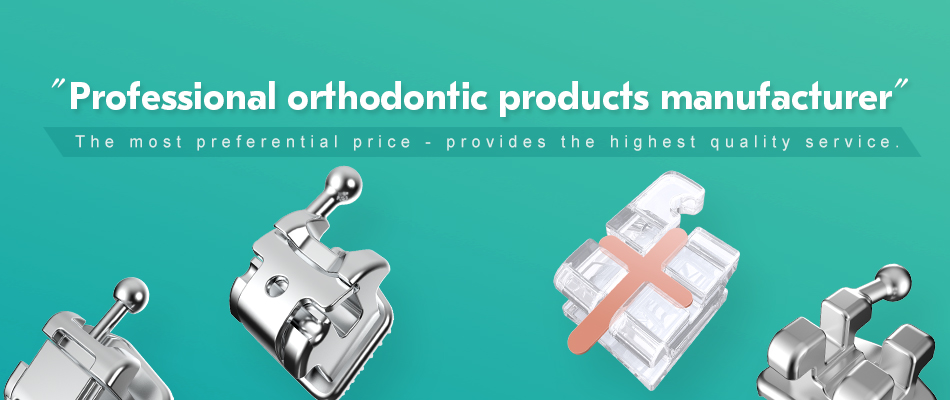

Self-ligating brackets have transformed orthodontic treatment over the past two decades. Unlike traditional brackets that require elastic or wire ligatures to secure the archwire, self-ligating brackets incorporate a built-in mechanical gate or slide mechanism. This design reduces friction, shortens appointment times, and improves patient comfort. According to the American Association of Orthodontists (AAO), approximately 4 million patients in the United States undergo orthodontic treatment annually, with self-ligating systems accounting for a growing share of cases. Practices adopting self-ligating brackets report reducing average chairside time per patient by 15–20 minutes per visit.
This guide examines the key factors that orthodontists and dental practices should evaluate when selecting self-ligating brackets, covering mechanical design differences, clinical performance data, material specifications, and cost-effectiveness considerations.
What Are Self-Ligating Brackets and How Do They Work?
Self-ligating brackets are orthodontic appliances equipped with an integral locking mechanism that directly engages the archwire without requiring external ligatures. The bracket body contains a movable clip, gate, or spring that can be opened to insert the wire and then closed to secure it in the slot.
There are two primary mechanical classifications:
Passive self-ligating brackets feature a rigid, stationary closure that does not apply active force to the archwire. The sliding mechanism maintains a loose engagement with the wire, which minimizes frictional resistance during orthodontic tooth movement. This design is particularly suited for retraction phases and cases requiring efficient sliding mechanics.
Active self-ligating brackets incorporate a spring-loaded clip or door that exerts light contact pressure on the archwire. When the wire is smaller than the slot dimension, the spring actively engages the wire, providing express alignment forces in early treatment stages.
A 2019 systematic review published in the Progress in Orthodontics journal found that passive systems consistently produced lower friction forces (typically 50–200gf lower across tested wire/bracket combinations) while active systems demonstrated faster initial alignment in mild to moderate crowding cases.
Why Self-Ligating Brackets Reduce Treatment Time and Chair Visits
One of the most cited advantages of self-ligating brackets is the reduction in overall treatment duration and the number of required appointments. Clinical studies provide compelling data:
- A prospective randomized trial reported average treatment time reduction of approximately 6 months for comprehensive cases using passive self-ligating systems compared to conventional twin brackets.
- Appointment intervals can often be extended from 4 weeks to 6–8 weeks in many cases due to more consistent force delivery and reduced friction.
- The elimination of ligature placement and removal saves approximately 5–8 minutes per arch per appointment, according to time-motion studies conducted in university dental schools.
The mechanism behind these improvements centers on friction reduction. In conventional systems, elastic ligatures create binding between the bracket slot and archwire, particularly during sliding mechanics. Self-ligating passive systems reduce this friction by up to 60–80%, allowing lighter continuous forces to move teeth more efficiently through alveolar bone.
Material Matters: 17-4 Stainless Steel vs. MIM Technology in Orthodontic Brackets
Most commercial self-ligating brackets are manufactured from either cast stainless steel or metal injection molding (MIM). Understanding these processes helps purchasing decisions for dental laboratories and orthodontic practices.
17-4 stainless steel is a precipitation-hardening alloy containing chromium (16–18%), nickel (3–5%), copper (3–5%), and niobium. Its yield strength of approximately 1,000–1,200 MPa makes it highly resistant to deformation under orthodontic loading. This material is particularly advantageous for brackets subjected to high moment-to-force ratios during torque expression.
Metal Injection Molding (MIM) is a near-net-shape manufacturing process that combines powdered metal with a binder system. The compound is injected into precision molds, then debound and sintered. MIM components demonstrate excellent dimensional consistency (+/- 0.02mm tolerance), which is critical for slot dimension accuracy in self-ligating brackets. According to research published in the Journal of Materials Engineering and Performance, MIM-processed 17-4 stainless steel achieves mechanical properties comparable to wrought material after proper sintering.
Manufacturers utilizing MIM technology report weekly production capacities of 10,000+ bracket units per production line, enabling consistent quality control and competitive pricing for bulk procurement.
Comparing Self-Ligating Systems: Roth vs. MBT Prescription Styles
Two widely referenced orthodontic prescriptions dominate the self-ligating bracket market: the Roth specification and the MBT (McLaughlin, Bennett, Trevisi) specification. Both define the torque, tip, and angulation values built into each bracket slot.
| Parameter | Roth Prescription | MBT Prescription |
|---|---|---|
| Upper Central Incisor Torque | +12° | +17° |
| Upper Lateral Incisor Torque | +8° | +10° |
| Upper Central Incisor Tip | +5° | +4° |
| Recommended Use | Classic finishing | Versatile, preferred by many clinicians |
The Roth prescription was developed by Dr. Ronald Roth in the 1970s and emphasizes overcorrection to account for relapse tendencies. The MBT prescription emerged from systematic refinement and offers greater torque expression in the anterior segment. Many modern self-ligating bracket lines offer both prescriptions across their product range.
Clinical preference often depends on individual treatment philosophy, with MBT gaining broader adoption in contemporary practice due to its documented effectiveness across diverse malocclusion types.
How to Integrate Self-Ligating Brackets into Your Practice Workflow
Transitioning to self-ligating bracket systems requires consideration of clinical protocols, staff training, and inventory management.
Step 1: Evaluate Case Selection Criteria. Self-ligating brackets perform optimally in cases requiring efficient sliding mechanics: space closure, archwire alignment, and moderate crowding resolution. Complex torque demands or severe rotations may still benefit from conventional auxiliary appliances.
Step 2: Train Clinical Staff on Mechanism Operation. Unlike conventional brackets requiring ligature placement, self-ligating brackets require specific opening and closing techniques. Hands-on training with manufacturer-supplied demonstration kits reduces chairside errors during initial adoption.
Step 3: Adjust Appointment Scheduling Intervals. Practices typically extend recall intervals to 6–8 weeks when using passive self-ligating systems, as force decay is more gradual and tooth movement proceeds more consistently without friction-related interruptions.
Step 4: Monitor Inventory and Reorder Cycles. Self-ligating brackets typically carry higher per-unit costs than conventional brackets but eliminate the need for separate ligature supplies. Calculate total per-patient cost including all accessories to accurately assess savings.
Cost-Effectiveness Analysis: Self-Ligating Brackets vs. Conventional Systems
Initial bracket costs for self-ligating systems typically run 20–40% higher than conventional twin brackets. However, total cost analysis reveals a more nuanced picture.
Direct cost savings include: elimination of elastic ligatures ($3–$8 per patient per visit), reduced procedure time translating to higher patient throughput, and fewer instrument inventory items.
Indirect benefits include: improved patient experience (no painful ligature changes), potential reduction in emergency visits for broken or lost ligatures, and enhanced practice efficiency metrics.
A 2020 cost-analysis published in the Journal of Clinical Orthodontics calculated that practices transitioning to self-ligating systems experienced a net per-patient cost reduction of approximately 8–12% when factoring in ligature elimination and time savings across a typical 18-month treatment protocol.
Frequently Asked Questions
What is the main difference between active and passive self-ligating brackets?
Active self-ligating brackets use a spring-loaded clip that applies light pressure to the archwire, making them effective for early alignment phases. Passive self-ligating brackets have a stationary gate design that does not apply active force to the wire, minimizing friction during sliding mechanics. The choice depends on treatment phase and biomechanical goals.
How much friction do self-ligating brackets generate compared to conventional brackets?
Passive self-ligating brackets reduce friction by approximately 60–80% compared to conventional twin brackets with elastic ligatures, according to laboratory studies. This reduction enables lighter continuous forces to achieve tooth movement more efficiently.
What materials are used in manufacturing self-ligating brackets?
Most self-ligating brackets are manufactured from 17-4 precipitation-hardening stainless steel using either precision casting or metal injection molding (MIM). MIM technology provides superior dimensional accuracy and consistent slot geometry, which are critical for precise torque expression.
Do self-ligating brackets shorten overall orthodontic treatment time?
Multiple clinical studies report average treatment time reductions of 4–6 months for comprehensive cases using passive self-ligating systems. Appointment intervals can often be extended from 4 weeks to 6–8 weeks, reducing total visit count while maintaining treatment efficacy.
Are self-ligating brackets suitable for all types of malocclusion?
Self-ligating brackets are effective for the majority of malocclusion types including crowding, spacing, and Class II corrections. However, cases requiring extreme torque expression or complex mechanics may still benefit from supplementary appliances. Case selection should be based on individual biomechanical requirements.
Post time: Apr-07-2026