


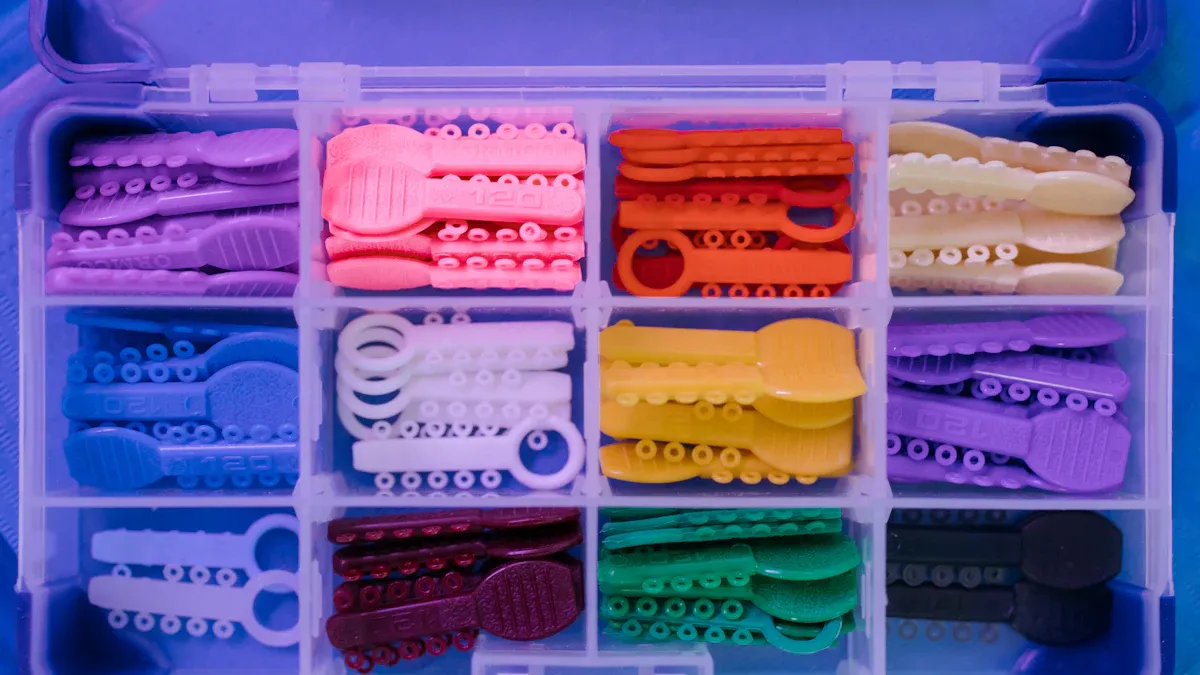
Orthodontic elastics are vital in improving bite alignment. These dental elastics exert targeted pressure to address various dental issues, making them indispensable for effective treatment. Research indicates that utilizing auxiliary resources, such as orthodontic elastics for bite correction, greatly enhances orthodontic outcomes. Additionally, understanding how orthodontic elastics work can improve the overall treatment experience, enabling patients to achieve their desired results more efficiently. As a leading dental elastics manufacturer, we also offer high-quality latex orthodontic elastics to meet diverse patient needs.
Key Takeaways
- Orthodontic elastics are essential for correcting bite issues and aligning teeth effectively. Consistent use leads to better treatment outcomes.
- Different types of elastics serve specific functions, such as correcting overbites or underbites. Understanding these types helps in effective treatment.
- Following your orthodontist’s instructions on wearing elastics is crucial. Neglecting to do so can extend treatment time and affect results.
- Patients should wear elastics for 20-24 hours daily and change them at least twice a day to maintain necessary pressure for effective treatment.
- Using strategies like setting reminders and keeping spare elastics can improve compliance, leading to a smoother and faster orthodontic journey.
What Are Orthodontic Elastics?
Orthodontic elastics, commonly known as rubber bands, play a crucial role in orthodontic treatment. These small yet powerful tools help align teeth and improve bite function. They come in various types, each designed for specific dental corrections.
Types of Orthodontic Elastics
Different types of orthodontic elastics serve distinct functions. Here is a summary of the most common types:
| Type of Elastic | Function |
|---|---|
| Class I Elastics | Close gaps, align teeth within the same jaw, provide support during treatment phases. |
| Class II Elastics | Correct overbites by pulling upper teeth backward and encouraging lower jaw movement forward. |
| Class III Elastics | Address underbites by pulling lower teeth backward and allowing upper jaw movement forward. |
| Vertical Elastics | Close open bites, improve interlocking of teeth, enhance overall bite function. |
| Crossbite Elastics | Correct cross-bites by applying corrective force diagonally. |
Orthodontic elastics are typically made from special polymer elastomers. This material offers excellent tolerance, stain resistance, and biocompatibility. For patients with latex allergies, latex-free options are also available.
Size and Strength Variations
Orthodontic elastics vary in size, color, and strength to meet different treatment needs. The diameter of these elastics can range from 1/8 inch to 1/2 inch, with each size corresponding to specific applications. For instance, a 1/4 inch elastic is commonly used for Class II and III corrections, while a 3/8 inch elastic is ideal for posterior crossbite corrections.
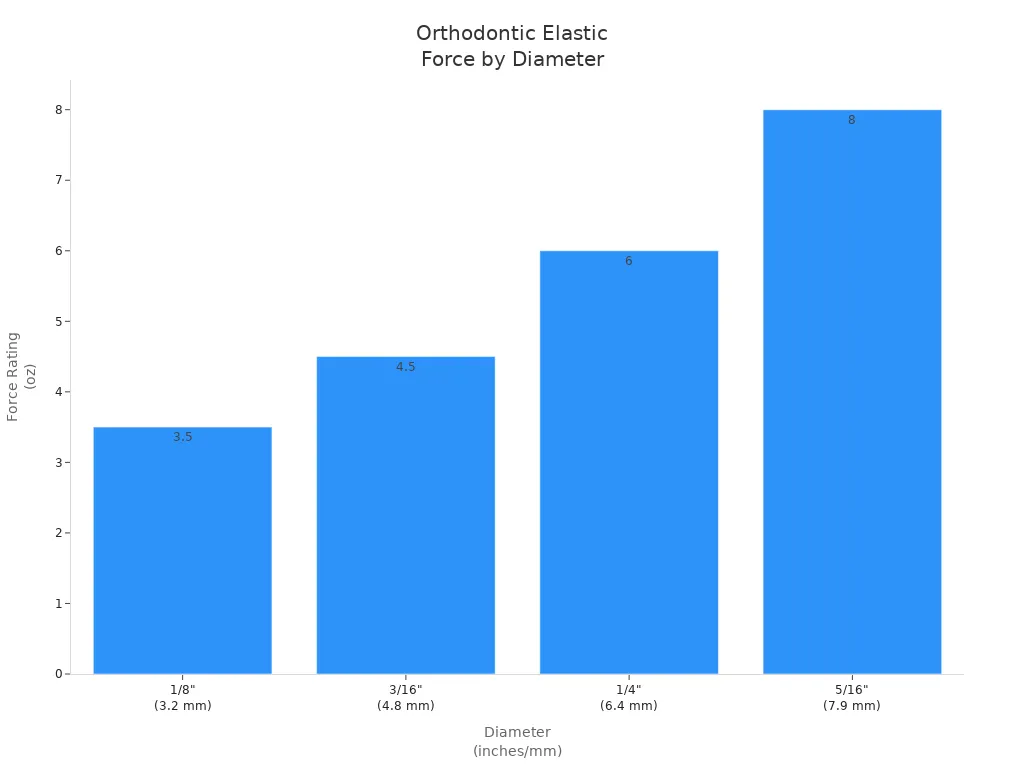
The choice of elastic size and strength depends on factors such as the distance between hooks, desired tooth movement, and patient tolerance. Orthodontists carefully select the appropriate elastics to ensure effective treatment outcomes.
How Do Orthodontic Elastics Work?
Orthodontic elastics play a pivotal role in aligning teeth and correcting bite issues. These small rubber bands apply targeted forces to the teeth and jaws, facilitating movement into proper alignment. By exerting pressure, they can pull the jaw forward or backward, depending on the specific dental correction needed. Typically, orthodontists introduce elastics after several months of wearing braces. Their consistent use is essential for achieving the desired bite and alignment.
The mechanics behind orthodontic elastics involve several factors that influence tooth movement. The placement of the elastics affects both the direction and magnitude of the forces applied. For instance, the site of application determines how forces distribute through the periodontal ligament, while the direction of force dictates the resultant vector of the applied forces.
| Factor Influencing Tooth Movement | Description |
|---|---|
| Site of Application | Affects how forces are distributed through the periodontal ligament. |
| Direction of Force | Determines the resultant vector of the applied forces. |
| Length and Diameter of Elastic | Influences the magnitude of force applied to the tooth. |
| Tooth Rotation and Health | Affects the biological response and efficiency of movement. |
| Patient Cooperation | Essential for effective treatment outcomes. |
Research indicates that orthodontic elastics experience significant force loss due to stress relaxation, especially in wet environments. Studies by Andreason and Bishara, along with Wang et al., have shown a pattern of force degradation over a 24-hour period. Additionally, Bertl et al. found that elastics lose a considerable amount of force within the first half hour of use. Liu et al. highlighted that normal activities, such as talking and eating, contribute to this force loss, with most degradation occurring within the first 200 cycles. Understanding these mechanical properties is crucial for effective clinical practice.
The nature of the force applied to the teeth also plays a significant role in their movement. Continuous forces lead to steady and effective movement, while intermittent forces can disrupt the remodeling process, causing pauses in movement. Light, continuous forces are preferred as they facilitate gentle movement with minimal discomfort.
In clinical practice, the typical force levels exerted by orthodontic elastics vary. For example, when 3/16 elastics are stretched, a significant increase in force occurs across all elastic groups. The heaviest elastics show the greatest increase, while lighter elastics exhibit less force. Studies suggest that elastics can experience up to 30% force degradation, particularly within the first hour of use.
Importance of Following Instructions with Orthodontic Elastics
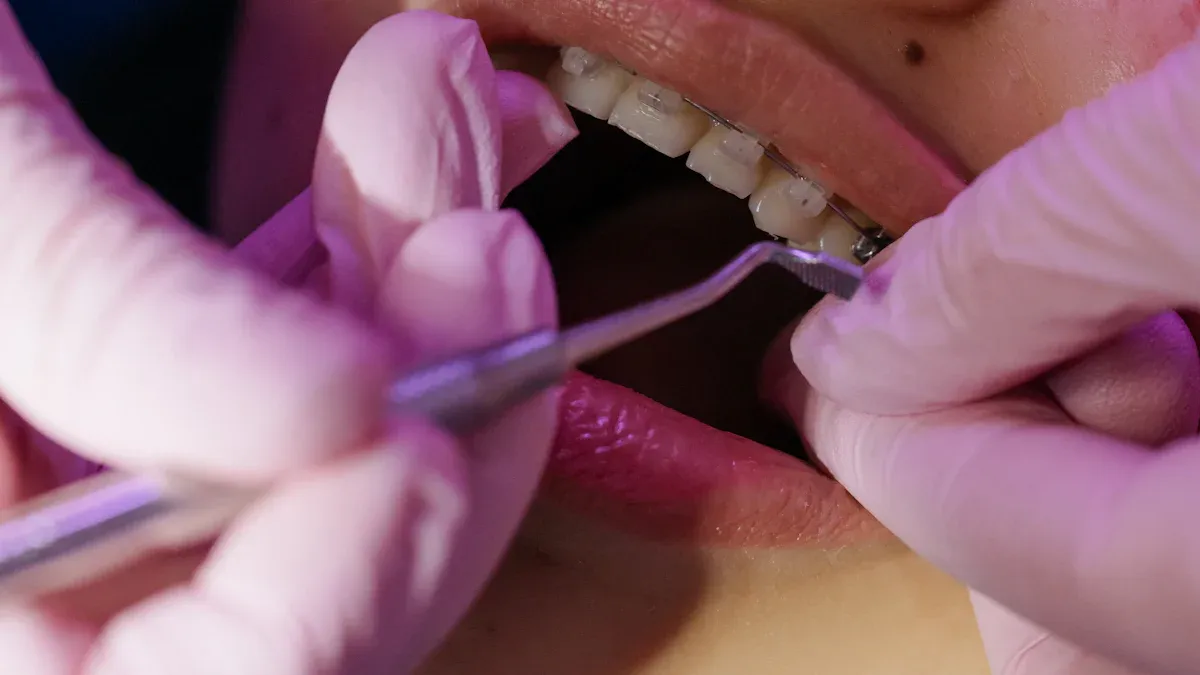
Following your orthodontist’s instructions regarding the use of orthodontic elastics is crucial for achieving optimal treatment results. These small rubber bands play a significant role in aligning teeth and correcting bite issues. However, neglecting to wear them as prescribed can lead to several negative consequences.
Consequences of Not Following Instructions:
Consequence Description Extended Treatment Time Not wearing elastics can slow down progress, leading to longer treatment duration. Incomplete Tooth Movement Skipping elastics may prevent teeth from moving into their proper positions, affecting results. Open Bite Issues Neglecting elastics can create or worsen an open bite, causing gaps between upper and lower teeth. Jaw Misalignment Failure to wear elastics may result in jaw misalignment, affecting bite and causing discomfort. Overall Oral Health Poor bite due to not wearing elastics can lead to uneven wear on teeth and gum problems.
Research indicates a limited understanding of how patient compliance with orthodontic elastics directly impacts treatment outcomes. Most studies do not compare adherence levels with treatment results, complicating conclusions. Only one study specifically investigated adherence to elastics, highlighting a lack of comprehensive research in this area.
To enhance compliance, patients can adopt several effective strategies:
- Build it into your routine: Wear elastics right after brushing your teeth and replace them after meals. For headgear, set a schedule around homework or bedtime.
- Keep extra supplies handy: Carry spare elastics in your backpack, locker, or purse. You never know when one might break or get lost.
- Use reminders: Set phone alarms or sticky notes as gentle prompts throughout the day.
- Track your progress: Mark days on a calendar when you wore elastics or headgear as prescribed. Seeing consistency visually can boost motivation.
- Communicate with your orthodontist: If your elastics snap frequently or your headgear feels uncomfortable, let your orthodontist know right away. Adjustments can improve comfort and compliance.
By adhering to these strategies, patients can significantly improve their compliance with orthodontic elastics. This commitment ultimately leads to a more efficient treatment journey and better oral health outcomes.
What to Expect During Treatment with Orthodontic Elastics
Patients can expect a range of experiences during their treatment with orthodontic elastics. Initially, they may feel some discomfort as their mouths adjust to the new pressure. This sensation is similar to muscle soreness after exercise. Typically, the discomfort decreases within 2-3 days as the body adapts. However, if pain persists, it may indicate improper use or issues with the braces, warranting a consultation with the orthodontist.
The average duration for wearing orthodontic elastics spans from a few months to a year, depending on individual dental needs and treatment plans. Orthodontists usually introduce elastics after the first few months of braces. Consistent wear is crucial for effective treatment, as it leads to better alignment and faster progress toward orthodontic goals.
Patients should also be aware of some common side effects associated with orthodontic elastics. These may include:
- Discomfort when first using elastics.
- Sore spots from the elastics rubbing against the inside of the cheeks.
- Temporary changes in speech, particularly with specific elastic configurations.
To ensure a smooth treatment journey, patients can adopt several recommended daily routines:
- Carry extra elastics to replace any that stretch or break.
- Remove elastics before meals if they hinder eating, but remember to put them back afterward.
- Wash hands before and after handling elastics.
- Wear elastics as directed to speed up treatment.
- Change elastics at least twice a day to maintain effectiveness.
By following these guidelines, patients can enhance their treatment experience and achieve optimal results with orthodontic elastics.
Benefits of Using Orthodontic Elastics
Orthodontic elastics offer numerous advantages that significantly enhance the effectiveness of dental treatment. These small rubber bands play a crucial role in aligning teeth and correcting bite issues. Here are some key benefits of using orthodontic elastics:
- Adjusting Bite Alignment: Orthodontic elastics help move teeth into their correct positions more efficiently. They apply consistent, gentle pressure to align jaws properly, resulting in a balanced bite.
- Correcting Bite Issues: These elastics effectively address various bite problems, including overbites, underbites, and crossbites. By guiding the upper and lower jaws into alignment, they improve overall bite function.
- Improving Treatment Efficiency: Wearing elastics as directed by an orthodontic team can significantly speed up the orthodontic treatment process. They act as an additional force to shift teeth into desired positions more efficiently.
- Enhancing Aesthetic Outcomes: Orthodontic elastics contribute to a more attractive smile by correcting malocclusion. They help prevent issues like impaired chewing and uneven wear of teeth, which can arise from a bad bite.
- Long-term Stability: Consistent use of elastics leads to stable bite alignment. This stability not only enhances aesthetics but also helps prevent future dental issues, making it easier to maintain oral health.
Orthodontic elastics are essential for achieving effective bite alignment. Their targeted pressure helps correct various dental issues, leading to improved oral health. Adhering to your orthodontist’s instructions is crucial for success. Patients should follow these recommendations:
- Wear elastics consistently for 20-24 hours daily.
- Change elastics regularly to maintain necessary pressure.
- Consult your orthodontist for personalized advice tailored to individual treatment needs.
By prioritizing these practices, patients can enhance their treatment journey and achieve optimal results.
FAQ
What are the common side effects of wearing orthodontic elastics?
Patients may experience mild discomfort, sore spots in the mouth, or temporary speech changes. These effects usually diminish within a few days as the mouth adjusts to the elastics.
How long should I wear my orthodontic elastics each day?
Orthodontists typically recommend wearing elastics for 20-24 hours daily. Consistent use is crucial for achieving optimal treatment results and ensuring effective tooth movement.
Can I eat with my orthodontic elastics on?
It is advisable to remove elastics before meals to avoid damage. Patients should replace them immediately after eating to maintain the necessary pressure for treatment.
How often should I change my orthodontic elastics?
Patients should change their elastics at least twice a day. Regular changes help maintain the required force and ensure effective treatment throughout the orthodontic journey.
What should I do if my elastics break?
If an elastic breaks, patients should replace it immediately. Keeping spare elastics on hand can help prevent interruptions in treatment and maintain progress.
Post time: Jan-30-2026