
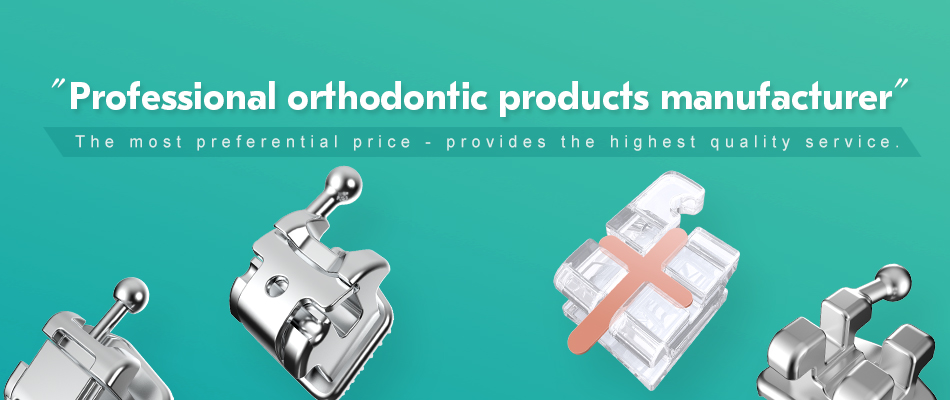

Orthodontic Self Ligating Brackets-passive provide precise torsion control. This feature is crucial for optimal outcomes in challenging orthodontic scenarios. Such advanced control is vital for achieving accurate three-dimensional tooth movement. It significantly improves complex case management. This capability helps orthodontists achieve predictable results.
Key Takeaways
- Passive self-ligating brackets give orthodontists better control over tooth movement. This helps them fix hard cases more easily.
- These brackets reduce friction. This means teeth move faster and more comfortably. Patients may finish treatment sooner.
- Passive self-ligating brackets make treatment more exact. This leads to better results and healthier teeth in the long run.
Limitations of Traditional Torque Control
The “Play in the Slot” Issue
Traditional orthodontic brackets often present a significant challenge: the “play in the slot.” This refers to the inherent gap between the archwire and the bracket slot. When orthodontists insert a rectangular or square archwire into a conventional bracket, a small space typically remains. This space allows for unintended movement of the wire within the slot. Consequently, the bracket cannot fully engage the wire’s intended torque. This “play” diminishes the efficiency of torque transfer from the archwire to the tooth. It makes precise control over root position difficult.
Inconsistent Torque Expression in Conventional Systems
Conventional orthodontic systems also struggle with inconsistent torque expression. They rely on elastomeric ties or steel ligatures to secure the archwire. These ligatures create friction against the archwire. This friction varies significantly depending on the material, placement, and tightness of the ligature. Such variability leads to unpredictable forces acting on the teeth. As a result, the actual torque delivered to a tooth often deviates from the intended torque. This inconsistency complicates treatment planning and prolongs the time required to achieve desired tooth movements. It also makes achieving optimal root parallelism and stability more challenging for orthodontists.
Enhanced Torsion Control with Passive Self-Ligating Brackets
Defining Passive Self-Ligation Mechanics
Orthodontic Self Ligating Brackets-passive represent a significant advancement in orthodontics. They feature an integrated clip or door. This clip securely holds the archwire within the bracket slot. Unlike conventional systems, these brackets do not require external ligatures. The “passive” aspect means the clip applies no active force to compress the archwire. Instead, it simply closes the slot. This design allows the archwire to move freely within the bracket. It facilitates efficient force transmission. This mechanism is fundamental to their enhanced performance.
Superior Slot-Wire Engagement for Precision
This unique design provides superior slot-wire engagement. The precise fit between the archwire and the bracket slot minimizes the “play” seen in traditional brackets. This reduced play ensures a more direct and accurate transfer of the archwire’s programmed torque. Orthodontists achieve greater control over tooth movement. This precision is crucial for complex cases. It allows for accurate three-dimensional positioning of teeth, including precise root control. This direct engagement translates into more predictable outcomes.
Minimizing Friction for Optimal Torque Transmission
Passive self-ligating brackets also significantly minimize friction. The absence of elastomeric or steel ligatures eliminates a major source of resistance. Reduced friction allows forces to transmit more efficiently from the archwire to the tooth. This leads to more consistent and predictable torque expression. Optimal torque transmission helps achieve desired tooth movements with greater control and less unwanted side effects. It also contributes to faster treatment progress. Orthodontic Self Ligating Brackets-passive streamline the treatment process.
Addressing Complex Cases with Precise Torsion
Correcting Severe Rotations and Angulations
Passive self-ligating brackets offer significant advantages for correcting severe rotations and angulations. Traditional brackets often struggle with these complex movements. The “play in the slot” issue in conventional systems makes it difficult to apply precise rotational forces. Passive self-ligating brackets, however, minimize this play. Their superior slot-wire engagement ensures a more direct transfer of rotational forces from the archwire to the tooth. This direct engagement allows orthodontists to program specific rotations into the archwire. The bracket then accurately translates these forces to the tooth. This precision helps achieve optimal tooth alignment even in severely rotated teeth. It also reduces the need for auxiliary appliances or extensive wire bending.
Managing Challenging Skeletal Discrepancies
Managing challenging skeletal discrepancies also benefits from precise torsion control. Skeletal discrepancies often lead to compensatory dental movements. These movements can include significant tooth angulations or rotations. Passive self-ligating brackets provide the control necessary to address these dental compensations effectively. They allow orthodontists to maintain or correct specific tooth positions relative to the underlying skeletal structure. For example, in cases with an anterior open bite, precise torque control helps upright incisors. This uprighting can improve occlusal relationships. In Class II or Class III cases, accurate torque application assists in achieving proper inter-arch coordination. This precision supports the overall treatment plan for skeletal correction.
Tip: Precise torsion control helps orthodontists manage dental compensations in skeletal discrepancy cases, leading to more stable and functional outcomes.
Achieving Improved Root Parallelism and Stability
Achieving improved root parallelism and stability is a critical goal in orthodontics. Poor root parallelism can compromise periodontal health and long-term stability of the occlusion. Traditional brackets often make it challenging to achieve ideal root positions due to inconsistent torque expression. Passive self-ligating brackets, with their enhanced slot-wire engagement and minimal friction, deliver more consistent and predictable torque. This consistency allows orthodontists to precisely control root angulation and inclination. Accurate root positioning ensures roots are parallel, which promotes better bone support and reduces the risk of relapse. This precise control contributes significantly to the overall stability of the final orthodontic result. It also enhances the longevity of the treatment.
Practical Advantages of Orthodontic Self Ligating Brackets-passive
Predictable Treatment Outcomes
Passive self-ligating brackets offer highly predictable treatment outcomes. Their precise control over tooth movement allows orthodontists to achieve planned results with greater accuracy. The superior slot-wire engagement ensures the archwire’s programmed forces translate directly to the teeth. This direct force application minimizes unintended tooth movements. Consequently, orthodontists can confidently anticipate the final tooth positions. This predictability simplifies treatment planning and reduces the need for mid-course corrections. Patients benefit from a clearer understanding of their treatment journey.
Reduced Treatment Duration
The design of passive self-ligating brackets often leads to reduced treatment duration. Minimal friction within the bracket system allows teeth to move more efficiently along the archwire. This efficiency means less resistance to tooth movement. Consistent and gentle forces accelerate the biological response of the bone and periodontal ligament. As a result, teeth reach their desired positions faster. This reduction in overall treatment time is a significant advantage for both patients and practitioners.
Fewer Wire Bends and Chairside Adjustments
Orthodontic Self Ligating Brackets-passive significantly reduce the need for wire bends and chairside adjustments. The system’s inherent ability to deliver programmed forces effectively minimizes the necessity for manual wire manipulation. Orthodontists spend less time making intricate bends to correct minor discrepancies. The precise slot-wire engagement ensures the archwire performs its intended function without constant intervention. This efficiency translates into fewer, shorter appointments for patients. It also frees up valuable chair time for the orthodontic team.
Enhanced Patient Comfort and Oral Hygiene
Patient comfort and oral hygiene see significant enhancements with passive self-ligating brackets. The absence of elastomeric ties or steel ligatures eliminates a common source of irritation to the cheeks and lips. Patients often report less discomfort and fewer sores. The smoother bracket design also makes cleaning easier. Food particles do not get trapped as readily around ligatures. This improved oral hygiene reduces the risk of plaque buildup and decalcification during treatment. Furthermore, the lighter, more consistent forces applied by Orthodontic Self Ligating Brackets-passive contribute to a more comfortable overall experience.
Tip: The streamlined design of passive self-ligating brackets not only improves treatment efficiency but also significantly enhances the patient’s daily experience with braces.
A Significant Advancement in Orthodontic Practice
Evolution of Orthodontic Mechanics
Passive self-ligating brackets mark a pivotal moment in orthodontic mechanics. Historically, orthodontists relied on conventional brackets with ligatures. These systems often generated high friction. This friction hindered efficient tooth movement. The introduction of self-ligating technology changed this paradigm. It shifted the focus towards low-friction systems. This evolution allows for more controlled and predictable force application. It represents a significant leap from earlier, less precise methods. Orthodontists now possess tools for finer control over tooth positioning.
The Future of Precision Orthodontics
The future of orthodontics increasingly emphasizes precision. Passive self-ligating brackets play a crucial role in this trend. They offer the foundational mechanics for highly accurate tooth movement. This precision integrates well with emerging digital technologies. Digital planning and 3D imaging enhance treatment customization. These brackets facilitate the execution of complex treatment plans. They help achieve optimal aesthetic and functional outcomes. This technology paves the way for even more personalized and efficient patient care. It sets a new standard for orthodontic excellence.
Tip: The continuous evolution of orthodontic mechanics, driven by innovations like passive self-ligating brackets, promises a future of even greater precision and patient-specific treatment solutions.
Torsion control in Orthodontic Self Ligating Brackets-passive fundamentally transforms the approach to complex orthodontic cases. This advanced technology offers enhanced predictability, greater efficiency, and superior patient outcomes. This marks a significant leap forward. It actively shapes the future of orthodontic treatment.
FAQ
What is torsion control in orthodontics?
Torsion control refers to the precise management of tooth rotation around its long axis. It ensures accurate root positioning. This control is vital for achieving optimal bite and stability.
How do passive self-ligating brackets enhance this control?
Passive self-ligating brackets offer superior slot-wire engagement. This minimizes play between the wire and bracket. It allows for more direct and accurate transfer of programmed forces to the tooth.
Do these brackets reduce treatment time?
Yes, they often reduce treatment duration. Minimal friction allows teeth to move more efficiently. This leads to faster progress and fewer appointments for patients.
These brackets streamline the orthodontic process, benefiting both practitioners and patients.
Post time: Nov-11-2025