

High-grade orthodontic instruments are distinguished by their superior material quality. Precision engineering is essential, ensuring every tool performs flawlessly. An excellent orthodontic materials supplier prioritizes these aspects. Ergonomic design is crucial; it significantly reduces hand fatigue for practitioners. Proven durability characterizes these tools, offering reliable long-term performance. Understanding what instruments are commonly used by orthodontists helps appreciate these features. This quality also impacts components like orthodontic archwires, influencing how one considers how should orthodontic archwires be selected.
Key Takeaways
- High-grade orthodontic tools use strong materials. These materials include surgical stainless steel and titanium. They last a long time and resist rust.
- Precision engineering makes tools work perfectly. Tips align well. Tools apply force evenly. This helps orthodontists do their job accurately.
- Good tool design helps orthodontists. Tools feel comfortable to hold. They reduce hand tiredness. This makes work easier and more precise.
- Durable tools last a long time. They are built strong. They resist wear and tear. This means they work well for many years.
Material Excellence in Orthodontic Instruments
The foundation of any high-grade orthodontic instrument lies in its material composition. Manufacturers carefully select specific metals and alloys to ensure instruments perform reliably and last a long time. These choices directly impact the tool’s strength, flexibility, and resistance to the harsh oral environment.
Surgical-Grade Stainless Steel for Longevity
Surgical-grade stainless steel forms the backbone for many durable orthodontic instruments. This material offers excellent strength and hardness, making it ideal for tools that require precision and resilience. Several types of stainless steel are commonly used.
- Austenitic Stainless Steels are primary materials for many orthodontic components.
- AISI 302 contains 17-19% chromium, 8-10% nickel, and 0.15% carbon.
- AISI 304, often called 18/8 stainless steel, has 18-20% chromium, 8-12% nickel, and up to 0.08% carbon.
- AISI 316 adds molybdenum to 18/8 stainless steel for better resistance to pitting corrosion.
- AISI 316L is a low-carbon version of 316, with a maximum of 0.03% carbon, which further improves corrosion resistance.
- AISI 304L contains 18-20% chromium, 8-10% nickel, and less than 0.03% carbon.
- Martensitic Stainless Steels provide high strength and hardness, making them suitable for surgical instruments that need sharp edges and robust construction.
- Precipitation-Hardening Stainless Steels, such as 17-4 PH, offer superior mechanical properties, making them a preferred choice for orthodontic brackets.
These specific compositions ensure instruments maintain their integrity through repeated use and sterilization cycles.
Titanium and Advanced Alloys for Performance
Beyond stainless steel, advanced alloys like titanium offer unique benefits for specialized orthodontic instruments and components. These materials provide enhanced performance characteristics.
- NiTi Alloys (Nickel-Titanium) are widely used for orthodontic wires due to their superelasticity and shape memory properties. These wires can return to their original shape after bending, applying consistent forces.
- Titanium Molybdenum Alloy (TMA) also finds use in orthodontic applications, offering a balance of flexibility and strength.
- Titanium alloys provide significant advantages over stainless steel in many areas.
- They offer superior biocompatibility and corrosion resistance. Titanium forms a stable titanium dioxide (TiO₂) passive film. This film minimizes inflammation and metal ion release, ensuring long-term chemical stability in the oral environment. This feature is crucial for reducing adverse tissue reactions.
- Titanium has a high strength-to-weight ratio. It is significantly lighter than stainless steel (4.5 g/cm³ versus 8 g/cm³) but maintains comparable or even superior strength. This allows for lighter instruments that can still withstand necessary forces.
- Beta titanium alloys, used in archwires, offer a lower elastic modulus, a high elastic limit, and good formability. These properties are ideal for applying continuous forces and accommodating large deformations. Titanium brackets are also suitable for patients with nickel allergies, highlighting better biocompatibility for sensitive individuals.
- Titanium is non-magnetic. This property is advantageous for surgical tools and can be relevant for orthodontic instruments, especially in environments requiring MRI compatibility.
These advanced materials allow for the creation of instruments with specific mechanical properties tailored to complex orthodontic procedures.
Corrosion and Sterilization Resistance of Orthodontic Instruments
The oral environment presents a significant challenge for any medical device. Saliva, food particles, and varying pH levels can cause corrosion, which degrades instruments over time. High-grade orthodontic instruments must resist these corrosive effects and withstand repeated sterilization without losing their integrity.
Industry standards guide manufacturers in ensuring corrosion resistance. ISO 27020:2019, adopted as ANSI/ADA Standard No. 100, specifically emphasizes biocompatibility, corrosion resistance, and mechanical strength for orthodontic brackets. Adherence to this globally recognized guideline ensures products perform reliably in the challenging oral environment. This demonstrates a manufacturer’s commitment to high-quality orthodontic products.
Materials like titanium and stainless steel are crucial for withstanding the corrosive effects of saliva, fluoridated foods, and acidic dentifrices. They maintain structural integrity and ensure long-term durability throughout the treatment period. This prevents degradation and minimizes the risk of instrument failure.
Corrosion resistance testing is a critical industry practice. Manufacturers simulate oral conditions, such as exposure to saliva, food particles, and fluctuating pH levels, to evaluate how instruments withstand degradation. They immerse instruments in solutions mimicking the oral environment to observe their performance over time. This testing is vital for guaranteeing the durability and reliability of orthodontic products.
Precision Engineering for High-Grade Orthodontic Instruments
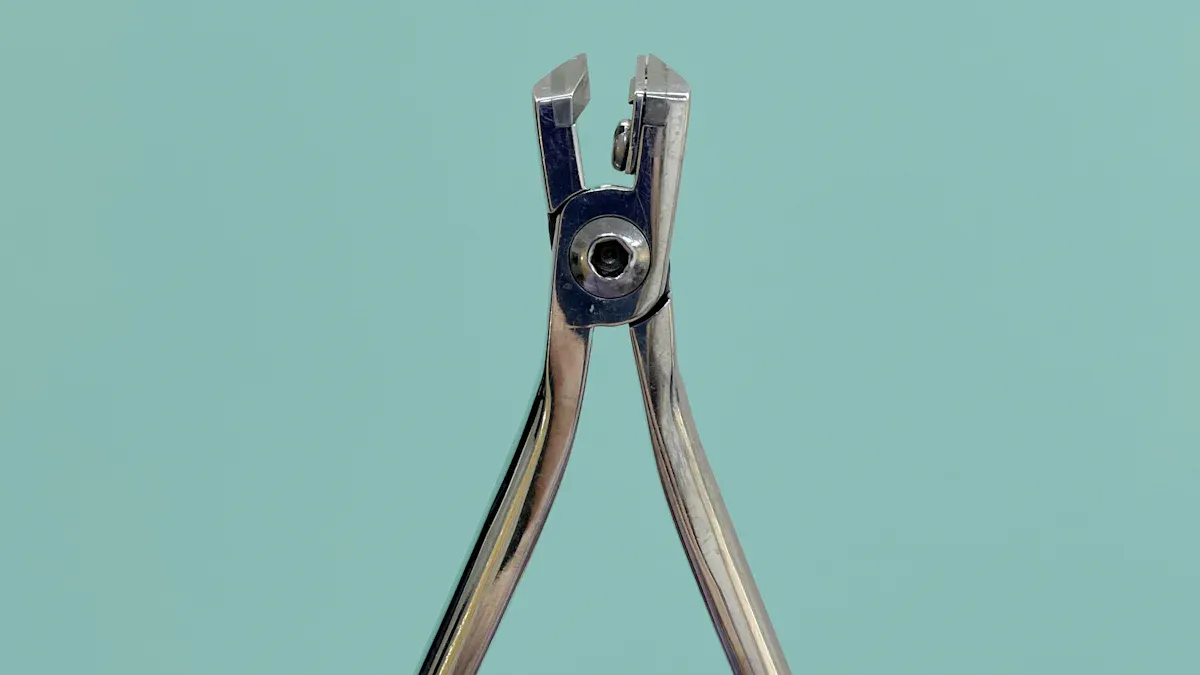
Precision engineering is a hallmark of truly high-grade orthodontic instruments. It ensures every tool performs its specific task with exactness and reliability. This meticulous attention to detail in manufacturing directly impacts treatment success and patient comfort.
Flawless Tip Alignment and Closure
The tips of orthodontic instruments must align perfectly and close without any gaps. This flawless alignment is critical for accurate wire bending, bracket placement, and ligature tying. Even a tiny misalignment can lead to errors in treatment or damage to delicate orthodontic components. Manufacturers achieve this high level of precision through advanced techniques.
- They use automated manufacturing processes. These processes achieve very tight tolerance levels, often down to 0.01mm.
- Manufacturers regularly upgrade their precision machining equipment.
- They implement advanced quality control protocols.
- Digital scanning technologies help ensure accuracy.
- Computer-guided precision engineering and robotic fabrication systems play a big role.
- Micro-tolerance measurement protocols confirm the exactness of each instrument.
- Some systems even use multi-axis laser machining. This creates patient-specific geometries directly from digital treatment plans. This method allows for complex undercut features. Conventional machining cannot create these features. It also provides superior surface quality for optimized adhesive bonding.
These methods ensure that instrument tips meet perfectly, providing the control orthodontists need.
Consistent Force Application
Orthodontic treatment relies on applying precise and consistent forces to move teeth. High-grade instruments are engineered to deliver these forces predictably. For example, pliers designed to bend wires must apply the same amount of force each time. This consistency comes from the instrument’s design, material properties, and manufacturing accuracy. Engineers carefully calculate leverage points and jaw designs. This ensures the instrument transmits force efficiently and uniformly. This predictability helps orthodontists achieve desired tooth movements without over-stressing the teeth or surrounding tissues.
Smooth Articulation and Movement
Instruments with moving parts, like pliers with hinges, require smooth articulation. This means the parts move freely without sticking or binding. Smooth movement allows the orthodontist to operate the instrument with minimal effort and maximum control. It reduces hand fatigue during long procedures. Precision machining of the hinge components and careful assembly ensure this fluid motion. The surfaces of moving parts are often polished to reduce friction. This attention to detail makes the instrument feel responsive and reliable in the practitioner’s hand.
Micro-Finishing and Edge Retention
High-grade orthodontic instruments feature superior micro-finishing. This process involves polishing the instrument surfaces to an extremely smooth finish. This smooth surface reduces friction. It also prevents debris from sticking to the instrument. A highly polished surface makes cleaning and sterilization easier. This contributes to better hygiene in the clinic.
Micro-finishing also enhances the instrument’s performance. Smooth surfaces allow for precise movements. They reduce wear on the instrument itself. This extends the instrument’s lifespan. It also minimizes wear on other orthodontic components, like wires or brackets. For example, a smooth plier jaw will not scratch or damage a delicate archwire.
Edge retention is another critical aspect of high-grade instruments. This refers to an instrument’s ability to maintain its sharpness or gripping capability over time. Instruments like wire cutters or ligature cutters must have sharp, durable edges. These edges perform clean cuts. Poor edge retention leads to dull instruments. Dull instruments require more force to operate. They can also damage wires or ligatures.
Manufacturers achieve excellent edge retention through several methods. They use specific heat treatments for the metal. These treatments harden the cutting edges. They also employ precise grinding techniques during manufacturing. This creates a strong, sharp edge. Some instruments may also feature specialized coatings. These coatings further enhance durability and edge life.
Consider the benefits of superior edge retention:
- Efficiency: Sharp instruments complete tasks quickly.
- Accuracy: Clean cuts ensure precise wire adjustments.
- Safety: Reduced force prevents slippage and potential injury.
- Longevity: Durable edges mean instruments last longer.
Both micro-finishing and edge retention reflect the manufacturer’s commitment to quality. They ensure the instrument performs reliably throughout its service life. These features directly impact the orthodontist’s ability to deliver precise and effective treatment.
Tip: Regularly inspect instrument edges for wear. Dull instruments compromise treatment quality and can increase hand fatigue.
Ergonomic Design for Optimal Orthodontic Instruments
Ergonomic design is a critical feature of high-grade orthodontic instruments. It focuses on making tools comfortable and efficient for the user. This design approach helps orthodontists perform precise work with less strain. It improves both the quality of care and the practitioner’s well-being.
Balanced Weight Distribution
Proper weight distribution in dental instruments is crucial. It minimizes excessive pressure on the hand or arm. Balanced instruments allow smoother movements. They reduce localized stress, which is particularly important during delicate procedures. Instruments should weigh under 15 grams. This minimizes hand muscle activation. Angled instruments often feature compact head designs. These designs minimize wrist deviation. Straight instruments maintain a balanced weight distribution along the shaft. This distributes weight evenly for steady torque application.
Comfortable Grip Design
A comfortable grip design significantly impacts instrument use. Handle materials like silicone or plastic/resin affect the force needed for effective use. Stainless steel handles can potentially increase fatigue. A handle’s texture is critical. Smooth handles can slip, especially with moisture. Textured handles, however, enhance grip. They allow for more controlled force. A thick handle, at least 10 mm in diameter, improves comfort. It also reduces repetitive motion injuries. Silicone handles offer enhanced comfort. They are soft yet durable. Their textured design provides a non-slip grip, even when hands or gloves are wet. The lightweight nature of silicone handles improves control and precision. These handles are also autoclavable, ensuring hygiene.
Reduced Hand Fatigue
Ergonomic design directly reduces hand fatigue. Lightweight instruments and large-diameter handles lessen muscle activity. They also reduce pinch force. This lowers the risk for Musculoskeletal Disorders (MSDs). Instrument handles should ideally weigh 15 grams or less. Their diameter should be 10 millimeters or greater. Instruments with wider handles are particularly easy on the muscles. Orthodontists should hold hand instruments in a modified pen grasp. The movement should come from the whole arm, not just the fingers. This prevents joint and ligament damage. Minimizing the pressure applied also helps keep muscles gentle.
Enhanced Control and Maneuverability
High-grade orthodontic instruments offer orthodontists superior control and maneuverability. This allows for precise movements during delicate procedures. An instrument’s design directly influences how easily a practitioner can guide it. This precision helps achieve optimal treatment outcomes.
Ergonomic features contribute significantly to this enhanced control. A well-balanced instrument feels like an extension of the hand. This reduces the effort needed to hold and position the tool. It also minimizes unwanted movements. The instrument’s weight distribution ensures stability. This stability is crucial when performing intricate tasks, such as bending small wires or placing tiny brackets.
The grip design also plays a vital role in maneuverability. A comfortable, non-slip grip allows the orthodontist to maintain a firm hold without excessive squeezing. This reduces muscle strain and improves tactile feedback. Tactile feedback refers to the sensations an orthodontist feels through the instrument. Good feedback helps them gauge the force they apply. It also helps them feel the resistance of the material. This sensitivity is essential for delicate adjustments.
Furthermore, the instrument’s overall shape and tip design enhance maneuverability. Slim, tapered tips can access tight spaces within the oral cavity. This allows for precise work around teeth and existing appliances. The smooth articulation of moving parts ensures fluid operation. This prevents jerky movements that could compromise accuracy. Orthodontists can make fine adjustments with confidence. They trust the instrument will respond exactly as intended.
Ultimately, enhanced control and maneuverability lead to more efficient and effective treatment. Orthodontists can work with greater precision. They reduce the risk of errors. This improves patient comfort and shortens procedure times. High-grade instruments empower practitioners to deliver the best possible care.
Durability and Longevity of Orthodontic Instruments
High-grade orthodontic instruments offer exceptional durability. They withstand the demanding environment of dental practice. This longevity ensures reliable performance over many years.
Robust Construction
High-quality stainless steel forms the foundation for robust orthodontic instruments. This material provides excellent strength and corrosion resistance. Manufacturers also use advanced surface coating technologies. These coatings enhance instrument effectiveness. For example, graphene-based coatings improve mechanical properties and offer antibacterial effects. Specific methods like physical vapor deposition (PVD) and radio frequency (RF) magnetron sputtering create uniform, protective layers. These layers improve resistance to corrosion and wear.
Resistance to Wear and Tear
Even the best instruments face wear and tear. High-grade instruments resist these challenges effectively. Material fatigue can cause ligatures to lose strength. Improper application, like using too much force, can also damage tools. Patient habits, such as biting hard foods, contribute to wear. Environmental factors, like excessive moisture, can cause rust. However, superior materials and construction minimize these effects. High-quality tools, like dental three-jaw pliers, maintain their alignment and edge sharpness longer. This prevents issues like misaligned jaws or dulled edges.
Extended Service Life
Several factors contribute to the extended service life of high-grade orthodontic instruments. High-quality surgical stainless steel endures numerous sterilization cycles without degradation. Unlike chrome-plated instruments, it does not rust if scratched. Cutting instruments often feature carbide inserts. These inserts maintain sharpness and prevent dulling. Higher-quality instruments integrate carbide with increased carbon and chromium in the tips. This design prevents separation. The instrument’s joint type also matters. Orbit joints allow realignment if tips become misaligned, offering an advantage over box joints. Consistent material grade throughout the instrument reduces failure risks. Proper use is also crucial. Orthodontists must adhere to wire size restrictions for cutters. They should avoid misusing hinged pliers for tasks like crimping. Thorough cleaning, including removing adhesives before ultrasonic cleaning, maintains integrity. Protective processing, such as using surgical milk and instrument cassettes, prevents damage during sterilization.
Manufacturer Warranty and Support
High-grade orthodontic instruments come with strong manufacturer warranties and reliable support. These assurances protect an orthodontist’s investment. They also guarantee the instrument’s performance over time. A good warranty shows a manufacturer trusts its product quality.
Reputable companies offer various types of warranties. Nordent, for example, provides an unconditional satisfaction guarantee for its non-powered hand instruments. This guarantee ensures the tools are free from defects in material or workmanship. For ultrasonic inserts, Nordent offers a 90-day warranty. This covers manufacturing defects in materials and workmanship. The company repairs or replaces these items at its discretion.
Precision Dental USA also stands behind its products. They offer an extended 2-year warranty for their complete orthodontic tools. This warranty covers damage or breakage under normal use conditions. Precision Dental USA also provides a money-back guarantee. This allows for returns or replacements if instruments fail to perform their designated operation under normal use.
Even repair services offer strong guarantees. G&M Dental Instrument Repair provides unconditional warranties on its repair work. This applies to all brands and manufacturers. Their used and refurbished handpieces come with the same warranty as newly purchased ones. This commitment to quality extends beyond new purchases.
Strong manufacturer support includes easy access to customer service. It also involves clear warranty terms. This support ensures orthodontists can rely on their tools. It gives them peace of mind. They know their instruments will perform as expected.
Advanced Features and Maintenance for Orthodontic Instruments
High-grade orthodontic instruments often include advanced features. These features improve treatment outcomes and simplify maintenance. Proper care also extends the life of these valuable tools.
Innovative Design Elements
Manufacturers constantly innovate to create better orthodontic instruments. These new designs enhance patient comfort and treatment efficiency. They also provide orthodontists with more precise tools.
- Aesthetic Brackets: Ceramic and zirconia brackets offer improved strength. They also provide better aesthetics and stain resistance. These brackets blend with natural tooth color for discreet treatment.
- Self-Ligating Brackets: These brackets feature an inbuilt clip mechanism. This secures the archwire. It reduces friction and can shorten treatment time. It also increases patient comfort.
- Lingual Brackets: Refined designs and digital customization enhance these invisible orthodontic options.
- Nanotechnology Integration: Antibacterial coatings, such as those using silver nanoparticles, minimize plaque accumulation. They also reduce enamel demineralization.
- 3D Printing: This technology enables the creation of personalized brackets. These brackets are tailored to individual tooth anatomy. They improve fit, comfort, and biomechanical performance.
- Smart Brackets: These brackets have sensors and AI capabilities. They allow for real-time force monitoring. This optimizes treatment outcomes and reduces clinical visits.
Ease of Cleaning and Sterilization
High-grade instruments are easy to clean and sterilize. This is crucial for maintaining hygiene in a dental practice. Instruments must withstand repeated sterilization cycles without damage. Smooth surfaces and corrosion-resistant materials prevent debris from sticking. They also ensure effective disinfection. This ease of maintenance saves time for dental staff. It also prolongs the instrument’s lifespan.
Manufacturer Reputation and Certifications
A manufacturer’s reputation and certifications are important indicators of quality. They assure orthodontists of the instrument’s reliability and safety.
- C.E Compliance Certificate for Dental, Surgical and other Instruments.
- ISO 13485:2016 Certificate for QMS (Quality Management System).
- ISO 9001:2015 Certificate for QMS (Quality Management System).
- ISO 13485:2016 (MDSAP) Certificate.
Orthodontic instrument manufacturers should possess ISO 13485:2016 for Quality Management Systems. This is an international standard for medical device QMS registration. It provides a model for compliance with EU CE marking Medical Devices Directives. It also aligns with Japan Pal, Health Canada CMDCAS, and FDA QSR. Manufacturers also need the CE Mark. This is a legal requirement in many European countries. It indicates compliance with essential safety and environmental requirements of the European Medical Device Directives. Furthermore, compliance with FDA regulations, specifically 21 CFR Parts 808, 812, and 820 for Medical Devices; Current Good Manufacturing Practice (cGMP), is crucial. This ensures safe and effective products reach the market.
High-grade orthodontic instruments combine superior materials, precision, ergonomics, and durability. Investing in quality instruments enhances clinical outcomes. These tools enable precise movements and reduce clinician fatigue. They lead to greater precision, increased patient comfort, and more predictable treatment results. Ultimately, these advancements contribute to superior patient outcomes. Selecting high-grade instruments also improves practice efficiency. Lin states that high-end products offer outstanding quality and warranty. This contributes to clinical efficiency. Prioritize these attributes when choosing orthodontic instruments.
FAQ
Why do high-grade instruments use specific materials?
High-grade instruments use materials like surgical-grade stainless steel and titanium alloys for strength and longevity. These materials resist corrosion from saliva and sterilization. They also provide biocompatibility, ensuring patient safety and instrument integrity over time.
What is the benefit of precision engineering in orthodontic tools?
Precision engineering ensures flawless tip alignment and consistent force application. This allows orthodontists to perform accurate wire bending and bracket placement. It also guarantees smooth articulation, which improves control and reduces errors during treatment.
How does ergonomic design improve an orthodontist’s work?
Ergonomic design reduces hand fatigue for orthodontists. It provides balanced weight distribution and comfortable grip designs. This enhances control and maneuverability. Practitioners can work with greater precision and comfort during long procedures.
Why are manufacturer certifications important for orthodontic instruments?
Manufacturer certifications, like ISO 13485 and CE Mark, assure instrument quality and safety. They confirm compliance with international standards for medical devices. These certifications indicate reliable performance and adherence to strict manufacturing practices.
Post time: Dec-03-2025