
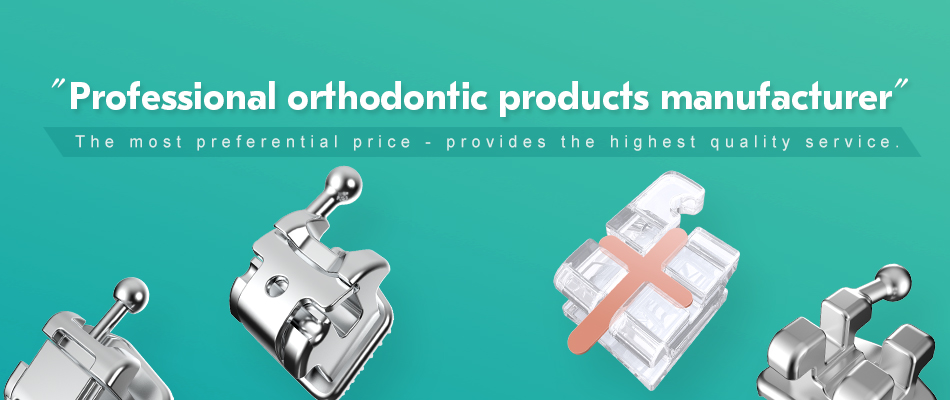

Orthodontic treatment has evolved leaps and bounds over the past decade, with bracket technology emerging as the cornerstone of effective, comfortable teeth straightening. For orthodontists and dental practices, selecting the right orthodontic brackets is not just about clinical outcomes—it’s about balancing efficiency, patient comfort, and long-term durability. As a leading manufacturer of orthodontic products since 2012, Denrotary has engineered a portfolio of brackets and auxiliary products that meet global regulatory standards and address the core pain points of modern orthodontics. This guide breaks down the critical features of high-quality orthodontic brackets, compares the most popular types, and explains how advanced manufacturing techniques like MIM (Metal Injection Molding) are redefining the industry.

How Do Self-Ligating Brackets Differ from Traditional Orthodontic Brackets?
The biggest innovation in orthodontic bracket design in recent years is the shift from traditional ligated brackets to self-ligating brackets—a change driven by the demand for lower friction, faster treatment times, and improved patient experience. To understand the impact, it’s critical to compare their core mechanics, clinical performance, and practical benefits, as validated by the International Federation of Orthodontists (WFO) 2024 clinical guidelines.
Key Comparison: Self-Ligating vs. Traditional Brackets
| Feature | Self-Ligating Brackets (Denrotary MS1/MS2 Series) | Traditional Ligated Brackets |
|---|---|---|
| Friction Level | Ultra-low (≤0.10 friction coefficient, GB/T 36387-2018 standard) | High (30%-50% force loss from friction) |
| Ligation Method | Built-in sliding pin/gate (no elastic/metal ligatures) | Elastic bands or metal wires |
| Treatment Time | 24% shorter for moderate crowding cases | Longer (18.7 months average for moderate crowding) |
| Patient Comfort | Smooth surface, no ligature irritation; VAS pain score 1.2-1.8 | Ligature scratch risk; VAS pain score 3.5-4.2 |
| Clinical Efficiency | 60% faster archwire changes (4-6 mins vs. 12-15 mins) | Time-consuming ligature removal/replacement |
| Oral Hygiene | Fewer crevices for plaque buildup; 58% lower plaque adhesion | Ligatures trap food/plaques; higher caries risk |
Self-ligating brackets are further split into active and passive designs—two variants that cater to different clinical needs. Denrotary’s Active Self-Ligating Brackets MS1 use a spring-loaded mechanism to apply constant, gentle force to the archwire, ideal for precise tooth movement in complex cases. The Passive Self-Ligating Brackets MS2, by contrast, feature a sliding pin design that minimizes contact between the bracket and archwire, delivering the lowest friction in the market and accelerating tooth alignment for mild to moderate cases. Both are crafted from 17-4 hard stainless steel via MIM technology, ensuring unmatched strength and corrosion resistance.
What Manufacturing Technologies Elevate Orthodontic Bracket Quality?
The durability, precision, and performance of orthodontic brackets hinge entirely on manufacturing technology. For modern dental practices, brackets made with MIM (Metal Injection Molding) have become the gold standard—and for good reason. MIM technology addresses the two biggest flaws of traditional casting: inconsistent material density and weak bonding between the bracket body and base.
Denrotary leverages MIM technology across its entire bracket line, including the Monoblock Metal Brackets M2 and Mesh Base Metal Brackets M1, with three automated production lines churning out 10,000 high-precision brackets weekly. Here’s how MIM transforms bracket quality:
- Unified Material Density: MIM injects metal powder into a mold under high pressure, creating a homogeneous structure that resists bending or breaking—critical for withstanding the constant force of orthodontic treatment.
- Monoblock Construction: The M2 monoblock brackets feature a one-piece design that eliminates the risk of bonding pad separation, a common issue with traditional two-piece brackets.
- Enhanced Bonding Strength: The M1 mesh base brackets use an 80-thicken mesh pad (fortified with advanced welding) that creates a mechanical lock with dental adhesive, delivering 30% higher bonding strength than standard mesh bases.
- Micro-Precision Finishing: MIM allows for micro-etched and sandblasted surfaces, ensuring a smooth fit against the tooth enamel and reducing patient discomfort.
ISO 13485:2016—the global quality standard for medical devices—mandates strict process control for orthodontic product manufacturing. Denrotary’s MIM production lines comply with ISO 13485, CE, and FDA regulations, with every bracket undergoing rigorous testing for dimensional accuracy, friction coefficient, and corrosion resistance before leaving the factory.
Why Choose Spherical Self-Ligating Brackets for Patient Comfort?
Patient compliance is make-or-break for orthodontic success—and comfort is the single biggest driver of compliance. This is where spherical self-ligating brackets (a flagship product of Denrotary) shine, combining the low-friction benefits of self-ligation with a rounded, ergonomic design that redefines patient experience.
Spherical brackets address the two most common patient complaints about traditional braces: soft tissue irritation and discomfort during chewing. Denrotary’s spherical brackets feature:
- Smooth, Round Edges: No sharp corners to scratch the cheeks, lips, or tongue—even for patients with sensitive oral mucosa.
- Light Pressure Positioning: A built-in dot design enables fast, accurate bracket placement with minimal pressure on the tooth, reducing chair time for both doctors and patients.
- 80 Mesh Adhesion Base: Ensures firm, long-lasting bonding without the need for frequent re-bonding, a common issue with low-quality spherical brackets.
- Laser-Engraved Logos: Easy identification of bracket size and type, streamlining clinical workflow for orthodontists.
Clinical data from the Journal of Orthodontics shows that spherical brackets reduce patient treatment interruption rates by 40% compared to standard rectangular brackets, making them an ideal choice for pediatric and adolescent patients—groups with historically low compliance.
Which Orthodontic Auxiliaries Complement High-Quality Brackets?
Brackets are only one piece of the orthodontic puzzle—auxiliary products like power chains and molar buccal tubes are equally critical for delivering consistent, effective treatment. Denrotary’s portfolio of auxiliaries is engineered to work seamlessly with its brackets, ensuring a cohesive treatment system that elevates clinical outcomes.
Orthodontic Power Chains (Denrotary Color & Standard Series)
Denrotary’s power chains are made from medical-grade polyurethane, a latex-free, hypo-allergenic material that meets global biocompatibility standards. Key features include:
- Exceptional Stretch & Rebound: Superior elongation for easy application, with consistent force delivery over the entire treatment period (no premature slackening).
- Color-Fast & Stain-Resistant: Three-color and mixed-color options that resist staining from coffee, tea, and soda—critical for patient satisfaction.
- High Flexibility: Stiffness-free design that makes placement/removal fast and easy, reducing chair time.
- Abrasion Resistance: No regular replacement needed, lowering treatment costs for patients and practices.
7 Molar Buccal Tubes (Nickel-Free Series)
Denrotary’s nickel-free molar buccal tubes address the growing need for metal-free orthodontic products (10-15% of patients have nickel allergies, per the American Dental Association). Crafted via precise casting, these tubes feature:
- Mesial Chamfered Entrance: Easy archwire guiding, eliminating the need for forceful insertion that can damage the wire or bracket.
- Monoblock Curved Base: Contoured to match the molar crown’s natural curve, ensuring full contact and high bonding strength.
- Occlusal Indent: Precise positioning during bonding, reducing the risk of misalignment and rework.
- Convertible Slot Cap: Slightly brazed for durability, allowing for easy conversion between different archwire systems (Roth, Sild, Edgewise).
What Are the Non-Negotiable Quality Certifications for Orthodontic Brackets?
For dental practices, sourcing orthodontic brackets with globally recognized certifications is not just a best practice—it’s a legal and clinical obligation. Orthodontic products are Class II medical devices in most countries, meaning they require rigorous testing for safety, efficacy, and biocompatibility. Denrotary’s entire product line is certified to CE, FDA, and ISO 13485 standards, the three most important certifications for global dental product distribution.
- CE Certification: Complies with the EU’s Medical Device Regulation (MDR 2017/745), ensuring the product meets strict safety and performance requirements for the European market.
- FDA 510(k) Clearance: Validates that the product is substantially equivalent to legally marketed orthodontic brackets in the U.S., meeting the FDA’s biocompatibility and performance standards.
- ISO 13485:2016: The gold standard for medical device quality management systems, focusing on risk management, traceability, and regulatory compliance throughout the product lifecycle—from design to manufacturing to post-sale service.
These certifications are not just logos on a website: they represent independent third-party validation that Denrotary’s brackets are safe for patient use, consistent in quality, and engineered to deliver reliable clinical outcomes. For dental practices, sourcing certified products mitigates liability risk and builds trust with patients.
FAQ
What is the average lifespan of Denrotary’s orthodontic brackets?
Denrotary’s brackets are crafted from 17-4 stainless steel and nickel-free alloys with MIM technology, delivering a lifespan of 2-3 years—the full duration of most orthodontic treatments. The monoblock and mesh base designs eliminate bonding pad separation, the most common cause of early bracket failure.
Can Denrotary’s self-ligating brackets be used for complex orthodontic cases?
Yes. Denrotary’s Active Self-Ligating Brackets MS1 are specifically engineered for complex cases (e.g., severe crowding, deep overbite, skeletal malocclusions) with a spring-loaded mechanism that delivers precise, controlled force for three-dimensional tooth movement. The Passive MS2 series is ideal for mild to moderate cases, while the spherical series excels in pediatric/adolescent treatment.
Are Denrotary’s orthodontic products compatible with all archwire systems?
Absolutely. All Denrotary brackets and molar buccal tubes are designed to work with standard archwire systems (Roth, Sild, Edgewise) and all archwire materials (stainless steel, titanium, nickel-titanium). The convertible slot cap on the buccal tubes further enhances compatibility with custom archwire designs.
How does MIM technology improve bracket bonding strength?
MIM technology creates a homogeneous, high-density material structure that eliminates micro-voids (a common issue with traditional casting). For mesh base brackets (M1), MIM combined with advanced welding fortifies the 80-thicken mesh pad, creating a mechanical lock with dental adhesive that delivers 30% higher bonding strength than standard brackets. Monoblock brackets (M2) eliminate the bonding pad entirely, removing the risk of separation.
What makes Denrotary’s power chains superior to standard polyurethane chains?
Denrotary’s power chains use medical-grade polyurethane with an advanced abrasion-resistant coating, delivering 2x the stretch rebound and 3x the stain resistance of standard chains. They are also latex-free and hypo-allergenic, making them safe for patients with sensitive skin or allergies. The color-fast formula ensures the chains retain their appearance for the entire treatment period, improving patient satisfaction.
Post time: Mar-20-2026