


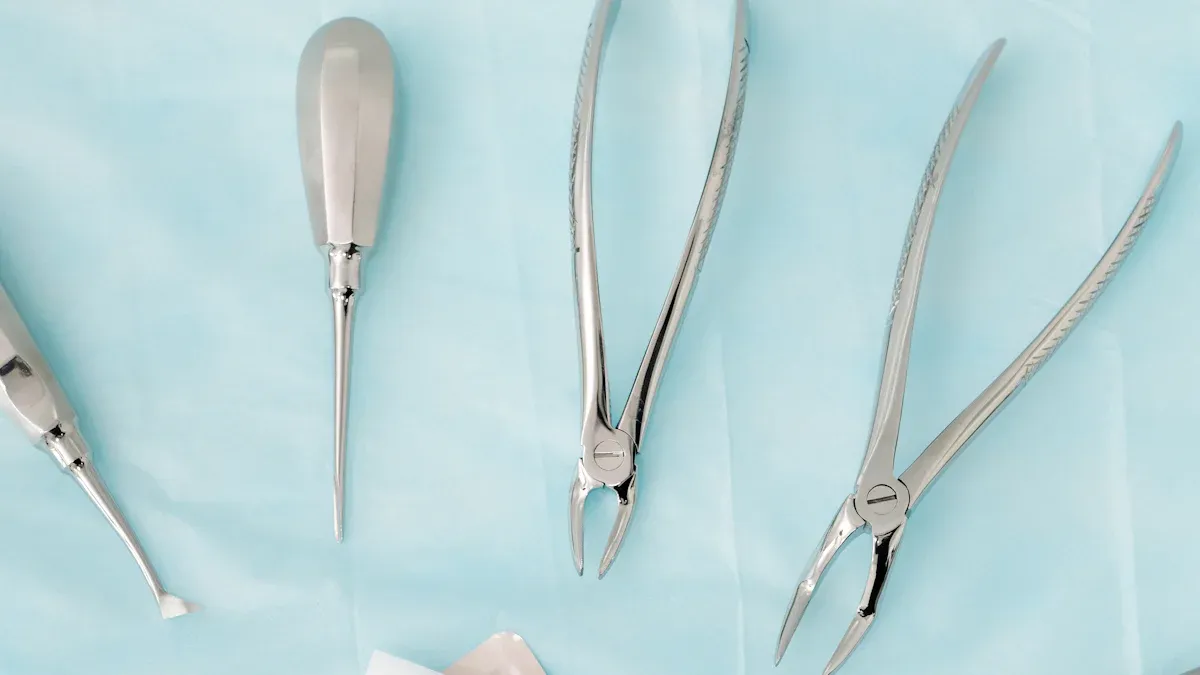
The ideal specialized orthodontic instruments for adult braces in 2025 prioritize precision, patient comfort, and efficiency. More than 1.5 million adults seek orthodontic treatment annually, often for aesthetic concerns, functional issues like malocclusion, and to prevent dental diseases. These advanced orthodontic treatment tools leverage advanced materials and digital integration, addressing the unique needs of adult patients. Key tools include specialized clear aligner pliers and precise bonding tools for aesthetic brackets. A leading dental instruments manufacturer develops these innovations, influencing dental clinic equipment purchasing decisions. Understanding what types of orthodontic pliers exist and what are they used for? becomes crucial for effective treatment.
Key Takeaways
- New orthodontic tools help move adult teeth with great accuracy.
- These tools make treatment more comfortable for adults.
- Digital scanners and 3D imaging help plan treatments better.
- Special tools like TADs and IPR systems fix complex tooth problems.
- Ergonomic tools help orthodontists work better, and patient-focused tools reduce pain.
Precision Orthodontic Instruments for Appliance Management
Clear Aligner Pliers for Refinements
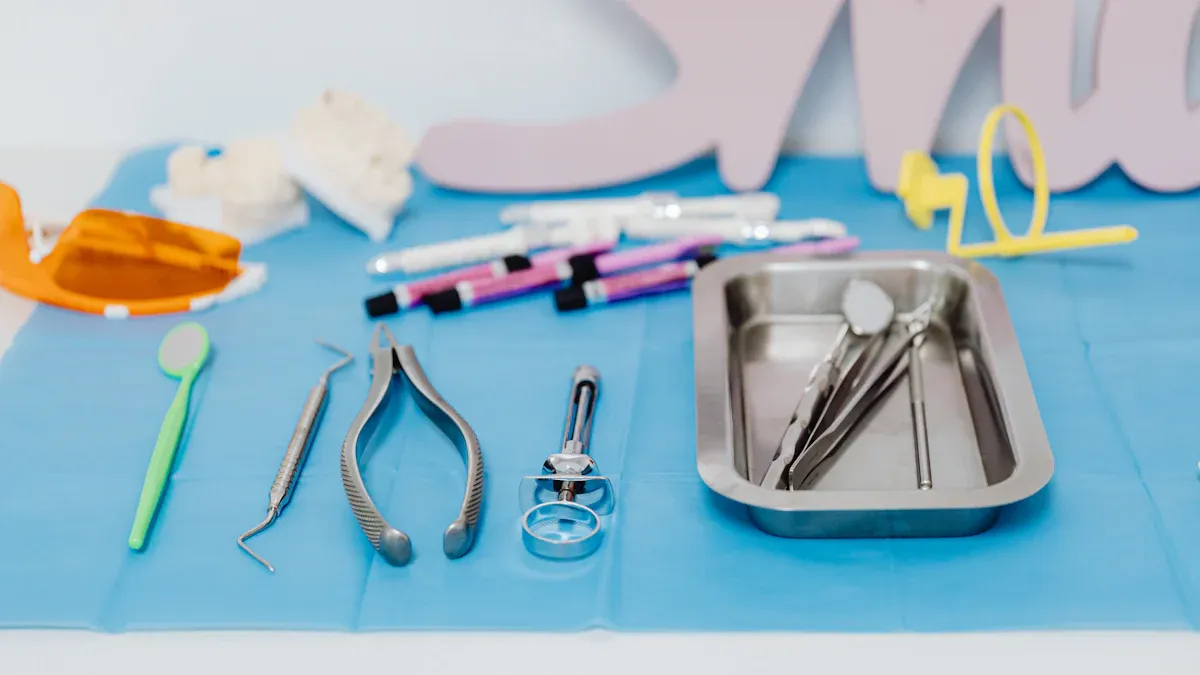
Clear aligners have become very popular for adult orthodontic treatment. However, sometimes aligners need small adjustments to work perfectly. Specialized pliers help orthodontists make these precise changes. These tools create small indentations or dimples in the aligner material. This helps guide specific tooth movements, like rotating a tooth or improving how the aligner fits. They ensure the aligner tracks the treatment plan accurately, leading to better results and a more comfortable experience for the patient.
Specialized Bonding and Debonding Instruments
Attaching and removing brackets, especially aesthetic ones, requires highly specialized tools. Orthodontists use precise bonding instruments to place brackets accurately on each tooth. This precision prevents damage to the tooth enamel and ensures the bracket stays securely in place. For aesthetic brackets, which often use ceramic or composite materials, specific bonding agents are crucial.
Tip: Specialized bonding agents enhance adhesion for aesthetic brackets. Silane coupling agents improve adhesion to porcelain surfaces by forming weak chemical connections. Resin composite materials offer sufficient shear bond strength, typically 6-8 MPa, and acceptable attachment failure rates. For direct bonding to exposed dentine, self-etching dentine bonding agents are recommended.
Debonding instruments are equally important. They allow orthodontists to remove brackets at the end of treatment without harming the enamel. These tools apply controlled force, minimizing discomfort for the patient and preserving tooth integrity.
Archwire Bending Pliers for Complex Cases
Archwires play a central role in traditional braces, guiding teeth into their correct positions. Many adult orthodontic cases involve complex tooth movements or significant bite corrections. Specialized archwire bending pliers give orthodontists the ability to customize these wires precisely. These pliers allow for intricate bends and loops, creating specific forces that move teeth in a controlled manner. This level of customization ensures effective treatment for even the most challenging cases. It also helps achieve optimal aesthetic and functional outcomes. These specialized orthodontic instruments are essential for managing complex adult treatments.
Advanced Diagnostic Orthodontic Instruments and Planning Tools
Intraoral Scanners for Digital Impressions
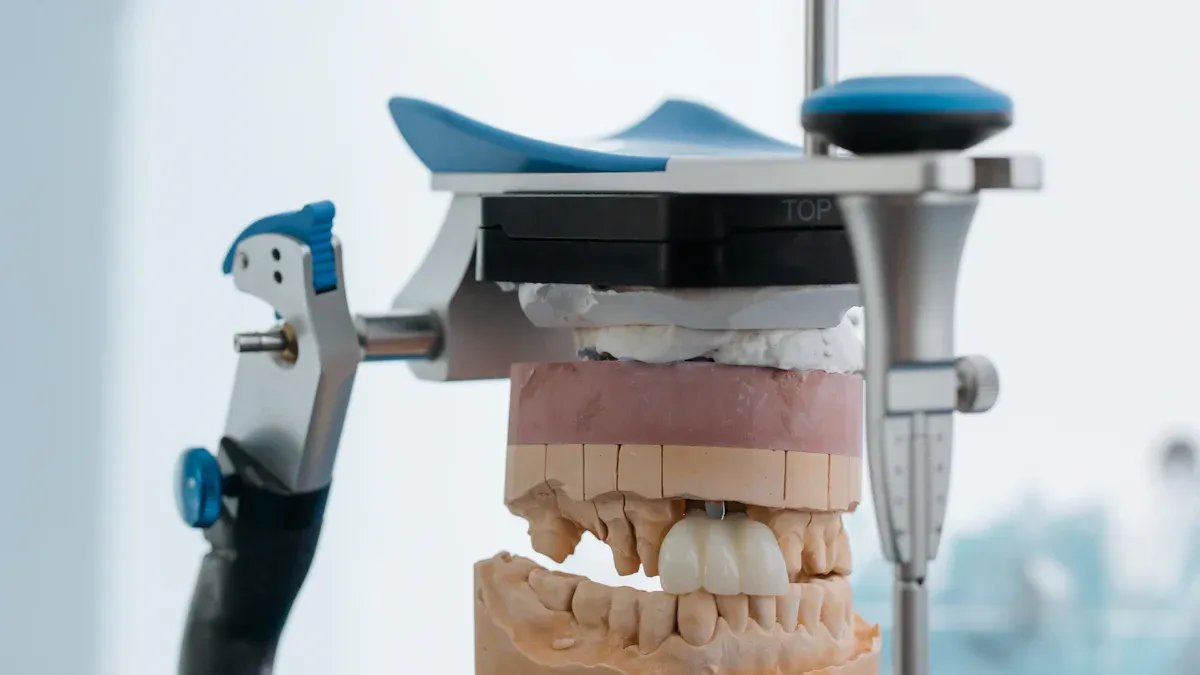
Modern orthodontics relies heavily on precise diagnostic tools. Intraoral scanners have revolutionized how orthodontists take impressions. These devices create highly accurate 3D digital models of a patient’s teeth and gums. This process replaces messy traditional plaster molds. Digital models offer many benefits. They are cost-effective, save time, and are easy to store. Many experts now consider digital models from intraoral scans the new gold standard in orthodontics. Their accuracy is well-established. It is no longer a major concern for orthodontic diagnosis.
However, planning tooth movements precisely remains a complex task. A study looked at the accuracy of digital orthodontic treatment planning. It found differences between planned and actual tooth movements. For example, researchers observed discrepancies in 96 samples for one group (V0). They saw differences in 61 samples for another group (Vi). A third group (Ve) showed discrepancies in 101 samples. This indicates that planned tooth movements do not always perfectly match clinical results.
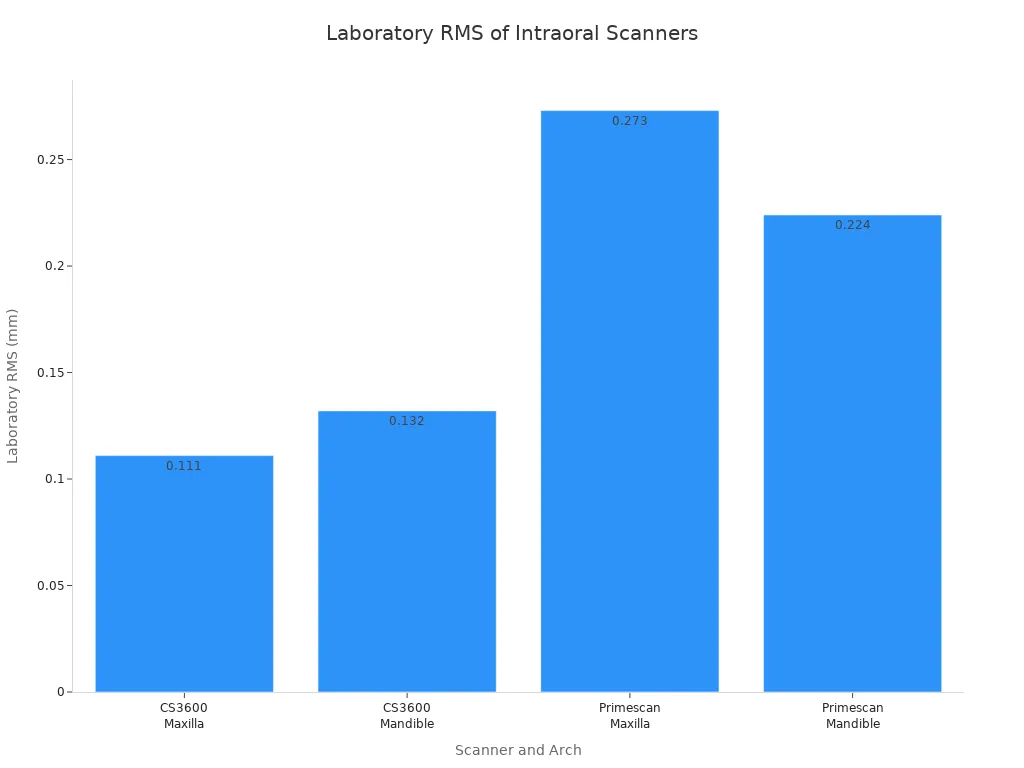
Different intraoral scanners show varying levels of precision. The following table compares the accuracy of two popular scanners:
| Scanner | Arch | Laboratory RMS (mm) | Clinical RMS (mm) |
|---|---|---|---|
| CS3600 | Maxilla | 0.111 ± 0.031 | Not significantly different |
| CS3600 | Mandible | 0.132 ± 0.007 | Not significantly different |
| Primescan | Maxilla | 0.273 ± 0.005 | Not significantly different |
| Primescan | Mandible | 0.224 ± 0.029 | Not significantly different |
Note: Clinical RMS values did not significantly differ between scanners or arches (p > 0.05). A significant difference between clinical and laboratory phases was observed only for the Primescan in the maxilla (p = 0.017).
The chart below visually represents the laboratory accuracy of these scanners:
3D Imaging (CBCT) for Comprehensive Assessment
Cone-beam computed tomography (CBCT) provides orthodontists with detailed 3D images of a patient’s oral and maxillofacial structures. This technology offers a comprehensive view of teeth, bones, and soft tissues. It helps assess complex cases, identify hidden issues, and plan treatments with greater accuracy. CBCT scans are especially useful for adult patients. They often have more complex dental histories or underlying conditions.
However, CBCT imaging involves radiation exposure. Patients receive a higher radiation dose from CBCT than from a typical panoramic radiograph. This dose can be 5 to 16 times greater. Orthodontists carefully weigh the benefits of detailed imaging against the radiation risk. They use CBCT only when necessary for diagnosis and treatment planning.
The table below compares the effective radiation doses of different imaging methods:
| Imaging Modality | Effective Dose Range (µSv) |
|---|---|
| Digital Panoramic Radiograph | 6–38 |
| Cephalometric Radiograph | 2–10 |
| CBCT | 5.3–1025 |
Digital Treatment Planning Software
Digital treatment planning software is a crucial tool for modern orthodontics. It allows orthodontists to simulate tooth movements and predict treatment outcomes before starting any procedures. This software often includes artificial intelligence (AI) integration. AI-driven predictive modeling helps optimize treatment plans. It reduces inefficiencies and potential complications.
Orthodontists can use real-time virtual scenario testing. This allows them to make dynamic adjustments based on how a patient might respond. They can refine aligner sequencing, bracket positioning, and force application. Digital twin modeling simulates orthodontic forces. It compares actual tooth movement with predicted movement. This helps orthodontists modify appliance adjustments as needed. AI-driven Finite Element Models (FEMs) optimize how biomechanical forces distribute in bracket-based treatments. These models predict how teeth will respond to various forces. They help minimize unwanted tooth movements.
AI also assists in risk management. It identifies potential complications earlier than traditional methods. These complications include root resorption or periodontal disease. This allows orthodontists to optimize treatment strategies. The software improves treatment predictability. It minimizes complications and reduces treatment duration. Ultimately, it enhances patient satisfaction by continuously refining strategies based on real-time patient progress. These advanced orthodontic instruments and software tools are transforming adult orthodontic care.
Specialized Orthodontic Instruments for Adjunctive Procedures
Temporary Anchorage Devices (TADs) Placement Kits
Temporary Anchorage Devices, or TADs, are small, temporary implants. Orthodontists place them into the bone. They provide stable anchorage. This anchorage helps move teeth in specific directions. TADs are crucial for complex adult cases. They allow for tooth movements that traditional braces alone cannot achieve. For example, TADs can help close spaces or upright molars. TADs placement kits contain specialized drills, drivers, and other instruments for precise insertion. These orthodontic instruments ensure minimal discomfort and accurate placement. They are essential tools for advanced adult orthodontic treatment.
Interproximal Reduction (IPR) Systems
Interproximal Reduction (IPR) involves removing small amounts of enamel from between teeth. This procedure creates space within the dental arch. It also helps resolve tooth-size discrepancies and reshape teeth. Orthodontists use IPR to correct malocclusions, enhance aesthetics, and improve the stability of treatment results. IPR is common in adult orthodontic treatment. It frequently occurs with aligners (59%) or fixed appliances (33%).
Common reasons for IPR include triangular-shaped teeth (97%), reshaping existing restorations (92%), and addressing tooth size discrepancies (89%). It also helps reduce black triangles (66%) and mild crowding (92%). Mandibular anterior teeth, such as lateral incisors, central incisors, and canines, are most often reduced. Maxillary central and lateral incisors also frequently undergo IPR. Less IPR occurs in posterior teeth.
Different IPR systems exist. These include:
- Interproximal strips
- IPR strip systems
- Mosquito burs
- Reciprocating IPR systems
- Rotary discs
Rotary discs, used with a slow-speed handpiece, are often the fastest and most comfortable option. All IPR instruments effectively reduce enamel. However, they differ in efficiency, effects on enamel surface roughness, and technical aspects like abrasive grain size.
Ergonomic and Patient-Centric Orthodontic Instruments
Ergonomic Handpieces and Pliers
Orthodontists perform many precise tasks. They need tools that are easy to use for long periods. Ergonomic handpieces and pliers help reduce operator fatigue. Handpieces are lightweight and balanced. This design enhances precision. A 360-degree swivel nosecone allows smooth transitions between surfaces. It minimizes wrist strain. Comfortable grips fit all hand sizes. This allows longer work periods with less fatigue. Pliers also have ergonomic designs. Their handles provide a comfortable and secure grip. Non-slip coatings prevent slippage during delicate tasks. A spring mechanism automatically opens the jaws after pressure release. This makes repetitive tasks more efficient. These features improve comfort for the orthodontist. They also lead to better patient outcomes.
Patient Comfort-Focused Instruments
Patient comfort is a top priority in adult orthodontics. New instruments focus on reducing pain. One such technology uses patented Advanced PulseWave neuromodulation. This technology sends gentle, subsensory electric pulses. These pulses calm nerves and block pain. The device is pen-shaped and portable. It has metal prongs. Orthodontists apply these prongs to sensitive teeth or gum tissue. It calms nerves in the mouth. This blocks both soft and hard tissue pain. Pain relief can last up to 48 hours. This device is versatile. Clinicians use it in the office. Patients can also take it home. It makes procedures like debonding smooth and painless. It addresses sensitivity from air from handpieces. It helps when adding new appliances, such as Forsus Class II Correctors or expanders. This prevents discomfort. For dental trauma, it enables pain-free repositioning of luxated teeth without injections. These patient-centric orthodontic instruments improve the treatment experience.
In 2025, ideal specialized orthodontic instruments for adult braces integrate digital precision, enhance patient comfort, and allow for highly customized treatment.
These advanced tools, ranging from clear aligner pliers to 3D imaging and TAD placement kits, enable orthodontists to achieve optimal aesthetic and functional outcomes for adult patients.
The continuous evolution of orthodontic instruments ensures more predictable, efficient, and comfortable treatment experiences for adults.
FAQ
What are the main benefits of specialized orthodontic instruments for adults?
These instruments offer greater precision in tooth movement. They enhance patient comfort during treatment. They also improve efficiency for orthodontists. This leads to better and faster results for adult patients.
How do intraoral scanners improve adult orthodontic treatment?
Intraoral scanners create accurate 3D digital models of teeth. This replaces messy traditional impressions. They help with precise treatment planning. This technology makes the process more comfortable and efficient for patients.
Why are Temporary Anchorage Devices (TADs) important for adult braces?
TADs provide stable anchorage in the bone. They allow orthodontists to achieve complex tooth movements. Traditional braces cannot always do this alone. TADs are crucial for challenging adult cases.
What is Interproximal Reduction (IPR), and why do orthodontists use it?
IPR involves removing small amounts of enamel between teeth. This creates space in the dental arch. It helps correct crowding and reshape teeth. IPR improves aesthetics and treatment stability for adults.
Post time: Dec-03-2025