
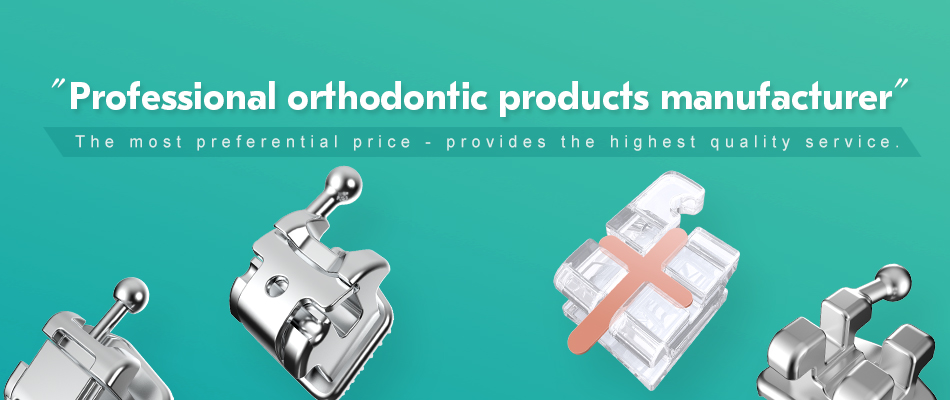

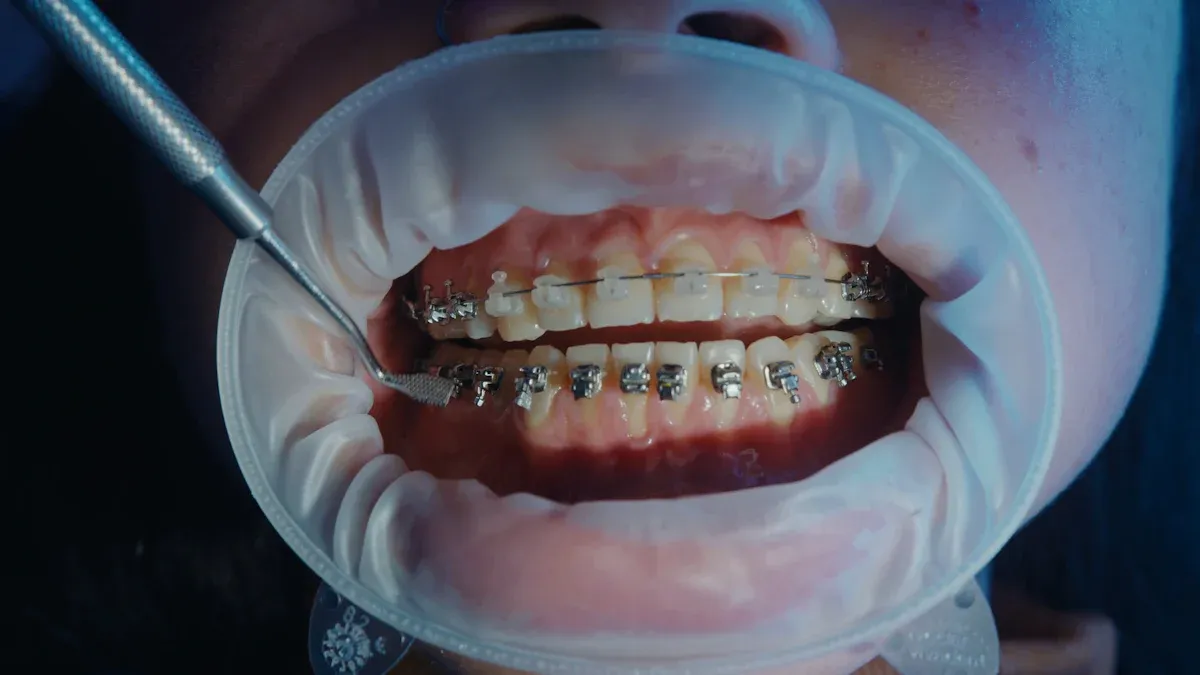
Self-ligating brackets are revolutionizing modern orthodontics, with all-metal versions being a top choice for efficient treatment. Their innovative design significantly enhances treatment speed, patient comfort, and overall clinical outcomes. Patients using these metal orthodontic brackets experience an average 6.33-month reduction in treatment duration. Studies consistently confirm that self-ligating brackets reduce overall treatment time by several months. These brackets offer superior efficiency, and understanding the distinction between passive vs active self-ligating brackets can further illuminate their benefits. So, why do metal self-ligating brackets reduce chair-side time? Their design often eliminates the need for ligatures, streamlining adjustments. Furthermore, the use of high-precision MIM orthodontic brackets ensures consistent quality and performance. Ultimately, what are the main advantages of self-ligating brackets in orthodontic treatment? They include faster treatment, improved hygiene, and enhanced patient comfort.
Key Takeaways
- All-metal self-ligating brackets help teeth move faster. They reduce friction, so treatment takes less time.
- These brackets make braces more comfortable. They also make it easier to keep teeth clean.
- Orthodontists can control tooth movement better. This helps them get good results for patients.
The Unmatched Efficiency of All-Metal Self-Ligating Brackets
Friction Reduction for Faster Tooth Movement
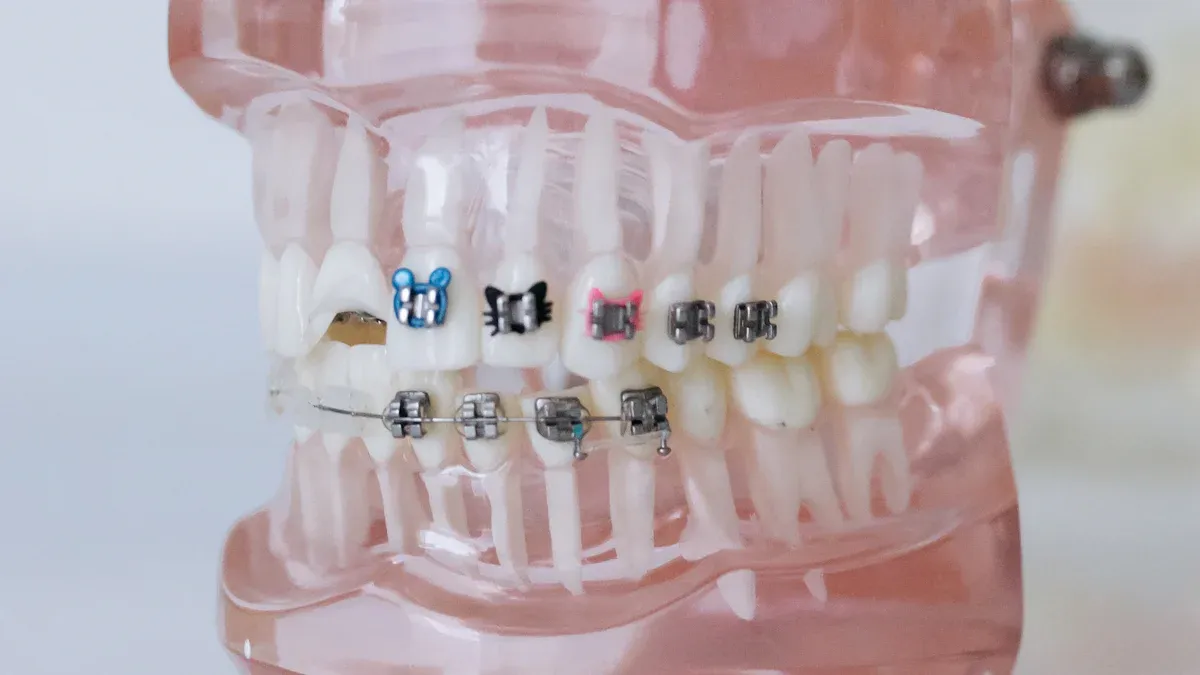
All-metal self-ligating brackets significantly enhance orthodontic treatment by reducing friction. This design allows for smoother and more efficient tooth movement. Self-ligating bracket (SLB) systems incorporate specialized internal mechanisms. These mechanisms eliminate or significantly reduce the need for external ligatures. This design directly contributes to better control over friction during tooth movement. It leads to improved treatment efficiency and outcomes. For example, the Damon Q and Q2 all-metal brackets feature a self-ligating mechanism. This mechanism holds the archwire without requiring additional elastic or metal ligatures. This integrated design reduces friction, facilitating freer and more comfortable tooth movement. These advancements build on previous models and clinical insights to enhance performance.
Studies have investigated the frictional properties of these brackets. One study found no statistical difference in static friction between SL3 self-ligating brackets and conventional metal brackets ligated with elastomeric modules. However, Smartclip SL3 Brackets with stainless steel (SS) wire showed a statistically significant decrease in frictional resistance (2.550 ± 0.343 N) compared to Clarity Advanced Brackets with TMA wires (P = 0.003 and P = 0.006) and Radiance brackets with SS (P = 0.002 and 0.005) and TMA archwires (P < 0.001). Another study indicated that Damon 2 self-ligating brackets produced less friction than other ligation methods. Speed self-ligating brackets also produced less friction than regular uncoated, conventional silver, and standard silver modules. Damon 2 brackets specifically showed no recordable friction of ligation. This reduced friction translates into less resistance for teeth as they move into their correct positions.
Predictable and Efficient Treatment Plans
All-metal self-ligating brackets contribute to predictable and efficient treatment plans through various mechanisms. While some studies indicate no significant variation in overall orthodontic treatment duration based on bracket type, self-ligating brackets (SLBs) offer distinct advantages in procedural efficiency. SLBs may improve early alignment, even if their overall impact on total treatment duration is minimal. A comparison between SLBs and conventional brackets (CBs) showed an an insignificant difference in treatment duration (19.19 months for SLBs versus 21.25 months for CBs). No significant differences were found between SLBs and CBs in the velocity of canine retraction or the efficiency of canine retraction and anchorage maintenance.
However, self-ligating brackets facilitate faster archwire changes due to their clip-based design. This contributes to improved clinical efficiency and reduced chairside time. The Damon2 system, an SLB, significantly reduced the average time for wire placement in a fully bonded arch to 46 seconds, compared to 98 seconds for Orthos brackets (conventional). Ligation and re-ligation with the Damon SLB system showed statistically significant but clinically minimal time savings, averaging 24 seconds per archwire removal and replacement. SLBs eliminate the need for a chairside assistant during the ligation process, streamlining the procedure by not requiring the handling of elastomeric or wire ligatures. For moderate crowding (irregularity index <5), the self-ligating group achieved 2.7 times faster correction. This difference was marginally insignificant for greater crowding (irregularity index >5). Stainless steel self-ligating brackets generated significantly lower static and kinetic frictional forces compared to conventional stainless steel brackets.
Superiority Over Traditional Brackets
All-metal self-ligating brackets offer several documented advantages over traditional bracket systems in terms of treatment mechanics. Self-ligating braces allow the archwire to move more freely due to a specialized clip or door mechanism. Traditional braces, in contrast, use elastic bands. This design reduces friction between the wire and brackets, leading to a smoother treatment process. The efficient wire movement can lead to faster tooth movement and potentially reduce overall treatment time, sometimes by a few months. The sliding mechanism reduces friction and pressure on teeth. This leads to gentler adjustments and less discomfort compared to the tighter grip of elastic ligatures in traditional braces. This combination of reduced friction, enhanced efficiency, and improved patient comfort establishes the superiority of all-metal self-ligating brackets in modern orthodontics.
Enhanced Patient Experience and Durability with Self-Ligating Brackets
Greater Patient Comfort and Oral Hygiene
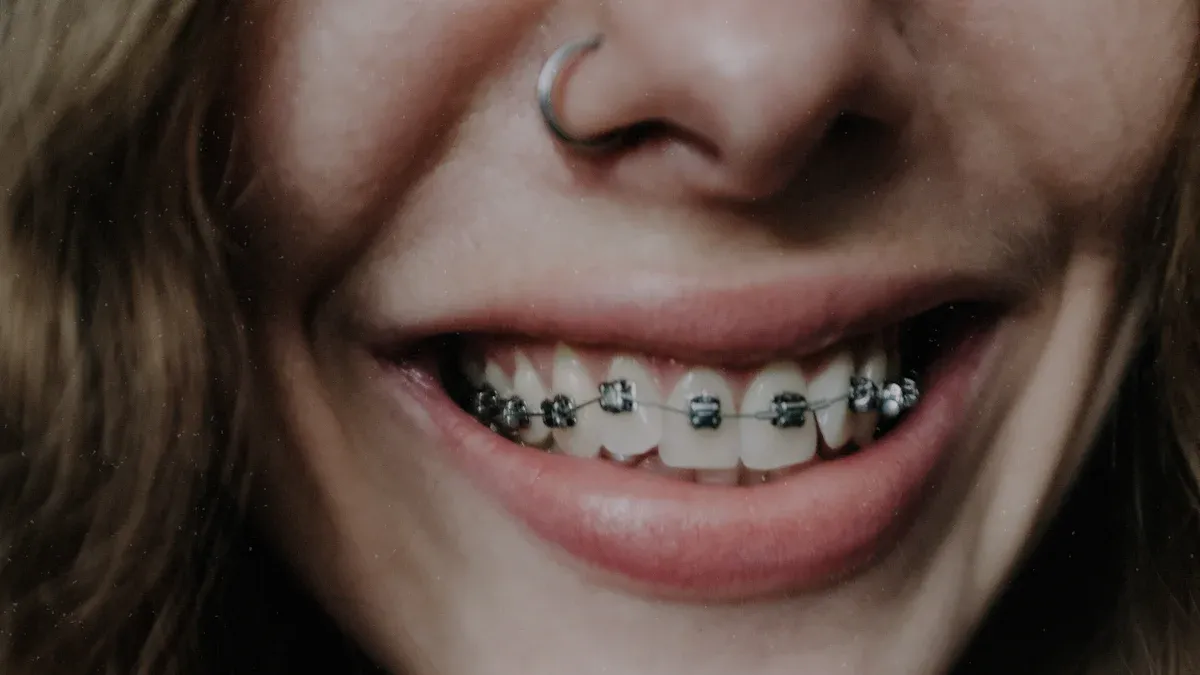
All-metal self-ligating brackets significantly improve the patient experience by prioritizing comfort and facilitating superior oral hygiene. Patients often report higher levels of discomfort with conventional appliances, particularly during the initial alignment phase. This contrasts with those using self-ligating appliances, who experience less pain. Lower friction in self-ligating systems reduces compression of the periodontal ligament, directly contributing to this decreased discomfort.
Maintaining good oral hygiene with traditional braces presents challenges. Elastic bands tend to trap food and plaque, making cleaning difficult. All-metal self-ligating braces eliminate these rubber ties, which significantly reduces the accumulation of plaque and bacteria. This design makes brushing and flossing considerably easier for patients. Consequently, it lowers the risk of developing cavities and gum disease throughout orthodontic treatment. The absence of ligatures removes irregular surfaces where debris can accumulate, simplifying cleaning routines and decreasing the risk of plaque buildup and associated oral health issues.
Fewer Appointments and Shorter Chair Time
The design of all-metal self-ligating brackets also translates into practical benefits for patients and orthodontists, primarily through fewer appointments and shorter chair time. The efficient mechanics of these systems often reduce the overall number of required visits.
| Study | Conventional Brackets (Visits) | Self-Ligating Brackets (Visits) | Reduction in Visits |
|---|---|---|---|
| Weber et al. (Insignia) | 18 | 11 | 7 |
| Dr. Jerry Clark (InOvation) | 16 | 10 | 6 |
As shown in the table, studies indicate a notable reduction in the number of appointments. For instance, patients using Insignia self-ligating brackets required 7 fewer visits compared to conventional methods. Similarly, InOvation self-ligating brackets led to 6 fewer appointments. This reduction in visits saves patients time and travel, while also optimizing the orthodontist’s schedule and practice efficiency. The streamlined adjustment process, which does not involve changing elastic ligatures, also contributes to shorter individual chairside appointments.
All-Metal Strength and Reliability
All-metal self-ligating brackets are renowned for their exceptional strength and reliability, stemming from the advanced materials used in their construction. Manufacturers carefully select specific metal alloys to ensure durability, biocompatibility, and optimal performance throughout the treatment period.
Common metal alloys used include:
- Stainless Steel (e.g., 304L, 316L, 17-4 PH): This material offers high strength, form stability, and excellent corrosion resistance, particularly with 316L. PH types provide superior strength. However, austenitic types can release nickel ions, and PH types are difficult to machine.
- Cobalt-Chromium Alloys: These alloys are known for excellent biocompatibility, reduced nickel content, and high wear and corrosion resistance. They are suitable for nickel-sensitive patients, though they are more expensive and exhibit higher friction than titanium against certain wires.
- Titanium & Titanium Alloys (e.g., Ti-6Al-4V, Grade 2/4 CP): Titanium provides superior biocompatibility, excellent corrosion resistance, and low allergic potential. Alpha-beta alloys offer greater durability, and CP titanium ensures a safe bonding base. Limitations include lower hardness for Grade 2 CP and potential vanadium ion release from Ti-6Al-4V.
- Precious Metal-Coated Alloys (e.g., Gold-Plated Steel): These offer high aesthetic value and biologically inert surfaces, traditionally used in lingual systems. Their main drawbacks include very high cost and limited mechanical benefits compared to modern stainless steel.
These robust materials ensure the brackets withstand the forces of chewing and orthodontic adjustments without deforming or breaking. This inherent strength contributes to consistent treatment outcomes and minimizes the need for emergency repairs, further enhancing the patient experience and the overall efficiency of the orthodontic process.
Clinical Precision and Control for Orthodontists
Orthodontists gain significant clinical precision and control with all-metal self-ligating brackets. These advanced systems offer superior mechanics, allowing for more predictable and efficient treatment outcomes. The design features empower practitioners to manage complex cases with greater confidence and achieve optimal results for their patients.
Optimized Tooth Movement and Archwire Engagement
All-metal self-ligating brackets significantly optimize tooth movement control, especially in complex orthodontic cases. They achieve this by reducing friction between the archwire and the bracket. This lower friction allows orthodontists to apply lighter forces, which is more biologically compatible with the patient’s anatomy. Consequently, teeth move more efficiently. The absence of elastomeric ligatures also eliminates the friction and degradation associated with them. This contributes to a more consistent force delivery and better control over tooth positioning. This is particularly beneficial in cases requiring significant tooth translation or rotation.
These brackets utilize a specialized design that eliminates traditional ligatures. Instead, they employ either a sliding clip or a spring-loaded gate to secure the archwire. Passive designs incorporate a simple sliding door. This door holds the archwire without applying additional force, minimizing friction. Active designs feature a spring clip. This clip applies gentle, consistent pressure to the archwire, enhancing control and guiding tooth movement. This is particularly useful in later treatment stages for improved precision. Most self-ligating bracket designs achieve archwire engagement through a metal face. This metal face forms part of the bracket slot. Orthodontists can open and close this face using an instrument or even a fingertip, effectively securing the archwire within the bracket.
Precise Engineering for Optimal Results
The precise engineering of all-metal self-ligating brackets contributes significantly to predictable clinical results. For example, the spherical design of some brackets allows for precise bracket positioning. This simplifies the process with a dot design for effortless light pressure positioning. This streamlines treatments, reduces adjustment time, minimizes patient discomfort, and ensures consistent results. The self-ligating mechanism eliminates the need for elastic bands or ties. This reduces friction and irritation. Teeth move more freely, speeding up treatment, increasing patient comfort, and reducing the need for frequent adjustments.
Manufacturers use high-precision materials, compliant with ANSI/ADA Standard No. 100 and ISO 27020:2019 standards. These materials ensure durability and consistent clinical outcomes even with long-term use. A smooth locking mechanism ensures the bracket adheres securely to the tooth surface. This maintains the integrity of orthodontic care and prevents accidental slips. Furthermore, an 80 mesh bottom design provides a strong foundation. This enhances the bond between the bracket and adhesive, reducing the risk of detachment.
Streamlined Orthodontic Practice Workflow
All-metal self-ligating brackets significantly streamline the orthodontic practice workflow. The custom self-ligating solution is noted for significantly reducing the time spent on ligation. It also contributes to quicker initial tooth alignment. Advanced technology and custom prescriptions streamline treatment by minimizing play and enabling precise tooth positioning, thereby optimizing control. The full custom digital orthodontic solution dedicates itself to increasing overall efficiency in the practice. This technology aims to lower the stress experienced by the orthodontic practice.
Custom digital solutions optimize treatment mechanics. The technology specifically designs itself to streamline workflows within orthodontic practices. This contributes to overall practice success. The custom bracket design features low friction and non-fatiguing ligation. Tighter tolerances in the slot ensure shorter ligation appointments. This design facilitates quicker initial alignment of teeth. A snug fit in the bracket slot leads to improved tooth positioning and optimized control in all three orders. The solution eliminates wire bends and reduces the need for bracket repositioning. It delivers predictable results with fewer patient appointments. Overall treatment time can be reduced by over 4 months. Chair-side visits are shorter, and appointment intervals can be longer due to the absence of rubber bands. Built-in clips hold the wire, reducing the need for manual tightening. Less friction means fewer components, leading to smoother and faster tooth movement. Simpler adjustments mean patients require fewer visits to the orthodontist. The reduced friction design allows for more efficient tooth movement, resulting in fewer adjustments.
All-metal self-ligating brackets are the top choice for modern efficient orthodontics. They deliver faster, more comfortable, and highly effective treatment outcomes. Reduced friction, enhanced hygiene, superior durability, and precise clinical control drive these unparalleled results. Orthodontists achieve optimal patient outcomes with these advanced systems.
FAQ
How do all-metal self-ligating brackets speed up treatment?
They reduce friction between the archwire and bracket. This allows teeth to move more efficiently and quickly into their correct positions, often shortening overall treatment time.
Do patients find all-metal self-ligating brackets more comfortable?
Yes, patients often experience less discomfort. The design uses lighter forces and eliminates elastic ligatures, which reduces pressure on teeth and surrounding tissues.
What is the main difference between self-ligating and traditional brackets?
Self-ligating brackets use a built-in clip or door to hold the archwire. Traditional brackets require elastic bands or wire ties, which create more friction and require more frequent adjustments.
Post time: Jan-05-2026