

Orthodontic Self-Ligating Brackets are experiencing a significant surge in popularity in 2026. Experts project the market for these brackets to grow at a Compound Annual Growth Rate (CAGR) of approximately 7-9% over the next five years, with the U.S. market specifically seeing a 7.5% CAGR from 2026 to 2033. This growing preference stems from their advanced design, which offers substantial advantages in treatment efficiency, patient comfort, and aesthetic appeal. Patients often wonder, “How do self-ligating brackets reduce orthodontic treatment time?” and these systems provide clear answers. The innovative design, including a low friction orthodontic system, truly sets them apart.
Among the various types, Metal Auto Self-Ligating Brackets are particularly noteworthy. Their robust construction and efficient mechanics contribute to the overall advantages of passive self-ligating brackets. Furthermore, a common question among patients is, “Can metal auto self-ligating brackets reduce the frequency of clinic visits?” The answer is often yes, due to their design that allows for longer intervals between adjustments, enhancing convenience for both patients and practitioners.
Key Takeaways
- Self-ligating brackets move teeth faster. They use less friction than traditional braces.
- These brackets offer more comfort. Patients have fewer appointments with the orthodontist.
- Self-ligating brackets make cleaning teeth easier. They help reduce plaque buildup.
- These braces look better. They come in clear options and do not stain like traditional braces.
- Many people benefit from self-ligating brackets. They are good for those wanting faster treatment and more comfort.
Faster Treatment with Orthodontic Self-Ligating Brackets
Many people want to know if their braces can work faster. Orthodontic self-ligating brackets offer a design that helps move teeth more efficiently. This can lead to a quicker journey toward a beautiful smile.
Reduced Friction for Efficient Tooth Movement
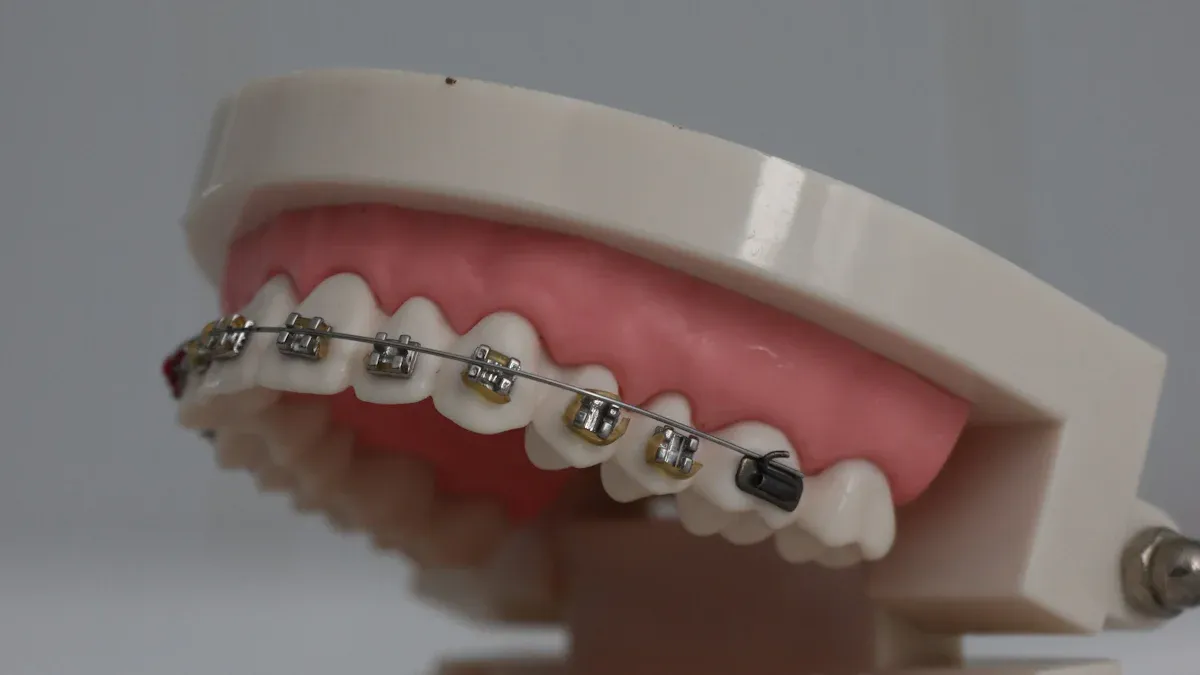
Traditional braces use tiny elastic bands or metal wires to hold the archwire in place. These ligatures create friction, which can slow down tooth movement. Self-ligating brackets, however, have a special built-in clip or door. This design secures the archwire directly within the bracket. It eliminates the need for those external ligatures. By doing this, the archwire slides more freely through the bracket. This significantly minimizes frictional forces. Less friction means teeth can move into their correct positions with less resistance. This makes the entire process more efficient.
Consistent Force Application
Consistent force is key for effective tooth movement. Self-ligating brackets excel at this. They use a unique clip system inside each bracket to hold the wires. This is different from traditional braces that rely on rubber ties. This advanced design allows the wires to slide freely, which reduces pressure on the teeth. The system applies gentle, consistent forces to move teeth. It minimizes discomfort and avoids the resistance caused by tightening elastics.
The Damon System, for example, combines self-ligating brackets with high-tech memory shape wires. This combination delivers light, consistent forces to the teeth. The clip secures the wire, so it stays active for longer periods. This means braces do not require “tightening” every 4-6 weeks, unlike older systems. This low-friction system, along with lighter force wires, makes the treatment more comfortable. Clinical data supports this. A study in the Journal of Clinical Orthodontics showed that self-ligating brackets deliver continuous force. This leads to more efficient tooth movement and effective treatment outcomes. While studies show the overall treatment time might not be statistically different from conventional brackets (around 19.19 months versus 21.25 months), the consistent force and reduced friction contribute to a smoother, more predictable movement process. This often translates into fewer adjustment appointments for patients.
Enhanced Comfort and Fewer Appointments with Orthodontic Self-Ligating Brackets
Patients often look for ways to make their orthodontic journey more comfortable and convenient. Orthodontic Self-Ligating Brackets deliver on both fronts. They offer a design that reduces discomfort and can lead to fewer visits to the orthodontist.
Gentler Pressure on Teeth
Self-ligating brackets use a special clip or sliding door to hold the archwire. This design differs from traditional braces, which rely on elastic bands. This difference significantly reduces friction. The archwire moves more freely through the bracket. This allows teeth to shift more naturally into their correct positions. This reduced friction means less pressure as teeth move. It leads to gentler adjustments and a smoother treatment process. Both passive and active self-ligating brackets contribute to this. Passive types allow ultra-thin starter wires for minimal pressure. Active clips apply a gentle squeeze as alignment progresses. This mechanism ensures continuous but gentle pressure application.
Minimized Discomfort During Adjustments
The gentler pressure from self-ligating brackets directly translates into less discomfort for patients. Many patients report positive experiences, especially noting enhanced comfort. A significant majority of orthodontists (40.5%-60.7%) favor self-ligating brackets over conventional brackets. They largely attribute this preference to improved patient comfort.
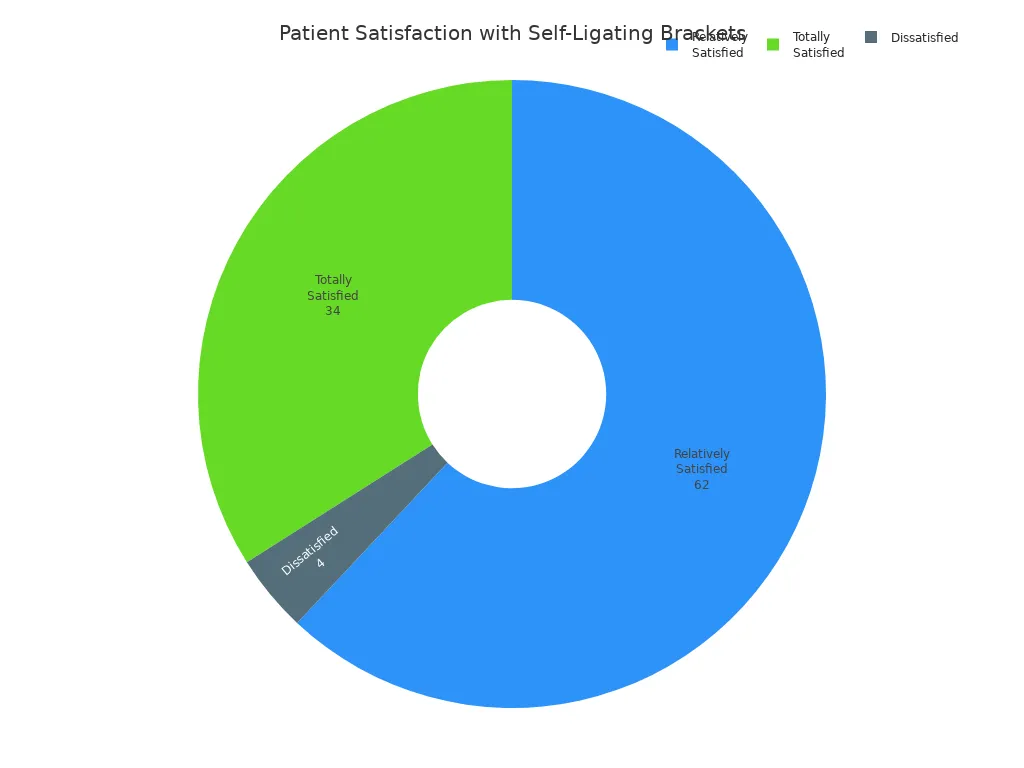
This chart shows that 96% of patients are at least relatively satisfied with their experience. This high satisfaction rate highlights the comfort benefits. The design also often allows for longer intervals between adjustments. This means fewer trips to the orthodontist. While some research indicates a reduction in the number of appointments needed, other studies suggest mixed results. However, the potential for fewer visits adds to the convenience for busy individuals.
Improved Oral Hygiene with Orthodontic Self-Ligating Brackets
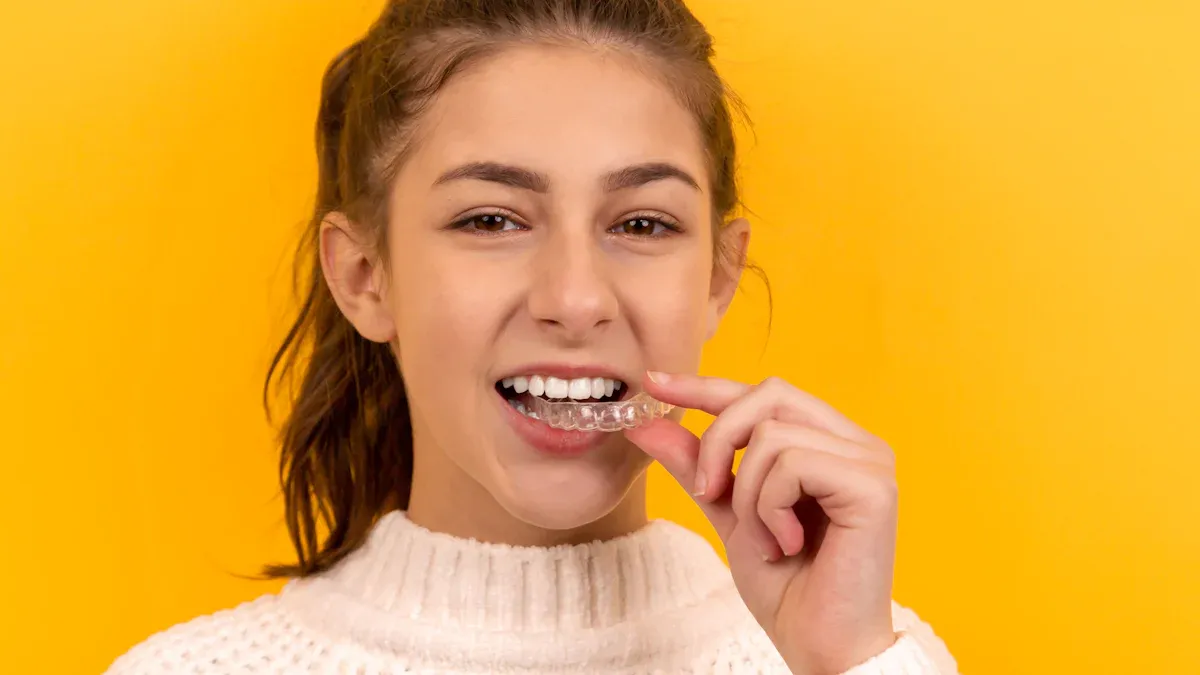
Keeping your teeth clean during orthodontic treatment is very important. Good oral hygiene helps prevent cavities and gum problems. Orthodontic Self-Ligating Brackets make this task much easier for patients. Their design helps keep your mouth healthier throughout treatment.
Easier Cleaning and Maintenance
Traditional braces often use small elastic bands to hold the archwire. These tiny bands can trap food particles and make brushing difficult. Self-ligating brackets do not need these elastics. Instead, they have a built-in clip or door that secures the wire. This smooth design means fewer places for food to get stuck. Patients find it much simpler to brush and floss around these brackets. This makes daily cleaning routines more effective. You can reach all surfaces of your teeth and brackets with less effort.
Reduced Plaque Accumulation
The design of self-ligating brackets also leads to less plaque buildup. Plaque is a sticky film of bacteria that can cause gum disease and tooth decay. Without elastic ties, there are fewer surfaces for bacteria to cling to. This creates a cleaner environment in your mouth. Studies have shown a clear difference in plaque levels between different types of braces.
| Index | Ligation Method | Mean | SD | t-test | D.F. | P-value |
|---|---|---|---|---|---|---|
| Plaque Index | Conventional | 2.07 | 0.70 | 2.366 | 28 | 0.025* |
| Self-ligation | 1.53 | 0.52 | ||||
| Modified Plaque Index | Conventional | 3.80 | 1.08 | 4.731 | 28 | 0.000** |
| Self-ligation | 2.00 | 1.00 | ||||
| Gingival Index | Conventional | 2.20 | 0.68 | 3.666 | 28 | 0.001** |
| Self-ligation | 1.40 | 0.51 |
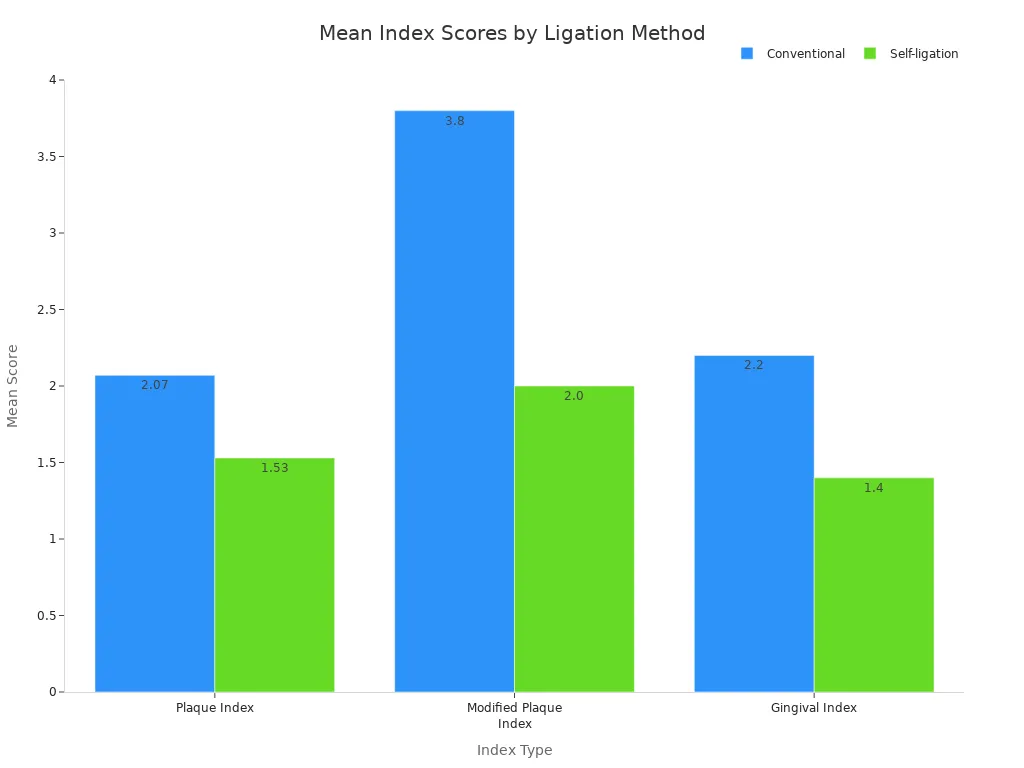
A clinical trial found that conventional braces with elastic modules collected more plaque. Smart clip self-ligating bracket systems showed less plaque. This means self-ligating systems help control bacteria better. They offer a more hygienic choice for orthodontic treatment. This improved hygiene can lead to healthier gums and teeth throughout your smile journey.
Aesthetic Advantages of Orthodontic Self-Ligating Brackets

Many people worry about how braces will look during treatment. They want a solution that helps their smile without drawing too much attention. Orthodontic Self-Ligating Brackets offer some great aesthetic benefits that address these concerns.
Discreet Appearance
Patients often prefer braces that are less noticeable. Self-ligating brackets provide excellent options for a more discreet look. They come in materials that blend well with your natural teeth.
- Clear brackets blend seamlessly with the natural color of teeth, offering a more discreet option.
- For those seeking a less noticeable appearance, ceramic or clear materials are available. These options blend with your teeth, providing a more subtle treatment.
- Clear brackets are available, making the braces less noticeable. This option is great if you are looking for a more subtle treatment.
These choices mean you can straighten your teeth without feeling self-conscious about your smile. The design focuses on effective treatment while keeping aesthetics in mind.
No Staining from Elastics
Traditional braces often use small elastic bands to hold the archwire in place. These elastics can stain easily from foods and drinks like coffee, tea, or curry. This staining can make your braces look discolored and less appealing between appointments.
Self-ligating brackets do not use these elastic ties. Instead, they have a built-in clip or door that secures the archwire. Because there are no elastics, you do not have to worry about them staining. This means your braces maintain a cleaner, more consistent appearance throughout your treatment. You can enjoy your favorite foods and drinks without concern for discoloration, helping your smile look its best every day.
Who Benefits Most from Orthodontic Self-Ligating Brackets?
Many people consider orthodontic treatment. They often wonder if a specific type of brace suits their needs best. Self-ligating brackets offer distinct advantages. Certain individuals find these benefits particularly appealing.
Individuals Seeking Shorter Treatment Times
Patients often ask about the speed of their orthodontic journey. Self-ligating braces can mean a shorter time in treatment compared to traditional braces. Most people wear them for 12 to 24 months. For small dental issues, treatment might finish even faster. Extensive problems, however, could take longer than 24 months.
Some research suggests that the overall treatment time does not differ significantly based on the bracket type. This includes metallic, ceramic, conventional, or self-ligating options. However, self-ligating brackets do create more effective sliding movement during the initial stages of correction. This can make the start of treatment feel more efficient. For moderate to severe cases, such as large overbites or extreme crowding, treatment can still last 18 to 36 months, regardless of the brace type.
Patients Prioritizing Comfort and Convenience
Comfort and convenience are top priorities for many patients. Self-ligating brackets excel in these areas. They allow the archwire to slide more freely. This leads to less resistance and a more comfortable experience. Patients often report fewer episodes of discomfort after appointments. Orthodontists may suggest these brackets for individuals sensitive to pain. Studies indicate these brackets can improve oral health-related quality of life.
The design also offers significant convenience. Fewer manual adjustments are necessary. This means fewer office visits, perhaps every 8-10 weeks instead of 4-6 weeks. This saves time for busy schedules. The absence of elastic ties also makes cleaning easier. This prevents food and plaque from getting trapped. Easier oral hygiene is a major convenience for daily care. The sliding mechanism reduces friction and pressure on teeth. This leads to less discomfort during adjustments and throughout the entire treatment.
These innovative braces offer a modern, efficient, and comfortable way to straighten teeth. Their many advantages, including faster treatment, enhanced comfort, better hygiene, and improved aesthetics, explain their increasing popularity. You should talk to an orthodontist. They can help you decide if these brackets are the right choice for your smile journey.
FAQ
Can self-ligating brackets really shorten treatment time?
Yes, they often do. The design reduces friction. This allows teeth to move more efficiently. Many patients experience a quicker journey to their new smile. However, individual cases vary.
Are self-ligating brackets more expensive than traditional braces?
The cost can be similar to traditional braces. Sometimes, they might have a slightly higher initial cost. However, fewer appointments can save money on travel and time. Patients should discuss pricing with their orthodontist.
How often do patients need to visit the orthodontist with self-ligating brackets?
Patients typically need fewer appointments. The design allows for longer intervals between visits. This means check-ups might be every 8-10 weeks. Traditional braces often require visits every 4-6 weeks. This offers great convenience.
Do self-ligating brackets work for all types of orthodontic issues?
Self-ligating brackets are versatile. They can treat a wide range of orthodontic problems. This includes crowding, spacing, and bite issues. An orthodontist will assess each patient’s specific needs. They determine the best treatment plan.
Can patients choose clear self-ligating brackets?
Yes, clear options are available. These brackets blend with the natural tooth color. They offer a more discreet appearance. This is a popular choice for patients who want less noticeable braces.
Post time: Jan-15-2026