
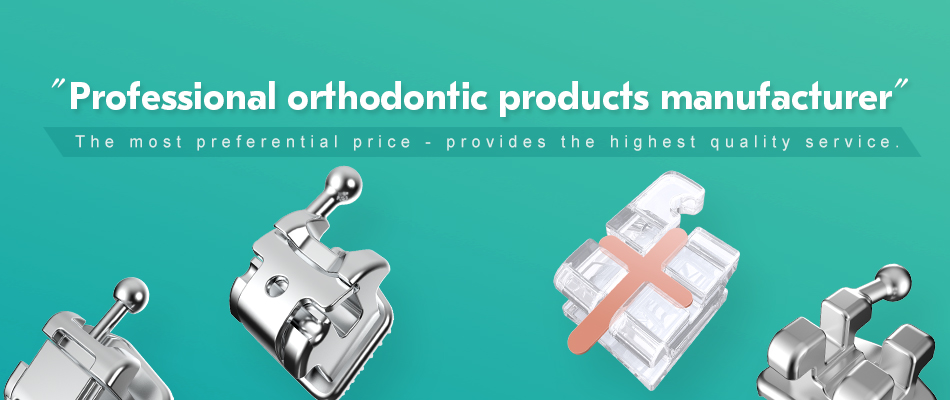

In the rapidly evolving landscape of dental technology, the shift from traditional ligating systems to advanced Self-Ligating Brackets has marked a significant milestone. For orthodontic professionals and global dental suppliers, understanding the biomechanical advantages and clinical efficiency of these systems is no longer optional—it is a prerequisite for competitive practice.

What Makes Self-Ligating Systems Superior to Traditional Brackets?
The fundamental difference lies in the mechanism of archwire engagement. Traditional brackets require elastic ties or stainless steel ligatures to hold the wire in place, creating significant friction. In contrast, Self-Ligating Brackets, such as the MS1 Active and MS2 Passive series from Denrotary, utilize a built-in “sliding door” or clip mechanism.
The Friction Reduction Factor
Friction is the enemy of efficient tooth movement. High friction requires higher forces to initiate movement, which can lead to patient discomfort and potential root resorption.
- Passive Self-Ligation: Offers the lowest friction, ideal for the alignment and leveling stages.
- Active Self-Ligation: Provides better torque control during the finishing stages by applying a continuous active force on the archwire.
| Feature | Traditional Brackets | Self-Ligating Brackets (MS Series) |
|---|---|---|
| Ligation Method | Elastic / Steel Ties | Built-in Metal Clip/Slide |
| Friction Level | High (Resistance to sliding) | Ultra-Low (Enhanced sliding mechanics) |
| Chair Time | Longer (Manual tying) | Significant Reduction (Quick-open/close) |
| Patient Comfort | Potential soft tissue irritation | Smooth profile, less pressure |
| Hygiene | Ties accumulate plaque | Easier to clean, less bacterial buildup |
How Does Bracket Base Technology Influence Bonding Strength?
A common challenge for clinicians is “bracket debonding,” which disrupts treatment schedules and increases costs. Denrotary’s Metal Brackets utilize advanced Mesh Base Technology. By using an 80-mesh laser-welded base, the surface area for adhesive penetration is maximized, ensuring a mechanical lock that significantly reduces clinical failure rates.
According to research published in the Journal of Orofacial Orthopedics, the shear bond strength (SBS) of laser-etched mesh bases is substantially higher than that of chemically treated bases, making them a “Gold Standard” for reliability.
Are Ceramic Self-Ligating Brackets the Ultimate Aesthetic Solution?
For adult patients, aesthetics are often the primary concern. Ceramic Self-Ligating Brackets combine the discreet appearance of monocrystalline sapphire or polycrystalline alumina with the mechanical efficiency of self-ligation.
1.Stain Resistance: Unlike elastic ties which discolor over time, the slide mechanism of a ceramic bracket remains clear throughout the treatment.
2.Strength and Precision: Modern ceramic materials are engineered to resist fracturing while maintaining a precision slot for accurate torque expression.
3.Biocompatibility: High-purity medical-grade materials ensure no allergic reactions, a critical point for the European and US markets (complying with ISO 13485 and FDA standards).
The Essential Role of High-Performance Arch Wires
No bracket system is complete without the engine that drives it: the Arch Wire. The synergy between a low-friction bracket and a high-tech wire is crucial.
- Niti Super Elastic Wires: These provide constant, light forces over a wide range of movement.
- Thermal Activated Arch Wires: These react to the patient’s oral temperature, becoming active only when in the mouth, which simplifies the initial engagement of severely crowded teeth.
Why Quality Standards (CE, FDA, ISO) Matter for Global Sourcing?
Denrotary’s production in a 100,000-level clean room environment and its triple certification (CE, FDA, ISO 13485) ensure that every Molar Buccal Tube or bracket meets global safety benchmarks. This level of compliance reduces the legal and clinical risks for distributors and hospitals.
FAQ: Common Questions About Professional Orthodontic Supplies
What is the difference between Active and Passive self-ligating brackets?
Active brackets have a spring clip that applies pressure to the archwire for better control of rotation and torque. Passive brackets have a slide that does not press on the wire, offering the lowest friction during the initial stages of treatment.
How does mesh base technology prevent bracket fall-off?
The 80-mesh base creates a high-density grid that allows the bonding resin to flow into the gaps and “lock” the bracket to the tooth enamel through mechanical retention, providing superior bond strength compared to smooth bases.
Why should I choose Niti Arch Wires over Stainless Steel for initial alignment?
Arch Wires made of Nickel-Titanium (Niti) have “shape memory” and super-elasticity, meaning they apply gentle, continuous force even when significantly deflected, which is more comfortable for the patient and faster for tooth leveling.
Are ceramic brackets as strong as metal brackets?
While metal is inherently more ductile, modern Ceramic Brackets are made from high-strength polycrystalline alumina which can withstand all standard orthodontic forces. However, they require careful handling during debonding to protect the enamel.
How does Denrotary ensure the quality of its orthodontic products?
Quality is ensured through a strictly controlled manufacturing process in a 100,000-level clean room, utilizing precision German testing instruments, and maintaining compliance with ISO 13485, CE, and FDA certifications to meet international medical device standards.
Post time: Mar-24-2026