
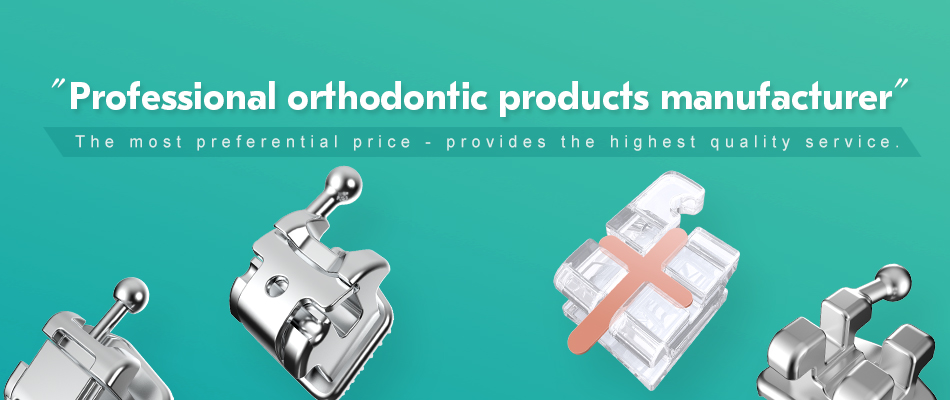

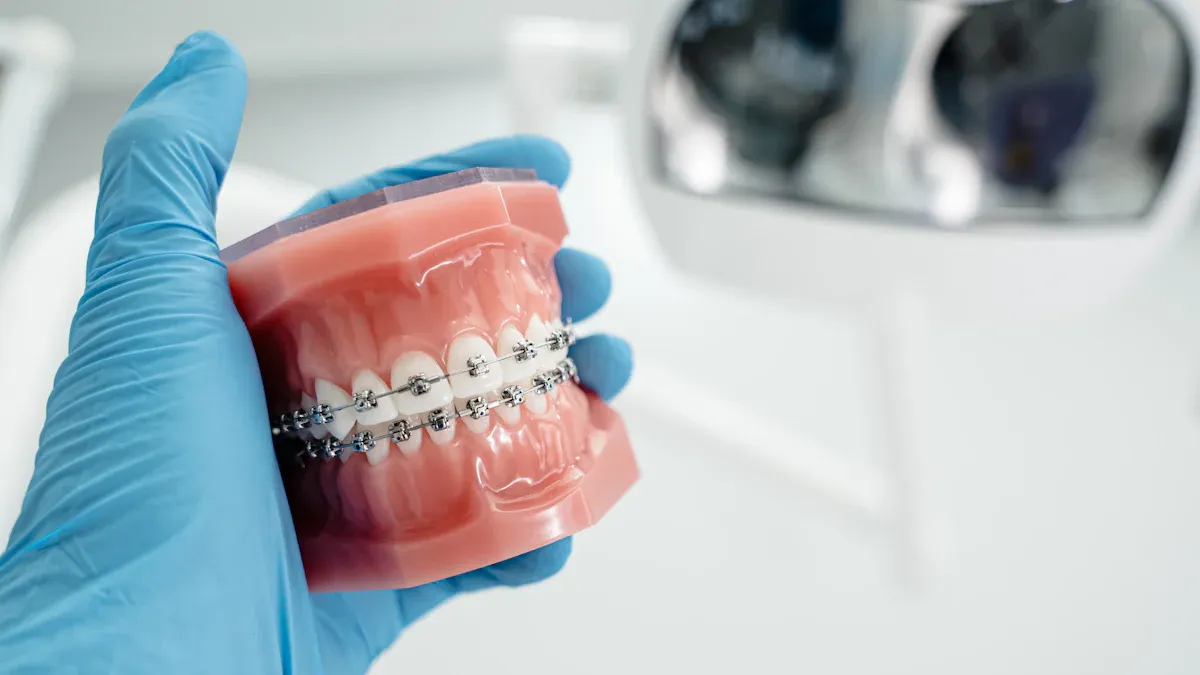
Orthodontic Self-Ligating Brackets offer an optimal solution for complex orthodontic cases. Their unmatched control, efficiency, and reliability truly make them stand out. These metal orthodontic brackets ensure predictable, superior outcomes, even for challenging tooth movements. They provide a robust, effective pathway to successful treatment in intricate scenarios. Many ask, “What brackets are best for complex orthodontic treatment?” The answer often points to self-ligating brackets for complex cases, especially when considering the best orthodontic brackets for severe malocclusion. They deliver significant metal self-ligating brackets clinical advantages.
Key Takeaways
- Metal self-ligating brackets give doctors great control over tooth movement. This helps them fix teeth very precisely.
- These brackets help teeth move faster and more smoothly. This means patients finish their treatment sooner.
- The brackets are very strong and reliable. They do not break easily, which means fewer emergency visits.
- Patients feel more comfortable with these brackets. They also make it easier to keep teeth clean.
- These brackets can fix many different and hard tooth problems. They work well for severe bite issues.
Unmatched Control and Precision with Orthodontic Self-Ligating Brackets
Superior Torque and Rotation Management
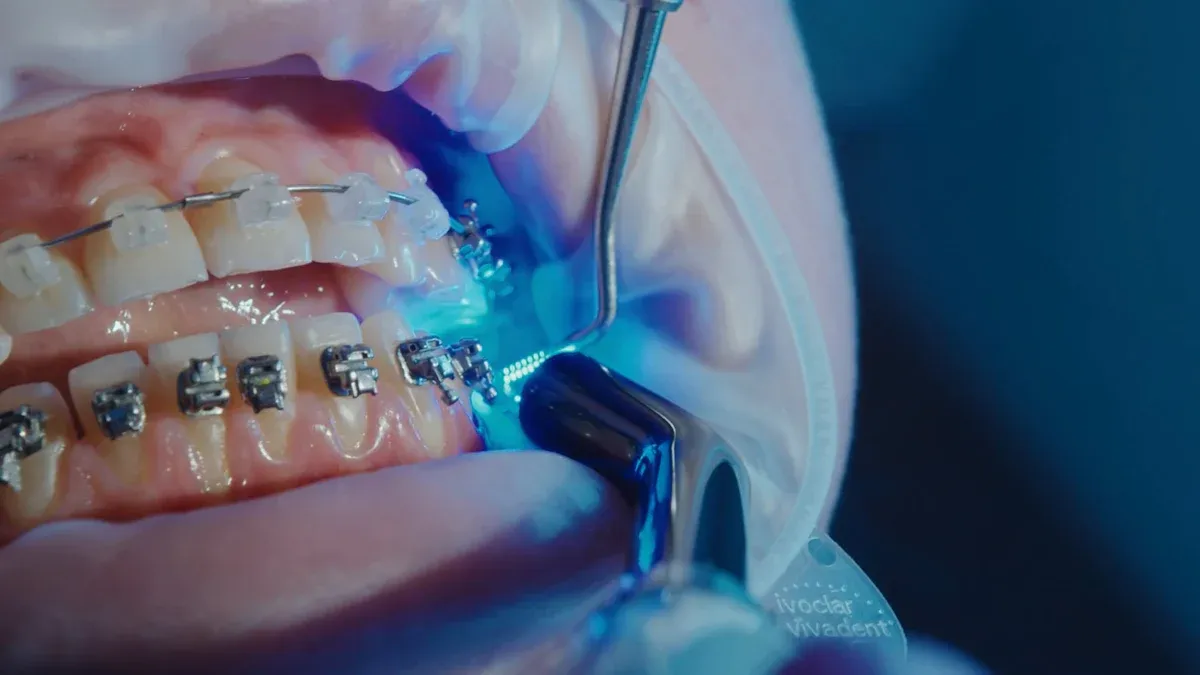
Orthodontic Self-Ligating Brackets provide exceptional control over tooth movement. They excel in managing torque and rotation. For example, the JJ Ortho Selfy Active Metal Self-Ligating Bracket Kit uses a dual activation system. This system combines interactive brackets for front teeth and passive brackets for back teeth. This ensures precise control in the front and great wire movement freedom. This design facilitates efficient adjustments during all treatment stages. Other brackets, like In-Ovation R, offer good torque management with rectangular archwires. The Forestadent 3D torque-lingual SLB has a vertical slit for three-dimensional control. This helps with both torque and rotation. The Opal M bracket, a passive metal type, also has a size and design ideal for managing tooth rotation and torque.
Consistent Force Delivery for Predictable Movement
These brackets deliver consistent force through a low-friction mechanism. Unlike traditional systems, which can feel tight after adjustments, this method allows teeth to move more naturally. The built-in mechanism lets the archwire slide freely within the brackets. This helps align teeth efficiently and supports faster alignment early on. Self-ligating brackets reduce friction and improve tooth movement efficiency. They use an internal clip or sliding door to hold the archwire. This removes the need for external ligatures, which cause friction and slow movement. This design leads to more precise tooth movement and efficient force delivery. They consistently provide less friction and more consistent tooth movement, especially in early treatment with the right wires. The design allows the archwire to glide smoothly, giving continuous, gentle pressure. This passive sliding mechanism lets the wire move naturally. This aligns with how teeth move through bone remodeling, which works best with consistent, light forces. Some brackets, like Pitts 21, even use thermodynamic materials. These materials respond to mouth temperature, becoming more flexible or rigid as needed. This improves biological compatibility and consistent force delivery.
Millimeter-Level Accuracy in Tooth Positioning
The superior torque and rotation management, combined with consistent force delivery, leads to millimeter-level accuracy in tooth positioning. This precise control allows orthodontists to guide teeth exactly where they need to go. It ensures the final alignment is not just aesthetically pleasing but also functionally sound. This level of accuracy is crucial for complex cases where even small deviations can impact the overall outcome. The advanced design of these brackets makes highly predictable and precise tooth movements possible.
Enhanced Efficiency and Faster Treatment Outcomes
Reduced Frictional Resistance for Smoother Movement
Metal self-ligating brackets really boost efficiency in orthodontic treatment. They achieve this by significantly reducing friction. Unlike traditional brackets that use elastic ties, these brackets have a built-in clip or door. This design allows the archwire to slide freely. This means teeth move more smoothly and with less resistance.
Consider how different brackets handle friction:
| Comparison | Metric | Median Value (ASLB) | Median Value (CBSSL) | Median Value (PSLB) | P-value | Conclusion |
|---|---|---|---|---|---|---|
| Active Self-Ligating Brackets (ASLB) vs. Conventional Brackets with Stainless Steel Ligatures (CBSSL) | Tensile Strength | Lower | Higher | N/A | > 0.05 | Similar frictional levels |
| Passive Self-Ligating Brackets (PSLB) vs. Conventional Brackets with Stainless Steel Ligatures (CBSSL) | Tensile Strength | N/A | Significantly Higher | Lower | < 0.05 | Less friction in PSLB |
| Passive Self-Ligating Brackets (PSLB) | Frictional Force | N/A | N/A | Lowest | N/A | Lowest friction levels |
As you can see, passive self-ligating brackets (PSLB) show the lowest frictional forces. This low friction helps teeth move into their correct positions faster and more comfortably.
Shorter Overall Treatment Timelines
The reduced friction and efficient tooth movement directly lead to shorter treatment times. Patients often finish their orthodontic journey sooner. For example, patients using metal self-ligating brackets saw their treatment end about 3.6 months earlier on average. This is a big difference compared to those with conventional brackets. This means you get to enjoy your new smile much faster!
Fewer and Quicker Adjustment Appointments
Self-ligating brackets also make clinic visits easier and faster. Because the archwire slides freely, orthodontists do not need to change elastic ties at every appointment. This saves a lot of time. Placing a wire in a fully bonded arch with a Damon2 system took only 46 seconds, much quicker than the 98 seconds for conventional brackets. This efficiency also allows for slightly longer intervals between appointments. You spend less time in the dental chair and have fewer visits overall.
Superior Durability and Reliability for Complex Cases
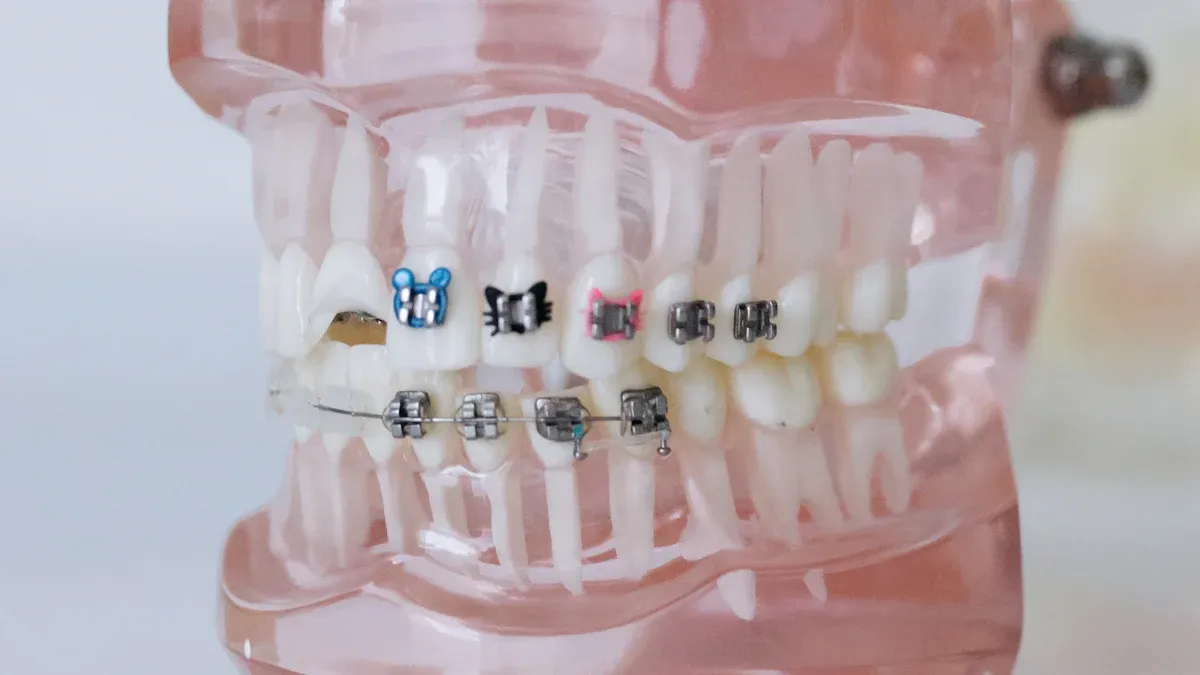
Metal self-ligating brackets stand out for their incredible durability. This strength is especially important when treating complex orthodontic cases. These brackets must withstand significant forces and remain reliable throughout the entire treatment period.
Robust Material Strength for Consistent Performance
The materials used in these brackets are top-notch. They ensure consistent performance. For example, MP35N® (UNS R30035) is a special alloy often used. Manufacturers choose it for its biocompatibility, corrosion resistance, and strength. It also offers toughness and ductility. This allows for precise shaping while maintaining durability. Another advanced material is a 17-4 low nickel alloy. This alloy provides maximum strength in thin walls. It also prevents slot collapse, which is crucial for effective treatment. Furthermore, Nitinol is used for the clip component. This material ensures the clip opens and closes effortlessly many times. It has been tested for over 1000 cycles, proving its long-lasting function.
Reduced Risk of Breakage and Orthodontic Emergencies
The robust construction of these brackets significantly reduces the risk of breakage. This is a huge benefit for patients. Fewer broken brackets mean fewer emergency visits to the orthodontist. Patients can continue their treatment without unexpected interruptions. This reliability helps keep the treatment plan on track. It also gives patients peace of mind.
Long-Term Stability in Challenging Environments
Complex cases often involve challenging oral environments. These might include crowded teeth or extensive tooth movements. Metal self-ligating brackets offer long-term stability in these situations. Their strong materials and design ensure they perform consistently. They maintain their integrity and function throughout the entire treatment. This reliability is key to achieving successful and lasting results for even the most intricate orthodontic challenges.
Improved Patient Experience with Orthodontic Self-Ligating Brackets
Patients often find their orthodontic journey much more pleasant with modern bracket systems. Metal self-ligating brackets significantly enhance the patient experience. They offer benefits that make treatment more comfortable and convenient.
Increased Comfort and Less Oral Irritation
These brackets are designed with patient comfort in mind. They often have smoother, rounded edges compared to traditional brackets. This design reduces friction against the soft tissues inside the mouth. Patients report less irritation to their cheeks and lips. The gentle, consistent forces applied by these systems also mean less overall discomfort during tooth movement. This leads to a more comfortable treatment experience from start to finish.
Easier Maintenance of Oral Hygiene
Maintaining good oral hygiene during orthodontic treatment can be a challenge. However, metal self-ligating brackets make this task much simpler.
- They have fewer ligatures, which means fewer places for food debris to get trapped. This simplifies daily brushing and flossing.
- The absence of elastic bands or ties prevents food particles from accumulating around the brackets. This makes cleaning routines more straightforward.
- Eliminating rubber ties significantly reduces the buildup of plaque and bacteria. This lowers the risk of cavities and gum disease. Patients find brushing and flossing considerably easier, which helps them maintain excellent oral health throughout their treatment.
Reduced Chair Time During Clinic Visits
Nobody enjoys spending extra time in the dental chair. Orthodontic Self-Ligating Brackets help reduce this time. While the exact time saved per visit can vary, these systems allow for longer intervals between appointments. Patients with these brackets typically visit their orthodontist every 8 to 10 weeks. In contrast, those with traditional brackets often need appointments every 4 to 6 weeks. This reduction in visit frequency means patients spend less overall time in the dental chair throughout their treatment. It also offers more flexibility for their busy schedules.
Versatility for Diverse Complex Orthodontic Challenges
Metal self-ligating brackets truly shine when orthodontists face diverse and complex challenges. Their adaptable design and robust mechanics make them suitable for a wide range of intricate cases. They offer solutions where other bracket systems might fall short.
Effective Treatment for Severe Malocclusions
Orthodontists often choose metal self-ligating brackets for severe malocclusions. These include significant overbites, underbites, and crossbites. The precise control these brackets offer allows for effective correction of these challenging bite issues. They apply consistent, gentle forces, which guides teeth into their correct positions efficiently. This capability ensures a successful outcome even in the most complicated alignment problems. Patients receive a functional and aesthetically pleasing bite.
Capability for Extensive and Intricate Tooth Movement
Complex cases frequently demand extensive and intricate tooth movements. Metal self-ligating brackets excel in these situations. They manage rotations, torques, and vertical movements with remarkable accuracy. Their design allows orthodontists to make detailed adjustments, guiding each tooth precisely. This system handles significant tooth repositioning, which is crucial for achieving optimal results in crowded mouths or cases with large gaps. They provide the necessary tools for detailed, multi-directional tooth movement.
Seamless Integration with Auxiliary Appliances
Metal self-ligating brackets integrate seamlessly with various auxiliary appliances. Orthodontists often use elastics, palatal expanders, or temporary anchorage devices (TADs) in complex treatments. These brackets provide secure attachment points and work harmoniously with these additional tools. This compatibility allows for comprehensive treatment plans. It ensures all aspects of a complex case receive attention. This adaptability makes them an invaluable asset for orthodontists tackling the most challenging orthodontic scenarios.
Metal self-ligating brackets stand as the definitive choice for navigating modern orthodontics’ complexities. Their combination of precise control, efficient mechanics, and robust durability ensures successful and predictable treatment outcomes. These Orthodontic Self-Ligating Brackets offer patients a reliable and effective path. They help achieve a healthy, perfectly aligned smile.
FAQ
What makes metal self-ligating brackets a top choice for complex cases?
Metal self-ligating brackets offer unmatched control and precision. They manage torque and rotation effectively. This allows orthodontists to achieve millimeter-level accuracy. Their robust design ensures consistent performance for challenging tooth movements.
Do these brackets shorten treatment time?
Yes, they often do. Metal self-ligating brackets reduce friction. This allows teeth to move more smoothly and efficiently. Patients typically experience shorter overall treatment timelines compared to traditional brackets.
Are metal self-ligating brackets more comfortable for patients?
Many patients find them more comfortable. These brackets have smoother, rounded edges. They also use gentle, consistent forces. This design reduces oral irritation and discomfort during treatment.
How do these brackets help with oral hygiene?
They make oral hygiene easier. Metal self-ligating brackets do not use elastic ties. This means fewer places for food and plaque to get trapped. Patients can brush and floss more effectively.
Can these brackets handle severe bite problems?
Absolutely. Orthodontists frequently choose metal self-ligating brackets for severe malocclusions. These include significant overbites and underbites. Their precise control helps correct even the most challenging bite issues.
Post time: Jan-16-2026