
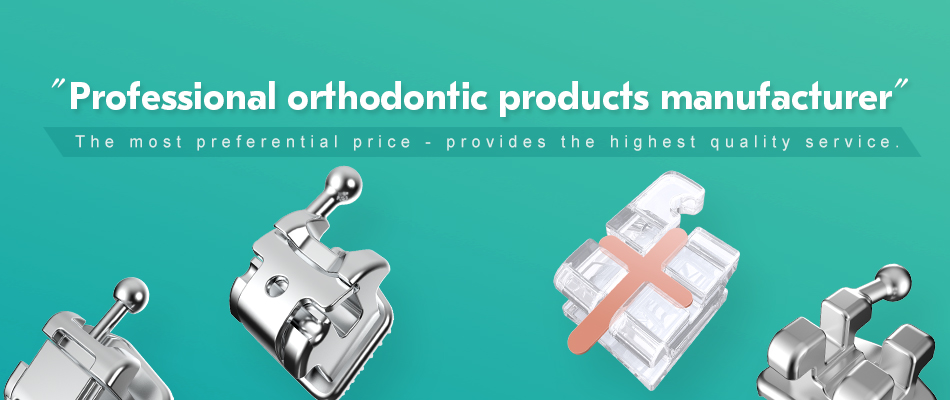

New practices benefit most from a bracket system that matches common cases, supports efficient chairside work, and fits procurement requirements. This guide explains how to select orthodontic brackets, related braces attachments, and the supporting hardware needed for a practical starter inventory.
What Orthodontic Brackets Do in a New Practice
Orthodontic brackets are the fixed interface that transfers force from the archwire to the tooth. In clinical terms, they are the anchor point that makes controlled tooth movement possible in braces treatment. The FDA recognizes brackets and tubes for orthodontic use as regulated dental devices, and ISO 27020 covers dimensional and labeling requirements for brackets and tubes used in fixed appliances. FDA-recognized ISO 27020 standard for orthodontic brackets and tubes FDA device classification for orthodontic brackets
Why this matters for startup inventory
A new clinic should stock bracket types that support both routine alignment and more selective aesthetic cases. That usually means conventional metal units, aesthetic ceramic or sapphire options, and at least one self-ligating line for cases where lower friction or faster wire changes are preferred. AAO guidance on braces also notes that modern systems may use ceramic brackets, self-ligating brackets, and elastic bands depending on the treatment plan. AAO braces treatment overview
How to Build a Starter Bracket Mix
A balanced starter mix reduces overstock risk while covering the most common fixed orthodontic workflows. For new dental practices, the safest approach is to begin with a narrow but complete set of orthodontic hardware that can handle initial alignment, space closure, and finishing.
Comparison Table: Core bracket categories for new dental practices
| Bracket category | Main advantage | Best use case | Inventory priority |
|---|---|---|---|
| Metal conventional | Strong, familiar, cost-efficient | General fixed treatment | High |
| Self-ligating metal | Lower friction and easier wire changes | Efficiency-focused workflows | High |
| Ceramic | Better aesthetics | Adult patients concerned about appearance | Medium |
| Sapphire | High transparency | Front-tooth aesthetic cases | Medium |
The clinical rationale is straightforward: self-ligating brackets often show lower friction than conventional designs, while archwire material also changes the force environment. A PMC study found significantly lower friction in self-ligating brackets than in conventional brackets, and stainless steel wires showed the lowest friction among the conventional group tested. PMC study on bracket-wire friction
Metal, ceramic, and sapphire choices
Metal brackets remain the default choice for most starter kits because they are durable and broadly applicable. Ceramic brackets are more suitable when appearance matters, while sapphire brackets serve patients who want a less visible appliance in the anterior region. FDA 510(k) summaries for ceramic orthodontic brackets describe them as devices intended to control tooth movement through a flexible orthodontic wire, which supports their role in comprehensive treatment. FDA 510(k) summary for ceramic orthodontic brackets
Which Braces Attachments Should Be Stocked First
Braces attachments are not limited to the visible bracket alone, because buccal tubes, ligature ties, rubber bands, and power chain products complete the treatment system. A new practice should treat these items as essential consumables rather than optional extras.
Comparison Table: Essential orthodontic attachments and their functions
| Attachment | Primary function | Typical stage | Procurement note |
|---|---|---|---|
| Buccal tube | Anchorage and archwire guidance | Posterior segment control | Stock by molar position |
| Ligature tie | Secures wire to bracket | All stages | Low-cost recurring item |
| Rubber bands | Auxiliary traction and bite correction | Interarch mechanics | Keep multiple sizes |
| Power chain | Continuous force for space closure | Space closure phase | Track elasticity and color |
Buccal tubes deserve special attention because they carry high posterior forces and guide the archwire in the molar region. For product planning, that means the posterior segment should not be treated as a generic add-on. It is a load-bearing part of the appliance system, and the target website’s buccal tube category is a logical companion to bracket inventory. See the buccal tube systems for a structured posterior setup.

How Archwire Selection Shapes Bracket Performance
Archwire selection determines how a bracket behaves in the mouth, especially during alignment and finishing. New practices should stock NiTi, copper NiTi, thermal activated, and stainless steel wires because each one serves a different treatment phase.
Stage-based wire selection
- NiTi wires are best for initial alignment and leveling.
- Copper NiTi and thermal activated wires help deliver lighter, more progressive force.
- Stainless steel wires provide higher control for mid-to-late stage detailing.
- Reverse curve wires support specific occlusal and curve-control needs.
The evidence base supports this staged approach. In the PMC friction study, wire material changed friction values, and stainless steel performed differently from nickel-titanium and beta-titanium in conventional brackets. That means a new practice should not buy brackets in isolation; it should match them with the wire sequence used in daily care. PMC evidence on archwire material and friction
For a practical product overview, the arch wire options page is useful for understanding how wire families support different treatment stages. In a starter inventory, this category should be considered part of the core orthodontic supplies package, not a separate afterthought.
Procurement should focus on compliance, consistency, and clinical compatibility before price alone. In orthodontics, a low unit cost is less useful if the product line lacks standardization, documentation, or stable supply.
Compliance and quality checklist
- Confirm regulatory status and market access documents.
- Verify bracket and tube dimensions against accepted standards.
- Review packaging, labeling, and traceability information.
- Check whether the supplier supports consistent batch quality.
- Match product types to the clinic’s most common case mix.
FDA-recognized standards matter here because they help define what a compliant orthodontic product should look like. ISO 27020, as recognized by FDA, covers functional dimensions, chemical ion release, packaging, and labeling for orthodontic brackets and tubes. That makes it especially relevant for export-oriented or compliance-focused buyers. FDA-recognized orthodontic bracket standard
For practices that want a broader system view, the orthodontic supplies homepage can be used to map brackets, tubes, wires, elastics, and tools into one purchasing plan. This is especially useful when the clinic wants one supplier for multiple product families.
Where to Buy Orthodontic Brackets and Related Hardware
A new practice should compare suppliers by product breadth, documentation, and service support rather than by catalog size alone. The most practical supplier list usually includes one full-line manufacturer and a few established industry references for benchmarking.
Supplier directory for startup practices
- orthodontic brackets for conventional, ceramic, and self-ligating options.
- buccal tube systems for posterior anchorage and wire guidance.
- arch wire options for staged alignment and finishing.
- orthodontic pliers for chairside adjustment and wire handling.
Other well-known reference points for clinical education and regulatory context include the AAO braces overview, the FDA-recognized ISO 27020 standard, and the PMC friction study. These sources help a new practice compare product claims against accepted clinical and regulatory expectations.
Practical Buying Strategy for the First 90 Days
The best first-order strategy is to buy fewer SKUs, but buy the right ones. New practices usually do better with a controlled starter set than with a broad catalog that creates waste, confusion, and slow turnover.
Start with one conventional metal line, one self-ligating line, one aesthetic line, a small range of buccal tubes, and the wire families needed for alignment and finishing. Then add elastics, ligature ties, power chain, and orthodontic pliers as recurring support items. This approach keeps the inventory aligned with real chairside demand and reduces the risk of dead stock.
FAQ
1. How many orthodontic bracket types should a new practice stock at the start?
Most new practices should begin with three bracket families: metal, self-ligating metal, and one aesthetic option such as ceramic or sapphire. That mix covers routine cases, efficiency-focused workflows, and adult patients who want lower visibility without creating excessive inventory complexity.
2. What is the most cost-effective starter choice for orthodontic brackets?
Conventional metal brackets are usually the most cost-effective starting point because they are durable, familiar, and suitable for many cases. However, cost should be balanced with case mix, because adult patients and efficiency-focused workflows may justify adding self-ligating or aesthetic options.
3. Do new dental practices need buccal tubes and archwires immediately?
Yes. Buccal tubes and archwires are core parts of fixed orthodontic treatment, not optional extras. A bracket without the right posterior attachments or wire sequence cannot function as a complete system, so these items should be included in the first purchasing plan.
4. What should a clinic ask a supplier about minimum order quantity?
A clinic should ask for minimum order quantity, carton configuration, lead time, and whether mixed-SKU orders are allowed. These details matter because orthodontic consumables are often purchased in stages, and a rigid MOQ can create unnecessary cash flow pressure for a new practice.
5. How can a practice reduce procurement risk when buying orthodontic hardware?
The safest method is to verify compliance documents, confirm product dimensions, and test compatibility with the clinic’s preferred wire sequence. It also helps to choose suppliers with stable manufacturing, clear labeling, and a complete product family so the practice can reorder consistently.
Post time: Sep-17-2026