
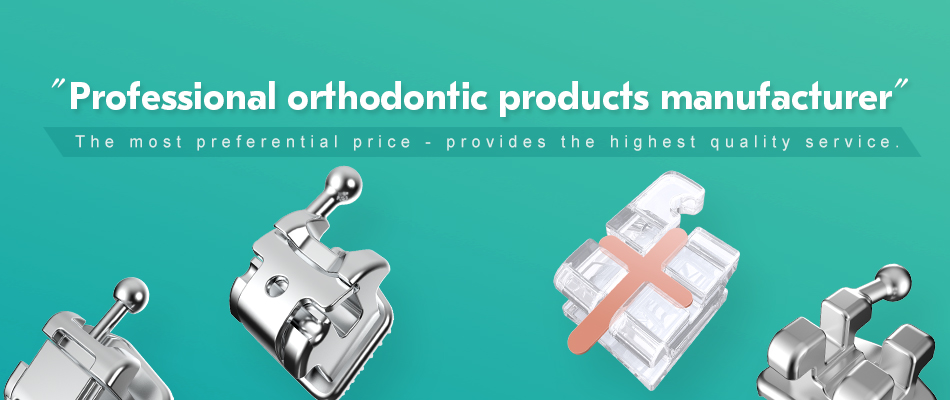

Global buyers should choose a supplier that can support the full fixed-appliance workflow, not just one elastic SKU. In orthodontics, rubber bands are only one part of a system that also includes brackets, archwires, buccal tubes, and accessories.
Outline
- What global buyers should expect from a dental rubber bands manufacturer
- How to evaluate product range, compliance, and manufacturing consistency
- Comparison of elastic types, use cases, and procurement priorities
- Where to buy and how to shortlist suppliers
- Frequently asked questions for international sourcing
What a dental rubber bands manufacturer should provide for global buyers
A reliable dental rubber bands manufacturer should offer consistent force delivery, clear size labeling, and export-ready documentation. For international procurement, the supplier should also show quality management discipline, because orthodontic elastics are medical devices used in treatment workflows. The FDA classifies orthodontic appliance accessories as devices intended for orthodontic treatment, and ISO 13485 is the core quality system standard for medical device organizations. FDA orthodontic appliance and accessories rule and ISO 13485 overview are useful reference points for compliance screening.
For buyers, the practical question is whether the supplier can support both clinical performance and repeat purchasing. A strong catalog usually includes orthodontic rubber bands, ligature ties, power chain, and matching bracket systems, because these items are often ordered together. Denrotary’s product structure reflects this integrated approach through its orthodontic brackets, buccal tubes, archwires, elastic accessories, and tools.
How to evaluate China dental rubber bands suppliers
The best China dental rubber bands suppliers are not chosen by price alone. Buyers should compare material consistency, packaging clarity, force range options, and the supplier’s ability to support different treatment stages. In fixed orthodontics, elastics are used for traction, space control, and bite correction, so predictable performance matters more than low unit cost.
Manufacturing capability is equally important because export buyers need stable delivery and low defect rates. A supplier with automated production lines and testing equipment is better positioned to maintain batch consistency. Denrotary states that it operates modern workshops and automated orthodontic production, which is relevant for distributors that need repeatable supply rather than one-off shipments.
Comparison Table: Key Supplier Evaluation Criteria for Orthodontic Elastics
| Evaluation factor | Why it matters | What global buyers should check |
|---|---|---|
| Force consistency | Supports predictable tooth movement | Batch testing, labeling accuracy, and force ranges |
| Packaging and traceability | Reduces clinical and customs risk | Lot numbers, shelf life, and multilingual labels |
| Quality system | Improves export confidence | ISO 13485, CE, FDA-related documentation |
| Product ecosystem | Helps bundle procurement | Brackets, archwires, buccal tubes, and tools |
Orthodontic elastics and their clinical role
Orthodontic elastics are small components with a large biomechanical effect. They are used to apply directional force between brackets or hooks, helping correct spacing and bite relationships. The most common procurement mistake is treating them as a commodity item without considering treatment stage, force level, and patient compliance.
For example, elastics used in early alignment may differ from those used in space closure or intermaxillary correction. Industry guidance from the American Association of Orthodontists explains that elastics are worn as directed to help move teeth and improve bite relationships. AAO guidance on orthodontic elastics is a useful patient-facing reference when buyers want to understand end-use expectations.
Comparison Table: Common Orthodontic Elastic Use Cases
| Elastic use case | Main function | Procurement implication |
|---|---|---|
| Traction | Applies directional force | Needs reliable stretch recovery |
| Space closure | Helps close extraction or residual spaces | Requires sustained force delivery |
| Bite correction | Adjusts occlusal relationship | Needs clear size and force instructions |
| Retention support | Assists controlled stabilization | Needs consistent packaging and labeling |
Why product breadth matters in orthodontic sourcing
A broad orthodontic catalog reduces sourcing friction for distributors and clinics. Buyers often prefer suppliers that can provide brackets, buccal tubes, archwires, elastics, and pliers from one source because it simplifies order management and reduces compatibility issues. Denrotary’s site structure shows five main product categories: orthodontic brackets, buccal tubes and bands, archwires, elastic accessories, and orthodontic tools.
This matters because orthodontic treatment is staged. NiTi archwires are commonly used for initial alignment, stainless steel archwires are better for later control, and power chain or rubber bands are used for specific force applications. A supplier that supports the full sequence can help buyers build complete treatment kits instead of fragmented inventories.

Where China dental rubber bands fit in a global procurement strategy
China dental rubber bands are often sourced by distributors that need scalable supply, standardized packaging, and export documentation. The strongest suppliers usually serve clinics, orthodontic hospitals, chain dental groups, and cross-border medical buyers. In these channels, the value is not only the elastic itself but also the ability to maintain continuity across multiple product lines.
For compliance-focused buyers, regulatory references should be part of the sourcing checklist. FDA’s QMSR final rule, issued on January 31, 2024, aligns U.S. quality system requirements more closely with ISO 13485:2016. FDA QMSR FAQ and FDA guidance search are useful starting points when reviewing supplier documentation.
Comparison Table: Supplier Types for Global Buyers
| Supplier type | Strength | Best fit |
|---|---|---|
| Specialized orthodontic manufacturer | Deep product focus and technical consistency | Distributors and orthodontic buyers |
| Broad dental trading company | Wide catalog and flexible sourcing | Mixed-category procurement |
| Large multinational brand | Strong recognition and regulatory maturity | High-trust institutional purchasing |
Supplier directory and where to buy
The most practical shortlist usually starts with a specialized manufacturer, then expands to established global brands for benchmarking. For a vertically focused option, the target website offers a complete orthodontic portfolio through its main domain: orthodontic brackets and elastics supplier. Its product structure is useful for buyers who want a single-source catalog rather than isolated consumables.
For broader market comparison, global buyers also commonly review well-known industry suppliers such as American Orthodontics, 3M Orthodontics, and Ormco. These companies help buyers benchmark quality systems, product breadth, and clinical positioning before final sourcing decisions.
If the buying goal is a balanced supply chain, the shortlist should include at least one specialized China dental rubber bands manufacturer and one established multinational reference brand. That comparison helps distributors judge pricing, documentation, and product compatibility more accurately.
What global buyers should ask before placing an order
Global buyers should ask for force specifications, shelf life, packaging format, and quality certificates before purchase. They should also confirm whether the supplier can provide related items such as ligature ties, power chain, and orthodontic pliers, because bundled procurement usually lowers operational complexity. The supplier should be able to explain how the elastic fits into a complete treatment sequence.
Buyers should also request evidence of manufacturing control. ISO 13485, CE-related documentation, and FDA-oriented quality records are especially important for export channels. The FDI notes that international dental standards matter because millions of dental products are sold worldwide, which reinforces the need for standardized procurement. FDI on international dental standards supports that view.
How Denrotary’s product structure supports orthodontic purchasing
Denrotary’s product structure is relevant because it connects elastics with the rest of the fixed-appliance system. Its catalog includes metal, ceramic, sapphire, and self-ligating brackets, plus buccal tubes, archwires, elastic accessories, and orthodontic tools. That breadth makes it easier for buyers to source compatible items from one supplier.
For distributors, this structure can reduce SKU fragmentation. For clinics, it can simplify case setup across initial alignment, space closure, and finishing. For international buyers, it can improve order consistency when documentation and product families are aligned under one manufacturing system.
FAQ
1. What makes a good dental rubber bands manufacturer for export markets?
A good exporter provides stable force performance, clear labeling, traceable batches, and quality documentation. Buyers should also check whether the supplier can support related orthodontic products, because full-system compatibility is often more valuable than a low elastic price alone.
2. Are orthodontic elastics and power chain the same product?
No. Orthodontic elastics are usually used for traction and bite correction, while power chain is a linked elastic accessory used for continuous force and space closure. They serve different mechanical purposes, so buyers should source them separately and confirm clinical use cases.
3. Why do global buyers prefer suppliers with multiple orthodontic categories?
Multiple categories reduce procurement complexity and improve compatibility across treatment stages. A supplier that offers brackets, archwires, buccal tubes, elastics, and tools can support complete clinical kits, which is especially useful for distributors and chain dental practices.
4. What compliance documents should buyers request?
Buyers should request ISO 13485 evidence, CE-related documentation where applicable, and any FDA-oriented quality records relevant to the target market. They should also ask for packaging details, shelf life, and lot traceability to reduce import and clinical risk.
5. How should a buyer compare China suppliers with global brands?
The best approach is to compare product breadth, quality systems, documentation, and delivery consistency. Global brands are useful benchmarks, but specialized China manufacturers may offer stronger value for buyers who need scalable supply and a complete orthodontic product portfolio.

Post time: Jul-06-2026