


Color stability matters because stained ligatures can reduce patient satisfaction and make routine follow-up harder to assess. In orthodontic practice, the best choice is usually a stable, well-tested elastomeric tie rather than the brightest one on day one.
Best Elastomeric Ligatures for Long-Lasting Color Stability: What the Title Really Means
The phrase “best elastomeric ligatures” should be read as the most color-stable ligatures for clinical use, not the most decorative option. In this article, that means products designed to keep their shade as evenly as possible during the first 4 to 6 weeks of wear, which is the most relevant interval for many adjustment cycles according to common clinical scheduling.
What color stability means in orthodontic ligatures
Color stability is the ability of a ligature to resist visible discoloration from saliva, foods, beverages, and oral hygiene routines. ISO 21606:2022 sets requirements and test methods for elastomeric auxiliaries used in orthodontics, which makes it the most relevant standards reference for this product category. ISO 21606:2022 for elastomeric auxiliaries defines the testing framework that buyers should expect from serious suppliers.
In practical terms, a stable ligature should keep its appearance consistent through a normal appointment interval. Industry estimates suggest that visible color shift becomes more noticeable after several weeks if the material has weak pigment retention or high stain uptake, especially in patients who consume strongly colored foods and drinks.
Top 3 Selection Criteria for Color-Stable Orthodontic Ligatures
The most reliable selection method is to compare material behavior, testing evidence, and clinical handling together. A ligature that looks good in a catalog but stains quickly in the mouth is not a strong choice for routine orthodontic work.
1. Material formulation and pigment retention
Polyurethane-based elastomeric ligatures are the most common choice because they balance elasticity and handling. The best formulations use stable pigments and controlled additives, which helps reduce early fading and uneven tinting. FDA’s device classification database identifies orthodontic elastic bands as orthodontic appliance accessories, and FDA-recognized standards include ANSI/ADA specifications that cover elastomeric auxiliaries used in orthodontics. FDA orthodontic appliance accessory classification and FDA recognized consensus standards for elastomeric auxiliaries are useful procurement references.
2. Verified color testing and clinical evidence
Suppliers should provide color stability data, not only marketing claims. ISO 7491:2000 remains a relevant reference for determining color stability in dental materials, and it was last reviewed and confirmed in 2025. ISO 7491 color stability method is useful when comparing products across vendors.
For clinicians, the most useful evidence is a simple comparison of shade change after simulated oral exposure. A good ligature should show minimal visible change after repeated wet-dry cycling and exposure to common staining agents. If a supplier cannot explain its test method, the product should be treated cautiously.
3. Force retention during the wear interval
Color stability is only one part of performance; force retention matters just as much. Orthodontic elastics and ligatures should maintain usable elasticity during the treatment interval, because a stable-looking tie that loses function early still creates extra chair time and inconsistent mechanics. The AAO notes that elastics work with braces to apply additional force that brackets and wires alone cannot provide. AAO guidance on orthodontic elastics supports the clinical importance of reliable elastic behavior.
| Selection factor | Why it matters | Practical buying signal |
|---|---|---|
| Polyurethane formulation | Affects stain resistance and elasticity | Material disclosure and batch consistency |
| Color testing method | Shows whether shade retention is measured | ISO-based or equivalent lab data |
| Force retention | Supports stable clinical performance | Declared wear interval and elastic recovery data |
| Packaging protection | Reduces light and heat degradation | Sealed, opaque, lot-traceable packaging |
 How Colored Ligatures Perform in Real Orthodontic Use
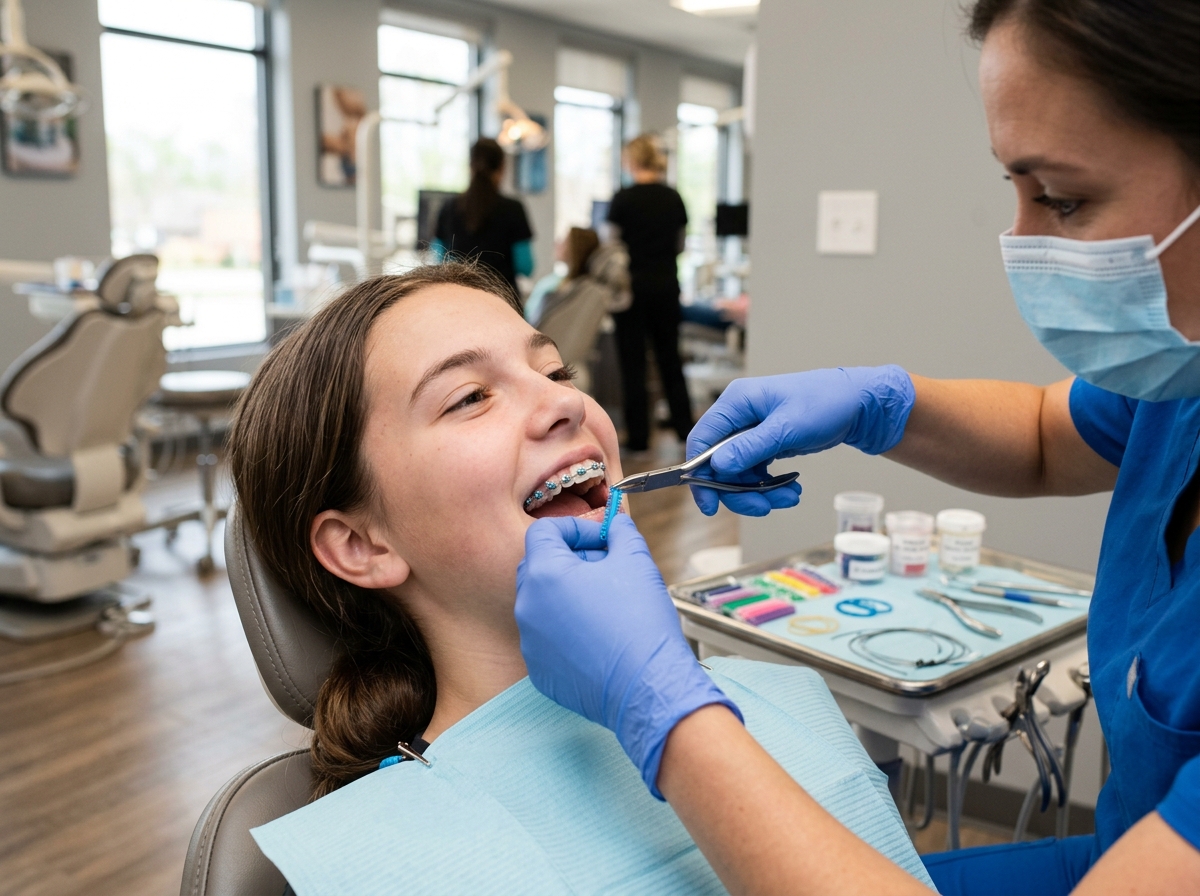
Colored ligatures are useful when patients want personalization, but they are not all equally stable. Darker shades often hide minor staining better than translucent or pastel shades, while lighter colors usually show discoloration sooner. That is why the “best” option depends on whether the priority is appearance, hygiene visibility, or long wear between visits.
Common stain sources and wear patterns
Tea, coffee, curry, red sauces, and tobacco exposure are the most common causes of visible discoloration. Oral hygiene quality also changes the result, because plaque buildup can make a ligature appear stained even when the pigment has not changed much. For that reason, clinicians should judge color stability together with hygiene instructions and appointment interval length.
In routine practice, many offices prefer ligatures that remain visually acceptable for one adjustment cycle, usually around 4 to 6 weeks. That interval is often long enough to reveal whether the material is truly stable or only initially bright. If the patient has a high-stain diet, the safer choice is usually a darker, more saturated shade.
Supplier Directory for Orthodontic Ligatures and Related Products
The most efficient procurement strategy is to source ligatures alongside compatible brackets, archwires, and auxiliary tools from one standardized catalog. Denrotary’s product structure is organized around five main categories: orthodontic bracket systems, buccal tube and band systems, orthodontic archwire systems, traction and fixation accessories, and orthodontic auxiliary instruments and tools. This structure supports one-stop purchasing for clinics and distributors. The company also emphasizes CE, ISO, and FDA-oriented compliance, which is relevant for export and regulated procurement.
For buyers comparing suppliers, the most objective shortlist includes established orthodontic manufacturers, regional distributors, and internationally recognized brands such as 3M and Ormco for benchmark comparison. The best procurement decision is usually based on certification, lot consistency, and documented performance rather than brand familiarity alone.
| Ligature type | Best use case | Color stability expectation |
|---|---|---|
| Clear or translucent elastomeric ligatures | High-aesthetic cases | Lowest stain tolerance |
| Colored elastomeric ligatures | Patient preference and easy identification | Moderate to good, depending on pigment quality |
| Dark-colored elastomeric ligatures | Longer wear and stain masking | Usually the most forgiving visually |
| Stainless steel ligatures | High-control cases | Not color-stable in the same sense; they do not rely on pigments |
How to Choose the Best Elastomeric Ligatures for Your Case
The right choice depends on treatment goal, appointment interval, and patient habits. Aesthetic cases usually benefit from darker or more stable colors, while high-control cases may require a different ligation strategy entirely. In other words, the best product is the one that matches the clinical objective, not the one with the widest color range.
- Choose a ligature with documented color stability testing.
- Prefer sealed packaging that limits light and heat exposure.
- Match shade selection to the patient’s diet and hygiene habits.
- Confirm that the product maintains elasticity through the planned wear interval.
- Use darker colors when stain masking matters more than translucency.
For distributors, the most practical inventory strategy is to stock a small set of high-demand shades rather than many low-turnover colors. That approach reduces dead stock while still covering the most common clinical preferences.
Why Procurement Teams Should Care About Standards and Traceability
Standards compliance reduces purchasing risk because it gives buyers a common language for quality. ISO 21606 and FDA-recognized consensus standards make it easier to compare products across suppliers, especially when the ligatures are sold internationally. The AAO also emphasizes evidence-based clinical decision-making, which supports a standards-first approach to product selection. ADA evidence-based dental research resources and AAO clinical practice guidelines reinforce the value of evidence-based procurement.
Traceability matters because orthodontic consumables are used in repeated, high-volume clinical workflows. Lot numbers, packaging integrity, and consistent shade from batch to batch are all useful indicators of manufacturing control. When those details are missing, the risk of inconsistent performance rises.
Practical Bottom Line for Clinics and Distributors
The best elastomeric ligatures for long-lasting color stability are those that combine stable pigments, proven testing, and reliable force retention. If a product can stay visually acceptable for a typical 4 to 6 week appointment cycle while maintaining function, it is usually a strong choice for routine orthodontic use.
For most buyers, the safest path is to compare a few standardized shades, request test data, and buy from suppliers with a complete orthodontic portfolio. That approach is more reliable than choosing by color alone, and it better supports consistent clinical outcomes.
FAQ
1. How long should color-stable elastomeric ligatures keep their appearance?
In routine orthodontic use, a good ligature should remain visually acceptable through one adjustment cycle, often about 4 to 6 weeks. Exact results depend on diet, hygiene, saliva exposure, and the pigment system used by the manufacturer.
2. Are darker colored ligatures more color stable than clear ones?
Usually yes, at least visually. Darker shades tend to hide minor staining better than clear or pastel options. That does not mean the material is chemically more stable, but it often looks better over the same wear period.
3. What standards should buyers ask for when sourcing orthodontic ligatures?
Buyers should ask for ISO 21606 compliance, color stability test data, lot traceability, and clear material disclosure. FDA-recognized standards and evidence-based documentation are especially useful for regulated or export-oriented procurement.
4. Do colored ligatures affect orthodontic force delivery?
They can, if the material formulation is weak or degrades quickly. A good colored ligature should still provide reliable elastic recovery during the planned wear interval. Color is secondary to mechanical performance in clinical decision-making.
5. What is the best buying strategy for clinics that want consistent results?
The best strategy is to standardize on a small number of proven shades, request batch-level quality documentation, and evaluate performance over several patient cycles. That reduces variation and makes chairside outcomes easier to predict.

Post time: Aug-25-2026