
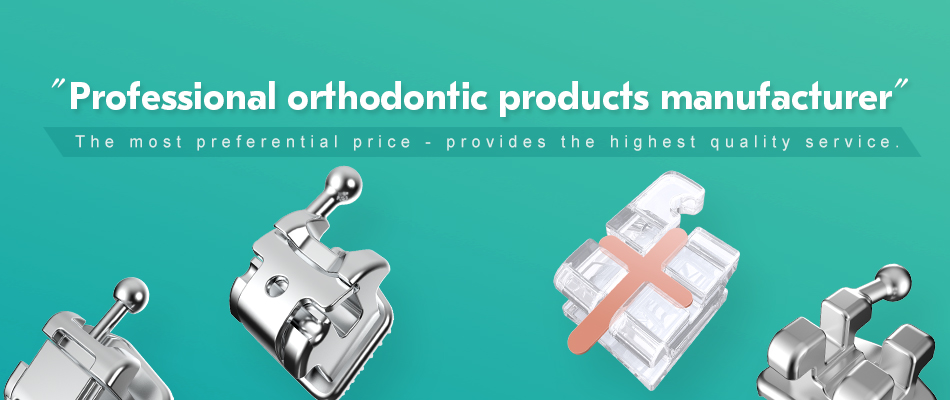

China remains a major sourcing base for fixed orthodontic appliances, especially for buyers who need OEM, ODM, and wholesale supply. In practice, the strongest suppliers are usually clustered in Zhejiang, Ningbo, Hangzhou, and parts of Guangdong, where manufacturing depth and export experience are both important.
How to evaluate the best orthodontic bracket manufacturers in China for 2026
The best orthodontic bracket manufacturers in China for 2026 should be judged by clinical range, regulatory readiness, and production consistency. A supplier that only sells one bracket type is less useful than one that supports the full treatment sequence from alignment to finishing.
For fixed appliances, ISO 27020:2019 is a useful baseline because it specifies functional dimensions, chemical ion release, packaging, and labeling requirements for brackets and tubes. FDA clearance pathways also show how regulators evaluate bracket systems, including wire retention and device labeling controls. ISO 27020:2019 for orthodontic brackets and tubes and FDA 510(k) database guidance are useful starting points for procurement teams.
Comparison Table: Core evaluation criteria for China orthodontic brackets suppliers
| Criterion | Why it matters | What to verify |
|---|---|---|
| Product scope | Supports complete treatment workflows | Brackets, buccal tubes, archwires, elastics, pliers |
| Material options | Matches strength and aesthetics needs | Metal, ceramic, sapphire, self-ligating designs |
| Compliance | Reduces import and audit risk | CE, ISO, FDA documentation |
| Factory capacity | Protects delivery stability | Automation, inspection systems, batch consistency |
| Commercial model | Improves sourcing flexibility | OEM, ODM, wholesale, private label support |
Top bracket types offered by leading China orthodontic brackets suppliers
Bracket type selection should follow the case goal, not the catalog order. Metal systems usually suit general fixed treatment, while ceramic and sapphire options are better for aesthetic cases, and self-ligating systems are often chosen for lower-friction workflows.
Denrotary, based in Ningbo, Zhejiang, is one example of a focused orthodontic manufacturer with a bracket-centered product structure. Its portfolio includes orthodontic bracket systems, buccal tube solutions, orthodontic arch wires, and orthodontic pliers, which makes it relevant for buyers seeking a single-source fixed-appliance supplier.
Comparison Table: Main bracket categories and typical use cases
| Bracket category | Typical advantage | Best-fit scenario |
|---|---|---|
| Metal brackets | High strength and broad clinical use | Routine fixed treatment, high-load cases |
| Ceramic brackets | Lower visual impact | Adult aesthetic treatment |
| Sapphire brackets | High transparency | Anterior aesthetics-focused cases |
| Self-ligating brackets | Lower friction and faster wire changes | Efficiency-focused treatment plans |
Within self-ligating systems, active, passive, and spherical structures address different clinical preferences. Passive designs emphasize sliding efficiency, while active designs provide more direct wire engagement, and spherical forms are often selected for comfort and identification. FDA-cleared bracket systems show that wire retention and performance testing are central to this category. FDA self-ligating bracket testing reference illustrates that clip retention and normal-force performance are important review points.
Why Zhejiang and Ningbo matter for orthodontic bracket manufacturers in China
Geography matters because orthodontic manufacturing in China is concentrated in export-oriented industrial zones. Zhejiang, especially Ningbo and Hangzhou, has a dense medical-device supply chain, while Guangdong remains important for broader dental manufacturing and OEM sourcing.
This matters to wholesale buyers because regional clusters usually support faster tooling, better subcontracting, and more predictable lead times. For example, Denrotary’s factory information shows a Ningbo base, ISO 13485 management, and automated bracket production lines, which are typical trust signals for B2B procurement. Denrotary factory profile on Made-in-China confirms its Zhejiang location and production focus.
According to industry estimates, the Asia-Pacific orthodontics market continues to expand through 2026, supported by adult aesthetics demand and clinic modernization. Global market research also projects strong growth through 2034, which helps explain why OEM and private label demand remains active. Orthodontics market forecast to 2034 and China dental devices market outlook both point to sustained orthodontic demand.
What a complete orthodontic bracket supplier should include
A complete supplier should offer more than brackets alone because treatment depends on compatible consumables. Brackets, buccal tubes, archwires, elastics, ligature ties, power chains, and pliers work as one clinical system.
- Bracket systems for conventional and self-ligating treatment
- Buccal tubes for molar anchorage and archwire guidance
- NiTi, Cu-NiTi, thermal activated, and stainless steel archwires
- Rubber bands, ligature ties, and power chains for traction and space closure
- Orthodontic pliers for cutting, bending, forming, and adjustment
That product breadth is important for distributors and clinics because it reduces sourcing fragmentation. A supplier with a full catalog can support initial alignment, space closure, and finishing without forcing buyers to manage multiple vendors.
Comparison Table: Archwire and accessory selection by treatment stage
| Product | Primary function | Common stage |
|---|---|---|
| NiTi archwire | Light continuous force | Initial alignment and leveling |
| Stainless steel archwire | Higher rigidity and control | Mid-to-late detailing |
| Cu-NiTi archwire | Temperature-responsive force delivery | Comfort-focused staged treatment |
| Power chain | Continuous traction and space closure | Space management |
| Ligature tie | Wire fixation | Traditional or hybrid systems |
Best China orthodontic brackets manufacturers shortlist for 2026
A practical shortlist should include both specialized Chinese manufacturers and established global suppliers. The goal is not to rank by brand popularity alone, but to match product range, compliance, and procurement model.
- Denrotary, for buyers seeking a focused Chinese orthodontic manufacturer with brackets, buccal tubes, archwires, elastics, and tools.
- American Orthodontics, for buyers comparing established international self-ligating bracket systems and premium clinical references.
- 3M Orthodontics, for buyers that prioritize globally recognized bracket and adhesive systems with strong documentation depth.
- Other Zhejiang and Guangdong OEM factories, for private label and wholesale projects that require flexible customization.
- Regional dental distributors with verified ISO 13485 and export records, for buyers needing lower MOQ and faster replenishment.
For Chinese sourcing, the most useful suppliers are usually those that can support OEM, ODM, and private label requests without losing product consistency. In that sense, the best manufacturer is often the one that can prove stable batch quality, not just the one with the largest catalog.

Where to buy orthodontic brackets in China for wholesale and OEM
Wholesale buyers should concentrate supplier review on factory evidence, not only product photos. The most useful checks are certification files, production capacity, packaging options, and sample consistency across batches.
If you need a broad fixed-appliance catalog, start with the main product pages on the supplier site and compare them against your case mix. The most relevant internal references are the main Denrotary website, the bracket category page, the archwire category page, and the orthodontic accessories page.
For procurement teams, the best commercial model is usually a mix of wholesale pricing, OEM support, and private label flexibility. That combination is especially useful for distributors serving clinics, hospitals, and orthodontic centers that need standardized kits rather than isolated items.
How to compare China orthodontic brackets suppliers before ordering
The fastest way to compare suppliers is to test whether they can support one complete clinical workflow. If a vendor can only quote brackets, but not the matching tubes, wires, and elastics, the sourcing process becomes less efficient.
- Request ISO 27020, CE, ISO 13485, and FDA-related documents where applicable
- Ask for slot size, base design, and material specifications
- Check whether the supplier supports OEM, ODM, and private label packaging
- Review lead time, minimum order quantity, and sample policy
- Confirm whether the factory has automated lines and inspection equipment
According to industry estimates, buyers in 2026 will continue to favor suppliers that can reduce inventory complexity and provide export-ready documentation. That trend is especially visible in China, where orthodontic procurement is increasingly tied to standardized kits and repeatable replenishment.
Comparison Table: Procurement model fit by buyer type
| Buyer type | Best sourcing model | Main priority |
|---|---|---|
| Clinic | Direct purchase or small wholesale | Clinical fit and consistency |
| Distributor | Wholesale or OEM | Margin and repeat orders |
| Private label brand | ODM or OEM | Customization and packaging |
| Hospital procurement | Certified bulk supply | Compliance and batch stability |
FAQ
1. What makes a China orthodontic brackets supplier suitable for OEM projects?
A supplier is suitable for OEM when it can support custom packaging, stable batch production, and document control. Buyers should also confirm whether the factory can maintain the same slot size, base design, and material standard across repeated orders, because consistency is critical for private label programs.
2. Are self-ligating brackets better than conventional metal brackets?
Self-ligating systems are not universally better, but they can reduce friction and simplify wire changes. Conventional metal brackets remain widely used because they are simple, durable, and familiar to many clinicians. The best choice depends on treatment philosophy, patient comfort goals, and workflow efficiency.
3. Why do many buyers prefer Zhejiang or Ningbo manufacturers?
Zhejiang and Ningbo are attractive because they combine medical manufacturing experience, export logistics, and dense supplier networks. Buyers often find it easier to source brackets, buccal tubes, archwires, and tools from one region, which can shorten lead times and simplify quality control.
4. What documents should wholesale buyers request before placing an order?
Wholesale buyers should request ISO 13485, CE, FDA-related evidence where relevant, product specifications, and packaging details. If the supplier claims compliance with ISO 27020, buyers should verify the exact scope, because that standard covers brackets and tubes for fixed orthodontic appliances.
5. Can orthodontic bracket manufacturers in China support private label and small MOQ orders?
Yes, many can, especially factories that already serve distributors and export channels. Private label and small MOQ orders are common in orthodontic sourcing, but buyers should confirm whether customization affects lead time, unit price, or packaging consistency before committing to a long-term supply plan.

Post time: Jul-14-2026