

Introduction
Choosing an orthodontic buccal tube manufacturer for OEM orders affects far more than unit price. Buyers need a factory that can deliver consistent clinical performance, stable quality across large production runs, and the flexibility to support private labeling, packaging, and margin goals. This article explains what separates a reliable buccal tube factory from a basic supplier, including manufacturing capability, quality control, MOQ expectations, customization options, and long-term supply readiness. With that framework, you can assess potential partners more confidently and align sourcing decisions with both product standards and commercial growth.
Why the Right Orthodontic Buccal Tube Manufacturer Matters
Selecting the ideal orthodontic buccal tube manufacturer is a pivotal strategic decision for dental supply brands and distributors. Buccal tubes are foundational components of fixed orthodontic appliances, anchoring archwires at the molars and enduring the most significant occlusal forces in the mouth. For Original Equipment Manufacturer (OEM) buyers, the selected factory must expertly balance exacting clinical efficacy with highly scalable production capabilities.
The global orthodontic supply market is increasingly competitive, driving brands to seek private-label manufacturing to differentiate their portfolios. Sourcing these critical components requires looking beyond basic brochures to understand a factory’s engineering depth, production capacity, and alignment with the brand’s long-term commercial goals.
Volume commitments, private labeling, and margin targets
Volume commitments heavily influence the OEM relationship and dictate the pricing structure. A typical tier-one manufacturer requires minimum order quantities (MOQs) ranging from 5,000 to 20,000 units per specific SKU for private-label production. These volumes justify the setup costs associated with custom packaging and dedicated production runs.
Buyers targeting aggressive margin improvements often seek a 30% to 45% reduction in their Cost of Goods Sold (COGS) compared to domestic wholesale sourcing. Achieving these margin targets requires negotiating tiered pricing contracts based on annual volume forecasts exceeding 100,000 units. A strong manufacturer will offer scalable pricing models that support a brand’s growth from initial market entry to large-scale international distribution.
Key risks of choosing the wrong manufacturer
Partnering with an unverified or under-equipped factory introduces severe clinical and commercial risks that can quickly erode a brand’s market position. If a manufacturer’s defect rate exceeds the strict industry standard of 1.5%, brands face costly product recalls, increased customer service overhead, and permanent damage to their reputation among orthodontic professionals.
Clinical failures often stem from poor manufacturing controls. For example, poorly manufactured tubes may suffer from mesh base delamination, resulting in the tube detaching from the molar during treatment. Additionally, slot inaccuracies or excessive friction can lead to a loss of rotational control, prolonging patient treatment times by several months and eroding orthodontists’ trust in the brand’s entire product line.
Product and Manufacturing Specifications to Compare
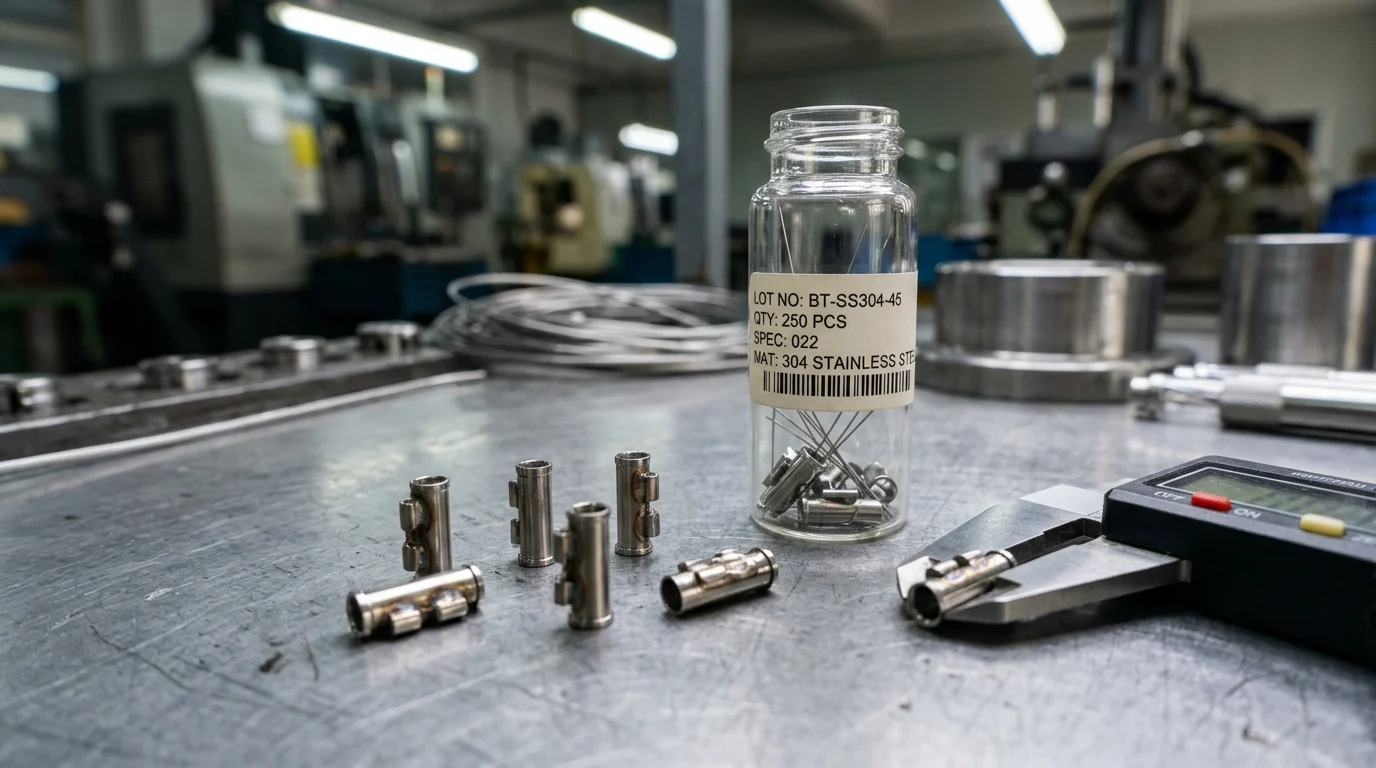
The anatomical complexity of molars demands exacting specifications from any prospective orthodontic buccal tube manufacturer. Evaluating a factory’s technical capabilities and engineering standards ensures the final product delivers predictable tooth movement and withstands the harsh environment of the oral cavity.
OEM buyers must rigorously compare design tolerances, material grades, and manufacturing technologies. Transitioning from generic off-the-shelf tubes to high-performance OEM designs requires a deep understanding of the mechanical properties that dictate clinical success.
Design variables that affect clinical fit
Clinical fit and treatment efficiency rely on highly precise design variables. The archwire slot dimensions—typically standard 0.018-inch or 0.022-inch—must maintain a strict manufacturing tolerance of ±0.001 inches. Any deviation beyond this threshold introduces wire play, compromising torque expression and extending treatment duration.
Furthermore, the base contour must accurately match the specific morphology of maxillary and mandibular first and second molars. Advanced factories utilize 80-gauge foil mesh bases or laser-structured bases to maximize adhesive penetration and retention. Features such as trumpet-shaped mesial entries are also critical, as they significantly reduce the friction encountered when clinicians insert complex archwires.
| Design Feature | Standard Specification | Premium OEM Specification | Clinical Impact |
|---|---|---|---|
| Slot Tolerance | ±0.002 inches | ±0.001 inches | Ensures accurate torque and rotational control |
| Base Design | 60-gauge mesh | 80-gauge contoured mesh | Increases bond strength and reduces debonding rates |
| Mesial Entry | Straight cut | Trumpet/Funnel shaped | Facilitates easier wire insertion in tight posterior spaces |
| Profile Height | Standard profile | Ultra-low profile (<2.0mm) | Reduces occlusal interference and patient discomfort |
Materials and welding or molding precision
Modern high-quality orthodontic buccal tubes are predominantly manufactured using Metal Injection Molding (MIM). This advanced manufacturing process allows for the creation of complex, single-piece geometries—such as integrated hooks and anatomically correct indentations—that traditional machining or casting cannot reliably achieve at scale.
Premium production utilizes 17-4 PH (Precipitation Hardening) medical-grade stainless steel. This specific alloy is chosen for its optimal balance of biocompatibility, corrosion resistance, and high yield strength, which typically exceeds 1,000 MPa. Additionally, if the tube is a two-piece design, the laser welding or brazing process connecting the tube body to the mesh base must guarantee a shear bond strength of at least 15 to 20 MPa to withstand heavy mastication forces without shearing.
How to Evaluate Quality Systems and Regulatory Readiness
Because orthodontic appliances are classified as regulated medical devices (typically Class IIa under the European MDR and Class II under the US FDA), an OEM partner must maintain rigorous Quality Management Systems (QMS). Regulatory compliance is not merely a legal hurdle; it is a baseline indicator of a factory’s manufacturing maturity and operational discipline.
A manufacturer’s ability to seamlessly integrate with a brand’s regulatory strategy significantly reduces time-to-market and compliance overhead. Buyers must scrutinize the factory’s documentation practices, cleanroom standards, and audit history.
Certifications, traceability, and validation records
A reliable factory must hold an active, independently audited ISO 13485:2016 certification specifically for the design and manufacture of orthodontic products. Furthermore, the facility should be capable of providing the technical files required to support FDA 510(k) clearances or CE marking under the stringent EU Medical Device Regulation (MDR 2017/745).
Traceability is a paramount regulatory requirement. The manufacturer must maintain complete Device History Records (DHR). In the event of a post-market surveillance inquiry or adverse event report, the factory’s ERP system must allow any individual unit to be traced back to its original raw material heat lot and operator shift within 24 to 48 hours.
Packaging customization, documentation, and change control
Packaging operations for medical devices must occur within highly controlled environments. Reputable manufacturers utilize ISO Class 8 (or cleaner) cleanrooms to prevent particulate and microbial contamination during the final assembly and packaging phases. OEM buyers should also ensure the packaging materials are compatible with standard sterilization protocols, such as Gamma irradiation or Ethylene Oxide (EtO), if sterile delivery is required.
Change control is another critical QMS component. OEM buyers must verify the supplier’s change control procedures, ensuring that no modifications to raw materials, MIM mold designs, or testing protocols occur without prior written approval from the buyer. Custom packaging solutions, such as color-coded blister packs equipped with UDI (Unique Device Identification) compliant GS1 barcodes, are now standard requirements for seamless global inventory integration.
Cost, Logistics, and Supply Chain Factors
Establishing a sustainable and profitable OEM partnership requires analyzing the Total Cost of Ownership (TCO) and the resilience of the supplier’s logistics network. Unit price is merely the starting point of the financial equation.
Supply chain disruptions in the medical device sector can lead to devastating stockouts, preventing clinicians from completing patient treatments. Therefore, evaluating a manufacturer’s production scalability, capital expenditure requirements, and delivery reliability is essential for long-term operational stability.
Cost drivers beyond unit price
Beyond the negotiated per-unit cost, OEM buyers must account for initial capital expenditures and hidden operational fees. Developing custom tooling for new, proprietary MIM molds represents a significant upfront investment, typically ranging from $3,500 to $8,500 per specific tube design. Buyers must clarify who retains intellectual property rights and physical ownership of these molds.
Regulatory documentation support, third-party biocompatibility testing (such as ISO 10993 cytotoxicity tests), and customized retail packaging can add 5% to 15% to the overall project cost. Understanding these variables upfront prevents budget overruns during the commercialization phase.
| Cost Driver | Typical OEM Expense Range | Financial Impact & Mitigation |
|---|---|---|
| Custom MIM Tooling | $3,500 – $8,500 per mold | High initial CAPEX; amortize over first 50,000 units |
| Regulatory Documentation | $1,500 – $4,000 (one-time) | Necessary for compliance; ensure factory provides technical files |
| Custom Blister Packaging | $0.05 – $0.15 per unit | Recurring OPEX; optimize by ordering packaging in bulk |
| Air Freight (Expedited) | $5.00 – $8.00 per kg | Impacts landed cost significantly; shift to sea freight for routine restocking |
Lead times, minimum order quantities, and delivery reliability
Logistics planning is critical to maintaining adequate inventory levels. Standard production lead times for a reputable orthodontic buccal tube manufacturer range from 45 to 60 days for established SKUs. However, entirely custom OEM designs may require 90 to 120 days for the initial production run to accommodate mold fabrication, sampling, and validation.
Buyers must negotiate strict delivery reliability metrics, aiming for an On-Time In-Full (OTIF) delivery rate of 98% or higher. To mitigate global freight disruptions and raw material shortages, it is highly recommended to establish Service Level Agreements (SLAs) that require the manufacturer to hold a 30-day to 60-day buffer stock of finished goods or raw materials specifically allocated to the OEM buyer.
How to Shortlist and Select Suppliers
Transitioning from a broad list of potential factories to a finalized, legally binding OEM contract requires a methodical and objective qualification process. Relying solely on marketing materials or trade show interactions is insufficient for medical device sourcing.
Implementing a structured evaluation framework protects the buyer’s financial investment, ensures regulatory compliance, and safeguards the brand’s equity in the dental market.
Supplier qualification and sample verification
The qualification phase must begin with requesting comprehensive technical dossiers and conducting a First Article Inspection (FAI). Buyers should request a randomized sample size of at least 50 to 100 units per SKU. These samples must undergo rigorous, destructive laboratory testing, including shear bond strength analysis, metallurgical composition checks via spectrometry, and slot dimension verification using optical comparators.
Simultaneously, third-party factory audits are highly recommended. Independent auditors can verify the accuracy of the factory’s ISO certificates, assess workforce conditions, review equipment maintenance logs, and ensure that the facility possesses the actual manufacturing footprint claimed in their promotional materials.
Decision criteria for final supplier comparison
Final supplier selection should utilize a weighted scoring matrix to eliminate subjective bias. Key decision criteria typically assign a 40% weight to consistent product quality and QMS robustness, as this directly impacts patient safety and regulatory standing. Total landed cost and payment terms usually account for 30% of the score.
The remaining 30% should be divided between communication efficiency, English-language technical support, and the factory’s proven capability to scale production seamlessly from 10,000 to 500,000 units annually. By objectively scoring each candidate against these quantifiable metrics, dental brands can confidently secure a manufacturing partner capable of supporting long-term commercial growth and clinical excellence.
Further reading:
Key Takeaways
- The most important conclusions and rationale for orthodontic buccal tube manufacturer
- Specs, compliance, and risk checks worth validating before you commit
- Practical next steps and caveats readers can apply immediately
Frequently Asked Questions
What MOQ is typical for OEM orthodontic buccal tubes?
Most private-label orders start around 5,000 to 20,000 units per SKU, depending on packaging, tooling, and customization level.
Which material is preferred for high-quality buccal tubes?
17-4 PH medical-grade stainless steel is commonly preferred because it offers strength, corrosion resistance, and consistent clinical performance.
What slot tolerance should I request from a buccal tube manufacturer?
Ask for ±0.001-inch tolerance on 0.018-inch or 0.022-inch slots to support accurate torque control and reduced wire play.
How can I reduce OEM sourcing risk when choosing a factory like DenRotary?
Verify defect-rate controls, material certificates, production capacity, and sample consistency before placing bulk orders or private-label packaging runs.
What buccal tube design features improve clinical performance?
Look for 80-gauge contoured mesh bases, trumpet-shaped mesial entries, and low-profile designs to improve bonding, wire insertion, and patient comfort.

Post time: Jun-10-2026