

Introduction
Choosing orthodontic brands for a growing dental chain is less about preference and more about operational fit. The right supplier affects pricing consistency, inventory control, clinical standardization, and the ability to support dozens or hundreds of locations without disruption. This article explains what separates an enterprise-ready orthodontic products supplier from a typical vendor, including manufacturing reliability, compliance, product range, and procurement integration. Readers will come away with a practical framework for evaluating suppliers that can protect margins, simplify multi-site purchasing, and support consistent patient outcomes across the organization.
Why dental chains need a different orthodontic sourcing approach
Procurement for multi-site Dental Support Organizations (DSOs) and dental chains requires a fundamentally different strategy than purchasing for an independent solo practice. While a single orthodontist might select supplies based purely on residency training or personal tactile preference, a corporate dental group must evaluate supply chain resilience, unit economics, and clinical scalability. As chains expand to encompass dozens or hundreds of locations, ad hoc purchasing creates fragmented inventory, inconsistent clinical outcomes, and bloated overhead.
To optimize operations, enterprise dental groups must transition from transactional ordering to strategic supplier partnerships. This shift demands a rigorous evaluation of manufacturing capacity, regulatory compliance, and the ability to integrate with centralized procurement systems. Selecting the optimal enterprise partner directly impacts the organization’s bottom line and patient satisfaction metrics.
Scale, standardization, and margin pressures
The primary drivers for centralizing orthodontic procurement are economies of scale, clinical standardization, and the mitigation of margin pressures. Dental chains typically target EBITDA margins between 15% and 20%, a threshold that is difficult to maintain if clinical supplies are purchased at retail market rates. By consolidating spend with a primary enterprise supplier, DSOs can leverage their aggregate volume to negotiate price breaks ranging from 15% to 30% below standard catalog pricing.
Furthermore, standardizing the clinical armamentarium across 50 or more clinics drastically reduces training overhead for dental assistants and streamlines the onboarding process for new associate orthodontists. When every clinic utilizes the same bracket systems and wire sequences, the organization minimizes the hidden costs of managing hundreds of disparate SKUs, reducing inventory holding costs and eliminating expired or obsolete stock.
Core orthodontic product categories for multi-site groups
To achieve maximum efficiency, supply chain directors must categorize orthodontic inventory based on turnover rates and clinical necessity. Understanding the consumption velocity of these core categories is essential for establishing automated replenishment thresholds and negotiating advantageous minimum order quantities (MOQs).
| Product Category | Primary Components | Replenishment Cycle | Volume Share of Spend | Standardization Priority |
|---|---|---|---|---|
| Brackets & Tubes | Metal, Ceramic, Self-Ligating | 30 – 45 Days | 45% – 55% | Critical |
| Archwires | NiTi, Stainless Steel, TMA | 15 – 30 Days | 20% – 25% | High |
| Elastomerics | Ligatures, Power Chains | 60 – 90 Days | 10% – 15% | Moderate |
| Adhesives & Cements | Light-cure paste, Band cement | 30 – 60 Days | 10% – 15% | High |
By focusing negotiations on the brackets and archwires that constitute up to 80% of the orthodontic supply spend, dental chains can secure the most impactful cost reductions while ensuring clinical efficacy across all locations.
What defines the best orthodontic products supplier for dental chains
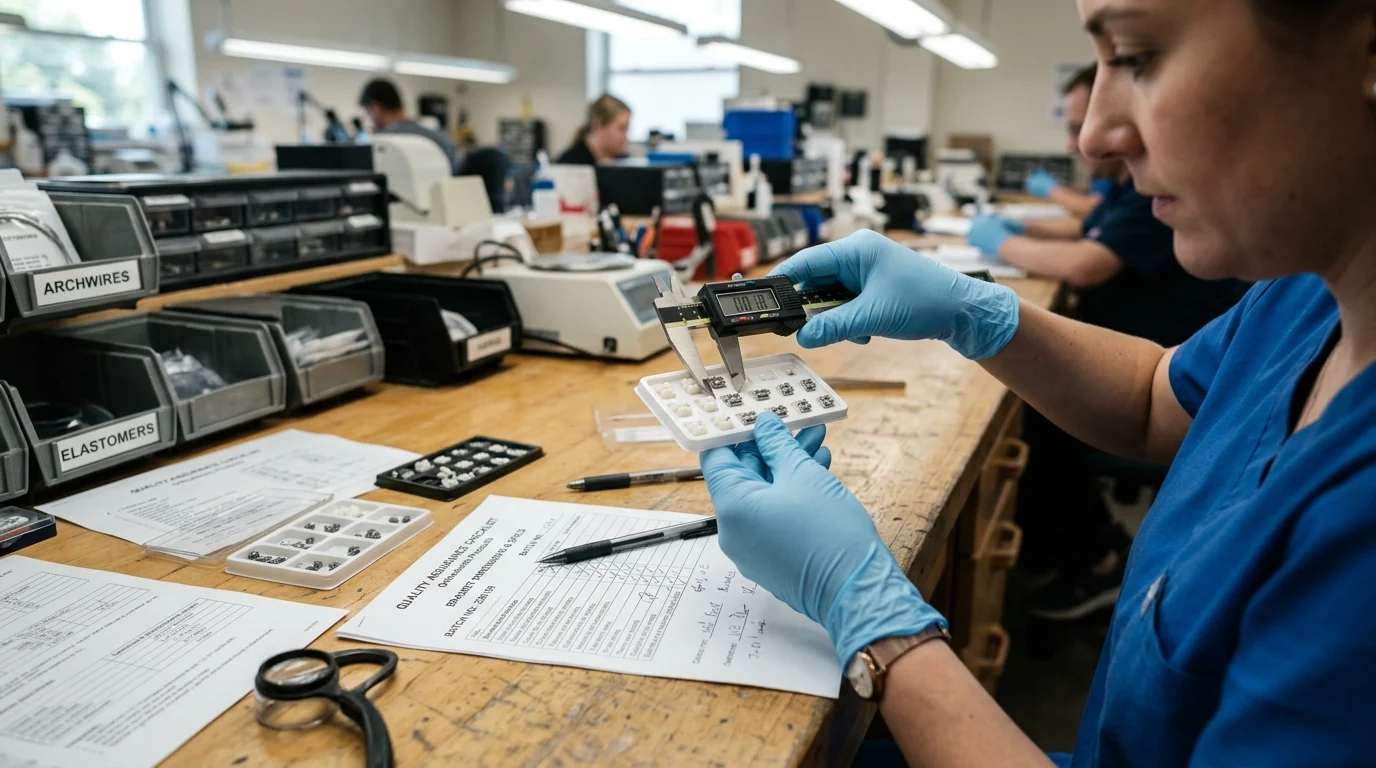
Identifying an enterprise-grade partner goes beyond comparing unit prices on a catalog page. The best suppliers for dental chains operate as extensions of the organization’s supply chain, offering robust quality assurance, transparent regulatory compliance, and scalable logistical support. A thorough understanding of a supplier’s operational infrastructure—often detailed on their corporate about us documentation—is critical for ensuring they possess the manufacturing maturity to support a rapidly expanding clinical network.
Quality, compliance, and traceability standards
For multi-site organizations, regulatory compliance and product traceability are non-negotiable. An enterprise supplier must manufacture under strict quality management systems, specifically holding active ISO 13485:2016 certification. Products must meet the regulatory requirements of the chain’s operating regions, such as FDA Class II clearance in the United States or CE MDR compliance in the European Union.
Traceability is equally vital for mitigating liability. Suppliers must utilize Unique Device Identification (UDI) systems, allowing the DSO to track specific manufacturing lots down to the individual patient level in the event of a recall. Top-tier suppliers maintain rigorous quality control protocols that yield defect rates well below the industry standard threshold of 0.5%, ensuring that brackets do not suffer from base separation or slot deformation during treatment.
Clinical consistency, private label, and service support
Clinical consistency is the bedrock of multi-doctor practices. Brackets must exhibit precise manufacturing tolerances; for instance, a 0.022″ bracket slot must maintain a tolerance of ±0.001″ to ensure predictable torque and sliding mechanics regardless of which associate orthodontist is performing the adjustment.
Additionally, elite suppliers offer private label or OEM (Original Equipment Manufacturer) services for high-volume dental chains. Organizations ordering upwards of 10,000 to 20,000 full bracket cases annually can significantly enhance brand equity and reduce costs by deploying a proprietary bracket system. This level of partnership requires dedicated service support, including highly responsive account managers and robust Electronic Data Interchange (EDI) capabilities to seamlessly integrate with the DSO’s centralized ERP software.
How to compare orthodontic brands, pricing, and supply reliability
Evaluating the vast landscape of orthodontic brands requires a transition from assessing simple unit costs to calculating the Total Cost of Ownership (TCO). TCO accounts for the base price of the product, shipping fees, inventory holding costs, and the clinical time lost to material failures (such as rebonding a detached bracket). Dental chains must implement a structured analytical framework to compare brands objectively.
Buyer comparison framework for orthodontic brands
A robust buyer framework categorizes suppliers into tiers based on their alignment with the DSO’s clinical and financial objectives. While premium legacy brands offer unparalleled clinical recognition, their high costs can severely compress margins. Conversely, ultra-budget suppliers may introduce unacceptable clinical variability.
| Supplier Tier | Market Positioning | Est. Cost per Bracket (USD) | Manufacturing Origin | Optimal DSO Fit |
|---|---|---|---|---|
| Tier 1 (Premium) | Legacy global brands, high R&D | $15.00 – $35.00 | US / Western Europe | Complex surgical cases, high-fee boutique clinics |
| Tier 2 (Value/Enterprise) | High-quality clones, OEM partners | $3.00 – $8.00 | Asia / Eastern Europe | Core DSO volume, scalable multi-site standard |
| Tier 3 (Budget) | White-label, unverified QC | $0.50 – $2.00 | Various | Not recommended due to clinical risk and high defect rates |
For the majority of dental chains, Tier 2 suppliers represent the optimal intersection of cost efficiency and clinical reliability, providing the necessary quality without the exorbitant premium associated with legacy branding.
Lead times, inventory strategy, and regional distribution
Beyond the product itself, supply reliability dictates the success of the partnership. Dental chains operating on Just-In-Time (JIT) inventory models require suppliers with domestic or highly efficient regional distribution centers capable of guaranteeing 98% order fill rates and 3- to 5-day lead times. In contrast, relying solely on direct-from-factory international shipments can extend lead times to 30 to 45 days, necessitating higher safety stock levels and tying up vital working capital.
Procurement teams must negotiate clear Service Level Agreements (SLAs) regarding backorder protocols and minimum inventory buffers. The ideal supplier will hold a dedicated 60- to 90-day safety stock specifically allocated for the dental chain, buffering the organization against global supply chain disruptions or sudden spikes in clinical demand.
How dental chains can reduce risk during sourcing and onboarding
Transitioning to a new clinical supplier introduces inherent operational and clinical risks. A sudden shift in materials without adequate vetting can lead to increased bond failures, extended chair time, and resistance from associate orthodontists. To mitigate these risks, dental chains must employ a highly structured, phased onboarding strategy before committing to an enterprise-wide rollout.
Step-by-step supplier qualification process
The qualification process begins well before any clinical products are ordered. Procurement officers should initiate the relationship by utilizing the supplier’s formal contact us channels to request comprehensive compliance documentation. This includes verifying FDA 510(k) clearances, reviewing the latest ISO audit summaries, and assessing the supplier’s financial stability to ensure they can sustain long-term production.
Following document verification, enterprise buyers often conduct a facility audit. For international suppliers, this may involve hiring third-party quality assurance firms to perform on-site inspections of the manufacturing floor. The audit verifies raw material sourcing (e.g., confirming the use of medical-grade 17-4 PH stainless steel) and validates the precision of their CNC machining and metal injection molding (MIM) processes.
Pilot orders, clinician feedback, and KPI reviews
Once a supplier passes the operational audit, the DSO must execute a controlled clinical pilot. This typically involves deploying the new products in 3 to 5 high-volume locations over a 90- to 120-day period. During this phase, clinical directors closely monitor specific Key Performance Indicators (KPIs).
The most critical metric during a pilot is the bracket bond failure rate. A successful pilot will demonstrate a bond failure rate of less than 3% to 5%, aligning with industry benchmarks. Additionally, the organization must collect qualitative feedback from clinicians regarding wire engagement, clip reliability in self-ligating systems, and overall ease of use. Only when the pilot meets both the quantitative defect thresholds and the qualitative clinical approval should the chain proceed with full integration.
Decision framework for choosing an orthodontic products supplier
The final decision to award an enterprise contract requires synthesizing all operational, financial, and clinical data gathered during the evaluation and pilot phases. Dental chains must avoid the trap of selecting a partner based on a single metric, such as the lowest unit cost, and instead utilize a weighted decision matrix to determine the optimal strategic fit.
Balancing cost, product breadth, compliance, and support
A balanced decision matrix typically weights criteria based on the organization’s specific vulnerabilities and goals. For a DSO with an annual orthodontic spend exceeding $500,000, a standard matrix might allocate 40% of the decision weight to total cost (including volume rebates and shipping), 35% to clinical quality and compliance (based on pilot KPI data and defect rates), and 25% to logistical support and integration capabilities.
This balanced approach ensures that cost savings do not come at the expense of patient outcomes or operational efficiency. A supplier offering a 40% reduction in bracket costs but suffering from chronic 60-day backorders will ultimately cost the organization more in lost chair time and emergency procurement than they save in unit price.
Final supplier selection criteria
The final selection criteria must culminate in a robust, mutually beneficial contracting structure. Enterprise agreements should include multi-year price locks—typically spanning 24 to 36 months—to protect the dental chain from raw material inflation. Furthermore, contracts should feature tiered rebate structures that incentivize volume growth, rewarding the DSO with retroactive discounts when annual purchasing milestones are surpassed.
Ultimately, the best orthodontic products supplier for a dental chain is one that seamlessly integrates into the organization’s existing infrastructure. By demanding rigorous compliance, negotiating favorable SLA terms, and validating clinical efficacy through controlled pilots, dental chains can secure a supply chain partner that actively drives clinical scalability and long-term profitability.
Further reading:
Key Takeaways
- The most important conclusions and rationale for orthodontic brands
- Specs, compliance, and risk checks worth validating before you commit
- Practical next steps and caveats readers can apply immediately
Frequently Asked Questions
What should a dental chain prioritize when choosing an orthodontic products supplier?
Prioritize ISO 13485 certification, regional compliance, lot traceability, stable manufacturing capacity, and pricing that supports multi-site standardization.
Why is standardizing orthodontic brands important for DSOs?
It reduces SKU complexity, simplifies staff training, improves clinical consistency, and lowers purchasing and inventory costs across locations.
Which orthodontic product categories matter most for cost control?
Focus first on brackets, tubes, and archwires, since they usually represent the largest share of orthodontic supply spend.
How can DenRotary support multi-site orthodontic procurement?
DenRotary can help with centralized sourcing, consistent product supply, scalable manufacturing support, and quality-focused orthodontic product options.
What compliance documents should a supplier provide before onboarding?
Ask for ISO 13485 certificates, FDA or CE documentation where applicable, lot traceability records, and quality control information.

Post time: Jun-18-2026