

Introduction
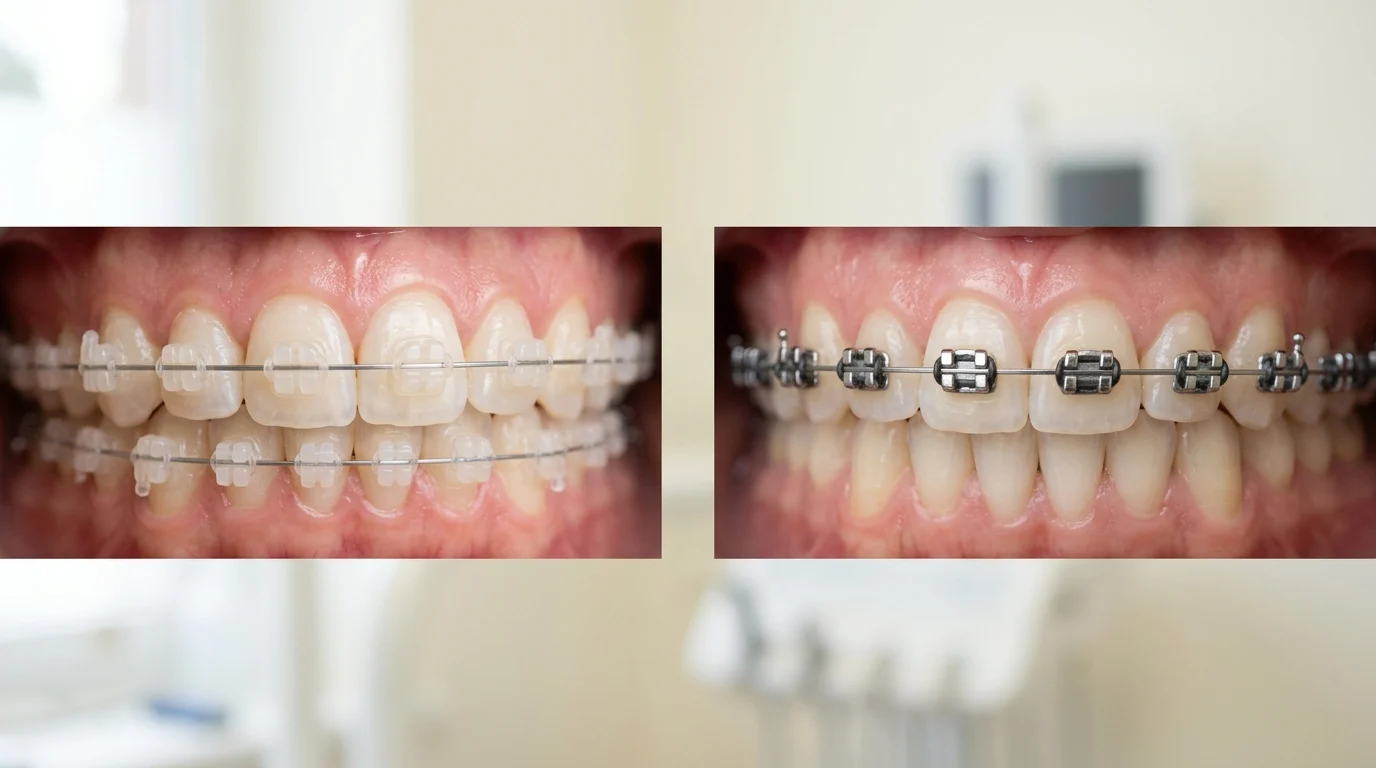
Choosing between ceramic brackets and metal braces involves more than appearance. The two systems differ in material strength, friction behavior, bracket size, durability, and how efficiently they move teeth during treatment. Those differences can affect comfort, visibility, maintenance, and, in some cases, overall treatment time. This comparison explains how each option performs in clinical use, where ceramic brackets offer advantages, where metal braces remain more practical, and what factors matter most when selecting the right appliance for specific patient needs.
Ceramic Brackets vs Metal Braces: Key Differences
The selection between ceramic and traditional metal orthodontic systems represents a fundamental biomechanical decision in treatment planning. While both systems utilize straight-wire appliance principles to achieve precise tooth movement, their foundational materials dictate distinct mechanical behaviors, manufacturing tolerances, and clinical applications.
For orthodontists and procurement managers, understanding the metallurgical and ceramic engineering behind these brackets is essential. The physical properties of the materials directly impact sliding mechanics, torque expression, and overall treatment duration.
Materials and bracket design
Metal braces are predominantly manufactured using Metal Injection Molding (MIM) from 17-4 PH or 316L medical-grade stainless steel. These alloys yield a remarkable tensile strength ranging from 850 to 1000 MPa, allowing for exceptionally low-profile designs without compromising structural integrity. Conversely, Ceramic Brackets are fabricated via Ceramic Injection Molding (CIM) or precision milling using either polycrystalline or monocrystalline alumina. While alumina provides superior optical translucency, its tensile strength is notably lower, typically falling between 400 and 600 MPa.
| Feature | Metal Braces (17-4 PH) | Ceramic Brackets (Alumina) |
|---|---|---|
| Manufacturing Method | Metal Injection Molding (MIM) | Ceramic Injection Molding (CIM) / Milling |
| Tensile Strength | 850 – 1000 MPa | 400 – 600 MPa |
| Fracture Toughness | High (Ductile) | Low (Brittle) |
| Profile Height | ~1.5 mm | ~1.8 – 2.0 mm |
Aesthetics, strength, and friction
Aesthetics drive the demand for ceramics, but this comes at a mechanical cost. The crystalline structure of alumina inherently possesses a higher surface roughness than polished stainless steel. In sliding mechanics, metal brackets exhibit a kinetic friction coefficient of approximately 0.10 to 0.15. Ceramic variants, unless equipped with a metal slot insert, demonstrate friction coefficients between 0.30 and 0.40. This increased friction can impede space closure and require heavier force applications, potentially straining the anchorage.
To mitigate these frictional disadvantages, manufacturers often incorporate silica glazing or stainless-steel slot inserts into ceramic designs. While inserts improve sliding mechanics by reducing friction by up to 40%, they slightly compromise the total aesthetic invisibility that patients initially seek.
Ligation and slot precision
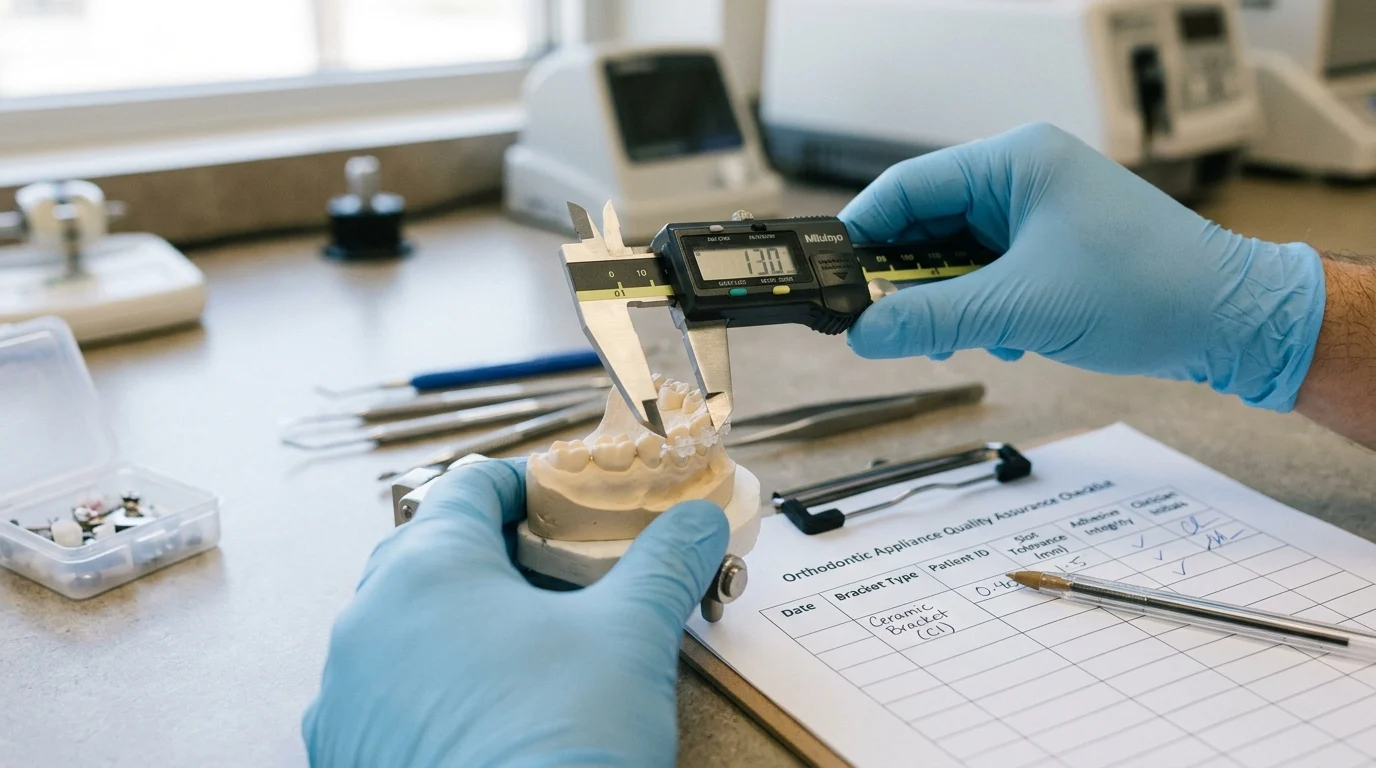
Precision in the bracket slot—standardized at either 0.018-inch or 0.022-inch—is critical for accurate three-dimensional tooth movement. Stainless steel’s ductility allows for rigorous milling tolerances, frequently achieving precision within ±0.001 inches. This ensures that the archwire engages exactly as prescribed by the bracket’s built-in torque and angulation.
Ceramic brackets face challenges in slot precision due to the shrinkage rates associated with the sintering process (often shrinking 15% to 20% during manufacturing). While advanced CIM technology has largely closed the tolerance gap, extreme torsional forces can still cause micro-abrasions in the ceramic slot, subtly altering the effective torque over a 24-month treatment cycle.
Clinical Performance and Patient Experience
Clinical performance is heavily influenced by how these materials interact with archwires under dynamic oral forces. Orthodontists must weigh the superior mechanical efficiency of metal against the aesthetic demands of the patient, factoring in the statistical probabilities of bracket failure, chairside adjustments, and potential treatment delays.
Treatment efficiency and torque control
Torque expression requires the bracket slot to withstand significant torsional forces without deformation or fracture. Metal brackets excel in this domain, allowing for full engagement of heavy rectangular archwires (e.g., 0.019 x 0.025-inch stainless steel) with up to 15 to 20 degrees of torque compensation. The ductility of metal means it will yield before it shatters.
Ceramic brackets, due to their brittle nature, are susceptible to tie-wing fractures under high torque. Clinical testing shows that polycrystalline alumina brackets may fracture when subjected to torsional forces exceeding 25 N·mm. Consequently, orthodontists often sequence wires more conservatively in ceramic cases, which can extend the active torque-expression phase by 2 to 3 months compared to metal.
Durability and replacement risk
Durability metrics present a stark contrast between the two systems. Clinical studies indicate that the bond failure and fracture rate for metal brackets hovers between 3% and 5% over a standard 24-month treatment period. In contrast, ceramic brackets exhibit combined failure and fracture rates ranging from 8% to 12%.
Furthermore, debonding poses a unique risk with ceramics. The bond strength of alumina to enamel using modern composites can exceed 20 MPa. Because enamel has a tear strength of approximately 10 to 14 MPa, improper debonding of ceramic brackets carries a documented risk of enamel spalling. Metal brackets peel away predictably, but ceramic brackets require specialized debonding pliers to fracture the adhesive layer without transferring stress to the enamel.
Comfort, visibility, and case selection
Patient comfort and appliance visibility dictate case acceptance, particularly in adult demographics where 70% of patients express a preference for aesthetic options. However, the physical dimensions of the brackets impact mucosal comfort. Because alumina lacks the tensile strength of steel, ceramic brackets must be manufactured with a thicker bulk to prevent fracture, resulting in profile heights of 1.8 mm to 2.0 mm, compared to the ultra-low 1.5 mm profile of modern metal brackets.
Case selection is therefore heavily influenced by occlusion. In deep bite cases, placing ceramic brackets on the mandibular incisors is contraindicated; the extreme hardness of alumina (9 on the Mohs scale compared to enamel’s 5) will cause rapid, severe attrition of the maxillary incisal edges if occlusal contact occurs. Metal brackets, being softer than enamel, pose a significantly lower risk of iatrogenic tooth wear.
Cost and Practice Considerations
Beyond clinical mechanics, the choice of bracket system fundamentally alters practice overhead, inventory management, and chairside time allocation. Procurement managers and practice owners must evaluate the total lifecycle cost of these appliances, from initial wholesale acquisition to the clinical time required for maintenance and removal.
Total cost and chair time
The baseline material cost varies significantly. A full-arch kit of traditional metal brackets typically costs between $25 and $50, depending on the manufacturer and proprietary design features (such as self-ligating doors or specialized base topographies). Conversely, highly aesthetic Ceramic Brackets command a premium, with kits ranging from $80 to $150.
Chair time also factors into the total cost equation. Ligation and adjustments for ceramic brackets generally take 10% to 15% longer due to the care required to avoid tie-wing fracture. Furthermore, the debonding process for a full ceramic case typically requires an additional 5 to 10 minutes of chair time to safely fracture the adhesive and polish the enamel, increasing the overhead cost of the final appointment.
Quality, compliance, and traceability
Quality assurance and regulatory compliance are non-negotiable for Class II medical devices. Orthodontic brackets must adhere to ISO 13485 standards for medical device manufacturing. For ceramic brackets, stringent quality control is required to monitor the sintering process; a temperature deviation of just 5°C during manufacturing can alter the crystalline structure and increase clinical fracture rates by over 15%.
Traceability protocols require manufacturers to maintain lot numbers and biocompatibility certifications. Metal brackets must pass rigorous corrosion resistance testing (ISO 10271) to ensure nickel leaching remains below the threshold of 0.2 µg/cm²/week, preventing allergic contact stomatitis in sensitive patients.
How to evaluate suppliers and products
Evaluating suppliers requires balancing unit costs with logistical reliability. Standard Minimum Order Quantities (MOQs) for wholesale metal brackets often start at 50 to 100 kits to unlock tiered discount pricing. Because ceramic brackets are utilized less frequently (comprising approximately 30% of standard inventory), practices must seek suppliers that offer flexible MOQs for aesthetic lines.
| Procurement Metric | Metal Bracket Suppliers | Ceramic Bracket Suppliers |
|---|---|---|
| Standard MOQ | 50 – 100 kits | 10 – 20 kits |
| Average Lead Time | 1 – 2 weeks | 2 – 4 weeks |
| Acceptable Defect Rate | < 0.1% | < 0.5% |
| Inventory Turnover | High (60-70% of cases) | Moderate (30-40% of cases) |
For specialized inquiries, bulk ordering evaluations, and assessing long-term supply chain stability, practices often consult direct manufacturing channels for Metal Braces to ensure consistent inventory flow and mitigate backorder risks.
When to Choose Ceramic or Metal Braces
Deciding between these two dominant orthodontic systems requires a synthesized approach, evaluating the biomechanical demands of the malocclusion against the patient’s aesthetic expectations and the practice’s operational capabilities. Neither system is universally superior; rather, their efficacy is entirely dependent on proper case selection.
Best cases for ceramic brackets
Ceramic brackets are the optimal choice for adult patients presenting with Class I malocclusions, mild to moderate crowding, or spacing issues where heavy sliding mechanics are not required. They are particularly effective in non-extraction cases where space closure friction is not a limiting factor.
From a biomechanical standpoint, ceramic brackets are highly successful when torque requirements are minimal (under 10 degrees of correction) and when the patient has a normal or open bite tendency, eliminating the risk of incisal wear from bracket contact.
Best cases for metal braces
Metal braces remain the gold standard for complex biomechanical challenges. Severe Class II or Class III malocclusions, surgical cases, and maximum anchorage extraction cases heavily rely on the low friction and high fracture toughness of stainless steel. In cases requiring significant en-masse retraction, metal brackets reduce binding and friction by up to 60% compared to unglazed ceramics.
Additionally, pediatric and adolescent patients are generally better suited for metal braces. The robust nature of the 17-4 PH steel withstands poor dietary compliance (e.g., chewing hard foods) far better than ceramic brackets, keeping emergency bracket-repair appointments to a minimum.
How to balance clinical and patient priorities
Balancing clinical and patient priorities mandates a comprehensive informed consent process. When patients demand aesthetics but present with complex biomechanical needs, hybrid setups offer a strategic compromise. Placing ceramic brackets on the maxillary anterior teeth (social six) while utilizing metal brackets on the mandibular arch and posterior segments balances the 30% to 40% higher material costs with excellent clinical control.
Ultimately, the practitioner must weigh the frictional resistance and fracture risks of ceramics against the aesthetic concerns of the patient. By leveraging data on treatment efficiency, material failure rates, and torque limitations, orthodontists can confidently navigate case selection, ensuring both optimal clinical outcomes and high patient satisfaction.
Further reading:
Key Takeaways
- The most important conclusions and rationale for Ceramic Brackets vs Metal Braces
- Specs, compliance, and risk checks worth validating before you commit
- Practical next steps and caveats readers can apply immediately
Frequently Asked Questions
Which option is usually more durable: ceramic brackets or metal braces?
Metal braces are generally more durable. Their stainless-steel structure resists fracture better, while ceramic brackets are more brittle and can have higher replacement rates during treatment.
Do ceramic brackets take longer to move teeth?
They can. Ceramic brackets often create more friction during sliding mechanics, so space closure and torque stages may be slightly slower than with metal braces.
Why do metal braces often perform better mechanically?
Metal brackets offer higher strength, lower friction, and more precise slot tolerances. This helps orthodontists achieve efficient tooth movement and reliable torque control.
Are ceramic brackets better if appearance matters most?
Yes. Ceramic brackets are chosen mainly for their tooth-colored, less noticeable look. If aesthetics are the priority, they are often preferred despite some mechanical trade-offs.
Where can I compare orthodontic bracket options from Denrotary?
You can review bracket and orthodontic product details on Denrotary’s product pages at denrotary.com/products/ and contact their team for specifications or sourcing support.

Post time: May-30-2026