

Introduction
Material selection in orthodontics now carries direct clinical and operational consequences, especially when appliances remain in constant contact with oral tissues for months or years. Nickel free buccal tubes help modern dental clinics reduce allergy-related risks, improve biocompatibility, and support more predictable treatment planning for sensitive patients. They also align with growing patient awareness about material safety and with the need to avoid mid-treatment appliance changes caused by hypersensitivity reactions. This article explains why nickel free options are becoming a practical standard, what performance and safety factors clinics should evaluate, and how custom buccal tubes can fit broader goals in efficiency, compliance, and patient care.
Why nickel-free buccal tubes are a strategic choice
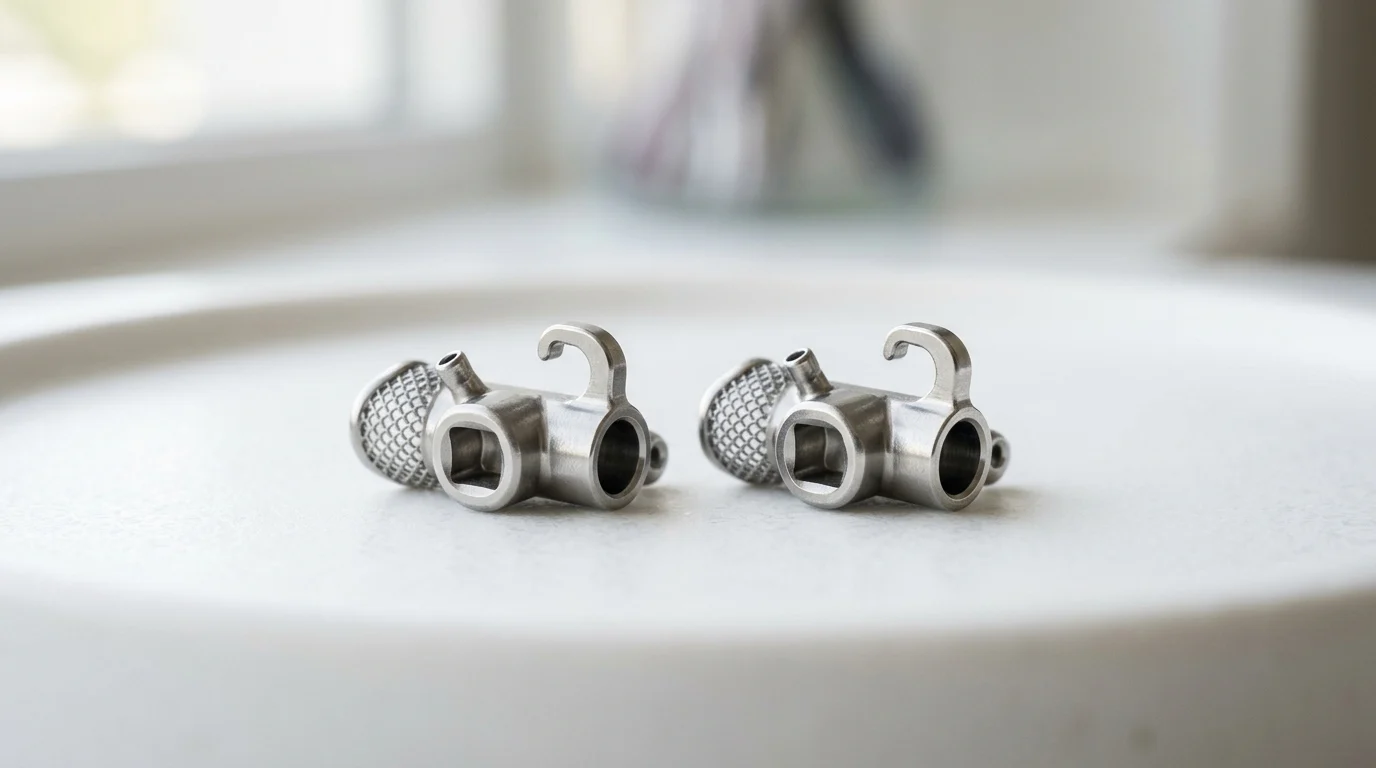
The integration of biocompatible materials into orthodontic practice has evolved from a niche specialty offering to a core clinical standard. As patient awareness regarding material composition grows, dental clinics are re-evaluating their inventory to mitigate risks associated with metal hypersensitivity. Custom orthodontic buccal tubes serve as foundational anchor points in fixed appliance therapy, enduring significant occlusal forces and continuous mucosal contact over treatment periods that typically span 18 to 24 months.
Transitioning to industry standards for nickel free buccal tubes represents a proactive approach to patient care and practice risk management. By eliminating nickel—a common sensitizing agent—clinics can standardize their procedural workflows without the disruption of mid-treatment appliance removal due to allergic contact stomatitis.
Patient safety and allergy considerations
Epidemiological data indicate that nickel contact hypersensitivity affects approximately 10% to 15% of the general population, with prevalence rates reaching up to 20% in female demographics. When standard 18-8 stainless steel appliances are placed in the moisture-rich, fluctuating pH environment of the oral cavity, they can release nickel ions through galvanic corrosion. This ion leaching is the primary catalyst for allergic reactions, which manifest clinically as gingival hyperplasia, localized erythema, and severe mucosal desquamation.
For modern clinics, utilizing hypoallergenic alternatives is not merely an aesthetic choice but a clinical necessity. Implementing custom buccal tubes crafted from titanium alloys or specialized cobalt-chromium compounds effectively eliminates the risk of nickel-induced dermatitis. This preventive strategy ensures that patient treatment progresses without inflammatory interruptions, thereby maintaining predictable biomechanical responses and protecting periodontal health.
Clinical and market drivers
Beyond clinical safety, the adoption of biocompatible brackets and tubes serves as a potent market differentiator. Modern dental consumers actively seek out practices that utilize advanced, health-conscious materials. Clinics that market a fully hypoallergenic treatment track can command a premium positioning, often seeing a 10% to 15% increase in case acceptance among patients with a history of atopy or specific material concerns.
Furthermore, regulatory bodies worldwide are progressively tightening the allowable limits of heavy metal leaching in medical devices. By proactively shifting procurement towards nickel-free alternatives, practices insulate themselves against future regulatory phase-outs of traditional stainless steel alloys. This alignment of clinical efficacy with evolving consumer demands ensures long-term practice viability.
Key specifications of high-quality nickel-free buccal tubes

Transitioning to hypoallergenic orthodontics requires a rigorous assessment of material properties and manufacturing tolerances. A buccal tube must maintain its structural integrity under the shear stresses of mastication and the torsional forces of heavy rectangular archwires, all while resisting deformation. Evaluating the nickel free buccal tubes catalog involves scrutinizing both the metallurgical composition and the physical architecture of the appliance.
Material and construction standards
The industry standard for premium hypoallergenic tubes relies heavily on medical-grade titanium (such as Ti-6Al-4V) or advanced nickel-free stainless steel alloys (e.g., Biodur 108). These materials must exhibit a yield strength exceeding 800 MPa to prevent slot distortion during torque application. Unlike traditional 300-series stainless steel, which contains 8% to 12% nickel to stabilize its austenitic structure, modern nickel-free alloys utilize high nitrogen content or alternative crystalline structures to achieve comparable durability without the associated immunogenic risks.
| Material Type | Yield Strength (MPa) | Nickel Content (%) | Corrosion Resistance | Biocompatibility |
|---|---|---|---|---|
| 304 Stainless Steel | 200 – 300 | 8.0 – 10.5% | Moderate | Low (Allergenic) |
| Ti-6Al-4V (Titanium) | 830 – 900 | < 0.01% | Excellent | Supreme |
| Biodur 108 (Ni-Free SS) | 700 – 900 | < 0.05% | High | High |
| Cobalt-Chromium | 450 – 600 | < 0.1% | High | High |
This table illustrates that titanium and specialized nitrogen-alloyed steels not only remove the allergenic hazard but frequently outperform traditional stainless steel in yield strength and corrosion resistance, ensuring the slot dimensions remain pristine throughout the treatment lifecycle.
Evaluation criteria for clinics
When evaluating custom buccal tubes, clinics must prioritize shear bond strength and dimensional accuracy. The base of the tube is critical; a micro-etched or 80-gauge equivalent mesh pad is necessary to achieve the optimal clinical shear bond strength of 10 to 14 MPa. Values below this threshold lead to unacceptable failure rates, while values above 15 MPa risk enamel fracture during debonding.
Dimensional accuracy within the archwire slot is equally vital. High-quality manufacturing should guarantee slot tolerances of ±0.001 inches. If a slot is oversized by even 0.002 inches, the loss of torque expression can extend treatment times by several months, negating the biomechanical advantages of a custom prescription.
Comparison factors across products
Product comparisons should also focus on patient comfort and clinical utility. Profile thickness is a primary metric; standard tubes often measure around 2.5 mm in profile, whereas low-profile nickel-free variants aim for a thickness of less than 2.0 mm to reduce occlusal interference and mucosal irritation. Additionally, the design of the mesial opening—specifically the presence of a ‘trumpet’ or funneled entrance—drastically reduces chair time during archwire changes, particularly in the posterior segments.
Clinicians must also evaluate the malleability of auxiliary hooks. While titanium offers excellent biocompatibility, it is inherently more brittle than stainless steel. High-quality custom titanium tubes utilize localized annealing processes on the hooks to allow for necessary clinical bending without fracturing.
How clinics should assess sourcing and compliance
Procuring medical devices requires a stringent vetting process to verify that marketing claims align with physical realities and regulatory frameworks. The label “nickel-free” is legally and technically distinct from “low-nickel,” and clinics must implement protocols to ensure their supply chain is secure, documented, and consistently reliable.
Quality control checkpoints
Robust quality control (QC) at the manufacturing level dictates the clinical reliability of the buccal tube. Clinics should seek suppliers that employ automated optical inspection (AOI) to verify that surface roughness (Ra) is maintained below 0.2 µm. A smooth surface finish is imperative not only for minimizing friction during sliding mechanics but also for preventing bacterial biofilm accumulation.
Furthermore, metallurgical testing must be part of the supplier’s routine QC. Spectroscopic analysis should be utilized on every batch to confirm that the elemental composition remains strictly within the specified limits. For a product to be definitively classified as hypoallergenic, the trace nickel content must consistently register below the 0.05% threshold. Any deviation risks triggering a reaction in highly sensitized patients.
Traceability and regulatory documentation
Traceability is non-negotiable in modern orthodontic procurement. Clinics must require comprehensive regulatory documentation, including ISO 13485 certification for medical device manufacturing and the relevant market clearances, such as FDA 510(k) in the United States or CE marking under the MDR 2017/745 in Europe. These documents prove that the manufacturer adheres to strict post-market surveillance and risk management protocols.
Purchasing managers should routinely request Certificates of Analysis (CoA) or Material Test Reports (MTR) for the specific lots they acquire. Engaging in consulting regarding nickel free buccal tubes with the manufacturer’s regulatory team can provide clarity on material sourcing and audit histories, ensuring the clinic is fully protected against liability claims related to material failure or undisclosed allergens.
Operational trade-offs in adopting custom orthodontic buccal tubes
Integrating custom nickel-free buccal tubes into a high-volume orthodontic practice involves distinct operational shifts. While the clinical benefits are clear, practice managers must carefully navigate the logistical transition to prevent supply bottlenecks, manage overhead costs, and ensure clinical staff are adequately trained on the new materials.
Inventory, planning, and rebond considerations
Inventory management is the first major hurdle. Clinics must decide whether to run a dual-inventory system—keeping standard stainless steel for the general population and titanium for sensitive patients—or to transition entirely to nickel-free tubes to simplify ordering. Custom manufactured tubes often carry Minimum Order Quantities (MOQs) ranging from 500 to 1,000 sets, which requires accurate forecasting of patient starts to avoid tying up excessive capital in static inventory.
Rebond considerations are also heavily influenced by material choice. Titanium and specialized alloys interact differently with standard orthodontic primers and adhesives compared to stainless steel. Clinics must ensure their bonding protocols are optimized for these materials to maintain rebond rates below the industry benchmark of 3% to 5%. Elevated rebond rates directly erode the profitability of a case through increased chair time and material waste.
Trial, validation, and scale-up steps
A phased implementation strategy is highly recommended for introducing new custom tubes. Clinics should begin with a controlled clinical trial involving 20 to 50 non-extraction cases. This limited scope allows the clinical team to evaluate the tactile feedback of the tubes, assess wire insertion efficiency, and monitor initial bond survival rates over the first three to six months of treatment.
Once the trial phase validates the clinical efficacy and the staff is comfortable with the handling characteristics, the clinic can proceed to scale up. Scale-up requires updating the practice management software with new inventory SKUs, establishing automated reorder points based on the new supplier’s lead times (which can range from 4 to 8 weeks for custom prescriptions), and standardizing the clinical bonding protocols across all operatories.
A decision framework for selecting nickel-free buccal tubes
Selecting the ideal custom buccal tube requires balancing clinical ideals with economic realities. Practice owners and procurement managers must utilize a structured decision framework to evaluate potential suppliers, ensuring that the chosen product aligns with the clinic’s standard of care and financial objectives.
Priority purchasing criteria
When establishing priority purchasing criteria, clinics must weigh three primary pillars: material purity, mechanical precision, and bonding reliability. Material purity guarantees the elimination of allergic reactions, which is the baseline requirement. Mechanical precision—specifically the exactness of the slot dimensions and torque values—dictates the efficiency of tooth movement. Finally, bonding reliability ensures that the appliance remains functional throughout the treatment duration.
Secondary criteria should include logistical factors such as supplier lead times, custom prescription flexibility, and customer support responsiveness. A supplier that offers excellent material properties but suffers from erratic 12-week lead times will ultimately disrupt clinical workflows and delay patient starts.
Balancing price, risk, and long-term outcomes
Financial analysis must look beyond the initial unit cost. Nickel-free buccal tubes generally carry a 15% to 30% price premium over standard stainless steel variants. However, this upfront cost must be contextualized within the broader scope of clinical risk management and practice efficiency.
| Decision Factor | Standard Stainless Steel | Custom Nickel-Free Tubes | Financial / Clinical Impact |
|---|---|---|---|
| Unit Cost | Baseline | +15% to 30% Premium | Higher initial inventory expenditure |
| Allergy Risk | 10-15% of patients | < 0.1% | Eliminates emergency visits for dermatitis |
| Slot Precision | Standard tolerances | High precision (±0.001″) | Reduces wire-bending chair time |
| Marketing Value | None | High (Biocompatible) | Increases premium case acceptance |
By utilizing this framework, clinics can quantify the return on investment. The reduction in emergency appointments for allergic reactions, coupled with the precise torque expression that shortens overall treatment time, frequently offsets the higher unit cost of the custom tubes. Ultimately, standardizing on high-quality, biocompatible materials streamlines clinical operations, fortifies patient trust, and secures the practice’s reputation in a competitive healthcare market.
Further reading:
Key Takeaways
- The most important conclusions and rationale for nickel free buccal tubes
- Specs, compliance, and risk checks worth validating before you commit
- Practical next steps and caveats readers can apply immediately
Frequently Asked Questions
Why should a clinic choose nickel free buccal tubes?
They reduce the risk of nickel hypersensitivity, help avoid mid-treatment appliance changes, and support a safer standard protocol for fixed orthodontic cases.
Which materials are commonly used in nickel free buccal tubes?
Medical-grade titanium, nickel-free stainless alloys like Biodur 108, and some cobalt-chromium options are common choices for strength and biocompatibility.
How can a clinic verify buccal tube quality before ordering?
Check material certification, slot accuracy, shear bond strength, corrosion resistance, and manufacturing consistency from the supplier.
Are custom nickel free buccal tubes strong enough for routine orthodontic treatment?
Yes. High-quality titanium and nickel-free alloys can handle normal occlusal loads and rectangular wire torque when made to proper tolerances.
Where can clinics source custom nickel free buccal tubes efficiently?
Clinics can review custom orthodontic options and product specifications through DenRotary at denrotary.com to compare materials and ordering requirements.

Post time: Jun-05-2026