

Introduction
For patients who want straighter teeth without the look of traditional metal braces, elastomeric ligatures play a small but important role. These tiny elastic rings hold the archwire in place on ceramic, clear, or tooth-colored brackets while helping the appliance remain less noticeable. In cosmetic orthodontics, their material, shade, and fit can affect both appearance and treatment performance. This article explains how cosmetic ligatures are used, which brace systems they work with, and what factors influence their durability, stain resistance, and overall clinical value, so readers can better understand how aesthetic braces function in practice.
Strategic role of cosmetic orthodontic ligatures
Cosmetic orthodontic ligatures serve as essential active components in modern aesthetic orthodontic treatments. These small elastomeric rings secure the archwire into the bracket slot while maintaining an inconspicuous appearance. With adult orthodontic cases rising by over 40% in the last decade, the demand for low-visibility appliances has fundamentally shifted clinical inventory requirements. Practitioners increasingly rely on these ligatures to fulfill the mechanical demands of tooth movement without compromising the visual discretion that patients expect.
Impact on aesthetics and case presentation
The primary advantage of aesthetic ligatures lies in their ability to blend seamlessly with natural dentition. By utilizing translucent, pearl, or tooth-colored elastomers, clinicians can achieve color matches corresponding to standard VITA shades like A1, A2, and B1. This visual integration directly influences case presentation and acceptance rates. When patients are offered a solution that reduces the metallic appearance of traditional braces by up to 80%, their willingness to commit to long-term orthodontic therapy significantly increases.
Fit within ceramic, clear, and aesthetic bracket systems
Cosmetic ligatures are specifically engineered to complement ceramic, composite, and sapphire bracket systems. Monocrystalline and polycrystalline ceramic brackets require ligatures that do not scratch or abrade their delicate surfaces. These elastomers provide a consistent seating force, typically ranging from 150 to 250 grams depending on the wall thickness and inner diameter. To explore a comprehensive range of these aesthetic solutions, clinicians can review specialized cosmetic orthodontic ligatures designed for low friction and optimal archwire retention.
Types and specifications of cosmetic orthodontic ligatures
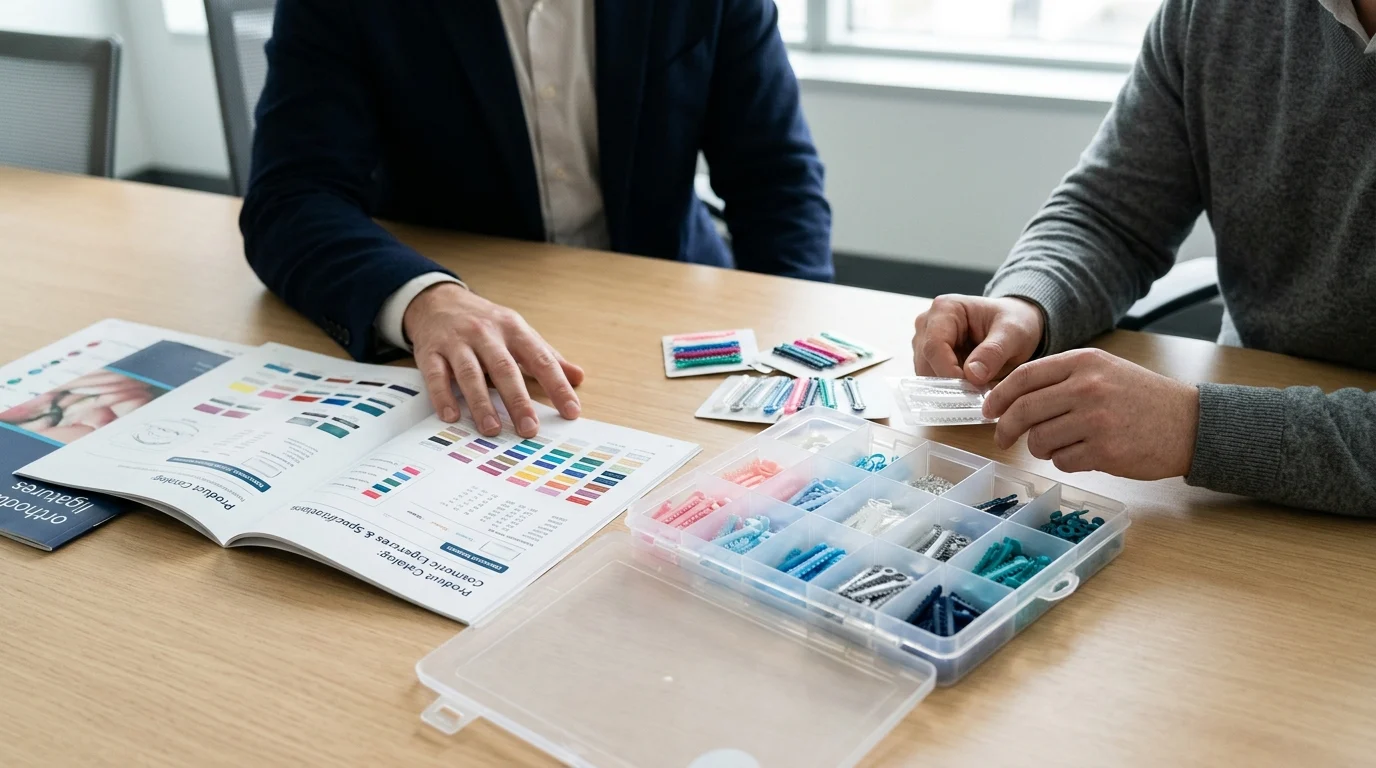
The technical specifications of cosmetic elastomeric ligatures dictate their clinical efficacy and durability. Manufacturers produce these ties with precise dimensions, commonly featuring an inner diameter of 0.115 to 0.120 inches and an outer diameter of approximately 0.175 inches. These standardized dimensions ensure compatibility with standard twin brackets, allowing for predictable engagement of both round and rectangular archwires.
Materials, colors, and design features
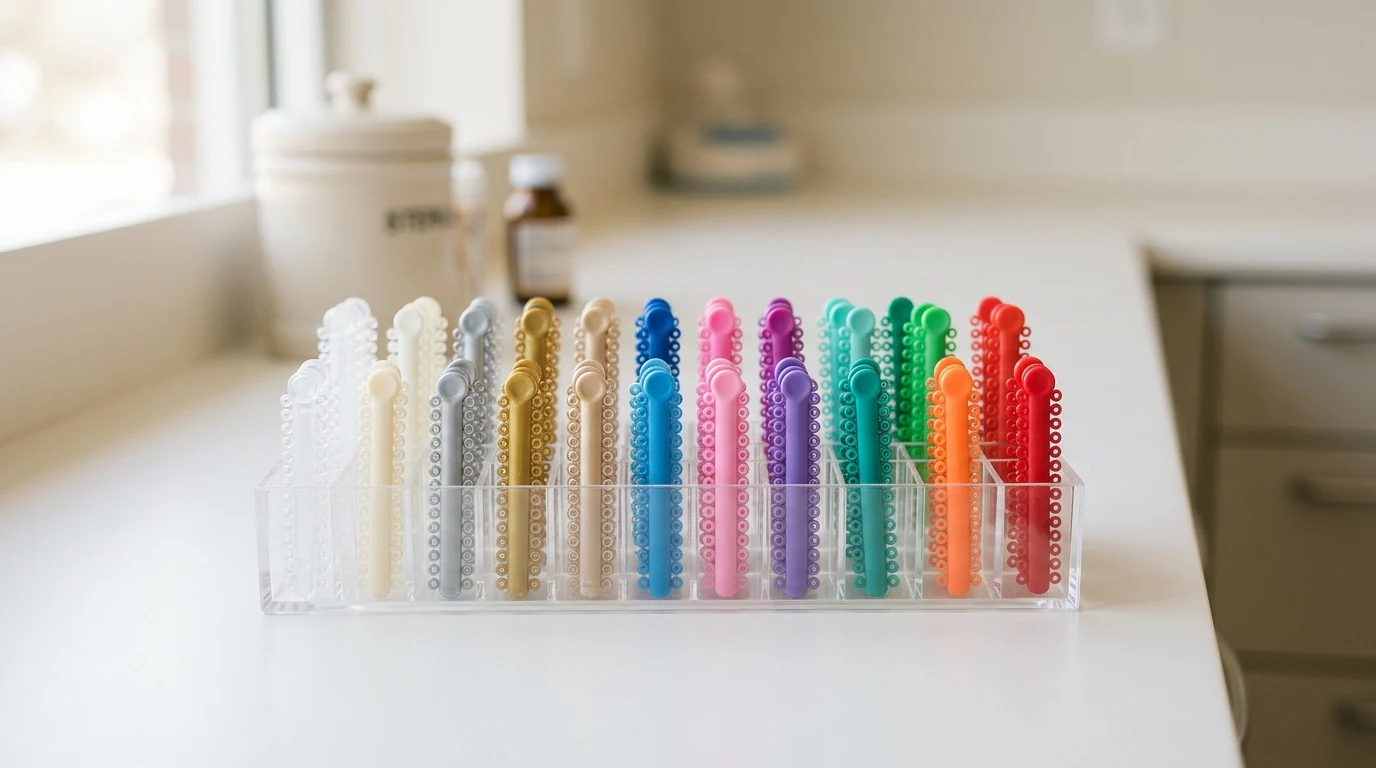
Modern aesthetic ligatures are predominantly fabricated from medical-grade polyurethane elastomers, which offer superior elasticity and tear resistance compared to natural latex. The color palette extends beyond standard clear options to include pearl, smoke, and tooth-colored variants. Smoke-colored ligatures, in particular, are engineered to mask dietary stains while maintaining a neutral appearance against ceramic brackets. Design features often include a low-profile cross-section, measuring around 0.040 inches in thickness, which minimizes plaque accumulation and reduces soft tissue irritation.
Selection, placement, and replacement considerations
Proper selection and placement of these ligatures require an understanding of elastomeric force decay. Polyurethane materials inherently experience stress relaxation in the oral environment, typically losing 50% to 70% of their initial force within the first 24 hours of placement. Consequently, clinicians must schedule replacement intervals every 4 to 6 weeks to maintain optimal archwire seating and active tooth movement. Practitioners can learn more about the material properties and selection criteria by visiting the manufacturer’s about us page, which details the engineering behind these specialized elastomers.
Comparison with alternative ligation options
Orthodontists must weigh the benefits of cosmetic elastomeric ligatures against alternative ligation methods, primarily stainless steel wire ties and self-ligating bracket systems. Each modality presents distinct biomechanical and operational characteristics that influence treatment efficiency, inventory management, and patient satisfaction. Understanding these distinctions ensures that clinics adopt the most appropriate ligation strategy for aesthetic cases.
Performance trade-offs: force retention, staining, and durabilit
y
The primary performance trade-offs involve force retention, staining susceptibility, and material durability. While stainless steel ties provide nearly 100% force retention over time without risk of deformation, they compromise the aesthetic appeal of clear brackets. Conversely, cosmetic elastomers suffer from rapid force decay in the moisture-rich oral cavity. Furthermore, clear polyurethane ties are highly susceptible to dietary pigmentation; exposure to coffee, tea, or turmeric can cause noticeable discoloration within 7 to 14 days, necessitating proactive patient compliance regarding dietary restrictions.
Cost, inventory, and maintenance differences
From a financial and operational perspective, cosmetic ligatures offer a highly cost-effective solution. Standard elastomeric ties typically cost between $0.02 and $0.05 per unit, allowing for minimal per-patient expenditure. In contrast, self-ligating ceramic brackets eliminate the need for external ties but increase the upfront bracket cost by $15 to $30 per unit. Maintaining an inventory of elastomeric ties requires stocking various colors and configurations, but the low unit cost mitigates the financial burden of bulk storage.
Comparison table of common ligation methods
To facilitate clinical decision-making, the following table outlines the comparative attributes of common aesthetic ligation methods.
| Ligation Method | Initial Force Decay | Aesthetic Quality | Stain Resistance | Average Cost Per Tooth |
|---|---|---|---|---|
| Clear Elastomeric Ties | High (50-70% in 24h) | Excellent | Low | $0.02 – $0.05 |
| Teflon-Coated Steel Ties | Low (<5%) | Good | High | $0.10 – $0.20 |
| Aesthetic Self-Ligating Brackets | None (Clip-based) | Excellent | High | +$15.00 – $30.00 (Premium) |
Quality, compliance, and supply chain evaluation
Procuring reliable orthodontic supplies requires rigorous oversight of quality standards, regulatory compliance, and supply chain stability. Because cosmetic ligatures are utilized intraorally for extended periods, they are subject to stringent global medical device regulations. Distributors and clinical buyers must carefully evaluate manufacturing benchmarks to prevent product failures, such as premature snapping or severe discoloration, which can disrupt treatment timelines and damage a clinic’s reputation.
Manufacturing controls and biocompatibility standards
Manufacturing controls for orthodontic elastomers focus heavily on biocompatibility and structural integrity. High-quality ligatures must comply with ISO 10993 standards for biological evaluation, ensuring they are non-cytotoxic, hypoallergenic, and entirely free of natural rubber latex and bisphenol-A (BPA). Advanced injection molding processes are utilized to eliminate flash—excess plastic at the parting line—which can harbor bacteria and cause friction. Precision in manufacturing ensures that the ultimate tensile strength remains consistent, typically withstanding up to 400% elongation before failure.
Packaging, sterilization, shelf life, and MOQ
Supply chain logistics depend heavily on proper packaging and defined shelf-life parameters. Medical-grade elastomers are sensitive to ultraviolet light and extreme temperatures, requiring opaque or UV-resistant packaging. When stored in climate-controlled environments below 25°C, these ligatures generally maintain a shelf life of 24 to 36 months. Distributors must also navigate Minimum Order Quantities (MOQs), which typically range from 1,000 to 5,000 sticks (each holding 10 to 50 ligatures) for wholesale pricing tiers, balancing inventory turnover rates with bulk discount advantages.
Supplier assessment and consistency checks
Evaluating a supplier involves analyzing their batch-to-batch consistency and quality assurance protocols. Buyers should request certificates of analysis and conduct mechanical testing on sample batches to verify tear strength and color stability. Establishing a robust supply chain requires partnering with responsive manufacturers. Procurement managers can initiate these evaluations and request detailed compliance documentation by utilizing the supplier’s contact us channels to ensure all regulatory and clinical requirements are met.
| Evaluation Criterion | Standard / Benchmark | Red Flags to Avoid |
|---|---|---|
| Regulatory Compliance | FDA Class I/II, ISO 13485 | Missing CE marks, lack of ISO certification |
| Biocompatibility | ISO 10993 (Latex-free, BPA-free) | Unspecified polymer blends |
| Shelf Life | 24 – 36 months | Lack of lot numbers or expiration dates |
| Dimensional Tolerance | ±0.002 inches | Visible flash, uneven ring thickness |
Selection and implementation for practices and distributors
The successful integration of cosmetic orthodontic ligatures into a dental practice or distribution portfolio requires a strategic approach to product selection and operational deployment. For clinical practices, the objective is to streamline chairside workflows while maximizing aesthetic outcomes. For distributors, the focus remains on maintaining an optimized inventory matrix that meets the diverse demands of regional orthodontic markets.
Clinical, commercial, and operational decision factors
Decision-makers must balance clinical efficacy with operational efficiency. A standard full-arch ligation utilizing elastomeric rings requires approximately 2 to 3 minutes of chair time, significantly faster than the 5 to 8 minutes typically needed for placing and tucking stainless steel wire ties. Commercially, practices must decide whether to standardize on a single universal aesthetic shade, such as pearl or smoke, or maintain a comprehensive inventory of clear, tooth-colored, and translucent options to match varying ceramic bracket systems and patient enamel shades.
Stocking, staff training, and patient communication
Effective implementation relies heavily on staff training and proactive patient communication. Dental assistants must be trained in the proper use of orthodontic mathieu pliers or specialized ligature directors to avoid overstretching the elastomers, which can permanently deform the polyurethane matrix. Furthermore, patient education is critical to the success of clear ligatures. Clinics must provide clear, written guidelines regarding dietary restrictions, advising patients to avoid highly pigmented foods and beverages—such as curry, red wine, and dark berries—that can compromise the aesthetic integrity of the ligatures between their scheduled 4-week adjustment appointments.
Further reading:
Key Takeaways
- The most important conclusions and rationale for cosmetic orthodontic ligatures
- Specs, compliance, and risk checks worth validating before you commit
- Practical next steps and caveats readers can apply immediately
Frequently Asked Questions
What are cosmetic orthodontic elastomeric ligatures used for?
They secure the archwire into ceramic or clear brackets while keeping braces less noticeable. They are commonly used in aesthetic orthodontic cases.
How often should cosmetic elastomeric ligatures be replaced?
They are typically replaced every 4 to 6 weeks. This helps maintain archwire seating, appearance, and more consistent tooth movement.
Do clear or tooth-colored ligatures stain easily?
Yes. Coffee, tea, curry, and turmeric can discolor them within 1 to 2 weeks, so smoke or pearl shades may be a more practical choice.
Are cosmetic ligatures compatible with ceramic brackets?
Yes. They are designed to work with ceramic, composite, and sapphire bracket systems without scratching bracket surfaces when properly placed.
Where can clinics source cosmetic orthodontic ligatures from DenRotary?
Clinics can review DenRotary’s cosmetic orthodontic ligature options on the products page at denrotary.com to compare aesthetic colors and specifications.

Post time: Jul-01-2026