



Introduction
Teen orthodontic treatment depends as much on behavior as on mechanics, and daily elastic wear is often where plans break down. One surprisingly effective motivator is color: giving adolescents a choice of colorful elastics can make treatment feel more personal, visible, and easier to commit to. This article explains how that small design choice supports compliance, why it aligns with teen psychology, and what it can mean for treatment efficiency, appointment outcomes, and patient satisfaction. It also sets up the practical factors clinicians and parents should consider when using colorful elastics to encourage more consistent cooperation.
How Colorful Elastics Can Improve Teen Orthodontic Compliance
Adolescent compliance remains one of the most unpredictable variables in orthodontic treatment. While biomechanical advancements have optimized bracket designs and archwire alloys, clinical outcomes still rely heavily on patient cooperation, particularly regarding oral hygiene and the consistent wear of interarch elastics. Non-compliance rates in teen orthodontic patients frequently range from 30% to 50%, a behavioral deficit that can significantly extend treatment timelines and compromise final occlusal results.
To mitigate this, clinicians increasingly utilize behavioral nudges to foster patient ownership over the treatment process. The integration of colorful elastomeric ligatures and interarch elastics serves as a low-cost, high-impact psychological tool. By transforming a passive medical procedure into an interactive experience, orthodontic practices can leverage adolescent psychology to improve adherence to prescribed wear protocols.
Why visual choice matters for adolescent motivation
Adolescence is a developmental stage characterized by a strong desire for autonomy and self-expression. Orthodontic treatment, which is often mandated by parents and executed by clinicians, naturally restricts this autonomy. Allowing teens to select the colors of their elastomeric ligatures (O-rings) or interarch elastics reintroduces a degree of control. Clinical behavioral studies indicate that offering minor, controlled choices in a healthcare setting can elevate patient engagement scores by up to 40%.
This visual choice transforms the orthodontic appliance from a purely medical device into a customizable accessory. Patients frequently align their color selections with holidays, school colors, or personal aesthetic preferences. This positive association reduces the stigma and frustration commonly associated with fixed appliances, fostering a more cooperative patient mindset during chairside adjustments and at-home care.
How compliance affects treatment efficiency
The mechanical efficiency of orthodontic treatment is directly tied to the continuous application of force. For interarch elastics, clinicians typically prescribe 20 to 22 hours of daily wear to achieve optimal tooth movement. When motivation wanes and a patient reduces wear time to 12 hours or less, the biomechanical force becomes intermittent, leading to cellular resting phases in the periodontal ligament rather than active bone remodeling.
This lack of compliance directly translates to clinical inefficiency. Treatment durations can easily increase by 3 to 6 months due to erratic elastic wear, requiring additional appointments and increasing overhead costs for the practice. By utilizing colorful elastics to maintain high levels of patient motivation, clinicians can ensure that the biological response to the applied forces remains uninterrupted, thereby keeping the treatment schedule on track.
Clinical and Behavioral Factors Behind Colorful Elastic Use
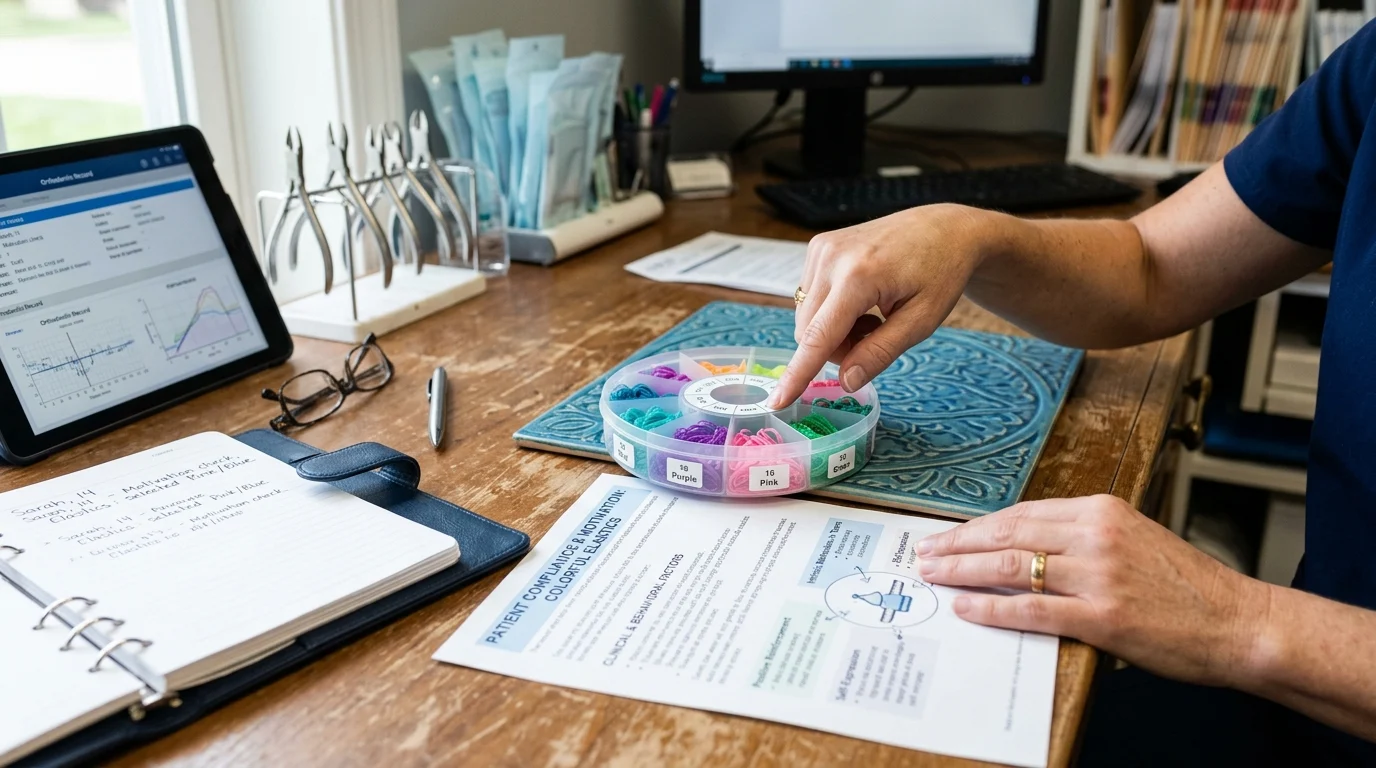
The application of colorful elastomerics requires an understanding of both the material science governing polyurethane products and the behavioral dynamics of the adolescent demographic. Elastomeric products are ubiquitous in orthodontics, but their mechanical properties are not static. Force degradation of elastomeric ligatures and chains typically reaches 50% to 70% within the first 24 hours of intraoral exposure.
Because these materials require frequent replacement—usually every 4 to 6 weeks for ligatures and daily for interarch elastics—the recurring need for fresh elastomerics creates a continuous cycle of patient engagement. Understanding the clinical distinctions between these products and the behavioral factors that drive their use is essential for maximizing both biomechanical efficacy and patient compliance.
How colorful elastics differ from ligatures and interarch elastics
While patients often use the term “rubber bands” interchangeably, clinicians must distinguish between elastomeric ligatures and interarch elastics when designing a compliance strategy. Elastomeric ligatures (or O-rings) are applied by the clinician to secure the archwire within the bracket slot. Their color selection provides an aesthetic boost and builds excitement for the appointment, but they do not require daily patient intervention.
Conversely, interarch elastics are removable bands used to correct malocclusions such as Class II or Class III discrepancies. These require strict patient compliance, as the patient must remove them for meals and replace them multiple times a day with fresh bands to maintain optimal force levels (typically ranging from 2.5 to 6.0 ounces). Offering colorful interarch elastics serves as a constant visual reminder for the patient to maintain their daily wear schedule.
Which psychological and chairside factors increase motivation
The chairside experience plays a pivotal role in reinforcing patient compliance. When orthodontic assistants dedicate 2 to 3 minutes to discussing color options, it builds essential rapport between the clinical team and the adolescent patient. This positive reinforcement makes the patient more receptive to clinical instructions regarding oral hygiene and elastic wear.
Furthermore, gamification strategies can be employed. Practices often run seasonal contests or social media campaigns where patients showcase their unique color combinations. This peer-to-peer validation leverages the adolescent drive for social acceptance, turning the diligent wear of colorful elastics into a socially rewarded behavior rather than an isolated chore.
What limitations and case-selection factors matter
Despite their behavioral benefits, colorful elastomerics present specific clinical limitations. Material composition is a primary factor; while most modern colored ligatures are made from non-latex polyurethane to avoid allergic reactions, non-latex interarch elastics often exhibit faster force decay than their natural latex counterparts. Clinicians may need to prescribe a 10% to 15% increase in initial force for non-latex colored bands to compensate for this rapid degradation.
Case selection also dictates color viability. In cases requiring severe rotational corrections or where friction-free sliding mechanics are paramount, self-ligating brackets or stainless steel wire ligatures may be biomechanically superior to elastomeric ligatures. In such instances, the clinician must balance the behavioral desire for colorful ligatures against the mechanical requirements of the treatment phase.
Comparing Colorful and Neutral Elastic Options
When designing a treatment plan, orthodontists must weigh the behavioral advantages of colorful elastics against the aesthetic and clinical properties of neutral or clear alternatives. Aesthetic brackets (ceramic or sapphire) are frequently paired with clear or tooth-colored elastomeric ligatures to minimize appliance visibility. However, these neutral options present unique challenges regarding material stability and patient satisfaction.
Clear elastomeric chains and ligatures are highly susceptible to discoloration. Research indicates that clear polyurethane elastomerics can exhibit a noticeable color change (a Delta E value greater than 3.0) within just 7 days when exposed to dietary chromogens like coffee, tea, mustard, or turmeric. This rapid degradation in appearance can paradoxically decrease patient satisfaction, making the comparison between colorful and neutral options a critical clinical consideration.
Which factors best compare compliance, appearance, and staining
Evaluating the trade-offs between colorful and neutral elastomerics requires analyzing their performance across several clinical and behavioral parameters. Colorful elastics effectively mask dietary staining, whereas clear options amplify it. Furthermore, the pigment additives in colorful elastomerics do not significantly alter their force delivery profiles compared to unpigmented versions, allowing clinicians to make decisions based primarily on aesthetics and compliance rather than biomechanical compromises.
| Parameter | Colorful Elastics | Neutral / Clear Elastics |
|---|---|---|
| Dietary Stain Visibility | Low (Pigment masks chromogens) | High (Delta E > 3.0 within 7-10 days) |
| Patient Compliance (Teens) | High (Driven by autonomy/expression) | Moderate to Low (Viewed as strictly clinical) |
| Primary Bracket Pairing | Stainless Steel (Metal) | Ceramic, Sapphire, Composite |
| Force Decay Profile | 50-70% in first 24 hours | 50-70% in first 24 hours |
| Visual Degradation | Minimal over 4-6 weeks | Severe yellowing over 4-6 weeks |
When neutral options may be the better choice
Despite the behavioral benefits of colorful options, neutral or clear elastics remain the superior choice for specific demographics and clinical scenarios. Adult orthodontic patients, who typically prioritize discretion over expression, overwhelmingly prefer clear ligatures paired with ceramic brackets or clear aligner therapy. For these patients, the psychological boost comes from the appliance’s invisibility rather than its customization.
Additionally, some adolescent patients are highly self-conscious and prefer a minimalist approach. In cases where clear ligatures are utilized but dietary staining is a persistent issue, clinicians may substitute clear elastomerics with silver or smoke-colored ligatures, or opt for Teflon-coated stainless steel ties. These alternatives maintain a relatively low visual profile while resisting the rapid discoloration that plagues transparent polyurethane materials.
How Orthodontic Practices Can Implement a Color-Choice Strategy
Integrating a comprehensive color-choice strategy into an orthodontic practice requires more than simply purchasing a variety of elastomeric ligatures. It demands a structured approach to workflow, inventory management, and patient communication. Without a streamlined protocol, color selection can bottleneck chairside operations, costing the practice valuable clinical time.
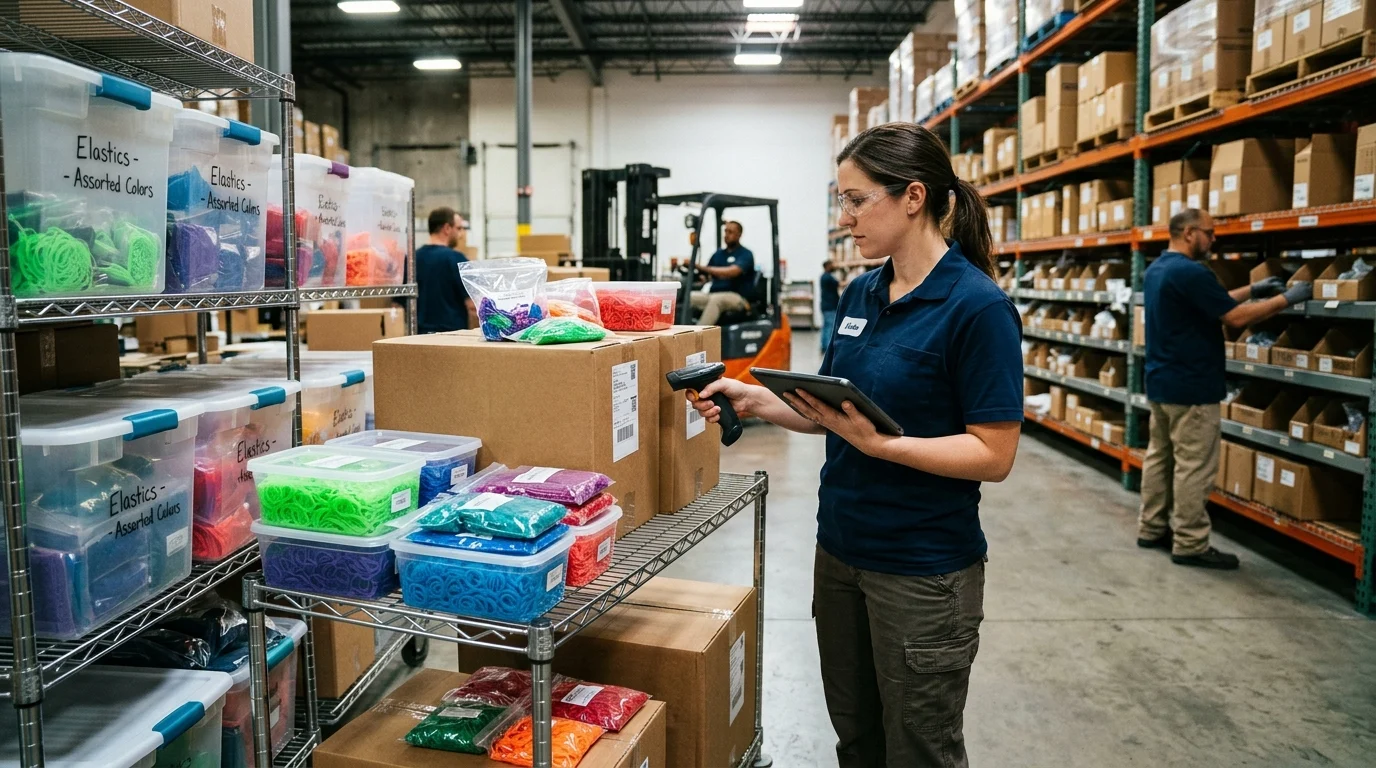
A well-managed inventory of 20 to 30 color options incurs a negligible per-patient cost—often under $0.15 for a full-mouth application of ligatures—but it necessitates rigorous stock control to ensure material efficacy. Polyurethane products are sensitive to environmental factors, and improper storage can lead to premature force degradation before the elastics are ever placed in the patient’s mouth.
How to build a color-choice protocol
To prevent color selection from consuming valuable chair time, practices must integrate the decision-making process earlier in the patient workflow. Many high-volume clinics utilize digital color-selector apps on tablets in the waiting room, allowing teens to visualize and choose their colors before sitting in the dental chair. This simple administrative shift can save an average of 3 to 5 minutes per adjustment appointment.
Alternatively, practices can utilize a physical “color wheel” at the sterilization or check-in desk. By the time the orthodontic assistant is ready to remove the archwire, the patient has already made their selection. This protocol ensures that the behavioral benefits of color choice are realized without sacrificing the clinic’s daily scheduling efficiency.
What communication works best with teens and parents
Effective communication transforms the selection of colorful elastics from a mere aesthetic preference into a behavioral contract. Clinicians and staff should frame the provision of colorful interarch elastics as a partnership. A common script involves telling the teen, “You are in charge of choosing the colors to make your smile look great, but in return, you are in charge of wearing them 22 hours a day to make the treatment work.”
Involving parents in this dialogue is equally important. Parents often bear the financial burden of extended treatment times caused by non-compliance. By educating parents on how colorful elastics serve as visual indicators of wear—allowing them to easily see if their child is actually wearing their prescribed rubber bands—the practice enlists the parent as an active monitor in the compliance ecosystem.
How inventory and quality control affect consistency
Maintaining a diverse spectrum of elastomeric colors requires meticulous inventory oversight. Orthodontic elastomerics possess a finite shelf life, typically ranging from 18 to 24 months, after which the polyurethane chains begin to cross-link improperly, resulting in brittleness and an unpredictable force delivery profile. Practices must implement a First-In, First-Out (FIFO) inventory system to mitigate material expiration.
| Inventory Item | Average MOQ | Ideal Storage Temp | Average Shelf Life | Turnover Priority |
|---|---|---|---|---|
| Standard Color Ligatures | 1,000 sticks | 68°F – 75°F (Dark) | 18 – 24 Months | High |
| Seasonal Color Ligatures | 500 sticks | 68°F – 75°F (Dark) | 18 – 24 Months | Medium (Seasonal) |
| Clear / Neutral Ligatures | 2,000 sticks | 68°F – 75°F (Dark) | 18 – 24 Months | Very High |
| Color Interarch Elastics | 50 patient bags | 68°F – 75°F (Dark) | 24 – 36 Months | High |
Furthermore, quality control extends to storage conditions. Elastomeric products are highly sensitive to ultraviolet (UV) light and extreme temperature fluctuations. Inventory should be stored in opaque containers or dark cabinetry, away from direct sunlight and autoclave heat, to preserve the structural integrity and elasticity of the polymers.
How to Measure Whether Colorful Elastics Are Worth Offering
To justify the logistical effort of managing a broad inventory of colorful elastomerics, orthodontic practices must evaluate the return on investment (ROI) through concrete clinical and operational metrics. While the upfront cost of colored ligatures and bands is minimal, the true value of this behavioral intervention is measured by its impact on treatment efficiency and patient retention.
By systematically tracking compliance indicators,
Key Takeaways
- The most important conclusions and rationale for Orthodontic Patients
- Specs, compliance, and risk checks worth validating before you commit
- Practical next steps and caveats readers can apply immediately
Frequently Asked Questions
How do colorful elastics help teens wear their orthodontic bands more consistently?
They give teens a sense of choice and make treatment feel personal, which can boost daily wear habits and reduce skipped hours.
Are colorful elastics the same as ligature ties and interarch elastics?
No. Colored ligature ties are placed by the orthodontist on brackets, while interarch elastics are removable bands teens must wear as prescribed each day.
How many hours a day should teens usually wear interarch elastics?
Most orthodontists recommend about 20 to 22 hours daily, removing them only for meals and replacing them with fresh bands as instructed.
Can poor elastic compliance really make treatment take longer?
Yes. Inconsistent wear can interrupt tooth movement and may add several months to treatment, plus extra adjustment visits.
Why do orthodontic practices choose high-quality elastics from manufacturers like Denrotary?
Reliable medical-grade elastics support more consistent force, product quality, and supply confidence, helping clinics manage treatment more predictably.

Post time: May-12-2026