


Introduction
Selecting an orthodontic OEM partner shapes far more than purchasing costs for global dental distributors. It affects product consistency, regulatory exposure, delivery performance, margin potential, and the credibility of a private-label portfolio in clinical settings. This article explains the main criteria distributors use to evaluate manufacturers, from material quality and production capability to certifications, traceability, and communication reliability. It also highlights the commercial and operational signals that separate a dependable long-term partner from a low-cost but risky supplier, giving readers a practical framework for assessing OEM candidates in a competitive and tightly regulated orthodontic market.
Why Orthodontic OEM Partners Matter
For global dental distributors, securing reliable orthodontic OEM (Original Equipment Manufacturer) partners is a strategic imperative rather than a mere procurement exercise. As the dental sector consolidates and clinical demands evolve, distributors rely heavily on their manufacturing counterparts to deliver precision-engineered devices that meet stringent clinical standards. The right OEM partner acts as an extension of the distributor’s own enterprise, providing the foundational hardware—from self-ligating brackets to nickel-titanium archwires—that drives clinical efficacy and commercial success.
Choosing a manufacturing partner requires a high-level understanding of both metallurgy and supply chain economics. Distributors must filter potential partners through rigorous technical and commercial lenses to ensure long-term viability in a highly regulated global market.
Impact on margins and portfolio strength
Transitioning from the distribution of established, tier-one branded orthodontic supplies to private-label manufacturing allows distributors to significantly restructure their financial models. By leveraging a capable OEM, distributors can routinely capture gross margin expansions ranging from 15% to 25% per unit, depending on the product category. This margin optimization provides the necessary capital to reinvest in localized marketing, clinical training, and digital dentistry integrations.
Furthermore, an integrated OEM partner enables distributors to rapidly expand their portfolio strength. Instead of being locked into a single brand’s product roadmap, distributors can source specialized components—such as ceramic aesthetic brackets or customized elastomeric ligatures—tailored to the specific preferences of their regional orthodontic clientele.
Market pressures reshaping supplier strategy
The global orthodontic supplies market is experiencing sustained growth, with clear aligner therapies and advanced bracket systems driving a compound annual growth rate (CAGR) of approximately 8.5%. However, this growth is accompanied by severe market pressures, including raw material inflation, geopolitical trade tariffs, and fluctuating currency exchange rates.
These macroeconomic forces are fundamentally reshaping supplier strategies. Distributors can no longer rely on single-source, transactional relationships. To mitigate supply chain disruptions, modern distributors are adopting dual-sourcing strategies and demanding greater operational transparency from their OEMs. A reliable partner must demonstrate resilience against these pressures, absorbing minor market shocks without immediately passing a 5% to 10% price hike down the supply chain.
How to Evaluate a Reliable Orthodontic OEM Partner
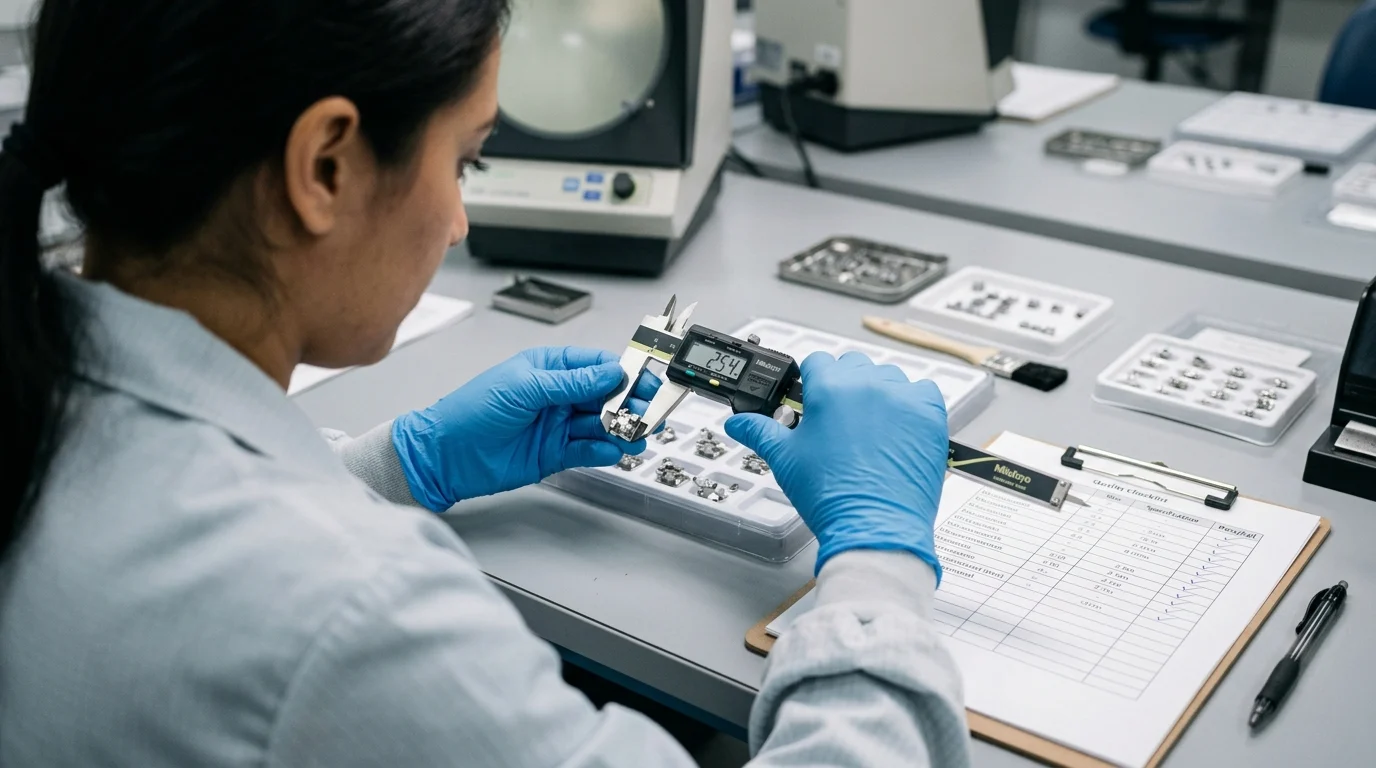
Evaluating a potential orthodontic OEM partner requires looking past marketing brochures and delving into the factory floor’s operational reality. Distributors must assess a facility’s technical infrastructure, production flexibility, and commercial terms to determine if the manufacturer can scale alongside the distributor’s growth trajectory.
Core manufacturing and technical capabilities
The foundation of orthodontic manufacturing lies in extreme precision. For metal brackets and buccal tubes, distributors must verify the OEM’s proficiency in Metal Injection Molding (MIM) and Computer Numerical Control (CNC) machining. A reliable manufacturer should consistently achieve dimensional tolerances of ±0.005 mm to ensure accurate torque and angulation in the bracket slot.
Additionally, the technical capability to process advanced materials is non-negotiable. The OEM must demonstrate expertise in handling medical-grade 17-4 PH stainless steel, polycrystalline alumina for ceramic brackets, and shape-memory alloys like Nitinol. The presence of in-house tooling and mold-making departments is a strong indicator of a supplier’s ability to control both quality and product development timelines.
Comparing MOQs, lead times, and product scope
Commercial terms dictate the financial feasibility of the partnership. Minimum Order Quantities (MOQs) vary drastically depending on the manufacturing process and the customization required. For standard MIM brackets, a typical MOQ might range from 5,000 to 10,000 sets per production run. Conversely, highly customized elastomeric chains may require an MOQ exceeding 100,000 units due to the complexities of color-matching and polymer extrusion.
Lead times are equally critical. A highly capable OEM should maintain standard production lead times of 30 to 45 days for catalog items, extending to 60 to 90 days for custom-tooled private label products. Distributors must align these timelines with their internal inventory turnover ratios to prevent costly stockouts.
Using a practical supplier comparison framework
To systematically evaluate potential partners, distributors should utilize a standardized comparison framework that weighs technical capability against commercial viability. This prevents subjective decision-making and highlights the true cost of acquisition.
| Supplier Tier | Typical MOQ (Bracket Sets) | Average Lead Time | Quality Certifications | Unit Cost Premium |
|---|---|---|---|---|
| Tier 1 (Strategic OEM) | 10,000+ | 30 – 45 Days | ISO 13485, MDR, FDA | Baseline |
| Tier 2 (Niche/Agile OEM) | 2,000 – 5,000 | 20 – 30 Days | ISO 13485 | +8% to +12% |
| Tier 3 (Transactional) | < 1,000 | 15 – 20 Days | Local Only | -15% (High Risk) |
Using this framework, distributors can clearly see the trade-offs. While Tier 3 suppliers offer lower costs and fast turnarounds, the lack of global regulatory certifications renders them unsuitable for major Western distribution networks.
Compliance and Quality Criteria to Review
In the medical device sector, quality is not a marketing term; it is a strict legal requirement. Orthodontic products are classified as Class II medical devices in most major jurisdictions, meaning that regulatory compliance is the highest barrier to entry. Distributors carry the legal burden of placing these devices on the market, making the OEM’s quality management system (QMS) the ultimate safety net.
Regulatory readiness for global dental markets
An OEM’s regulatory readiness dictates a distributor’s market access. At a bare minimum, the manufacturing facility must hold a valid ISO 13485:2016 certification issued by a recognized notified body. For access to the United States market, the OEM must have an active FDA facility registration and provide the necessary documentation to support 510(k) clearances for specific device categories.
In the European Union, the transition to the Medical Device Regulation (MDR 2017/745) has severely restricted the supplier pool. OEMs must provide comprehensive Technical Files, Clinical Evaluation Reports (CERs), and Post-Market Surveillance (PMS) data. Partnering with an OEM that lacks MDR readiness will immediately lock a distributor out of the European market, jeopardizing millions in potential revenue.
Key product specifications and validation checks
Beyond paperwork, the physical performance of the devices must be continuously validated. For orthodontic brackets, the critical metric is shear bond strength. The OEM’s quality control laboratory must provide batch-specific testing data proving that the bracket base consistently achieves a shear bond strength between 10 MPa and 15 MPa on etched enamel. Anything lower results in clinical bond failures, while excessive strength risks enamel fracture during debonding.
Similarly, orthodontic archwires must undergo rigorous tensile strength and differential scanning calorimetry (DSC) testing to verify transition temperatures for shape-memory alloys. Furthermore, all patient-contact materials must pass biocompatibility testing according to ISO 10993 standards, specifically assessing cytotoxicity, sensitization, and irritation.
Traceability, sterilization, and audit due diligence
Supply chain transparency is enforced through rigorous traceability protocols. A reliable OEM must implement Unique Device Identification (UDI) systems, ensuring that every batch of brackets, wires, or bands can be traced back to the original raw material ingot. This is vital in the event of a clinical recall.
For products sold as sterile, such as certain temporary anchorage devices (TADs) or pre-loaded delivery systems, the OEM must provide validated sterilization reports (e.g., Gamma irradiation or Ethylene Oxide). Distributors should conduct annual on-site or third-party audits to verify these processes. A high-performing OEM should demonstrate a critical defect rate of less than 0.5% (5,000 Parts Per Million) across their orthodontic lines.
Sourcing, Operations, and Logistics Considerations
Even the highest-quality orthodontic devices are useless if they cannot be delivered reliably and cost-effectively. Sourcing and logistics form the operational bridge between the OEM’s factory and the distributor’s warehouse. Effective supply chain management requires meticulous capacity planning, optimized shipping modalities, and a proactive approach to risk mitigation.
Capacity and operational risk assessment
Distributors must rigorously assess an OEM’s true production capacity, distinguishing between theoretical maximums and realistic output. A facility claiming a capacity of 500,000 bracket sets per month must prove they have the machinery, labor shifts, and raw material pipelines to sustain it. Bottlenecks often occur not in primary manufacturing, but in secondary processes like laser welding, polishing, or packaging.
Operational risk assessment also involves evaluating the OEM’s own supply chain. If the manufacturer relies on a single sub-tier supplier for their 17-4 PH stainless steel powder, a localized disruption could halt the distributor’s entire bracket portfolio. Reliable OEMs maintain redundant raw material sourcing and hold strategic buffer stocks of critical components.
Lead times, Incoterms, and inventory planning
Navigating international logistics requires a firm grasp of Incoterms and freight dynamics. Most orthodontic OEMs operate on Free On Board (FOB) or Ex Works (EXW) terms. Distributors must accurately calculate the landed cost, which includes freight, insurance, and import duties (which can range from 3% to 10% depending on the tariff classification).
Inventory planning must account for the stark differences in shipping modalities. To avoid stockouts, distributors typically maintain a buffer inventory of 15% to 20% above forecasted demand, particularly when relying on ocean freight.
| Modality | Average Transit Time | Estimated Cost per kg | Ideal Cargo Profile |
|---|---|---|---|
| Air Freight | 5 – 10 Days | $6.00 – $12.00 | High-margin items (Nitinol wires, custom brackets), urgent restocks |
| Ocean Freight (LCL) | 35 – 50 Days | $0.50 – $1.50 | Heavy, bulky consumables (elastomerics, alginates), planned inventory |
| Express Courier | 3 – 5 Days | $15.00+ | Prototypes, compliance samples, critical shortages |
A practical supplier selection process
Establishing a new OEM relationship should follow a structured, phased process. It begins with a detailed Request for Quotation (RFQ) that clearly outlines technical specifications, annual volume projections, and packaging requirements. This is followed by the procurement of first-article inspection (FAI) samples.
Distributors must never skip the clinical validation phase. Before committing to a full production run, FAI samples should be distributed to a trusted panel of Key Opinion Leaders (KOLs) or partner orthodontists. Only after receiving sign-off on clinical handling, bracket slot precision, and wire engagement should the distributor authorize the initial commercial purchase order.
Making the Final Supplier Decision
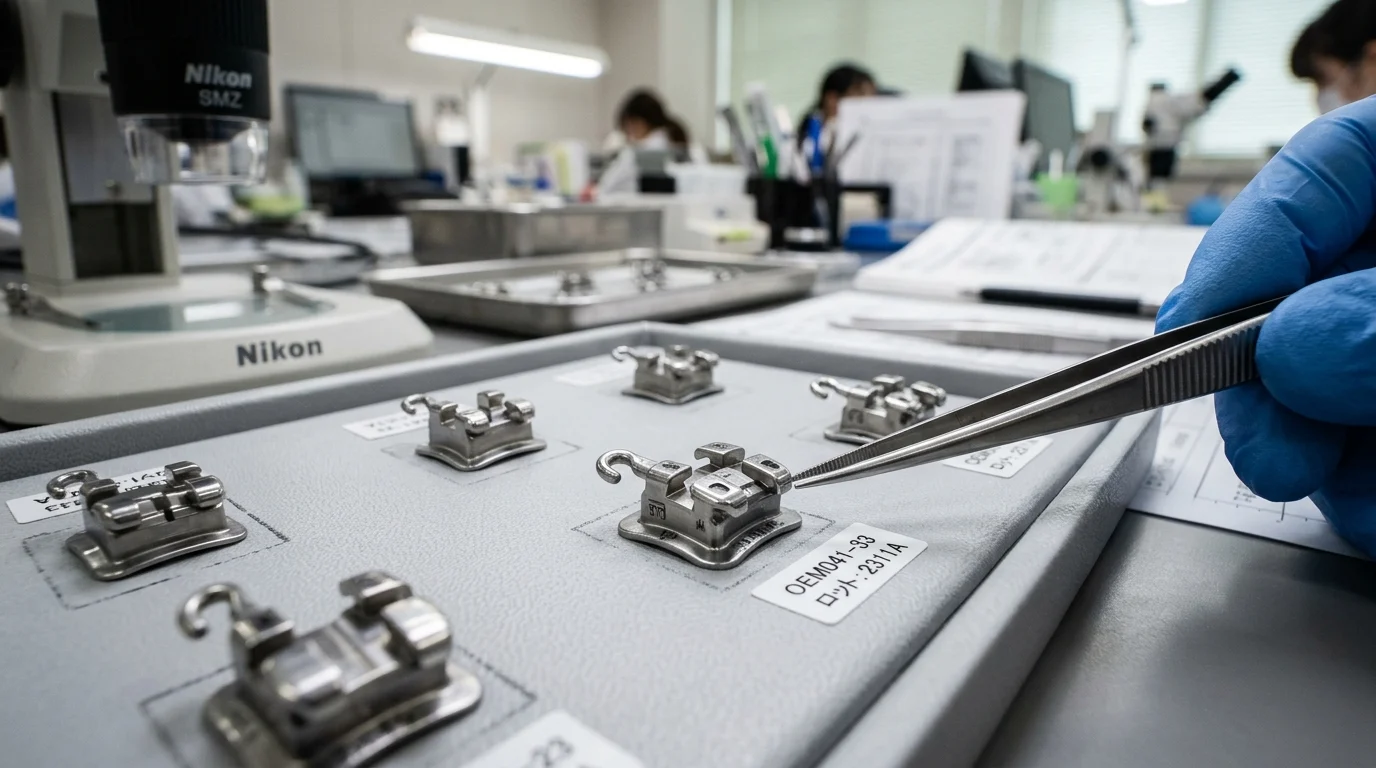
The culmination of the evaluation process is the final supplier decision, a strategic pivot that will dictate the distributor’s market competitiveness for years to come. This decision cannot be based on unit cost alone; it requires a holistic synthesis of quality data, logistical reliability, and the OEM’s willingness to engage in a true partnership.
Balancing cost, compliance, and service
The most common pitfall in global sourcing is the over-prioritization of piece-price over total cost of ownership. A manufacturer offering a 10% reduction in unit cost may ultimately destroy distributor margins if their products trigger a high rate of clinical returns or if a shipment is rejected at customs due to inadequate MDR documentation.
Distributors must balance these factors carefully. A premium paid to a Tier 1 OEM is often an insurance policy against regulatory audits, supply chain bottlenecks, and brand damage. The ideal partner provides a competitive cost structure while maintaining an unyielding commitment to clinical efficacy and responsive customer service.
Building a decision scorecard
To remove emotion and bias from the final decision, procurement teams should implement a weighted decision scorecard. This quantitative tool assigns specific values to the criteria evaluated during the sourcing process.
A standard orthodontic OEM scorecard might allocate weights as follows: Quality and Regulatory Compliance (40%), Total Landed Cost (30%), Manufacturing Capacity and Logistics (20%), and Communication/Strategic Alignment (10%). Distributors should mandate a minimum threshold—for example, requiring a supplier to score at least 85 out of 100 points—before progressing to formal contract negotiations and Master Supply Agreements (MSAs). This disciplined approach ensures that the chosen OEM is truly equipped to support the distributor’s long-term commercial objectives.
Key Takeaways
- The most important conclusions and rationale for Orthodontic OEM Partners
- Specs, compliance, and risk checks worth validating before you commit
- Practical next steps and caveats readers can apply immediately
Frequently Asked Questions
What certifications should a reliable orthodontic OEM partner have?
Look for CE, FDA, and ISO13485 as core proof of regulated medical-device manufacturing. These help distributors reduce compliance risk and speed market entry.
How can distributors verify real manufacturing capability before signing an OEM deal?
Request a factory audit, sample testing, and process details for MIM, CNC, and in-house tooling. Ask for actual output data, such as Denrotary’s automatic bracket lines and weekly capacity.
Which orthodontic products are best suited for OEM private labeling?
High-demand, repeat-order items work best: self-ligating brackets, buccal tubes, arch wires, elastics, and power chains. A broad catalog makes it easier to build a complete private-label line.
What lead times and MOQs should dental distributors expect?
Standard catalog items often ship in 30–45 days, while custom OEM projects may need 60–90 days. MOQs usually depend on the product type, tooling, and packaging requirements.
Why do material choices matter when selecting an orthodontic OEM partner?
Materials affect precision, bond strength, friction, and durability. Prioritize OEMs experienced with 17-4 stainless steel, sapphire or ceramic systems, and latex-free polyurethane for consistent clinical performance.

Post time: May-07-2026