
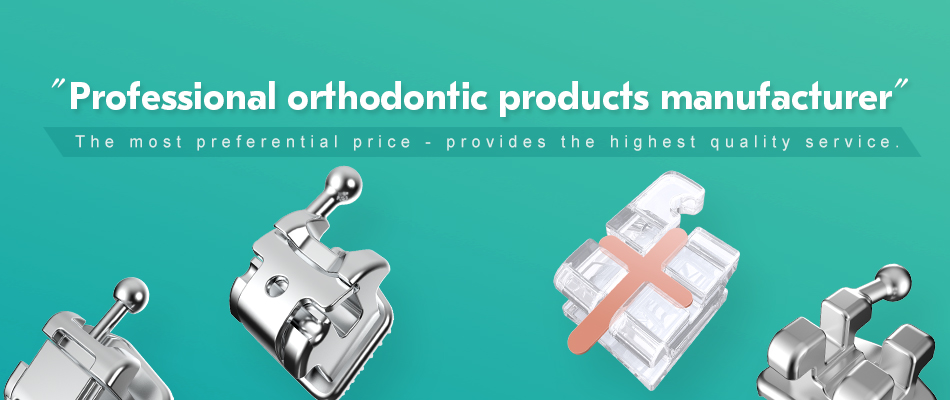

Patient comfort in orthodontic treatment depends on how efficiently the bracket, wire, and ligation system work together. When that system is designed for lower friction and smoother handling, patients usually experience less irritation and easier maintenance.
Why Orthodontic Brackets Affect Comfort
Orthodontic brackets influence comfort because they determine how force is transferred from the archwire to the teeth. The American Association of Orthodontists explains that braces use brackets and wires to move teeth gradually, and self-ligating designs can minimize friction and extend appointment intervals. AAO braces overview
Lower friction matters because friction can increase resistance during tooth movement and may contribute to discomfort, especially in the early phase of treatment. A review in the National Library of Medicine notes that many studies associate self-ligating systems with less pain during initial treatment stages. NCBI review on bracket friction and pain
How Orthodontic Brackets Improve Patient Comfort During Treatment
Orthodontic brackets improve patient comfort during treatment by reducing mechanical resistance, limiting unnecessary pressure, and making wire changes simpler. These effects are most noticeable during initial alignment, when the archwire is first engaged and the mouth is adapting to the appliance.
Comfort also improves when bracket edges are smoother and the profile is more compact. Rounded contours can reduce cheek and lip irritation, while stable bonding helps prevent repeated rebonding visits that interrupt treatment and add soreness.
In practical terms, the most comfortable systems usually share three traits:
- Lower friction between bracket slot and archwire
- Smaller or smoother external profile
- Reliable bonding that reduces emergency repairs
Comparison Table: Common Bracket Types and Comfort Factors
Comparison Table: Common Bracket Types and Comfort Factors
| Bracket type | Main comfort advantage | Typical clinical use |
|---|---|---|
| Metal conventional brackets | Strong, compact, and widely used | General fixed orthodontic treatment |
| Self-ligating brackets | Lower friction and easier wire changes | Cases prioritizing efficiency and comfort |
| Ceramic brackets | Better aesthetics and lower visual impact | Adult patients concerned about appearance |
| Sapphire brackets | High translucency and discreet appearance | Anterior cases with aesthetic demand |
Self-ligating systems are often selected when clinicians want easier archwire engagement and less sliding resistance. The AAO states that these brackets use built-in clips or doors to hold the wire, which can reduce friction and support longer intervals between visits. AAO self-ligating braces explanation
Material Choice and Soft-Tissue Comfort
Material choice improves comfort by balancing visibility, strength, and surface feel. Metal brackets remain the most common option because they are compact and durable, while ceramic and sapphire brackets are often preferred when aesthetics matter more to the patient.
For adult patients, aesthetic brackets can improve acceptance of treatment because they are less noticeable in daily life. That psychological comfort is not the same as physical comfort, but it can strongly affect treatment satisfaction and compliance.
FDA device summaries show that bracket design also affects bonding stability and wire handling, which are important for reducing repeat chairside interventions. A stable bracket footprint and easier wire placement can lower the chance of avoidable irritation. FDA bracket device summary
Comparison Table: Comfort-Related Features in a Fixed Appliance System
Comparison Table: Comfort-Related Features in a Fixed Appliance System
| Component | Comfort-related function | Clinical impact |
|---|---|---|
| Bracket | Controls friction and profile | Affects soreness and irritation |
| Archwire | Delivers force to teeth | Influences pressure level and response |
| Buccal tube | Guides posterior wire ends | Reduces wire-related trauma |
| Elastic accessories | Provide traction and closure | Support staged movement with controlled force |
Archwire selection is just as important as bracket design. NiTi wires are commonly used for early alignment because they deliver light, continuous force, while stainless steel wires are more rigid and better suited to later-stage control. That staged approach helps avoid excessive force early in treatment.
Thermal activated and copper NiTi wires can further support comfort because they respond to temperature and maintain more consistent force delivery. In many cases, this makes the initial adjustment period feel less abrupt for patients.
 Where Brackets Fit in a Comfort-Focused Treatment Plan
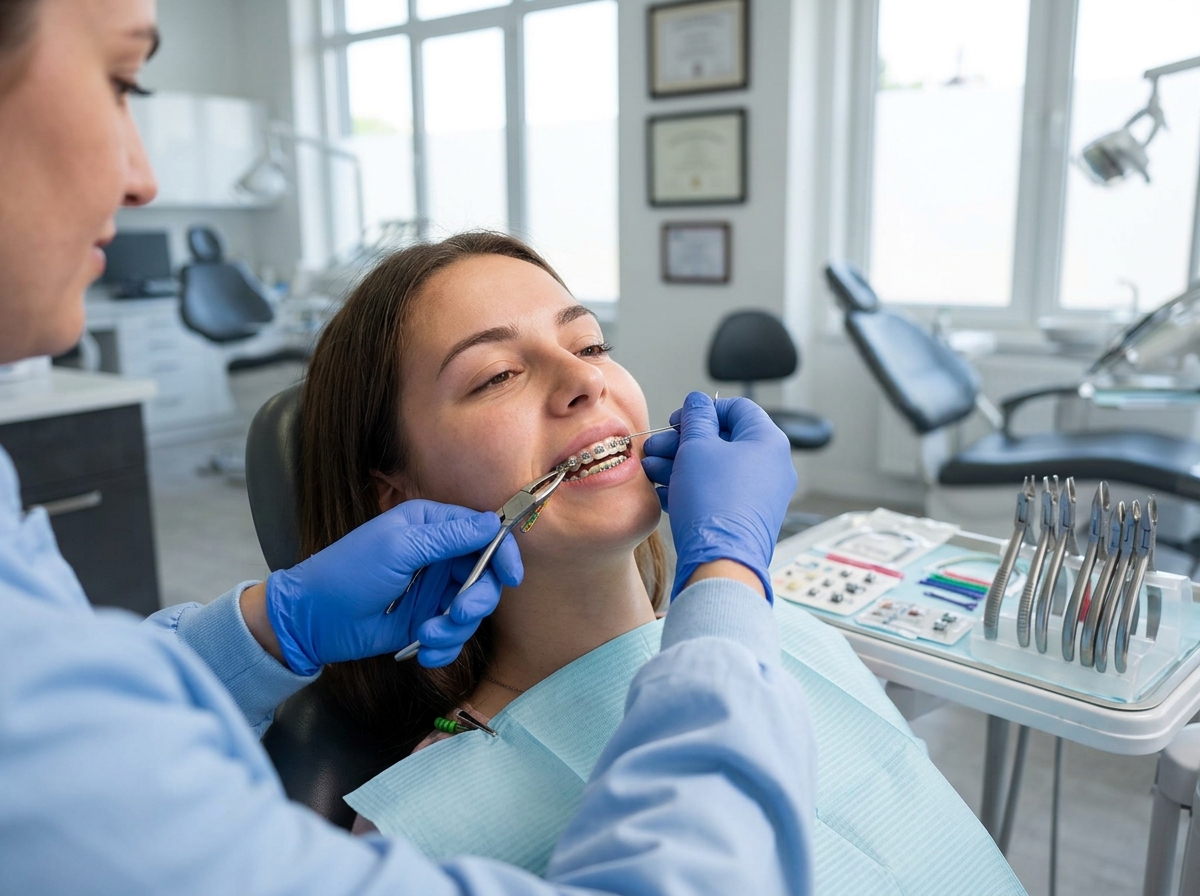
Comfort-focused orthodontic treatment is not based on one product alone; it depends on the full appliance sequence. Brackets, buccal tubes, archwires, elastics, and pliers all affect how smoothly the case progresses from alignment to finishing.
For example, a low-friction bracket system can work well with a NiTi archwire during early leveling, then transition to stainless steel for detailing and control. That progression reduces unnecessary force spikes and supports more predictable chairside adjustments.
For manufacturers that offer a full fixed-appliance range, the value is system compatibility. Denrotary’s product structure includes orthodontic brackets, buccal tube systems, orthodontic arch wire options, and orthodontic pliers, which makes it easier to match components across treatment stages.
Supplier Directory: What Buyers Should Look For
Supplier selection should focus on consistency, certification, and product breadth rather than appearance alone. A reliable supplier should offer bracket systems with clear material options, documented quality controls, and enough SKU coverage to support different treatment philosophies.
For procurement teams, the most useful checklist is straightforward:
- CE, ISO, or FDA-related compliance documentation
- Multiple bracket types for different case needs
- Compatible archwire and accessory ranges
- Stable batch quality and repeatable bonding performance
Industry buyers often compare manufacturers on product depth and export readiness. In that context, a vertically focused orthodontic supplier can be easier to standardize than a general dental catalog, especially when clinics need a complete fixed-appliance workflow.
Clinical Scenarios Where Comfort Gains Matter Most
Comfort gains matter most in the first weeks of treatment, in adult aesthetic cases, and in patients with high soft-tissue sensitivity. These are the situations where lower friction, smaller profiles, and fewer emergency adjustments can make the biggest difference.
Comfort is also important in busy practices because fewer repairs and simpler wire changes reduce chair time. That operational benefit can improve the patient experience indirectly by shortening visits and lowering treatment disruption.
In complex cases, elastic accessories such as power chains and ligature ties also contribute to comfort when they are used correctly. They help apply continuous force for space closure or traction without requiring overly aggressive adjustments. NCBI study on self-ligating and conventional bracket friction
What the Evidence Suggests About Pain and Friction
The evidence suggests that friction reduction is one of the main engineering routes to better comfort. Studies have found that self-ligating systems often show lower friction than conventional designs, although individual outcomes still depend on wire size, ligation method, and treatment stage.
It is also important to note that comfort is multifactorial. Tooth movement itself can cause soreness, and soft-tissue irritation may come from the wire ends, bracket profile, or oral hygiene challenges rather than the bracket slot alone.
That is why clinicians often combine bracket selection with wax, careful wire trimming, and staged force application. The result is not zero discomfort, but a more manageable treatment experience for most patients.
FAQ
Do self-ligating brackets always feel more comfortable?
Not always. They often reduce friction and simplify wire changes, but comfort still depends on wire size, treatment stage, and how well the appliance is adjusted. Some patients notice less irritation, while others mainly benefit from shorter or simpler appointments.
Are ceramic brackets more comfortable than metal brackets?
They are usually chosen for aesthetics, not because they are inherently softer on the mouth. Comfort depends more on bracket profile, smoothness, and wire management. Ceramic systems can feel similar to metal if the design and finishing are comparable.
Why do patients feel soreness after the first appointment?
The first appointment introduces new forces that begin moving teeth. That pressure can create temporary soreness for several days. Bracket design can influence the intensity, but the biological response to tooth movement is a major reason for early discomfort.
How do archwires affect comfort in orthodontic treatment?
Archwires determine how much force is delivered and how smoothly teeth move. Light-force NiTi wires are commonly used early because they are more flexible, while stiffer wires are used later for control. The wrong wire choice can increase pressure and irritation.
What should clinics prioritize when choosing bracket systems?
Clinics should prioritize bonding reliability, low-friction performance, case compatibility, and supply consistency. A system that works across alignment, space closure, and finishing stages is usually easier to manage and more comfortable for patients than a single-feature product.

Post time: Aug-08-2026