

Introduction
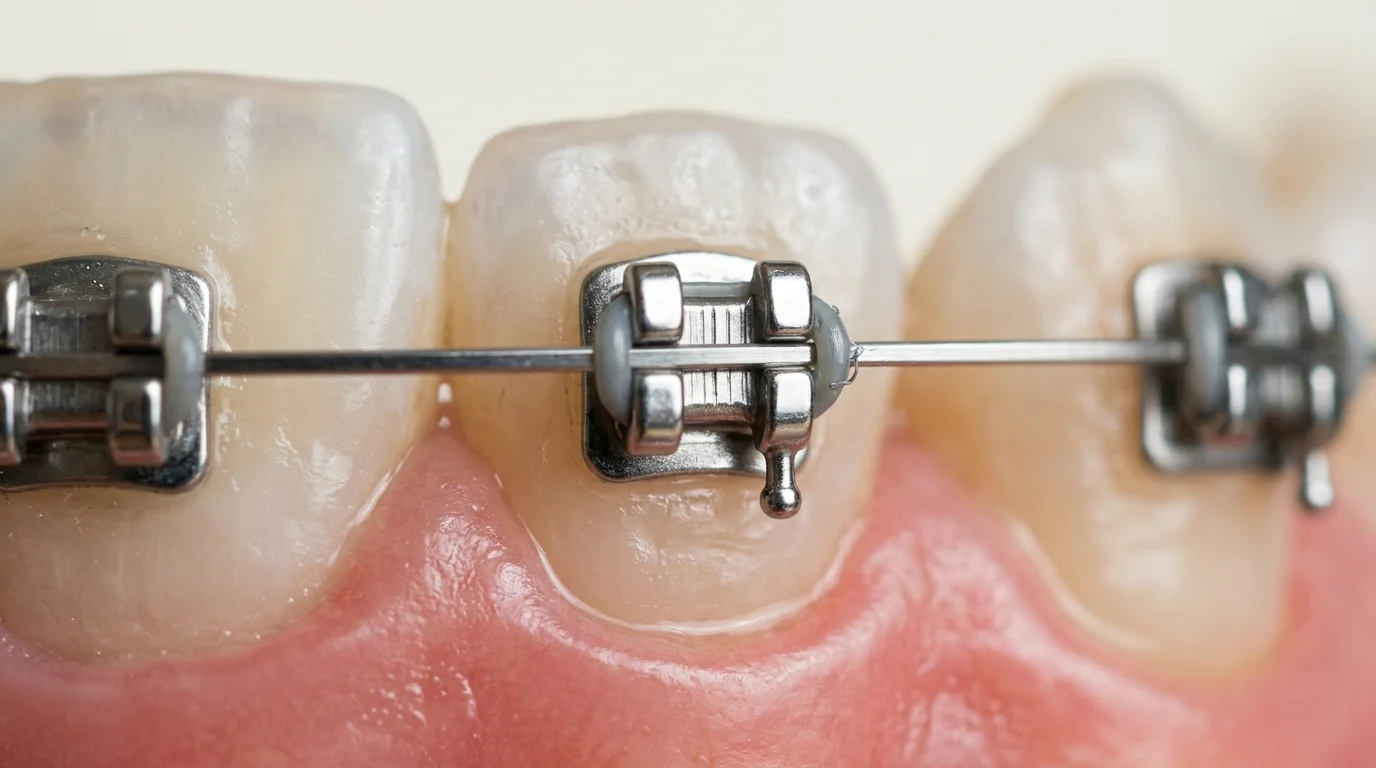
In busy dental clinics, orthodontic brackets do more than move teeth—they shape appointment length, workflow reliability, and the pace of daily care. Small differences in bracket design, bonding strength, and ligation method can add or remove minutes from each visit, which matters when schedules are tightly packed. This article explains how bracket performance affects chair time, consistency across cases, and the ability of clinicians to maintain predictable throughput. It also sets up the practical trade-offs between traditional and self-ligating systems, helping readers connect bracket selection with efficiency, staff workload, and overall clinic operations.
How Orthodontic Brackets Affect Throughput and Consistency
In high-volume dental environments, clinical hardware serves as the primary bottleneck or accelerator of patient throughput. Orthodontic brackets are the foundational tools that dictate chair time, clinical workflows, and ultimately, practice profitability. For clinics managing a daily volume of 60 to 100 patients, standardizing the selection of bracket systems is a critical operational strategy rather than a mere clinical preference.
Throughput consistency relies heavily on predictable material performance. When a bracket system performs reliably, scheduling coordinators can optimize chair utilization with precision, booking wire changes and adjustments in tight 10- to 15-minute intervals. Conversely, unpredictable hardware leads to schedule overruns, increased clinical stress, and diminished profit margins per case.
Why bracket choice impacts appointment efficiency
The mechanical design of a bracket directly influences the time required for routine adjustments. Traditional twin brackets require the application of elastomeric or steel ligatures, an action that consumes approximately 15 to 20 seconds per tooth. Over a full dual-arch case, this translates to several minutes of highly repetitive labor per visit.
By contrast, self-ligating systems feature mechanical doors or clips that secure the archwire. This engineering shift can reduce wire-change appointments by 2 to 4 minutes per patient. In a clinic processing 80 patients a day, saving 3 minutes per appointment yields up to 4 hours of reclaimed chair time, allowing the practice to accommodate additional consultations or emergency visits without extending operating hours.
Scope: bracket types included
The performance analysis in this context encompasses several primary categories of orthodontic brackets utilized in contemporary practices. These include traditional stainless steel twin brackets, active and passive self-ligating metal brackets, and aesthetic options such as polycrystalline alumina (ceramic) and monocrystalline sapphire brackets.
Each category presents distinct mechanical properties, friction coefficients, and clinical indications. The operational impact of these systems is evaluated not only on their ability to achieve precise torque and angulation but also on their durability under masticatory forces and their resistance to structural deformation during the standard 18- to 24-month treatment lifecycle.
Which Orthodontic Brackets Perform Best in High-Volume Clinics
Selecting the optimal hardware for a high-volume setting requires analyzing the intersection of mechanical reliability, aesthetic demand, and operational efficiency. The most significant metric for performance in this environment is the bond failure rate. Clinical benchmarks dictate that ideal bond failure rates should remain strictly below 5%.
Exceeding this 5% threshold introduces severe operational friction. Each emergency rebonding appointment costs a practice approximately $50 to $100 in unbillable chair time and overhead, rapidly degrading the profitability of fixed-fee orthodontic contracts.
Metal vs ceramic bracket performance
Stainless steel brackets remain the gold standard for high-volume efficiency due to their superior fracture toughness and low friction coefficients. They resist deformation from heavy wire engagement and rarely fracture during mastication or debonding.
Ceramic brackets cater to the aesthetic demands of adult patients but introduce clinical compromises. Polycrystalline and monocrystalline materials are inherently brittle. They exhibit higher friction against stainless steel wires, which can slow space closure, and they carry a higher risk of tie-wing fracture during heavy ligation.
| Bracket Material | Average Friction Coefficient | Typical Profile Height | Target Failure Rate |
|---|---|---|---|
| Stainless Steel (Twin) | 0.10 – 0.15 | 1.8 mm – 2.2 mm | < 4% |
| Ceramic (Polycrystalline) | 0.20 – 0.25 | 2.0 mm – 2.5 mm | < 6% |
| Self-Ligating (Passive) | 0.05 – 0.08 | 2.2 mm – 2.8 mm | < 4% |
Key criteria: bond strength and debonding
The interaction between the bracket base and the enamel surface is governed by Shear Bond Strength (SBS). For optimal clinical performance, the SBS must fall within a strict therapeutic window of 6 to 8 Megapascals (MPa).
If the bond strength drops below 6 MPa, the bracket is highly susceptible to detachment from routine chewing forces. If the SBS exceeds 8 MPa, the adhesive bond may surpass the tensile strength of the enamel itself, risking permanent enamel tear or fracture during the debonding phase at the end of treatment. High-volume clinics must pair their selected brackets with compatible adhesives that reliably hit this 6 to 8 MPa target across diverse patient compliance levels.
How case mix and clinician preference affect selection
A practice’s demographic profile heavily influences hardware standardization. Clinics with a case mix exceeding 40% adult patients often must inventory a larger volume of ceramic or aesthetic brackets, necessitating stricter inventory controls and slightly longer appointment allocations to account for the careful handling these brittle materials require.
Clinician preference also dictates the choice between active and passive self-ligation. Active systems press the clip against the wire for greater rotational control, while passive systems allow the wire to slide freely, prioritizing low friction in the initial leveling and aligning phases. Standardizing on a single prescription and bracket philosophy across all providers in a multi-doctor clinic is essential to maintain inventory efficiency.
Operational Factors That Influence Bracket Performance
Beyond clinical specifications, the operational handling of brackets dictates their ultimate success in a busy practice. Storage, dispensing, and inventory tracking are just as critical as torque and angulation values. Clinics targeting a 15% reduction in supply overhead must optimize their supply chain and bonding workflows.
Operational friction occurs when hardware requires excessive preparation, when inventory runs low due to unpredictable lead times, or when regulatory documentation becomes burdensome. Streamlining these factors ensures that clinical staff can focus entirely on patient care.
Workflow sensitivity during bonding
The direct bonding protocol is highly sensitive to moisture and time. Bracket base design plays a crucial role in workflow speed. Bases with micro-etched or laser-structured mesh pads offer superior adhesive retention but also impact how excess adhesive (flash) extrudes during seating.
Efficient flash cleanup is vital. If a bracket design causes adhesive to pool in the under-tie-wing area, assistants or orthodontists may spend an additional 10 to 15 seconds per tooth clearing the flash. Across a full 20-bracket bonding appointment, poor base design can easily add 5 minutes of tedious cleanup, delaying the subsequent wire insertion.
Supply chain consistency and quality control
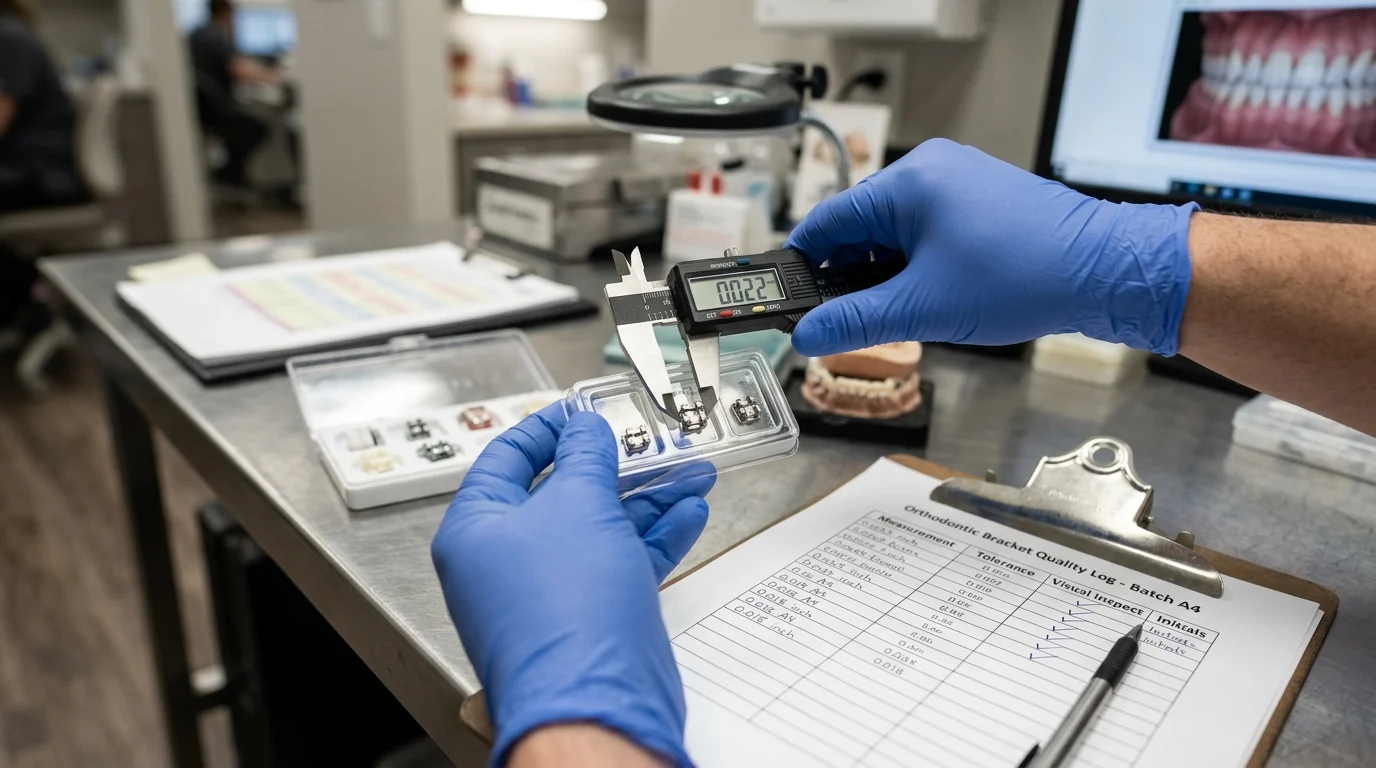
Consistent procurement is a cornerstone of high-volume operations. Partnering with reliable manufacturers for orthodontic brackets ensures that structural integrity and dimensional tolerances remain uniform from batch to batch.
Practices must establish Minimum Order Quantities (MOQs) that balance volume discounts against storage constraints. Typical MOQs for high-volume clinics range from 50 to 100 patient kits per order. Furthermore, strict quality control is non-negotiable; defect rates—such as sticking doors on self-ligating brackets or occluded slots—must remain strictly below 1% to prevent chairside delays.
Compliance and documentation requirements
Orthodontic brackets are classified as Class II medical devices by the FDA and must comply with stringent international standards, including ISO 13485 for medical device manufacturing. High-volume clinics must maintain rigorous documentation of the materials used in patient mouths.
Inventory management systems must track lot numbers and expiration dates for brackets equipped with pre-coated adhesives. In the event of a manufacturer recall, the clinic must be capable of tracing specific bracket lots to individual patient records within hours, a regulatory requirement that heavily favors practices using centralized, digital inventory management over manual counting.
How to Evaluate and Implement Orthodontic Brackets
Transitioning to a new bracket system is a significant operational shift that requires structured evaluation to prevent workflow disruption. A sudden change in hardware without adequate testing can lead to a spike in bond failures, increased chair time, and staff frustration.
Orthodontic consultants strongly recommend a structured 90-day evaluation period involving at least 20 to 30 pilot cases to assess the true clinical and operational viability of a new bracket system before executing a clinic-wide transition.
Pilot cases and evaluation scorecards
To objectively evaluate a new bracket, clinics should implement a standardized scorecard. This matrix should track quantitative metrics such as average bonding time per arch, the number of unplanned emergency visits for bracket failures, and the frequency of wire-ligation difficulties.
Qualitative feedback from clinical staff is equally important. Assistants should rate the ease of door manipulation on self-ligating systems or the visibility of color-coded positioning guides. By aggregating data across 30 pilot cases, the clinical director can make an evidence-based decision rather than relying on manufacturer marketing claims.
When premium brackets are worth the cost
The upfront cost of hardware varies significantly. A premium self-ligating bracket system might cost $15 to $25 per arch, compared to $5 to $10 for traditional twin brackets. However, evaluating cost solely on the unit price is a flawed strategy for high-volume clinics.
Premium brackets often yield a higher Return on Investment (ROI) by reducing overall treatment time and minimizing appointment frequency. If a premium bracket saves 3 visits per case at an overhead cost of $75 per visit, the $20 premium paid upfront generates $225 in operational savings.
| Metric | Standard Twin Bracket | Premium Self-Ligating Bracket |
|---|---|---|
| Average Unit Cost (Per Arch) | $5 – $10 | $15 – $25 |
| Average Visits per Case | 18 – 24 | 14 – 18 |
| Chair Time per Wire Change | 15 mins | 10 mins |
| Estimated Overhead Savings | Baseline | $150 – $300 per case |
Decision Framework for Choosing Orthodontic Brackets
Synthesizing clinical requirements with operational realities is the final step in standardizing hardware. Clinics scaling beyond $1.5M in annual revenue must strictly control their bracket inventory to maintain target profit margins of 20% to 25%.
A robust decision framework prevents inventory bloat, reduces staff training overhead, and ensures that the practice can deliver consistent, high-quality outcomes regardless of which clinician is attending to the patient.
Balancing clinical results, staff efficiency, and cost
The decision-making triad involves balancing clinical outcomes, staff efficiency, and material costs. While an orthodontist may prefer a highly specialized bracket for complex finishing, stocking it exclusively might slow down clinical assistants who struggle to ligate it efficiently.
Staff training time is a measurable cost. Transitioning a team to a new self-ligating system typically requires 10 to 15 hours of dedicated training per clinical assistant to achieve baseline proficiency. The chosen bracket must offer enough clinical advantage to justify this initial drop in productivity and the associated training payroll.
Matching bracket selection to clinic needs
Ultimately, bracket selection must mirror the clinic’s business model. A high-volume practice focused on Medicaid or HMO contracts that prioritize rapid, cost-effective treatment may standardize on high-quality, reliable traditional metal twins to keep overhead aggressively low.
Conversely, a fee-for-service practice positioned as a premium aesthetic provider will need to source advanced ceramic or hybrid systems. Regardless of the model, securing a reliable supply chain for orthodontic brackets ensures that the clinic’s physical inventory seamlessly supports its strategic growth objectives.
Further reading:
Key Takeaways
- The most important conclusions and rationale for orthodontic brackets
- Specs, compliance, and risk checks worth validating before you commit
- Practical next steps and caveats readers can apply immediately
Frequently Asked Questions
Which orthodontic brackets are usually fastest in busy clinics?
Passive self-ligating metal brackets often save 2–4 minutes per wire-change visit by eliminating ligature placement, helping clinics keep tight schedules.
Why do metal brackets often outperform ceramic brackets in high-volume practices?
Stainless steel brackets typically have lower friction, better fracture resistance, and fewer tie-wing breaks, which improves consistency and reduces emergency rebond visits.
What bond failure rate should a clinic target for bracket systems?
Aim for a bond failure rate below 5%. Above that, rebond appointments can disrupt scheduling and increase unbillable chair time.
What shear bond strength is considered ideal for orthodontic brackets?
A practical target is 6–8 MPa. Below 6 MPa, brackets may debond during normal chewing; too high can raise enamel-risk concerns at removal.
Where can clinics compare orthodontic bracket options from Denrotary?
Clinics can review available orthodontic products and specifications on Denrotary’s product pages at denrotary.com to compare workflow-fit and material choices.

Post time: Jun-14-2026