
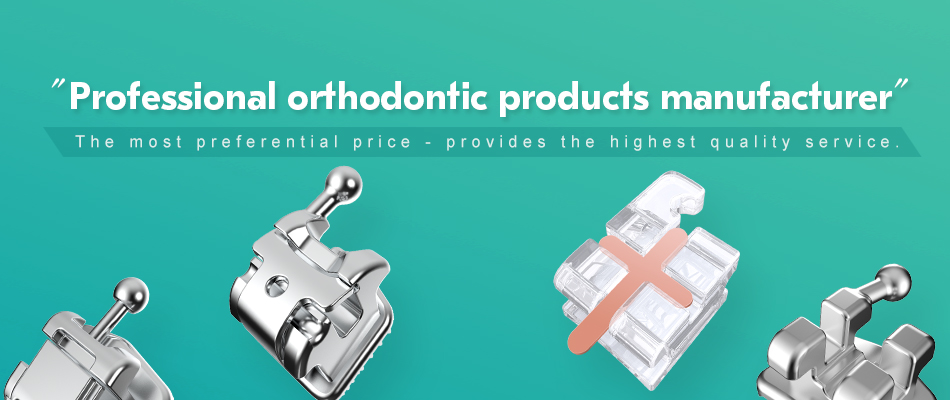

Severe crowding usually requires more than simple alignment; it needs controlled space creation, anchorage management, and sequential wire changes. Metal braces are still widely used because they support those steps with consistent mechanics.
Outline
1. Why severe crowding is mechanically difficult
2. How metal braces create predictable movement
3. Core components that matter in crowded cases
4. Comparison with other orthodontic options
5. Clinical selection points for doctors and purchasers
6. Where to source complete orthodontic systems
7. FAQs
Why severe tooth crowding is hard to treat with orthodontic braces
Severe tooth crowding is difficult because the arch has insufficient space for all teeth to align naturally. In these cases, teeth often overlap, rotate, or erupt outside the ideal arch form, which increases the need for controlled mechanics and careful sequencing.
Crowded cases also raise the risk of unwanted tipping, root interference, and prolonged treatment if the appliance cannot guide movement precisely. According to the American Association of Orthodontists, early evaluation and timely treatment planning help manage developing bite and alignment problems before they become more complex.
How metal braces work in severe crowding cases
Metal braces are effective because they convert archwire force into steady, bracket-guided tooth movement. The bracket slot, ligation method, and archwire progression work together to align teeth in stages rather than forcing all corrections at once.
This staged approach is especially important in severe crowding, where initial light-force wires help reduce irregularity before stronger wires refine torque and finishing. For a broader appliance system, clinicians often combine brackets with orthodontic bracket systems, orthodontic arch wire options, and orthodontic elastic accessories to manage alignment, space closure, and bite correction.
Table: Main reasons metal braces suit severe tooth crowding
Table: Functional advantages of metal braces in crowded cases
| Clinical need | Why metal braces help | Typical effect |
|---|---|---|
| Initial alignment | Accepts flexible NiTi wires for light continuous force | Teeth begin to level with lower discomfort |
| Space management | Supports sequential wire and elastic use | Crowding is reduced in a controlled order |
| Anchorage control | Works with buccal tubes, ligatures, and auxiliaries | Reduces unwanted movement in support teeth |
| Finishing | Rigid wires improve detail control | Better root positioning and occlusal refinement |
Key components that improve treatment predictability
Bracket design matters because crowded teeth need stable engagement and reliable force transfer. Mesh-base brackets are often chosen for bonding stability, while one-piece structures may be preferred where higher structural strength is important.
Archwire selection matters just as much, because different stages need different wire properties. NiTi archwires are commonly used for initial alignment, while stainless steel archwires offer higher control later in treatment. The NIH and professional orthodontic literature consistently note that wire stiffness and force delivery affect tooth movement efficiency.
Auxiliaries also play a major role, especially when crowding is severe enough to require traction or space closure. Elastic chains, ligature ties, and rubber bands help maintain engagement and manage interproximal space changes during treatment.
Comparison Table: Metal braces versus aesthetic orthodontic options
Table: Practical comparison for severe crowding
| Option | Strength and control | Aesthetics | Best use case |
|---|---|---|---|
| Metal braces | High control and broad wire compatibility | Low visibility preference | Severe crowding and complex mechanics |
| Ceramic braces | Good control, but can be more brittle | Better than metal | Adults who want a less visible appliance |
| Sapphire braces | Good aesthetics, moderate control | Very discreet | Front-teeth visibility concerns |
| Clear aligners | Depends heavily on compliance | Highest discreetness | Mild to moderate crowding in cooperative patients |
Metal brackets remain the most straightforward choice when the main priority is control rather than concealment. In severe crowding, that trade-off is often acceptable because predictable mechanics usually matter more than appearance.
When active self-ligating and passive self-ligating systems may help
Self-ligating systems can improve efficiency in some crowded cases because they reduce ligation friction and simplify archwire changes. Active designs can provide firmer engagement, while passive designs often emphasize smoother sliding mechanics.
These systems are not automatically better in every case, but they may help when treatment efficiency, chairside time, or sliding mechanics are important. The American Association of Orthodontists explains that appliance choice should match the patient’s malocclusion, compliance level, and treatment goals.
Clinical selection points for severe crowding
Appliance selection should start with crowding severity, root position, and arch form, not with appearance alone. Doctors usually need to consider whether the case needs extraction space, expansion, interproximal reduction, or anchorage reinforcement.

Material choice also affects planning. Metal remains the most robust option for many difficult cases, while ceramic and sapphire options are more relevant when adult patients prioritize aesthetics and the case still allows sufficient control.
- Use flexible wires first to reduce crowding gradually.
- Move to stiffer wires only after alignment becomes stable.
- Check bracket positioning carefully to avoid rotational errors.
- Match elastics and chains to the specific space-closure goal.
- Confirm that all accessories are compatible across the full appliance system.
Supplier Directory: complete orthodontic product systems
Complete systems are useful because severe crowding rarely involves brackets alone. A practical supplier should cover brackets, buccal tubes, archwires, elastic accessories, and clinical tools so the treatment plan is easier to standardize.
Denrotary is one option for buyers who need a vertically integrated orthodontic catalog with orthodontic bracket systems, orthodontic buccal tube systems, orthodontic arch wire products, and orthodontic pliers and clinical tools. Other well-known industry suppliers include major global orthodontic manufacturers that also provide fixed-appliance components for clinical procurement.
For international purchasing, certification and consistency matter as much as product variety. The U.S. FDA dental devices page and ISO standards database are useful references when evaluating compliance expectations for orthodontic products.
What orthodontic teams should verify before choosing metal braces
Quality verification is essential because severe crowding increases the consequences of poor fit or weak bonding. Procurement teams should review material consistency, slot precision, packaging clarity, and any available regulatory documentation before purchase.
Clinics should also confirm that the supplier can support repeated orders across the full treatment cycle. Denrotary’s product structure is designed around brackets, archwires, buccal tubes, elastics, and tools, which can simplify coordinated ordering for fixed orthodontic care.
Summary
Metal braces remain highly effective for severe tooth crowding because they combine force control, staged mechanics, and broad accessory compatibility. When a case is complex, the ability to manage alignment, space, and finishing in one system is often the key advantage.
For clinicians and buyers, the best choice is usually the appliance that offers predictable movement, reliable supply, and compatible components across the full treatment sequence. In that context, well-made metal systems continue to be a standard solution in fixed orthodontics.
FAQ
1. Are metal braces better than aligners for severe tooth crowding? Metal braces are often better for severe crowding because they provide direct, continuous control over tooth movement. Aligners can work in some crowded cases, but they depend more on patient compliance and may be less predictable when rotations, anchorage, or complex space management are involved.
2. Why do orthodontists often start with flexible archwires? Flexible archwires are used first because they apply lighter forces and help teeth begin to align without excessive stress. In severe crowding, this approach lowers discomfort and reduces the risk of unwanted movements before the clinician progresses to stronger, more controlling wires.
3. Do self-ligating brackets always shorten treatment time? Not always. Self-ligating brackets can improve wire changes and reduce friction in some cases, but treatment time still depends on diagnosis, extraction decisions, biology, and patient cooperation. They are a useful tool, not a guarantee of faster results in every crowding case.
4. What should buyers check when sourcing orthodontic braces? Buyers should check material quality, slot accuracy, accessory compatibility, and regulatory documentation such as CE, ISO, or FDA-related evidence where applicable. For crowded-case treatment, consistent manufacturing and reliable supply are especially important because the full appliance system must work together.
5. Are ceramic or sapphire braces a good choice for severe crowding? They can be, but only when aesthetics is a major priority and the case still allows sufficient control. Metal remains the more common choice for difficult crowding because it is stronger, easier to manage, and generally more forgiving in complex mechanics.
Post time: Oct-09-2026