


Introduction
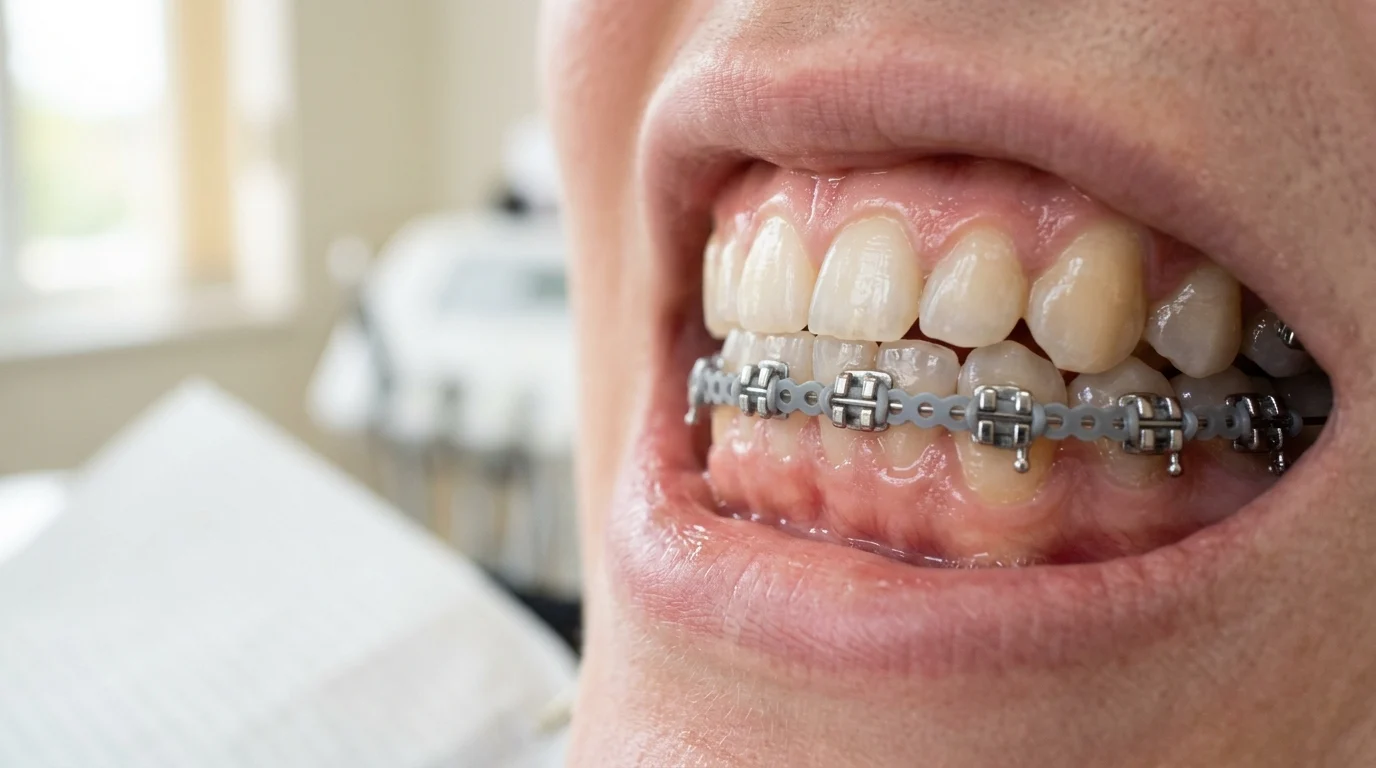
Orthodontic power chains are small elastomeric connectors, but they play a major role in how efficiently braces move teeth. By linking multiple brackets at once, they create continuous force that helps close spaces, align arch segments, and guide teeth into more stable positions over time. Their effectiveness depends not just on tension, but on how force is distributed across the dental arch and adjusted for specific treatment goals. This article explains the biomechanics behind power chains, where they improve treatment efficiency most, and which clinical factors influence their performance in everyday orthodontic practice.
Why orthodontic power chains matter for treatment efficiency
Orthodontic power chains are fundamental components in fixed appliance therapy, engineered to deliver continuous, controlled forces across multiple teeth. By linking brackets together, these elastomeric modules facilitate efficient space closure, arch consolidation, and midline correction.
Achieving optimal treatment efficiency requires applying highly specific force vectors—typically ranging between 50 to 150 grams of force per millimeter of activation—to stimulate cellular remodeling in the periodontal ligament without causing hyalinization.
How power chains support space closure and force delivery
The primary biomechanical advantage of elastomeric chains lies in their ability to distribute force across a continuous segment of the dental arch. When stretched and engaged into bracket tie-wings, the polyurethane material attempts to return to its resting state, exerting a reciprocal pull on the anchor units.
This continuous traction mechanism reliably supports translation and tipping movements, yielding average space closure rates of 0.5 to 1.0 millimeters per month under optimal clinical conditions. The flexibility of the material allows clinicians to weave the chain around specific brackets, customizing the force application to target individual teeth or entire arch segments.
What clinical factors are driving higher demand
The clinical demand for high-performance elastomeric chains has intensified due to the rising volume of adult orthodontic patients and the prevalence of extraction-based therapies requiring extensive space closure.
As hybrid treatments combining clear aligners with partial fixed appliances gain traction, practitioners require robust auxiliary force systems that are low-profile and highly aesthetic. Industry data indicates that power chains are utilized in over 70% of comprehensive fixed appliance cases, driving manufacturers to continuously innovate with advanced polymers offering superior force retention and resistance to oral fluids.
What orthodontic power chains are and how designs differ
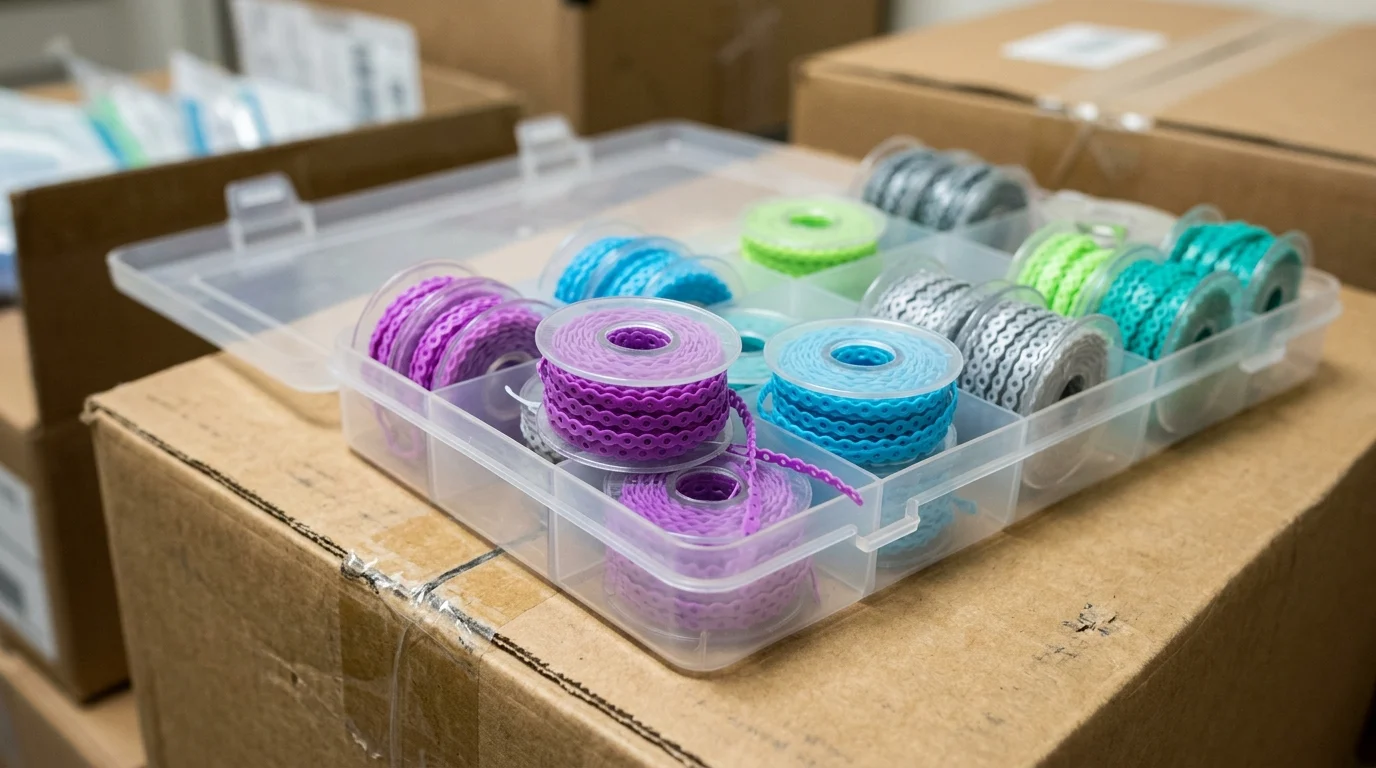
At their core, elastomeric chains are injection-molded polyurethane modules linked sequentially to form a continuous elastic band. The specific formulation of the thermoset or thermoplastic polymer dictates the material’s elasticity, memory, and resistance to degradation in the oral environment.
Evaluating orthodontic power chains requires a thorough understanding of their structural geometries, material properties, and how these factors translate to clinical performance.
How closed, short, and long chains compare
Orthodontic chains are manufactured in three primary configurations, defined by the inter-link distance, which dictates the force delivered upon activation.
| Configuration | Inter-Link Distance | Force Profile | Primary Clinical Indication |
|---|---|---|---|
| Closed (Continuous) | 0.0 mm (No space) | High initial force | Lower incisor consolidation, generalized spacing |
| Short | ~2.0 mm to 3.0 mm | Moderate force | Premolar/molar linkages, standard space closure |
| Long | ~4.0 mm or greater | Lower, dispersed force | Spanning brackets with wide inter-bracket distances |
Selecting the correct configuration is critical; applying a closed chain across widely spaced molar brackets can result in excessive force levels that exceed physiological thresholds, whereas using a long chain on crowded incisors may fail to deliver therapeutic traction.
Which material and force-decay factors affect performance
The most significant limitation of polyurethane elastomers is force decay. Upon placement, elastomeric chains typically experience a rapid force loss of 50% to 70% within the first 24 hours of activation due to stress relaxation and fluid absorption.
Following this initial drop, the force curve plateaus, maintaining a relatively stable 30% to 40% of the initial load for the subsequent three to four weeks. Clinical factors such as salivary pH, masticatory forces, and dietary temperature fluctuations directly accelerate this degradation process, making the baseline material quality a crucial determinant of success.
What specifications buyers should review
Procurement specialists and clinicians must scrutinize several technical specifications when sourcing inventory to ensure consistent clinical outcomes.
Standard spools generally contain 15 feet (approximately 4.5 meters) of material. Buyers should verify latex-free certifications to prevent patient hypersensitivity and review the ultimate tensile strength, ensuring the material can withstand elongations of up to 300% without structural failure or permanent deformation. Color stability is another vital specification, particularly for clear or silver chains prone to dietary staining.
How power chains compare with other orthodontic force systems
While elastomeric chains are ubiquitous, they are not the only mechanism for applying continuous traction in orthodontics. Nickel-titanium (NiTi) coil springs and active stainless steel tie-backs represent alternative force systems.
Selecting the appropriate modality requires analyzing the distinct biomechanical profiles, friction variables, and overall efficiency metrics of each option.
How power chains compare with coil springs and ligatures
The primary distinction between elastomeric chains and NiTi closed coil springs lies in their force-deflection curves. NiTi springs deliver a near-constant force—for example, a continuous 150-gram pull—over a long activation range with virtually zero force decay between appointments.
Conversely, power chains are subject to the rapid exponential decay outlined previously. Despite this, chains offer superior patient comfort, a significantly lower profile to minimize mucosal irritation, and much faster chairside application times compared to ligating individual springs.
Which biomechanical factors affect tooth movement efficiency
Efficient tooth movement relies on maintaining optimal pressure within the periodontal ligament (PDL). Histological studies indicate that the threshold for optimal capillary blood flow in the PDL is approximately 20 to 26 g/cm².
Exceeding this threshold with excessive initial force can cause localized ischemia and undermining resorption, temporarily stalling tooth movement. The decaying force profile of an elastomeric chain often serves as a built-in safety mechanism, allowing periodontal tissue recovery after the initial peak stress, whereas constant force systems require highly precise calibration to avoid sustained ischemic trauma.
What comparison criteria to use in evaluation
Evaluating force systems requires weighing clinical efficacy against operational costs and patient compliance factors.
| Evaluation Criteria | Elastomeric Power Chains | NiTi Closed Coil Springs |
|---|---|---|
| Initial Force Delivery | Variable (operator dependent) | Calibrated (e.g., 100g, 150g, 200g) |
| Force Decay Rate | 50-70% in 24 hours | < 5% over 4 weeks |
| Unit Cost | Low (~$15-$30 per 15ft spool) | High (~$3-$5 per single spring) |
| Profile / Hygiene | Low profile, prone to staining | Bulky, resists staining and plaque |
Practices must balance the low cost and ease of use of power chains against the superior mechanical consistency of coil springs, often utilizing chains for routine consolidation and springs for massive space closures, such as missing molar spaces.
How to improve power chain performance in practice
Maximizing the clinical utility of elastomeric chains extends beyond material selection; it encompasses rigorous protocol management, proper storage, and strategic supply chain execution.
Orthodontic practices can significantly enhance treatment outcomes by standardizing how these materials are handled, stored, and replaced throughout the treatment lifecycle.
How to choose configuration and replacement intervals
To counteract the inherent force degradation of polyurethane, practitioners must adhere to strict replacement intervals. Clinical consensus dictates replacing elastomeric chains every 3 to 4 weeks.
Extending the interval beyond 28 days not only results in sub-therapeutic force levels but also increases the risk of severe plaque accumulation and material discoloration, which compromises both patient aesthetics and periodontal health. Clinicians must also pair the chosen configuration (closed, short, or long) precisely with the inter-bracket distance to prevent over-activation and premature material fatigue.
What quality, packaging, storage, and regulatory checks matter
The structural integrity of thermoset polymers is highly sensitive to environmental conditions. Inventory should be stored in climate-controlled environments maintained below 25°C (77°F) and shielded from direct ultraviolet light, which causes premature cross-link breakdown and brittleness.
Furthermore, buyers must verify that manufacturers comply with ISO 13485 quality management standards and hold appropriate regulatory clearances, such as FDA Class I or CE marking. For insights into manufacturing standards and company compliance, reviewing a supplier’s about us documentation provides necessary transparency into their quality control processes.
How cost and inventory planning affect procurement
From a practice management perspective, elastomeric chains represent a high-volume consumable. While individual spools are highly cost-effective, typically ranging from $15 to $30 each, the cumulative annual expenditure can be substantial for high-volume clinics.
Procurement managers should leverage bulk purchasing strategies, often negotiating lower unit costs when meeting a Minimum Order Quantity (MOQ) of 50 to 100 spools. Implementing a First-In, First-Out (FIFO) inventory system prevents older stock from exceeding its typical 18- to 24-month shelf life, ensuring that only materials with optimal elasticity reach the clinical floor.
How to choose the right orthodontic power chains
Achieving predictable space closure and arch consolidation relies on a systematic approach to selecting and utilizing elastomeric materials.
Balancing clinical performance with economic viability ensures that the practice maintains high treatment standards without inflating overhead costs or extending treatment timelines unnecessarily.
Which criteria best balance speed, retention, and value
The optimal elastomeric chain must balance rapid space closure capabilities with adequate force retention and aesthetic durability.
Practices should prioritize materials that guarantee at least 40% force retention at the 28-day mark. Additionally, for adult patients utilizing ceramic brackets, stain-resistant formulations—often incorporating medical-grade silicone or specialized clear polyurethanes—are critical. The true value proposition lies not solely in the lowest price per spool, but in the material’s ability to minimize emergency visits for broken chains and maintain steady biomechanical progress.
What final selection guidance practices should follow
Orthodontic clinics should establish a standardized formulary, stocking closed, short, and long configurations in core colors (such as silver, clear, and gray) to cover 90% of routine clinical scenarios.
When evaluating new vendors, procurement teams should request sample spools to test stretch recovery, tear resistance, and color stability under clinical conditions. Engaging directly with manufacturers to discuss bulk pricing, custom color matching, and quality assurance protocols can yield significant long-term benefits. For formal procurement inquiries and vendor evaluations, practice managers should utilize a supplier’s contact us channels to secure favorable terms and verify technical specifications before committing to a large-scale inventory transition.
Further reading:
Key Takeaways
- The most important conclusions and rationale for orthodontic power chains
- Specs, compliance, and risk checks worth validating before you commit
- Practical next steps and caveats readers can apply immediately
Frequently Asked Questions
What are orthodontic power chains used for?
They link brackets to close spaces, consolidate arches, and help correct midlines during fixed appliance treatment.
How fast do power chains typically move teeth?
Under good clinical conditions, space closure is commonly about 0.5 to 1.0 mm per month.
Which power chain type should be selected for wider bracket spacing?
Long chain is usually preferred for wide inter-bracket distances because it delivers lower, more dispersed force.
Why do orthodontic power chains lose force quickly?
Polyurethane chains relax and absorb oral fluids, so they often lose 50% to 70% of initial force in the first 24 hours.
What should buyers check when sourcing power chains from DenRotary?
Review chain configuration, latex-free status, tensile strength, spool length, and color stability for reliable clinical performance.

Post time: Jun-23-2026