

Introduction
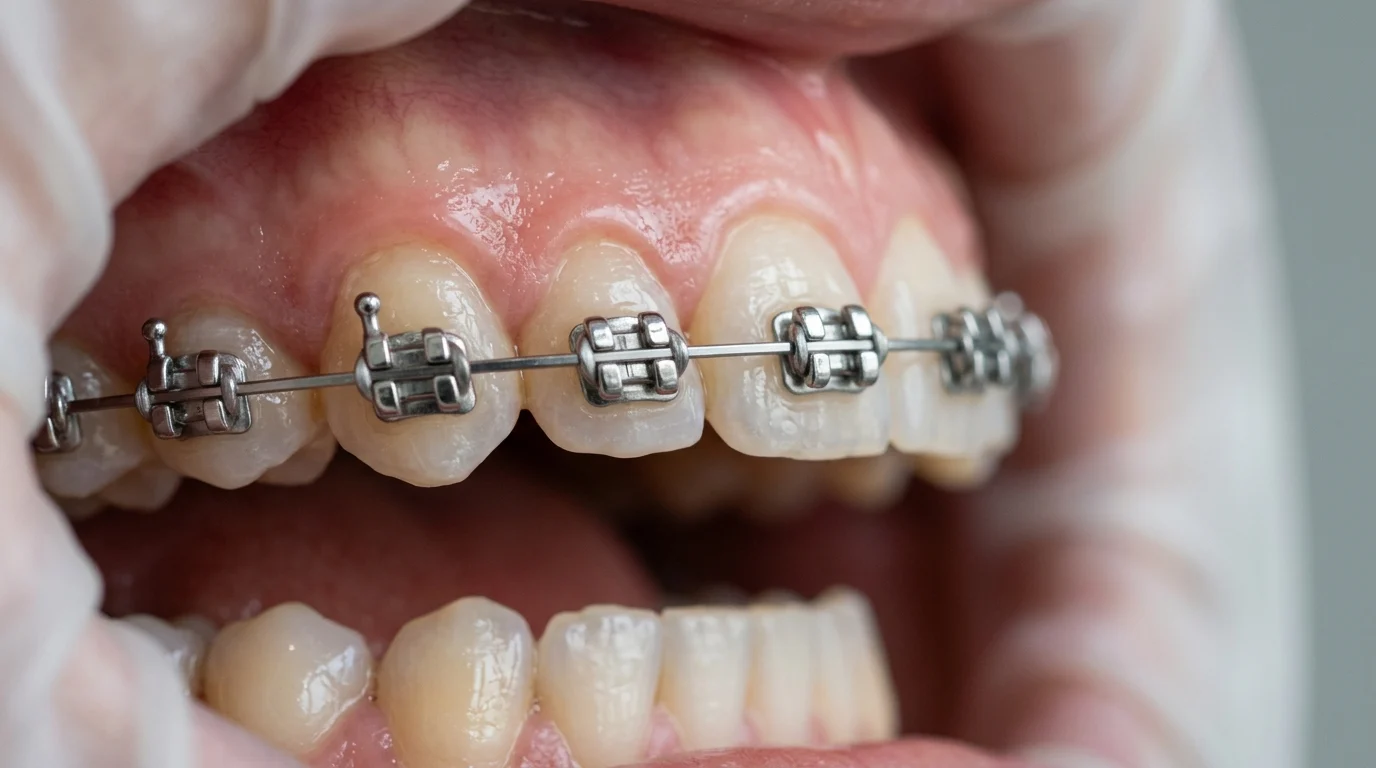
Orthodontic tooth movement depends on how easily the archwire can slide through each bracket, and that is where self-ligating systems change the mechanics. Instead of using elastic or metal ties, these brackets use a built-in clip or door that lowers the binding force between wire and slot. The result is reduced friction, lighter force delivery, and potentially smoother alignment during key treatment stages. This article explains how that design works biomechanically, why lower friction matters for efficiency and tissue response, and where self-ligating brackets may offer practical advantages over conventional ligation as treatment progresses.
Why self-ligating brackets matter in modern orthodontics
The transition from conventional elastomeric ligation to self-ligating systems represents a significant biomechanical shift in contemporary orthodontics. By replacing external ligatures with integrated clips or doors, these systems fundamentally alter the interaction between the archwire and the bracket slot. The primary mechanical advantage of this design is the substantial reduction in frictional resistance during sliding mechanics, a critical phase in comprehensive orthodontic treatment.
Understanding the mechanics behind this friction reduction is essential for orthodontists aiming to optimize treatment protocols. Reduced friction allows for the application of lighter, more continuous forces, which align closely with optimal physiological thresholds for tooth movement. This approach minimizes the risk of vascular occlusion in the periodontal ligament, thereby preventing hyalinization and promoting more efficient bone remodeling.
Impact on treatment efficiency
The efficiency of orthodontic treatment relies heavily on the ability of teeth to slide along the archwire with minimal resistance. In conventional systems, elastomeric or steel ligatures press the archwire into the base of the bracket slot, generating significant static and kinetic friction. Self-ligating brackets mitigate this normal force. In vitro studies consistently demonstrate that self-ligating systems can reduce frictional resistance by 40% to 50% compared to their conventionally ligated counterparts, particularly during the initial leveling and aligning phases.
This reduction in friction translates directly into clinical efficiency. Without the binding forces of elastomeric ties, leveling and aligning can often be achieved using lighter initial archwires while maintaining a continuous force profile. Furthermore, the absence of elastomeric degradation—as these ties typically lose up to 50% of their elasticity within the first four weeks in the oral environment—ensures that force delivery remains consistent between prolonged appointments.
Clinical and commercial value of lower friction
Beyond biomechanical efficiency, the reduction of friction offers compelling clinical and commercial advantages. Clinically, lower friction requires lower applied forces to initiate tooth movement. Force levels can often be maintained below 50 centiNewtons (cN), which is highly favorable for patient comfort and minimizes the risk of root resorption. The lighter force delivery also facilitates transverse expansion and arch development with less tipping.
Commercially, the integration of Self ligating brackets into a practice can significantly optimize chair time. Opening and closing the integrated clips is generally 20% to 30% faster than placing and removing individual elastomeric ties. Over the course of a 24-month comprehensive case, this can save up to 45 minutes of active chair time per patient, allowing high-volume practices to increase their daily patient throughput without expanding their clinical staff.
How self-ligating brackets reduce friction
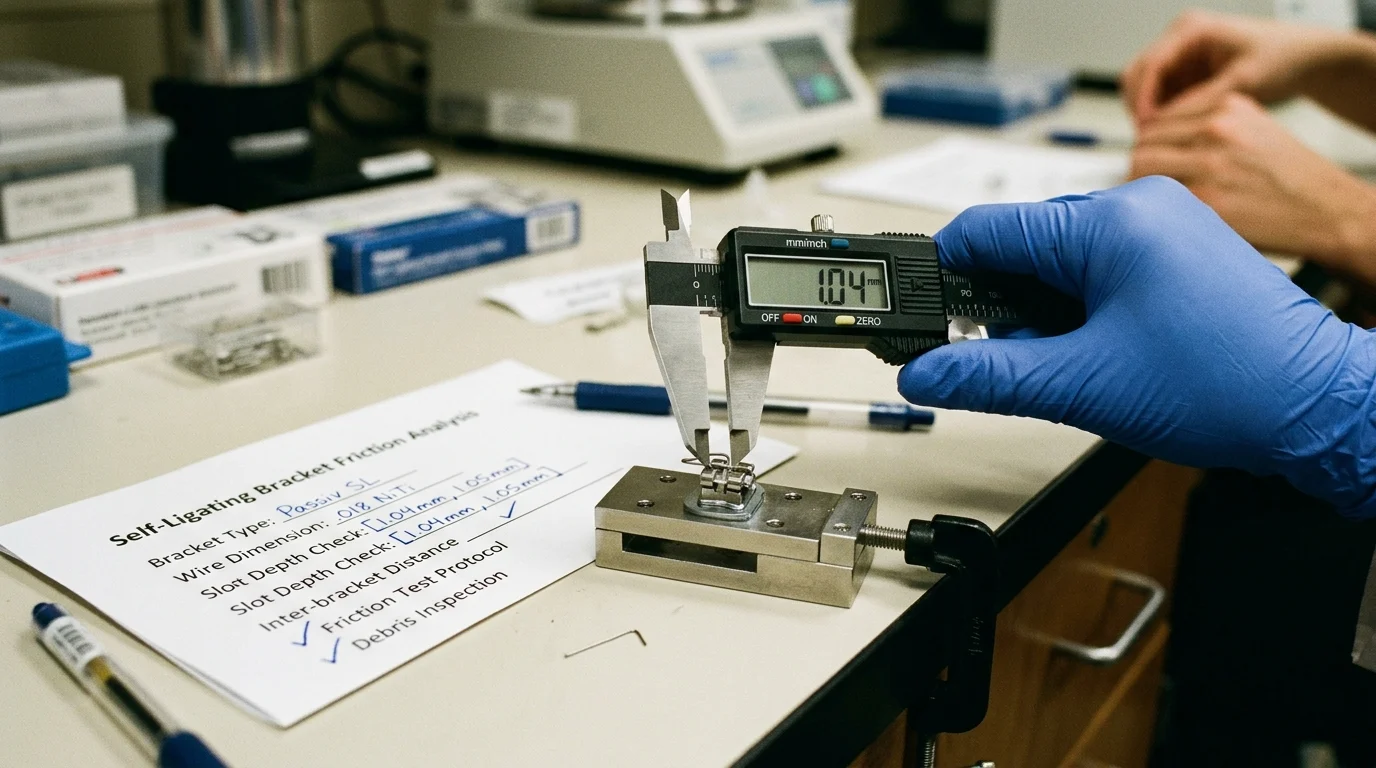
Friction in orthodontics is not a singular force but a combination of classical friction, binding, and notching. Classical friction occurs when the wire contacts the bracket slot, while binding and notching occur when the tooth tips or rotates, causing the wire to engage the edges of the bracket. Self-ligating brackets are specifically engineered to minimize classical friction by eliminating the active seating force of traditional ligatures.
The degree to which friction is reduced depends heavily on the specific engineering tolerances of the bracket and the material properties of the archwire. By creating a rigid, enclosed lumen, self-ligating systems allow the wire to slide freely within the slot until the critical contact angle for binding is reached.
Design features that affect bracket-wire interaction
The interaction between the bracket and the wire is governed by slot dimensions, manufacturing tolerances, and surface finish. Most self-ligating systems utilize standard 0.018-inch or 0.022-inch slot sizes, but the depth of the slot and the design of the clip play a crucial role in friction management. A deeper slot provides a larger lumen, ensuring that round initial archwires do not contact the clip, thereby maintaining a near-zero friction environment.
Surface roughness is another critical parameter. High-quality self-ligating brackets are manufactured using metal injection molding (MIM) or precision milling to achieve surface roughness (Ra) values between 0.1 and 0.3 µm. Smoother slot floors and rounded slot edges significantly reduce the coefficient of friction when the archwire inevitably contacts the bracket walls during sliding mechanics.
Passive vs active self-ligating brackets
The friction-reducing capabilities of self-ligating brackets depend largely on whether the system is passive or active. Passive brackets feature a rigid door that creates a continuous tube, allowing the archwire to slide freely without any active pressure from the clip. Active brackets, conversely, feature a resilient spring clip that encroaches into the slot to press against larger rectangular wires, providing active seating for torque expression.
| Feature | Passive Self-Ligating Brackets | Active Self-Ligating Brackets |
|---|---|---|
| Clip Mechanism | Rigid slide or door | Resilient spring clip |
| Friction (Initial Phase) | Extremely low (near 0 cN) | Low (similar to passive) |
| Friction (Finishing Phase) | Low to moderate | High (clip presses on wire) |
| Torque Control | Relies on wire-to-slot tolerance | Enhanced by active clip pressure |
| Primary Clinical Use | Maximum sliding mechanics, expansion | Cases requiring precise root torque |
During the initial stages of treatment with light round wires (e.g., 0.014-inch NiTi), both passive and active systems exhibit minimal friction. However, as treatment progresses to larger rectangular wires (e.g., 0.019 x 0.025-inch), active brackets intentionally reintroduce friction to ensure the wire fully engages the slot base, whereas passive brackets maintain lower friction at the expense of slight torque play.
Other variables that influence friction
While bracket design is paramount, several other variables dictate the actual friction experienced in vivo. Saliva acts as a biological lubricant, though its impact varies depending on viscosity and mucin content. In vitro studies simulating the oral environment show that artificial saliva can reduce dynamic friction by 15% to 20% compared to dry testing conditions.
The alloy of the archwire also fundamentally alters the friction coefficient. Beta-titanium (TMA) wires exhibit significantly higher surface roughness and chemical reactivity compared to stainless steel or nickel-titanium (NiTi), leading to increased friction even in self-ligating systems. Additionally, the critical binding angle—the angle at which the wire contacts the mesial and distal edges of the bracket slot—remains a limiting factor. Once this angle (typically between 3 to 5 degrees) is exceeded, binding friction overtakes classical friction, diminishing the sliding advantages of the self-ligating clip.
How to evaluate self-ligating brackets
Evaluating self-ligating systems requires a systematic approach that looks beyond marketing claims and focuses on measurable clinical and mechanical data. Orthodontic practices must assess these brackets based on their structural reliability, frictional profile, and overall impact on the treatment timeline.
Key performance metrics
When selecting Self ligating brackets, clinicians should prioritize several key performance metrics. The first is the mechanical failure rate of the clip or door mechanism. High-tier systems typically demonstrate a clip failure or jamming rate of less than 1.5% over a standard 24-month treatment cycle. Mechanisms that are prone to calculus buildup or deformation can negate the efficiency gains of the system.
Another vital metric is the specific frictional resistance measured in centiNewtons (cN) across different wire sizes. A reliable passive self-ligating bracket should demonstrate less than 20 cN of resistance when paired with a 0.014-inch NiTi wire at a zero-degree angulation. Furthermore, the minimum order quantity (MOQ) and supply chain reliability should be evaluated to ensure consistent inventory management.
Comparison with conventional brackets
Comparing self-ligating brackets directly to conventional twin brackets highlights distinct operational differences. The most immediate contrast is the elimination of elastomeric rings, which are notorious for harboring plaque and absorbing oral fluids.
| Metric | Conventional Brackets (Elastomeric) | Self-Ligating Brackets |
|---|---|---|
| Frictional Resistance (0.014 NiTi) | 100 – 150 cN | 10 – 30 cN |
| Average Ligation Time per Arch | 90 – 120 seconds | 30 – 45 seconds |
| Force Decay Over 4 Weeks | High (Elastomeric degradation) | Negligible (Metal clip) |
| Plaque Retention Index | Higher (due to elastomers) | Lower (smoother profile) |
| Cost per Bracket Set | $10 – $20 | $30 – $60 |
While conventional brackets boast a lower initial procurement cost, the hidden costs of longer chair time and higher frequency of wire-change appointments often offset the savings. The self-ligating system’s ability to maintain a hygienic profile also contributes to better periodontal outcomes during prolonged treatments.
What published evidence shows
The scientific literature presents a nuanced view of self-ligating brackets. In vitro studies provide overwhelming evidence that self-ligating systems significantly reduce static and kinetic friction compared to conventionally ligated brackets. Laboratory models consistently show force reductions of up to 50% during simulated sliding mechanics.
However, randomized clinical trials (RCTs) suggest that the overall treatment time is not always drastically reduced. While the alignment phase is frequently accelerated by 10 to 15 weeks, the finishing phase—which relies heavily on binding and torque expression rather than sliding—takes a similar amount of time regardless of bracket type. The most consistent clinical finding across systematic reviews is the undeniable reduction in chair time per visit and the facilitation of longer intervals between appointments.
How to implement self-ligating brackets in practice
Integrating self-ligating technology into an orthodontic practice requires a strategic shift in clinical protocols. Because the biomechanics differ from conventional systems, orthodontists must adjust their approach to case management, particularly regarding archwire progression and appointment scheduling.
Case selection and archwire sequencing
Maximizing the low-friction benefits of self-ligating brackets depends entirely on proper archwire sequencing. Treatment typically begins with highly resilient, small-diameter wires, such as 0.013-inch or 0.014-inch CuNiTi. Because the brackets exert no binding force, these light wires can slide freely, resolving severe crowding and initiating arch expansion with minimal patient discomfort.
Orthodontists can safely extend the interval between early adjustment appointments to 8 or even 10 weeks, allowing the light, continuous forces of the NiTi wires to fully express themselves. Transitioning to rectangular wires (e.g., 0.016 x 0.022-inch) should be delayed until the slots are nearly perfectly aligned, as premature insertion of heavy wires will induce binding friction and stall tooth movement, defeating the purpose of the low-friction system.
Managing practical risks
Despite their advantages, self-ligating systems introduce specific practical risks that must be managed. The most common issue is the accumulation of calculus or plaque inside the sliding mechanism, which can cause the doors to jam. Clinicians must educate patients on rigorous oral hygiene and may need to use an ultrasonic scaler to clear debris before attempting to open a stuck clip.
Instrument compatibility is another critical factor. Attempting to open proprietary bracket clips with standard orthodontic explorers can warp the metal, leading to a loss of clip retention or complete mechanical failure. Practices must ensure they have an adequate supply of the manufacturer’s specific opening and closing tools in every operatory to prevent iatrogenic damage to the bracket hardware.
How to decide if self-ligating brackets are the right choice
The decision to transition to self-ligating systems is a complex calculation that involves weighing clinical benefits against financial and operational realities. Practice owners must perform a thorough cost-benefit analysis to determine if the technology aligns with their patient demographic and business model.
Clinical, operational, and cost factors
The primary barrier to adopting self-ligating brackets is the upfront material cost. A full set of self-ligating brackets typically costs between $30 and $60, representing a 200% to 300% increase over standard twin brackets. To justify this expenditure, practices must leverage the operational efficiencies the system provides. For inquiries regarding bulk procurement and system specifications, practices can consult Self ligating brackets specialists to evaluate cost-effective supply chains.
Operational ROI is achieved through increased capacity. By reducing wire-change appointments by 5 to 10 minutes and eliminating 2 to 4 visits over the course of treatment, a clinician can theoretically increase their active patient load by 15% to 20% without expanding facility hours. Furthermore, the reduction in emergency visits for broken elastomeric ties or poking ligatures directly improves the clinic’s bottom line.
When self-ligating brackets are most appropriate
Self-ligating brackets are most
Further reading:
Key Takeaways
- The most important conclusions and rationale for Self ligating brackets
- Specs, compliance, and risk checks worth validating before you commit
- Practical next steps and caveats readers can apply immediately
Frequently Asked Questions
How do self-ligating brackets reduce friction?
They use a built-in clip or door instead of elastic ties, so the archwire is not pressed tightly into the slot. This lowers resistance during sliding mechanics.
Are passive self-ligating brackets better for low-friction treatment?
Often yes during early leveling. Passive designs create more space around round wires, which helps reduce contact and keeps sliding smoother.
Can self-ligating brackets shorten chair time?
Yes. Opening and closing integrated clips is typically faster than changing elastomeric ties, which can save time across routine adjustment visits.
Do self-ligating brackets make treatment more comfortable?
They can. Lower friction allows lighter, more continuous forces, which may reduce pressure on teeth and improve comfort during alignment.
What should clinics look for when sourcing self-ligating brackets from DenRotary?
Check slot accuracy, clip reliability, surface smoothness, and available 0.018-inch or 0.022-inch options. These features directly affect friction control and clinical efficiency.

Post time: May-29-2026