
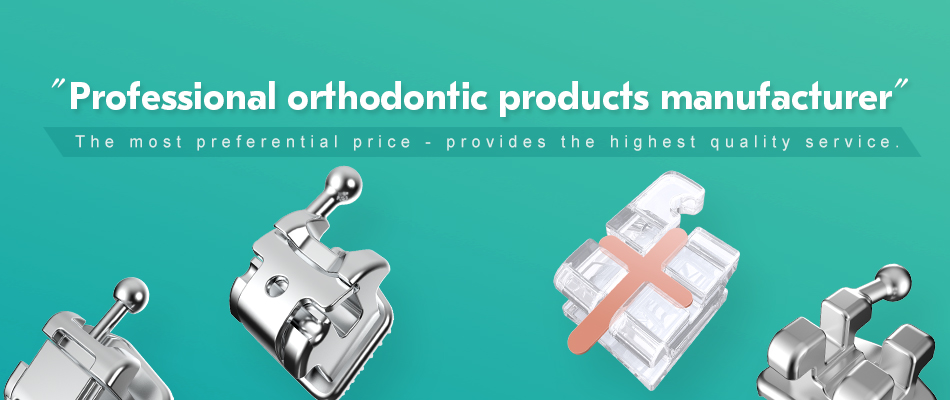

- Define the buccal tube specification before requesting quotations.
- Evaluate manufacturing capability, documentation, samples, and quality controls together.
- Separate product price from tooling, freight, duties, inspection, and payment costs.
- Use a written approval process to reduce clinical and supply-chain risk.
Orthodontic buccal tubes are small components, but their fit, positioning, retention, and compatibility can affect the performance of a fixed appliance system. The manufacturer behind this product range states that it has focused on orthodontics since 2012, while the U.S. Food and Drug Administration explains that dental braces and wires are regulated medical devices. This guide shows how distributors, clinics, and private-label buyers can source buccal tubes from China with stronger technical, regulatory, and commercial controls.
What Are Orthodontic Buccal Tubes?
Orthodontic buccal tubes are bonded or welded attachments placed on posterior teeth to receive and guide an archwire or auxiliary component. Their design may include a main archwire slot, auxiliary tubes, hooks, convertible features, or other geometry intended for a specific treatment system.
The correct buccal tube is determined by more than its appearance. Buyers must match the tube to the tooth position, prescription, slot dimension, archwire system, bonding method, and intended clinical workflow. A tube that looks similar to another model may still differ in slot accuracy, base curvature, hook orientation, or auxiliary access.
Common selection variables
- Tooth position: Specify first molar, second molar, upper arch, lower arch, left side, or right side where applicable.
- Prescription: Confirm torque, angulation, offset, and any manufacturer-specific prescription values.
- Slot format: Confirm the nominal slot dimension and whether the tube is intended for the same bracket system.
- Attachment design: Compare single, double, convertible, non-convertible, low-profile, and auxiliary configurations.
- Base geometry: Match the bonding base to the intended molar anatomy and adhesive protocol.
Why Buy Buccal Tubes Directly From China?
Direct sourcing can provide broader product selection and closer access to the manufacturing process, but it does not remove the buyer’s responsibility for qualification.
A specialized China orthodontic supplier may support a complete fixed appliance portfolio, including metal, ceramic, sapphire, and self-ligating brackets, archwires, elastomerics, and orthodontic instruments. This matters to distributors because a buccal tube can be purchased as part of a coordinated system rather than as an isolated SKU.
Direct communication can also make customization easier. Buyers may discuss private labeling, packaging language, product combinations, sampling, and documentation with the factory or export team. However, customization should begin only after the standard product and its quality characteristics have been approved.
Direct factory sourcing versus trading-company sourcing
| Evaluation area | Direct manufacturer | Trading company | Buyer priority score |
|---|---|---|---|
| Technical communication | Usually closer to production engineers | May be filtered through a sales intermediary | 5 |
| Customization control | Often more direct | Depends on factory relationship | 4 |
| Supplier flexibility | May have minimum order requirements | May combine products from several sources | 3 |
| Traceability | Can be linked to production records | Requires additional verification | 5 |
| Product breadth | Strongest within the manufacturer’s own portfolio | May offer a wider cross-brand catalog | 4 |
The buyer priority score is a purchasing framework, not a performance claim. A distributor should assign its own scores according to regulatory exposure, order volume, customization needs, and clinical risk.
How to Qualify a China Orthodontic Supplier
Supplier qualification should begin with evidence, not with the lowest quotation.
1. Review the product portfolio
First confirm whether the supplier offers the exact buccal tube families required by your market. Look for position-specific models, compatible bracket systems, different base designs, and clear product codes. A coherent product catalog is useful because it reduces the risk of mixing components with incompatible prescriptions.
The manufacturer’s website presents buccal tubes alongside brackets, archwires, elastomeric accessories, and orthodontic tools. Buyers can review the orthodontic product portfolio before asking for a formal quotation. Do not treat a broad catalog as proof of quality; use it as a starting point for technical verification.
2. Request a technical data package
A serious supplier should be able to identify each model with controlled product information. Request drawings or specification sheets showing the tube configuration, intended tooth position, slot dimensions, material description, surface finish, bonding base, and packaging format.
Ask the supplier to distinguish between a nominal design value and an inspected production value. If tolerance information is available, request the inspection method and sampling plan rather than accepting an unsupported number.
3. Verify quality and regulatory documentation
Regulatory documents should match the actual legal manufacturer, product family, manufacturing site, and destination market. A certificate with a similar product name is not enough if it does not cover the supplied model.
For United States distribution, review the applicable FDA device pathway and product obligations directly with your regulatory adviser. For European distribution, consult the European Commission overview of medical device regulations and determine which responsibilities apply to the manufacturer, importer, and distributor.
Request the following evidence where relevant:
- Quality management certification and its scope.
- Declaration or conformity documentation applicable to the destination market.
- Material information and supplier controls.
- Batch or lot identification practices.
- Complaint handling, corrective action, and change-control procedures.
- Packaging and labeling samples for review.
4. Inspect samples before placing a production order
Samples should be evaluated by both a purchasing team and an orthodontic professional. Check the base contour, slot access, weld appearance, hook geometry, surface defects, labeling, and packaging. If the product will be bonded, assess whether the base design is compatible with the intended adhesive workflow.
Where possible, compare samples from more than one production batch. The purpose is not merely to find a visually attractive sample, but to determine whether the supplier can reproduce the approved design consistently.
How to Compare Buccal Tube Specifications
The most important comparison is clinical compatibility, not the number of features listed on a brochure.

| Specification category | Questions for the supplier | Evidence to retain | Review score, 1-5 |
|---|---|---|---|
| Prescription | Which tooth and arch is covered? What prescription values apply? | Controlled specification sheet | 5 |
| Slot and tube geometry | How are dimensions defined and inspected? | Drawing and inspection record | 5 |
| Bonding base | How does the base fit the intended molar surface? | Sample and dimensional review | 5 |
| Material and finish | What material family and finishing process are used? | Material declaration and sample | 4 |
| Packaging | How are models, lots, and expiration information identified? | Label and carton artwork | 4 |
| Change control | How will design or process changes be communicated? | Written change procedure | 4 |
These scores are a buyer-created risk checklist, not claimed product specifications. The final decision should be based on clinical requirements, regulatory advice, and documented supplier evidence.
Pricing, MOQ, and Import Planning
The quoted unit price rarely represents the complete landed cost of orthodontic buccal tubes.
Request quotations that separate product cost, packaging, tooling, sampling, inspection, export documentation, freight, insurance, duties, taxes, and payment charges. Confirm the Incoterm in writing because a factory price, an FOB price, and a delivered price transfer different responsibilities to the buyer.
Minimum order quantity should be evaluated against inventory risk. A lower unit price may be uneconomical if the order contains slow-moving tooth positions or prescription variants. For a new supplier, a controlled pilot order can be more informative than a large purchase, provided that the pilot includes the models most important to your customers.
A practical purchasing sequence
- Prepare a model and quantity matrix by tooth position, arch, prescription, and packaging.
- Request technical files, regulatory evidence, quotation terms, lead-time assumptions, and sample conditions.
- Review samples and documentation with purchasing, regulatory, and clinical stakeholders.
- Approve a master specification and packaging artwork before production.
- Use a written purchase order with inspection, labeling, nonconformity, and change-notification requirements.
- Inspect the shipment against the approved sample and product codes before release.
Common Buying Mistakes to Avoid
The most expensive sourcing mistakes usually occur before the order is placed.
- Comparing only unit price: This can hide differences in packaging, documentation, freight responsibility, or inspection coverage.
- Using a generic product name: “Molar tube” is not a complete specification. Identify the position, prescription, slot, side, and design.
- Approving samples informally: Retain an approved reference sample and written specification.
- Ignoring product changes: A new material source, mold, weld process, or package can affect the approved product.
- Ordering incompatible components: Confirm the relationship between buccal tubes, brackets, archwires, and auxiliaries.
- Accepting certificates without scope review: Verify the legal entity, product coverage, site, validity, and destination-market relevance.
Who Should Buy Directly From China?
Direct purchasing is most suitable for distributors, orthodontic manufacturers, dental groups, and established importers that can manage product qualification and regulatory responsibilities.
Small clinics may benefit from buying through a qualified local distributor if they lack the resources to review documentation, manage customs, hold inventory, and handle complaints. Direct factory buying becomes more practical when demand is recurring, product requirements are stable, and the buyer can maintain a clear approval process.
For private-label programs, the buyer should define ownership of artwork, labeling, technical files, post-market obligations, and design changes before signing commercial terms. The legal role of the importer or distributor can differ by market, so professional regulatory advice is appropriate.
FAQ
What should I ask a China orthodontic supplier first?
Start with the exact model list, intended tooth positions, prescription, slot format, material information, sample availability, production location, quality documents, minimum order quantity, lead time, and export terms.
Are all orthodontic buccal tubes interchangeable?
No. Buccal tubes may differ in prescription, slot geometry, tooth position, base contour, auxiliary design, and compatibility with the rest of the appliance system. Confirm the specification before substitution.
Should I request samples before a bulk order?
Yes. Samples allow the buyer to review fit, finish, geometry, packaging, labeling, and clinical compatibility. Keep an approved reference sample for later production comparison.
How can I verify supplier quality claims?
Request documents that identify the legal manufacturer, covered products, manufacturing site, validity, and certification scope. Then compare the documents with the products, labels, and purchase-order entity.
What is the best Incoterm for a first order?
There is no universal best option. Choose an Incoterm only after confirming who handles freight, insurance, export clearance, import clearance, duties, and delivery. A freight forwarder can explain the practical cost implications.
Can I combine buccal tubes with brackets from another brand?
Potentially, but compatibility should not be assumed. Compare prescription, slot dimensions, archwire interaction, clinical instructions, and the intended treatment system. Ask a qualified orthodontic professional to review the combination.
How do I reduce risk in a private-label order?
Use a signed master specification, approved samples, controlled artwork, lot identification, documented inspection requirements, and written change notification. Define responsibility for complaints and regulatory records before production.
About the Manufacturer
Denrotary is a specialized orthodontic manufacturer established in 2012, offering brackets, orthodontic buccal tubes, archwires, elastomeric accessories, and clinical tools. Its portfolio covers fixed-appliance treatment stages and includes metal, ceramic, sapphire, and self-ligating bracket options. Buyers can review the product range, assess documentation and samples, and contact the export team through the company website to discuss sourcing requirements.
Post time: Sep-13-2026