


Introduction
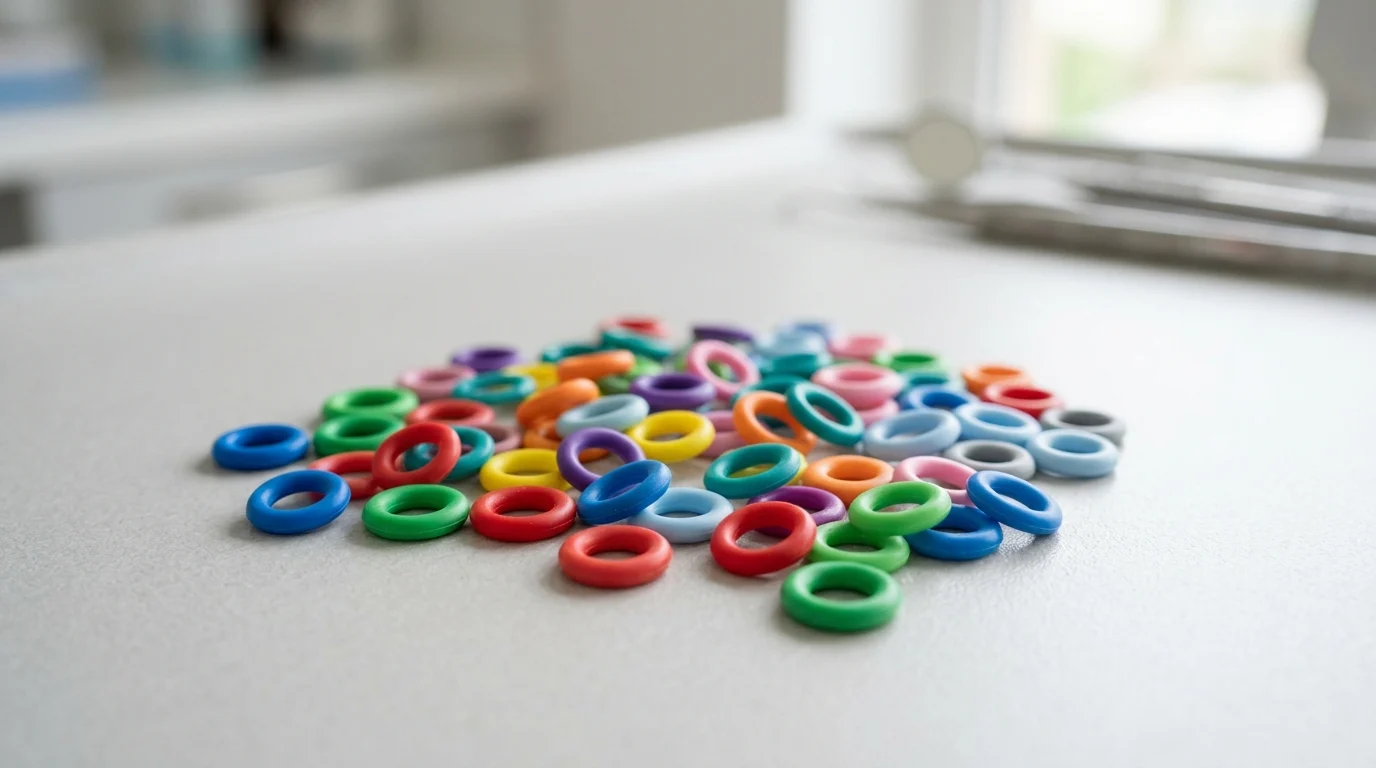
Selecting elastomeric ligatures involves more than matching a patient’s color preference. Color can streamline inventory control and chairside identification, while size influences seating, force retention, friction, and how efficiently appointments move. This article explains how common diameter ranges, dispensing formats, and color-coding choices affect daily orthodontic workflow and treatment consistency. By the end, you will know what to compare when buying elastomeric ligatures, how to align specifications with clinical needs, and how to avoid choices that increase handling time or compromise performance between visits.
Choosing elastomeric ligatures: key buying criteria
Procuring the right orthodontic consumables requires balancing clinical efficacy with operational efficiency. Among the most frequently utilized items in any orthodontic practice are elastomeric modules, which secure the archwire within the bracket slot. Selecting the optimal modules goes beyond mere aesthetic preference; it directly impacts force delivery, friction, and treatment pacing.
A standard orthodontic module typically features an outer diameter ranging from 0.110 to 0.120 inches. However, variations in size, profile, and material composition can drastically alter performance. Buyers must establish strict criteria to ensure that the chosen products maintain adequate tension between typical four-to-six-week appointment intervals without premature degradation.
How color and size affect chairside workflow
The physical dimensions and presentation of modules significantly influence operational speed. Products are generally dispensed on sticks, canes, or continuous spools. Sticks containing 10 to 24 modules are the industry standard, allowing practitioners to load multiple brackets rapidly while minimizing cross-contamination risks.
Color-coding also plays a subtle but vital role in inventory management and chairside efficiency. When standard sizes are color-coded uniformly across different force profiles or diameters, dental assistants can identify the correct specification instantly. Implementing an organized dispensing system based on size and color can reduce the time spent changing wires by up to 15%, optimizing overall patient throughput.
How this guide evaluates performance and value
Evaluating these consumables requires a quantitative approach to performance and value. Cost per module is only one factor; the actual value is determined by the material’s structural integrity over time. High-quality modules will exhibit a controlled force decay, typically losing 40% to 50% of their initial force within the first 24 hours, before plateauing to a consistent retention level.
Furthermore, procurement teams should monitor batch defect rates. A premium manufacturer should maintain a defect rate of less than 1%, meaning fewer snapped modules during application and lower material waste. This guide evaluates these products by weighing upfront procurement costs against clinical reliability, force retention metrics, and packaging efficiency.
Elastomeric ligatures: materials, colors, and sizes
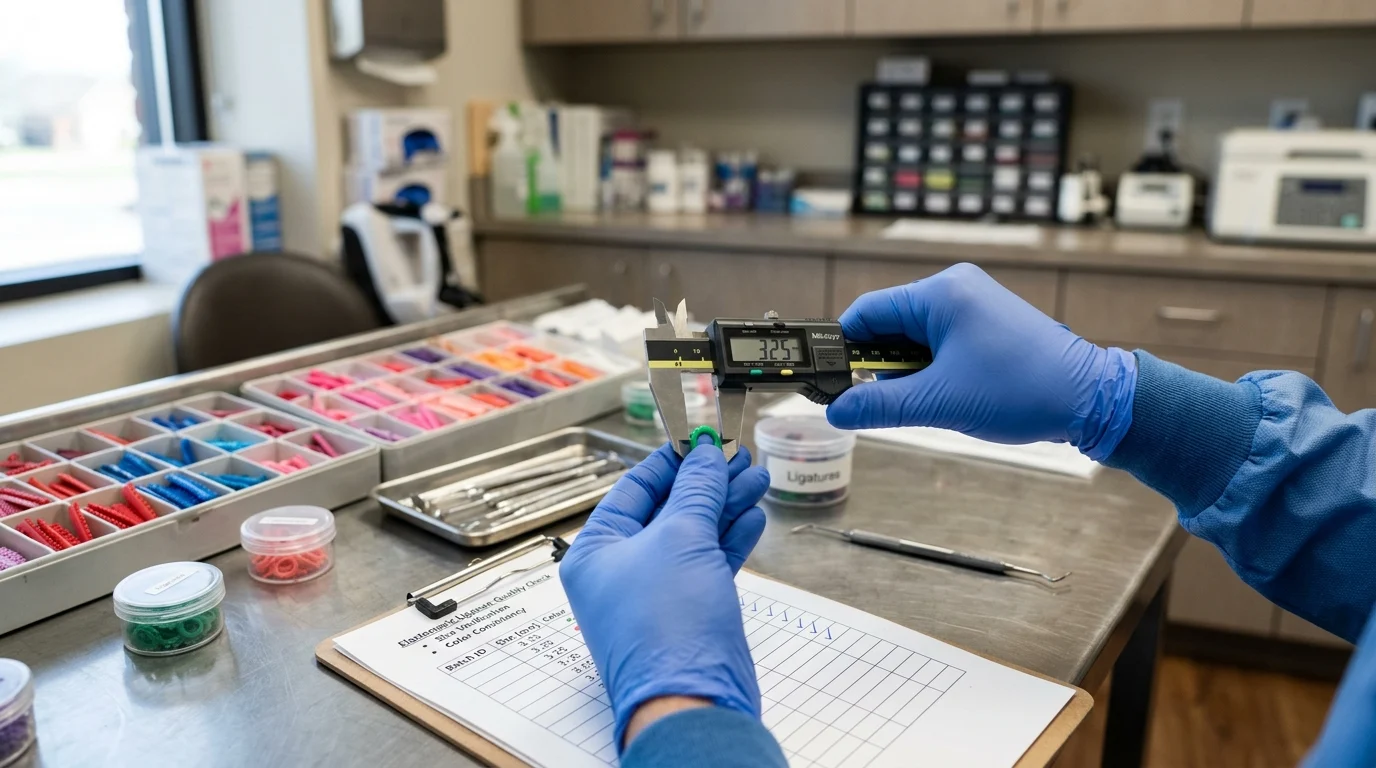
The fundamental performance of any orthodontic module is dictated by its baseline material chemistry. Most modern options are manufactured from medical-grade polyurethane, a polymer chosen for its elasticity, memory, and resistance to intraoral degradation. However, the specific formulation dictates how well the product handles the harsh, moisture-rich environment of the oral cavity.
Material and force-retention characteristics
Polyurethane modules deliver high initial force, which is necessary to seat the archwire fully into the bracket slot. Upon application, a standard module typically applies between 300 and 400 grams of initial force. Due to the inherent viscoelastic properties of the material, this force undergoes stress relaxation.
After four weeks in the mouth, the force generally decays to between 150 and 200 grams. Sourcing high-quality elastomeric ligatures ensures that the material formulation minimizes excessive force loss, maintaining enough active tension to facilitate tooth movement without requiring premature replacement.
Color stability and size tolerance
Pigmentation processes can occasionally interfere with the structural integrity of polyurethane. Therefore, high-quality manufacturing requires non-toxic, color-stable dyes that do not compromise the elastomer’s cross-linking. Additionally, dimensional precision is non-negotiable. A variance of just +/- 0.005 inches in the inner diameter can completely alter the seating force, either causing excessive friction or failing to engage the wire.
| Size Category | Typical Outer Diameter | Best Bracket Compatibility | Average Seating Force |
|---|---|---|---|
| Small | 0.100″ – 0.110″ | Mini-twin, lower incisors | High |
| Standard | 0.115″ – 0.120″ | Standard twin, premolars | Medium |
| Oversized | 0.130″+ | Ceramic, figure-eight ties | Low to Medium |
Maintaining strict size tolerances ensures that practitioners experience uniform tactile feedback during application, regardless of the pigment used.
Clear vs colored ligatures
The choice between transparent and pigmented options involves a trade-off between baseline aesthetics and long-term material behavior. Clear and silver modules remain the most popular choices for adult patients utilizing ceramic or stainless steel brackets. However, clear polyurethane is highly susceptible to staining.
Clear modules can absorb water and dietary dyes up to 2% to 3% by weight, leading to noticeable yellowing within two weeks of exposure to coffee, tea, or spices. Conversely, deeply pigmented modules mask this absorption. While the mechanical force decay remains relatively similar between clear and colored variants, the perceived degradation is much higher in clear options, often driving patient requests for earlier replacement.
How color and size choices affect clinical use
Matching the correct physical specifications to the clinical scenario is essential for predictable biomechanics. The interaction between the module, the archwire, and the bracket dictates the level of friction in the system, which directly impacts the speed and comfort of tooth movement.
Small, standard, and oversized ligatures compared
The selection of small, standard, or oversized modules depends entirely on the bracket architecture. Small modules, typically measuring 0.100 to 0.110 inches in diameter, are engineered for mini-twin brackets or narrow lower anterior brackets. They provide high ligation force but can snap if stretched over larger profiles.
Standard modules (0.115 to 0.120 inches) serve as the versatile default for over 80% of clinical applications, fitting most standard twin brackets comfortably. Oversized modules, exceeding 0.130 inches, are reserved for bulky ceramic brackets or when practitioners need to apply a figure-eight tie to increase friction and ensure full wire seating without breaking the elastomer.
Best color options for aesthetics and stain resistance
While aesthetic preferences vary by demographic, color selection has practical implications for stain resistance. Darker shades such as navy blue, maroon, and black exhibit the highest resistance to visible discoloration over a standard four-to-six-week treatment interval.
Bright, vibrant colors are highly requested by pediatric and adolescent demographics, requiring clinics to maintain a diverse palette. However, pastel shades tend to behave similarly to clear modules, showing dietary stains rapidly. Silver or smoke-colored modules offer the best middle ground, blending well with stainless steel hardware while effectively hiding minor discoloration.
Balancing color variety with SKU complexity
Offering a massive variety of colors can inadvertently create a logistical burden for clinical inventory management. Managing upwards of 40 different color SKUs leads to fragmented purchasing, increased storage requirements, and the risk of material expiration. The standard shelf life for polyurethane modules is generally 18 to 24 months, after which the material becomes brittle.
To optimize inventory, successful practices typically limit their selection to 15 to 20 core colors. This consolidation strategy ensures high turnover rates for all stocked items, preventing material degradation while still providing enough variety to satisfy patient demands. Bulk purchasing can then be concentrated on the highest-volume SKUs, driving down the average cost per unit.
What to verify when sourcing from manufacturers
Establishing a reliable supply chain for orthodontic consumables requires diligent vetting of manufacturers. Buyers must look beyond initial pricing to evaluate the supplier’s quality management systems, material sourcing, and adherence to international medical device standards.
Manufacturing consistency and packaging formats
Consistency in injection molding is the hallmark of a premium manufacturer. Flash—excess plastic left on the edges of the module—can cause patient discomfort and increase friction in the bracket slot. Buyers should request samples to verify clean, flash-free edges and consistent elasticity.
Packaging formats also dictate clinical utility. Individual patient sticks containing exactly 10 to 24 modules are preferred over loose bulk bags, as they drastically reduce the risk of cross-contamination. A reputable supplier should demonstrate a manufacturing defect rate of less than 0.5%, ensuring that practically every module dispensed performs precisely as expected.
Compliance, biocompatibility, and quality documents
Orthodontic modules are classified as medical devices, meaning suppliers must provide comprehensive compliance documentation. Facilities should hold an active ISO 13485 certification, which governs quality management systems for medical device manufacturing. Depending on the region, FDA Class I or II registration, or a CE mark, is mandatory.
Crucially, the raw materials must pass ISO 10993 biocompatibility testing to ensure they do not cause cytotoxicity, mucosal irritation, or systemic sensitization. It is also imperative to verify that all supplied elastomeric ligatures are 100% latex-free to prevent severe anaphylactic reactions in susceptible patient populations.
Supplier evaluation checklist
To streamline the vetting process, procurement managers should utilize a standardized matrix when comparing potential manufacturing partners. This ensures all critical operational and clinical metrics are met before signing long-term supply agreements.
| Evaluation Criteria | Target Metric | Clinical / Business Impact |
|---|---|---|
| Defect Rate | < 0.5% | Ensures consistent force delivery and minimizes waste |
| Minimum Order Quantity (MOQ) | 100 – 500 packs | Balances inventory costs with bulk pricing discounts |
| Biocompatibility | ISO 10993 compliant | Prevents patient allergic reactions and tissue irritation |
| Lead Time | 2 – 4 weeks | Prevents stockouts of popular colors |
Suppliers who can consistently meet these benchmarks while providing transparent documentation should be prioritized for long-term procurement contracts.
How to make the final purchasing decision
Finalizing the procurement strategy requires synthesizing clinical requirements, patient demographic preferences, and inventory budget constraints. A structured purchasing process ensures that the clinic remains well-stocked with reliable materials without tying up excessive capital in slow-moving inventory.
Step-by-step buying process
The buying process should begin with an internal audit of historical usage over the past 12 months to establish accurate consumption baselines. Next, clinics should request physical samples from shortlisted vendors. Clinical staff must test these samples by stretching them to at least three times their resting diameter to verify memory and tear resistance.
Once quality is confirmed, pricing negotiations can commence. Standard pricing typically ranges from $10 to $20 per pack of 1,000 modules, depending on volume commitments. Finally, establishing automated, recurring orders for high-volume items prevents emergency stockouts and reduces administrative overhead.
Building a practical color and size assortment
Constructing the ideal inventory assortment requires a data-driven approach rather than guesswork. A highly optimized inventory generally follows a 60/40 ratio: 60% of the stock should consist of high-turnover standard colors (silver, clear, and black), while the remaining 40% covers the assorted vibrant colors.
In terms of sizing, standard 0.115-inch to 0.120-inch modules will comfortably handle 90% of routine cases. Reserving just 5% of the inventory for small modules and 5% for oversized options is usually sufficient for specialized bracket systems. By analyzing these ratios and working closely with suppliers of elastomeric ligatures, buyers can build a resilient, cost-effective assortment that supports uninterrupted clinical excellence.
Further reading:
Key Takeaways
- The most important conclusions and rationale for elastomeric ligatures
- Specs, compliance, and risk checks worth validating before you commit
- Practical next steps and caveats readers can apply immediately
Frequently Asked Questions
What size elastomeric ligature is best for standard twin brackets?
Standard modules around 0.115″–0.120″ OD are typically the best fit for standard twin brackets and premolars.
Do colored elastomeric ligatures affect performance?
They can if pigments are poorly formulated. Choose medical-grade polyurethane with color-stable, non-toxic dyes and tight size tolerances.
Are clear elastomeric ligatures a good choice for adult patients?
Yes for aesthetics, especially with ceramic brackets, but they stain faster from coffee, tea, and spices and may yellow within weeks.
How often should elastomeric ligatures maintain useful force?
A good module should hold adequate tension across typical 4–6 week appointment intervals without premature breakage or excessive force loss.
What should buyers check when sourcing elastomeric ligatures from suppliers like Denrotary?
Check polyurethane quality, size tolerance, packaging format, color consistency, force retention, and a defect rate below 1% for reliable chairside use.

Post time: Jun-28-2026