
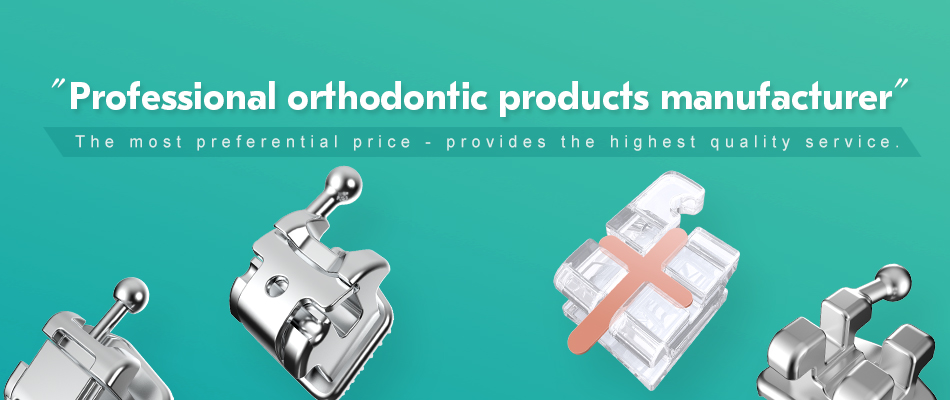

- Inspect the bracket base, slot, wings, hooks, and edge finishing for consistency and clean manufacturing.
- Match bracket material and design to the clinical scenario, treatment stage, patient priorities, and bonding protocol.
- Request technical documentation, traceability, regulatory evidence, samples, and batch-level quality information before placing a volume order.
- Evaluate the complete fixed appliance system, including brackets, archwires, buccal tubes, elastics, and instruments.
Premium orthodontic brackets are defined by dependable clinical function, consistent manufacturing, and appropriate documentation rather than branding alone. The British Orthodontic Society explains that orthodontic treatment uses appliances to move teeth and improve their position, while the U.S. Food and Drug Administration identifies dental devices as products subject to medical-device oversight. This guide shows buyers how to assess brackets before purchasing for clinical use, distribution, or private-label supply.
What Defines High-Quality Orthodontic Brackets?
High-quality orthodontic brackets provide predictable interaction between the bracket, adhesive, archwire, and ligation method throughout treatment.
A bracket is a small fixed appliance component bonded to a tooth and used to control the archwire. Its quality affects positioning accuracy, wire engagement, patient comfort, chairside handling, and the stability of the overall treatment system. A visually attractive bracket can still perform poorly if its slot dimensions vary, its base is inconsistent, or its edges are inadequately finished.
Quality should therefore be assessed through several connected dimensions:
- Functional consistency: Slots, wings, hooks, and bases should follow the stated design and prescription.
- Material suitability: Stainless steel, ceramic, sapphire, and other materials should match the intended clinical and aesthetic application.
- Manufacturing control: Surfaces should be clean, uniform, and free from burrs, cracks, contamination, or visible distortion.
- Bonding performance: The base should provide a stable and reproducible interface with the selected orthodontic adhesive.
- Documentation: The supplier should provide clear product identification, instructions, regulatory information, and traceability.

How to Inspect Orthodontic Brackets Before Buying
A structured sample inspection is more reliable than a catalogue description or a low unit price.
Inspect the bracket base
The bracket base is the first physical feature to examine because it influences bonding contact and positioning.
For mesh-base metal brackets, examine whether the mesh is even, securely attached, and free from crushed areas or loose wires. An uneven mesh may complicate adhesive coverage and make seating less predictable. For one-piece designs, inspect the transition between the base and bracket body for cracks, sharp edges, or machining marks.
The base should also be compatible with the intended adhesive workflow. Buyers should ask whether the product is supplied untreated, coated, or prepared for a particular bonding approach. Do not assume that a similar appearance means equivalent bonding behavior across manufacturers.
Check the slot and archwire interface
The slot should have a clean, consistent shape with no visible obstruction, deformation, or sharp internal damage.
Examine whether the slot entrance is symmetrical and whether the archwire can be inserted without unnecessary resistance. A distorted slot can affect rotation, torque expression, sliding mechanics, and the clinician’s ability to fully seat the wire. Buyers should compare samples from different production batches when possible and ask for the supplier’s dimensional inspection method.
Slot quality matters especially when the treatment plan depends on controlled wire engagement. A bracket that is difficult to ligate may increase chairside time, while inconsistent geometry can make two apparently identical brackets behave differently.
Evaluate wings, hooks, and ligation features
Bracket wings should hold the selected ligation method securely without creating unnecessary sharp contact points.
Inspect the wings for symmetry, adequate clearance, and smooth edges. For self-ligating orthodontic brackets, examine the clip or door for reliable opening and closing, stable archwire retention, and resistance to accidental displacement during routine handling. A self-ligating design may be active, passive, or another configuration, so the buyer should request a clear explanation of the mechanism rather than relying on the term alone.
Hooks should be positioned consistently and should not interfere with elastics, ligatures, the gingiva, or neighboring teeth. If the product is intended for a specific tooth position, verify the identification system and orientation markings before approving a purchase.
Orthodontic Bracket Materials and Design Options
Material selection should reflect the patient’s aesthetic expectations, the treatment mechanics, and the practice’s handling preferences.
| Bracket type | Typical buyer priority | Key inspection points | Potential limitation to discuss |
|---|---|---|---|
| Metal brackets | Mechanical familiarity and broad use | Base consistency, slot geometry, welds, edge finishing | Visible appearance may not suit every patient |
| Ceramic brackets | Aesthetic appearance and rigid handling | Surface clarity, crack resistance, slot finish, tie-wing integrity | Handling and debonding protocols require attention |
| Sapphire brackets | Tooth-colored or translucent appearance | Transparency, smoothness, slot integrity, packaging protection | Fragility and compatibility should be confirmed |
| Self-ligating brackets | Integrated archwire retention | Clip movement, closure, retention, debris tolerance | Mechanism-specific training and accessories may be needed |
Material alone does not prove product quality. A well-finished metal bracket may be more suitable for a particular case than a poorly controlled aesthetic bracket. Conversely, an aesthetic product may be appropriate when appearance is a central patient concern and the clinician accepts its handling requirements.
Premium Orthodontic Brackets: Documentation and Compliance
A premium orthodontic bracket supplier should be able to explain how the product is identified, inspected, released, and supported after delivery.
Ask for a technical file or product information package that clearly states the product name, bracket type, intended use, material information, prescription or system specification, storage conditions, and instructions for use. For international purchasing, request the regulatory documents relevant to the destination market instead of accepting a generic certificate image.
The FDA’s dental-device information is a useful starting point for understanding why dental products should be evaluated within the applicable medical-device framework. Regulatory status varies by product, market, intended use, and local requirements, so buyers should verify the evidence with their regulatory or quality team.
Traceability is another practical quality signal. Packaging should allow the buyer to identify the product, production batch, quantity, and expiration or shelf-life information when applicable. If a supplier cannot connect delivered cartons to production records, investigating a complaint or managing a recall becomes more difficult.
Questions to ask a supplier
- What material and manufacturing process are used for the bracket body and base?
- How are slot dimensions, base structure, clip function, and surface defects inspected?
- Can the supplier provide samples from a current production batch?
- Is the prescription or tooth-position coding clearly defined?
- What documents support import, distribution, and clinical use in the target market?
- How are complaints, nonconforming products, and replacement requests handled?
Testing a Sample Before a Volume Order
A sample should be assessed in the real workflow where the brackets will be used.
Start with visual inspection under suitable lighting. Then confirm identification, orientation, base design, slot access, wing symmetry, and the movement of any self-ligating mechanism. The sample should also be handled with the instruments and archwires normally used by the practice or laboratory.
For bonding evaluation, use the clinic’s established adhesive protocol and document the preparation method, seating behavior, cleanup, and removal experience. This does not replace a validated laboratory or clinical evaluation, but it can reveal practical incompatibilities before a larger order.
For distributors, compare packaging robustness, labeling clarity, carton organization, and the consistency of several samples. A supplier may offer a technically acceptable bracket but still create operational problems through inconsistent labeling or mixed configurations.
| Inspection phase | Buyer-created checkpoint count | Evidence to record | Release decision |
|---|---|---|---|
| Visual and packaging review | 4 checkpoints | Labels, seals, batch details, surface condition | Accept, hold, or reject |
| Mechanical handling review | 4 checkpoints | Slot access, wings, hooks, clip operation | Accept, investigate, or reject |
| Workflow compatibility review | 3 checkpoints | Bonding process, ligation, archwire seating | Trial approval or further testing |
| Documentation review | 4 checkpoints | Instructions, traceability, regulatory evidence | Approved supplier file or hold |
The checkpoint counts in this table are a buyer-created purchasing framework, not a regulatory requirement. The purpose is to prevent a single visual impression from deciding a clinically relevant purchase.
Common Buying Errors with Dental Brackets
The most common purchasing mistake is treating a low price as evidence of value.
Lower acquisition cost may be offset by inconsistent components, increased chairside handling, difficult bonding, unclear documentation, or replacement claims. Compare the complete cost of use, but avoid assigning an invented financial return to a bracket without reliable practice-specific data.
Another error is comparing unlike products. A conventional metal bracket, a ceramic bracket, and a self-ligating bracket may serve different clinical workflows. Compare equivalent prescriptions, tooth-position sets, materials, slot systems, packaging quantities, and support terms.
Buyers should also avoid accepting broad claims such as low friction, high bond strength, or improved comfort without asking how those claims were measured. Request the test method, sample description, comparison product, and limitations. A laboratory result may not predict every clinical outcome.
How to Choose a Supplier for a Complete Fixed Appliance System
The strongest supplier is often the one that can maintain consistency across the complete treatment chain.
Brackets work with archwires, buccal tubes, elastics, ligatures, power chains, and orthodontic instruments. A supplier with a coherent portfolio can simplify product matching, training, purchasing, and replenishment. However, portfolio breadth should never replace evidence of quality for each individual product.
For early alignment and leveling, clinicians may evaluate nickel-titanium options; for later control and finishing, stainless-steel archwires may be considered. Copper-nickel-titanium and thermal-activated products are selected when temperature response and force behavior are relevant to the treatment plan. These choices must follow the clinician’s prescription and the product’s documented characteristics.
Before approval, create a written scorecard covering bracket design, material, slot system, clinical handling, packaging, documentation, supply continuity, and after-sales support. Require corrective action when a sample fails rather than quietly adjusting the acceptance standard.
FAQ
How can I tell whether orthodontic brackets are high quality?
Inspect the base, slot, wings, hooks, edges, packaging, and identification marks. Then review samples in the intended bonding and ligation workflow and request technical and traceability documents.
Are ceramic brackets better than metal brackets?
Neither material is universally better. Metal brackets are widely used for mechanical familiarity, while ceramic brackets may suit patients who prioritize appearance. The correct choice depends on the case, clinician preference, handling protocol, and documented product performance.
What should I check on a self-ligating bracket?
Check whether the clip or door opens and closes smoothly, retains the archwire securely, remains stable during handling, and is compatible with the intended wire and instrument system.
Why does the bracket base matter?
The base forms the bonding interface with the tooth. Consistent base geometry and surface condition can make seating, adhesive coverage, cleanup, and removal more predictable.
What documents should an importer request?
Request product identification, instructions for use, material information, batch traceability, quality records where available, and regulatory evidence appropriate to the destination market. Local regulatory review should confirm what is legally required.
Should I test samples before buying in bulk?
Yes. A sample review can reveal slot, clip, surface, packaging, bonding, and labeling problems before they affect a large shipment. Use the same workflow, instruments, and accessories intended for regular use.
Can a complete orthodontic product range simplify procurement?
It can reduce supplier fragmentation and make replenishment easier, provided each product category meets its own clinical, technical, and documentation requirements. Portfolio breadth should be evaluated alongside consistency and support.
About the Manufacturer
Denrotary is a specialized orthodontic manufacturer serving fixed-appliance workflows with metal, ceramic, sapphire, and self-ligating brackets, plus buccal tubes, archwires, elastics, power chains, and orthodontic instruments. Its product structure supports different treatment stages and purchasing models, including international distribution and compliance-focused sourcing. Review the available range and contact the supplier for current specifications, samples, and quotation requirements.

Post time: Sep-07-2026