

Introduction
As global dental procurement shifts toward value-driven sourcing, China’s orthodontic elastics manufacturers are becoming central to how distributors and clinic networks balance cost, consistency, and private-label growth. This article highlights the factories expected to lead in 2026, with attention to production quality, material standards, customization capabilities, and export readiness. Readers will gain a clearer view of which suppliers are best positioned for large-volume orders, how pricing advantages are achieved, and what factors matter most when comparing manufacturers for long-term sourcing decisions.
Why are orthodontic elastics manufacturers in China attracting global bu
The global orthodontic supplies market has experienced a significant shift in procurement strategies leading up to 2026, with buyers increasingly turning to Asia for high-volume consumables. Orthodontic elastics, a staple in daily clinical practice, require precise manufacturing tolerances to ensure consistent force delivery. As raw material costs fluctuate and clinical networks expand, sourcing from overseas has transitioned from a purely cost-saving measure to a strategic necessity.
Today, buyers can achieve unit cost reductions of 30% to 45% by partnering with specialized facilities in China, without sacrificing clinical efficacy. This margin improvement is critical for distributors and large-scale clinic networks looking to remain competitive in an increasingly consolidated dental market.
How do pricing pressure, private-label demand, and regional supp
ly shape sourcing?
Dental practices globally are facing intense margin compression, prompting distributors to seek more competitive wholesale pricing. Consequently, the demand for private-label orthodontic elastics has surged, allowing distributors to build brand equity while controlling their supply chain. Leading manufacturers in China have optimized their regional supply networks to accommodate this shift, sourcing medical-grade latex and synthetic polymers at scale.
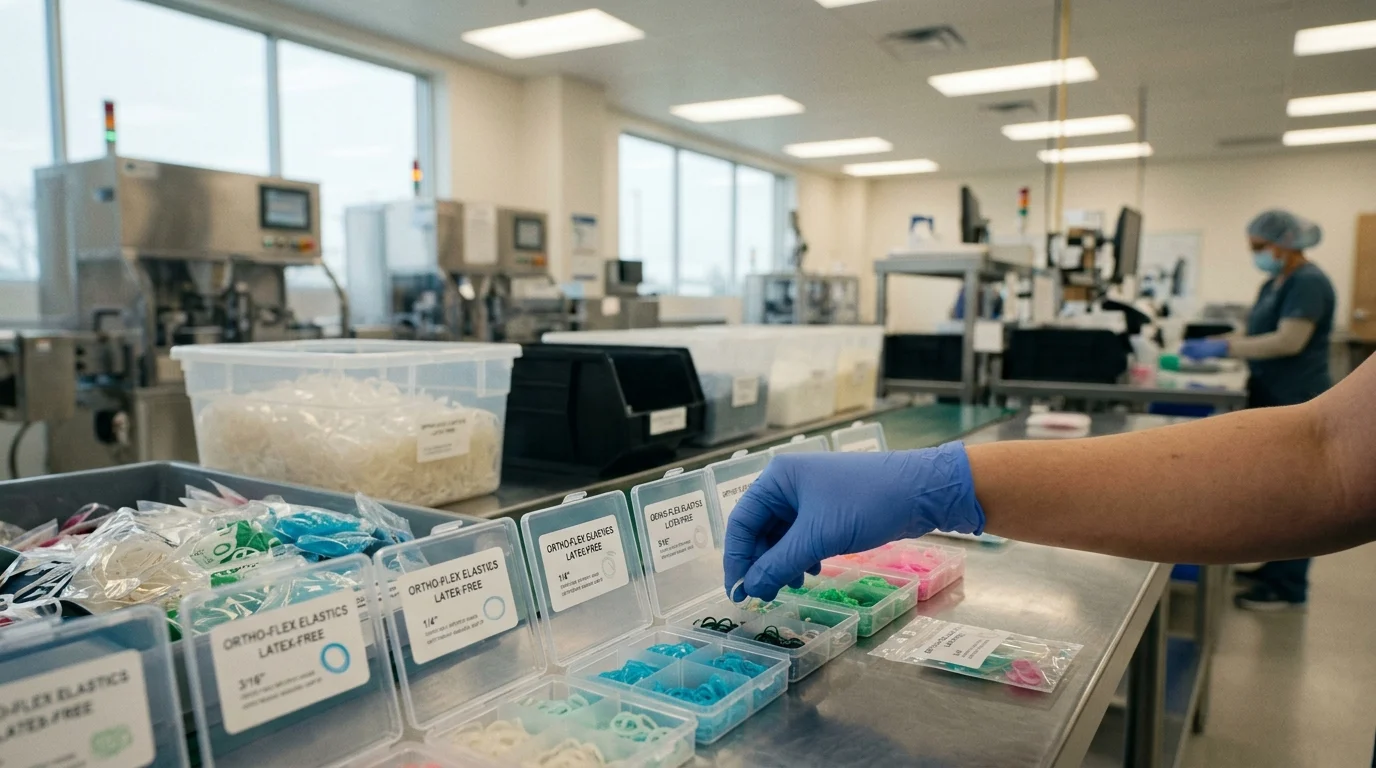
By localizing the procurement of raw materials and leveraging automated cutting and packaging lines, these factories maintain highly competitive pricing. Minimum Order Quantities (MOQs) for private-label runs typically start around 100,000 bags, a threshold easily met by mid-sized regional distributors. To learn more about how established facilities scale their operations to support global private-label programs, buyers often review the background of a prospective partner, such as exploring an orthodontic elastics manufacturers company profile to verify production capacity and history.
Which buyer segments are driving orders from China
?
The influx of orders to Chinese manufacturers is primarily driven by three distinct buyer segments: international dental distributors, Dental Support Organizations (DSOs), and specialized orthodontic brands. DSOs, which manage dozens or hundreds of clinics, are particularly influential. A mid-sized DSO might consume upwards of 500,000 packs of elastics annually, making direct factory sourcing highly lucrative.
Furthermore, specialized orthodontic brands that previously manufactured domestically are now utilizing Chinese facilities for contract manufacturing. This allows these brands to focus on marketing and clinical education while relying on automated overseas facilities to handle the high-volume, low-margin production of latex and non-latex consumables.
How do leading China orthodontic elastics manufacturers compare
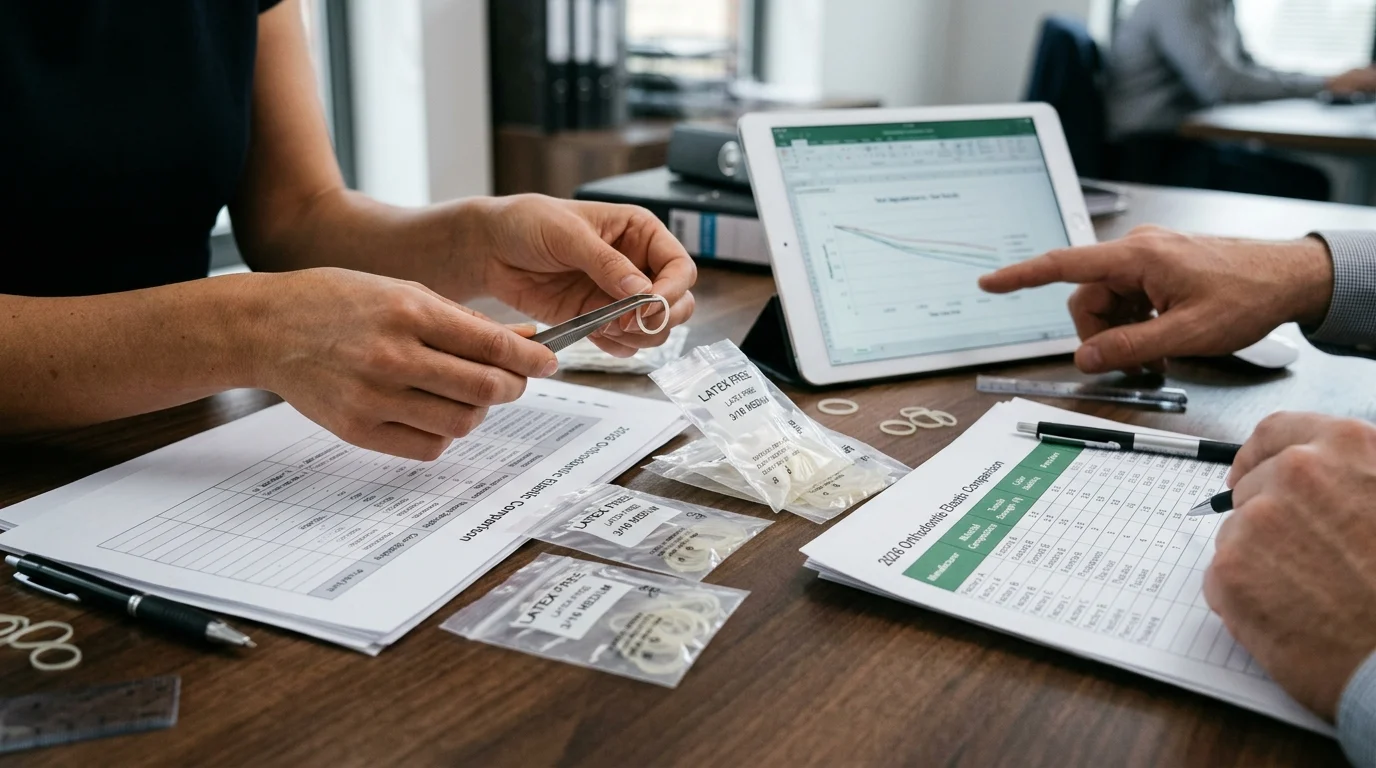
Evaluating prospective orthodontic elastics manufacturers requires a deep dive into their technical capabilities and operational infrastructure. Not all factories possess the precision equipment necessary to meet strict orthodontic tolerances, making technical due diligence a critical step for importers.
Which product specifications matter most when evaluating supplie
rs?
The clinical performance of an orthodontic elastic is defined by its force delivery, diameter, and material composition. Buyers must specify exact force levels—commonly categorized as Light (2.5 oz), Medium (3.5 oz), Heavy (4.5 oz), and Extra Heavy (6.5 oz)—and ensure the factory can guarantee these forces at a specific stretch distance, typically three times the resting diameter.
Material selection is equally critical. Factories must offer both surgical-grade natural rubber latex and latex-free (polyurethane) alternatives to accommodate patient allergies. The table below highlights the comparative specifications buyers must evaluate when selecting materials.
| Specification | Natural Rubber Latex | Latex-Free (Polyurethane) |
|---|---|---|
| Force Decay (24h) | 10% – 15% reduction | 15% – 25% reduction |
| Elongation Limit | >500% | ~300% to 400% |
| Shelf Life | 36 to 60 months | 24 to 36 months |
| Manufacturing Cost | Baseline | +15% to +25% premium |
What factors best distinguish factory scale, certifications, and
capabilities?
Factory scale and infrastructure directly impact product consistency. Top-tier manufacturers operate within ISO Class 8 (Class 100,000) cleanrooms to control airborne particulates during the extrusion and cutting processes. Buyers should look for facilities capable of producing at least 2 million to 5 million bags per month, indicating sufficient scale to handle seasonal demand spikes without extending lead times.
Certifications act as the baseline for qualification. A reputable manufacturer must hold an active ISO 13485 certification for medical device quality management. Additionally, depending on the target market, the factory must maintain FDA establishment registration or CE marking under the Medical Device Regulation (MDR).
How do OEM and private-label manufacturers differ
?
While often used interchangeably, OEM (Original Equipment Manufacturer) and private-label services represent different levels of customization. Private-label manufacturing typically involves taking a factory’s existing, validated elastic formulations and packaging them in custom-branded foil pouches or boxes. The setup costs are minimal, often requiring only $300 to $500 for custom printing plates.
Conversely, true OEM partnerships involve custom compounding. A buyer might request a proprietary polymer blend to alter the force decay curve or request a unique colorway for a pediatric dental line. OEM projects require custom extrusion dies and rigorous validation testing, pushing initial setup costs into the $2,000 to $5,000 range and requiring significantly higher MOQs to justify the engineering time.
What compliance, testing, and traceability standards should buyers expec
Orthodontic elastics are classified as medical devices—typically Class I in the United States and Class IIa in the European Union. Consequently, importing these products requires strict adherence to international safety, biocompatibility, and traceability standards. A failure in compliance can result in customs seizures, costly recalls, or severe clinical liabilities.
Which medical device documents and biocompatibility tests are es
sential?
Biocompatibility is the foremost safety concern for intraoral products. Buyers must require suppliers to provide comprehensive test reports adhering to the ISO 10993 standard. Specifically, the elastics must pass tests for cytotoxicity (ISO 10993-5), as well as sensitization and oral mucosal irritation (ISO 10993-10).
For natural rubber latex elastics, manufacturers must monitor and document extractable protein levels to minimize the risk of anaphylactic reactions. High-quality factories utilize advanced leaching processes to ensure extractable proteins remain well below the industry threshold of 50 micrograms per gram (µg/g). Buyers should request Certificates of Analysis (CoA) for each batch to verify these metrics before shipment.
How do sterilization, shelf-life validation, and lot traceabilit
y affect quality assurance?
Although orthodontic elastics are generally supplied non-sterile, the manufacturing process must strictly control bioburden levels. Factories must validate their cleanroom environments and packaging processes to ensure the product remains uncontaminated throughout its lifecycle. Accelerated aging tests are used to validate shelf-life claims, ensuring the elastics do not become brittle or lose elasticity over their stated 36 to 60-month lifespan.
Lot traceability is an essential component of quality assurance. Every pouch must be printed with a distinct lot number, manufacturing date, and expiration date, ideally utilizing GS1 barcode standards. This allows for rapid isolation of defective batches. Leading manufacturers maintain strict Acceptable Quality Limit (AQL) standards, typically enforcing an AQL of 1.5 for major defects (such as incorrect diameters or severe cuts) to ensure the defect rate remains under 0.1% across high-volume production runs.
How should importers assess cost, lead time, and supply chain
Procurement success relies on a holistic understanding of the supply chain, moving beyond the initial factory quote to calculate the true landed cost. Importers must map out cost drivers, rigorously audit their chosen facilities, and implement robust logistics strategies to mitigate the risks associated with international shipping.
Which cost drivers most affect landed price
?
The final landed price of orthodontic elastics is influenced by raw material indexing, packaging complexity, and freight volume. Medical-grade polyurethane for latex-free elastics typically costs between $15 and $25 per kilogram, making it significantly more susceptible to petroleum market fluctuations than natural rubber.
Packaging also plays a major role; individual patient packs (e.g., 100 elastics per bag) require extensive automated counting and sealing, adding labor and machine-time costs compared to bulk clinic spools. Importers must also factor in import duties, which vary by destination country.
| Cost Component | Estimated Share of Landed Cost | Key Variables |
|---|---|---|
| Raw Materials | 35% – 45% | Polymer index, latex spot prices |
| Manufacturing & Labor | 20% – 30% | Automation level, cleanroom overhead |
| Custom Packaging | 10% – 15% | Foil vs. plastic, color printing plates |
| Freight & Duties | 15% – 25% | Ocean vs. air freight, HS code tariffs |
What supplier qualification steps help buyers audit manufacturer
s?
Relying solely on digital communication is a major risk when sourcing medical consumables. Buyers should implement a multi-tiered qualification process. This begins with verifying the supplier’s business license, export license, and ISO certificates through official databases. For comprehensive validation, buyers should commission third-party auditing firms (such as SGS or TÜV) to conduct on-site inspections.
Auditors will evaluate the factory’s incoming quality control (IQC) for raw materials, machinery maintenance logs, and worker hygiene protocols. Before finalizing a contract, buyers can reach out directly to coordinate an audit or request physical production samples; utilizing an orthodontic elastics manufacturers contact portal is the standard first step to initiate this formal evaluation.
How do logistics planning, safety stock, and dual sourcing
reduce risk?
Lead times for custom-packaged orthodontic elastics typically range from 25 to 40 days for production, plus an additional 20 to 35 days for ocean freight to North America or Europe. To prevent stockouts, which can severely damage a distributor’s reputation with dental clinics, buyers must maintain adequate safety stock—usually 60 to 90 days of inventory.
For enterprise buyers with annual spends exceeding $500,000, dual sourcing is highly recommended. By splitting volume between a primary manufacturer (handling 70-80% of volume) and a secondary backup supplier (handling 20-30%), importers insulate themselves against localized factory shutdowns, port strikes, or sudden regulatory embargoes.
Which decision framework helps buyers shortlist the right supplier
Shortlisting the right manufacturing partner requires moving past generic marketing claims and applying a rigid, data-driven decision framework. The most successful importers prioritize long-term consistency and regulatory transparency over marginal, short-term price cuts.
How should buyers weigh quality consistency, regulatory readines
s, and service?
A balanced supplier scorecard should weigh quality consistency, regulatory readiness, and customer service. Quality consistency—specifically the ability to maintain force decay within a strict 15% to 20% tolerance over 24 hours of simulated intraoral use—should account for at least 40% of the decision weight.
Regulatory readiness, including the ability to rapidly produce technical files, biocompatibility reports, and traceability documentation, should account for another 30%. The remaining 30% is dedicated to service metrics: responsiveness to inquiries, willingness to accommodate urgent production shifts, and clear communication regarding raw material supply chain disruptions.
What final criteria separate low-cost suppliers from dependable
partners?
The final criteria separating a low-cost vendor from a dependable supply chain partner often come down to transparency and continuous improvement. A dependable partner will proactively notify buyers of necessary tooling upgrades or proposed changes to polymer suppliers, rather than substituting materials silently to save money.
Ultimately, saving 2 to 3 cents per bag of elastics is immediately negated if a batch fails clinical force tests or triggers a regulatory recall. Buyers must select manufacturers who view compliance and quality assurance not as burdensome overhead, but as the foundational elements of their global export strategy.
Further reading:
Key Takeaways
- The most important conclusions and rationale for orthodontic elastics manufacturers
- Specs, compliance, and risk checks worth validating before you commit
- Practical next steps and caveats readers can apply immediately
Frequently Asked Questions
What should buyers verify when choosing an orthodontic elastics manufacturer?
Check force accuracy, diameter tolerance, latex or latex-free options, cleanroom production, and monthly capacity. At DenRotary, buyers often review the company profile and product range before requesting samples.
What MOQ is typical for private-label orthodontic elastics?
Private-label runs often start around 100,000 bags. Confirm packaging options, print requirements, and lead time early so the factory can quote accurately.
How much can sourcing orthodontic elastics from China reduce costs?
Many buyers see about 30% to 45% unit-cost savings versus higher-cost regions. Actual savings depend on material type, packaging, order volume, and shipping terms.
Should I source latex or latex-free orthodontic elastics?
Use latex for better elongation and lower cost; choose latex-free polyurethane for allergy-sensitive markets. Specify required force level and expected shelf life before ordering.
How can I confirm a factory can support large distributor or DSO orders?
Ask for monthly output, typical lead times, cleanroom details, and export experience. A factory producing 2 to 5 million bags monthly is usually better suited for large programs.

Post time: Jun-17-2026