

Introduction
China has become a key sourcing base for orthodontic elastics as manufacturers combine large-scale production, OEM flexibility, and expanding compliance with international dental device standards. For distributors, private-label brands, and clinic groups, choosing the right supplier affects not only unit cost, but also material consistency, packaging options, lead times, and regulatory readiness. This overview highlights the leading orthodontic products manufacturers in China with a focus on orthodontic elastics, helping readers compare capabilities, understand what differentiates reliable partners, and identify the factors that matter most before moving into supplier evaluation, sampling, and procurement decisions.
Why source orthodontic elastics from China
The global orthodontic supply chain has increasingly centralized in Asia, driven by the region’s advanced manufacturing capabilities and robust export infrastructure. For distributors and clinical networks, partnering with a specialized orthodontic elastics manufacturer in China presents a strategic opportunity to optimize procurement without compromising clinical efficacy. Chinese facilities have transitioned from basic low-cost assembly to highly automated, clinically validated production hubs capable of meeting stringent international medical device standards.
Cost, private label demand, and product range
The primary driver for shifting procurement to Chinese manufacturers is the optimization of unit economics. Facilities operating at scale frequently deliver cost reductions of 30% to 50% per unit compared to Western suppliers, while maintaining equivalent material performance. This cost differential is critical for high-volume consumables like intraoral elastics.
Furthermore, the demand for private label and OEM (Original Equipment Manufacturer) services has surged. Clinical franchises and dental supply brands require customized packaging, proprietary branding, and specific color-coding systems. Chinese manufacturers excel in this domain, offering integrated packaging solutions that allow distributors to build brand equity directly with end-users.
Product categories beyond standard options
Beyond standard intraoral traction bands, top-tier facilities produce a comprehensive suite of elastomeric products. This includes specialized extraoral elastics, power chains, elastomeric ligatures, and separators. Advanced manufacturers formulate both surgical-grade natural rubber latex and latex-free (polyurethane) alternatives to accommodate patients with latex hypersensitivity.
| Product Category | Primary Material | Typical Application | Common Force Ratings |
|---|---|---|---|
| Intraoral Elastics | Natural Rubber Latex | Intermaxillary traction | 2.5 oz, 3.5 oz, 4.5 oz, 6.5 oz |
| Latex-Free Elastics | Polyurethane | Hypoallergenic traction | 3.5 oz, 4.5 oz, 6.5 oz |
| Power Chains | Elastomeric Resin | Space closure | Continuous light force |
| Separators | Radio-opaque Elastomer | Creating interproximal space | High initial force |
How to evaluate a reliable manufacturer
Identifying a highly capable manufacturer requires moving beyond marketing claims and conducting a rigorous technical evaluation. An orthodontic elastics manufacturer must demonstrate precise control over polymer chemistry, extrusion processes, and precision cutting to ensure that every elastic delivers the exact biomechanical force prescribed by the orthodontist.
Material, size, force, and packaging specifications
Clinical efficacy relies heavily on strict adherence to dimensional and force specifications. Standard intraoral elastics are typically manufactured in precise lumen sizes, including 1/8″, 3/16″, 1/4″, 5/16″, and 3/8″. The force levels—categorized generally as Light, Medium, Heavy, and Extra Heavy—must accurately measure predetermined weights (e.g., 2.5 oz to 6.5 oz) when stretched to three times their original internal diameter.
Evaluating an orthodontic elastics manufacturer also involves examining their packaging specifications. Medical-grade foil or specialized polymer pouches are required to protect the elastomers from UV degradation and moisture, which can prematurely weaken the material structure.
Production stability and batch consistency
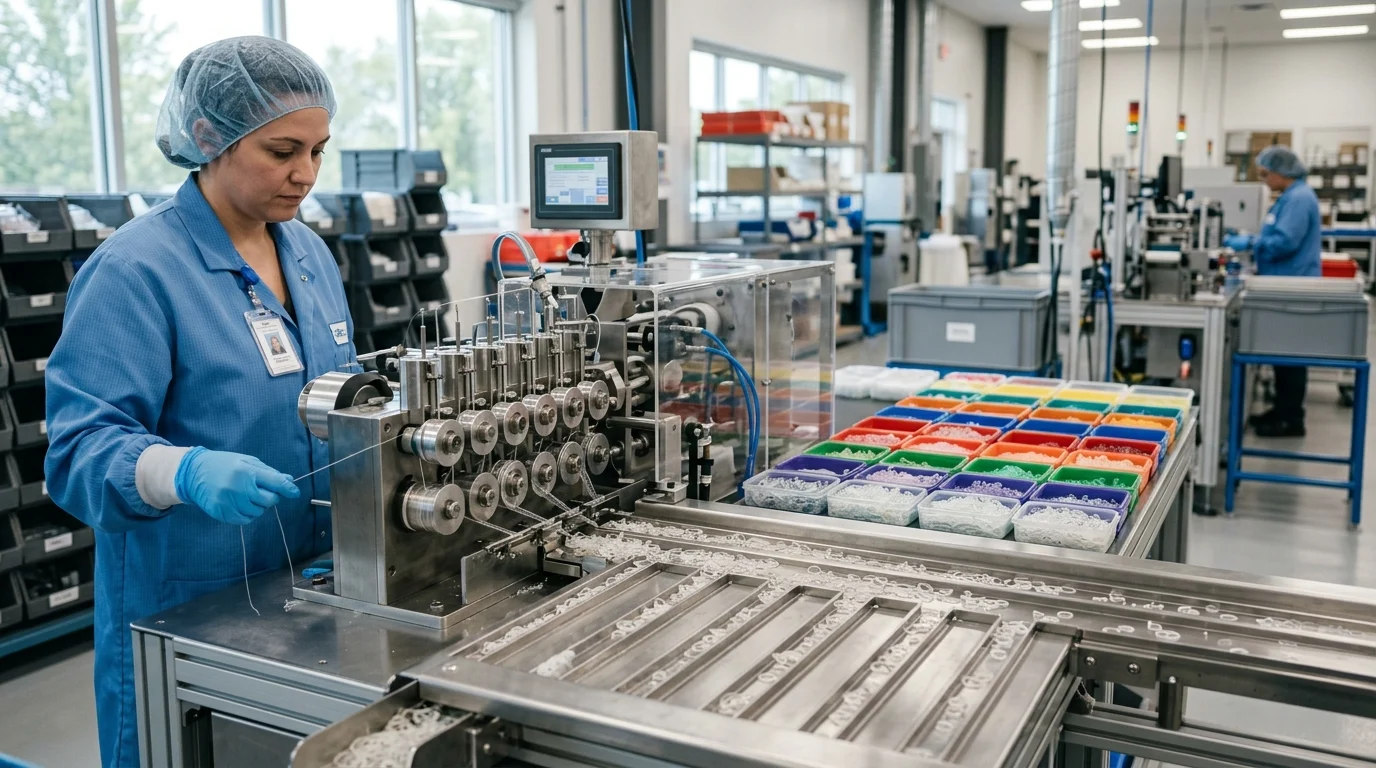
In orthodontic treatments, inconsistent force delivery can stall tooth movement or cause root resorption. Therefore, production stability is paramount. Leading manufacturers utilize Automated Optical Inspection (AOI) systems and continuous tensile testing to maintain batch consistency. A reliable supplier should guarantee a dimensional tolerance of less than ±0.05 mm and maintain a defect rate strictly below 0.5% across production runs.
Supplier comparison criteria
When comparing potential suppliers, procurement teams should utilize a standardized matrix to evaluate technical capabilities. Key criteria include the presence of ISO Class 8 (or better) cleanrooms for medical device manufacturing, the capacity to produce at least 10 million units monthly to prevent supply bottlenecks, and the availability of in-house testing laboratories equipped with digital force gauges and environmental aging chambers.
| Evaluation Criterion | Minimum Acceptable Standard | Premium Manufacturer Standard |
|---|---|---|
| Cleanroom Environment | ISO Class 8 (100,000) | ISO Class 7 (10,000) |
| Dimensional Tolerance | ± 0.10 mm | ± 0.05 mm |
| Batch Defect Rate | < 1.0% | < 0.5% |
| Monthly Capacity | 5 Million Units | > 20 Million Units |
How to vet compliance and OEM capabilities
Because orthodontic elastics are classified as medical devices (typically Class I or Class IIa depending on the jurisdiction), regulatory compliance is non-negotiable. Vetting a supplier’s quality management systems and their ability to protect intellectual property during OEM production is a critical phase of the procurement lifecycle.
Certifications, biocompatibility, and quality systems
A baseline requirement for any global supplier is an active ISO 13485:2016 certification, which governs quality management for medical devices. For the US market, the facility must be FDA registered, and the specific elastomeric products must possess a 510(k) clearance if applicable, or proper listing documentation. For the European market, compliance with the Medical Device Regulation (MDR 2017/745) and a valid CE Mark are mandatory.
Furthermore, the raw materials must pass rigorous biocompatibility testing under the ISO 10993 standard. This includes testing for in vitro cytotoxicity (ISO 10993-5) and skin sensitization and irritation (ISO 10993-10), ensuring the elastics are safe for prolonged mucosal contact in the oral cavity.
OEM terms, private label support, and IP protection
When establishing an OEM relationship, distributors must clearly define Minimum Order Quantities (MOQs) and private labeling terms. Standard MOQs for custom-branded foil pouches typically range from 5,000 to 10,000 bags per SKU, depending on the complexity of the rotogravure printing required.
Intellectual property (IP) protection is equally vital. Procurement contracts must include robust Non-Disclosure Agreements (NDAs) and clearly stipulate that the buyer retains ownership of any custom tooling, proprietary color-coding systems, or specialized polymer formulations developed during the partnership.
How to manage sourcing and logistics
Executing a successful overseas sourcing strategy requires meticulous logistical planning and a structured approach to supplier onboarding. Managing long-distance supply chains introduces variables in lead times and transit that must be accounted for to maintain uninterrupted clinical operations.
Supplier qualification process
The supplier qualification process should begin with a comprehensive desktop audit of the manufacturer’s regulatory certificates, followed by third-party on-site inspections if feasible. Before committing to commercial volumes, procurement managers must request and clinically test sample batches—typically 100 to 500 packs—to verify force decay rates and material resilience.
Initiating this process requires clear communication regarding technical requirements. Engaging directly with an orthodontic elastics manufacturer through formal RFQs (Requests for Quotation) ensures that both parties are aligned on material specifications, testing protocols, and acceptable quality limits (AQL) prior to pilot production.
Lead time, shipping mode, and inventory planning
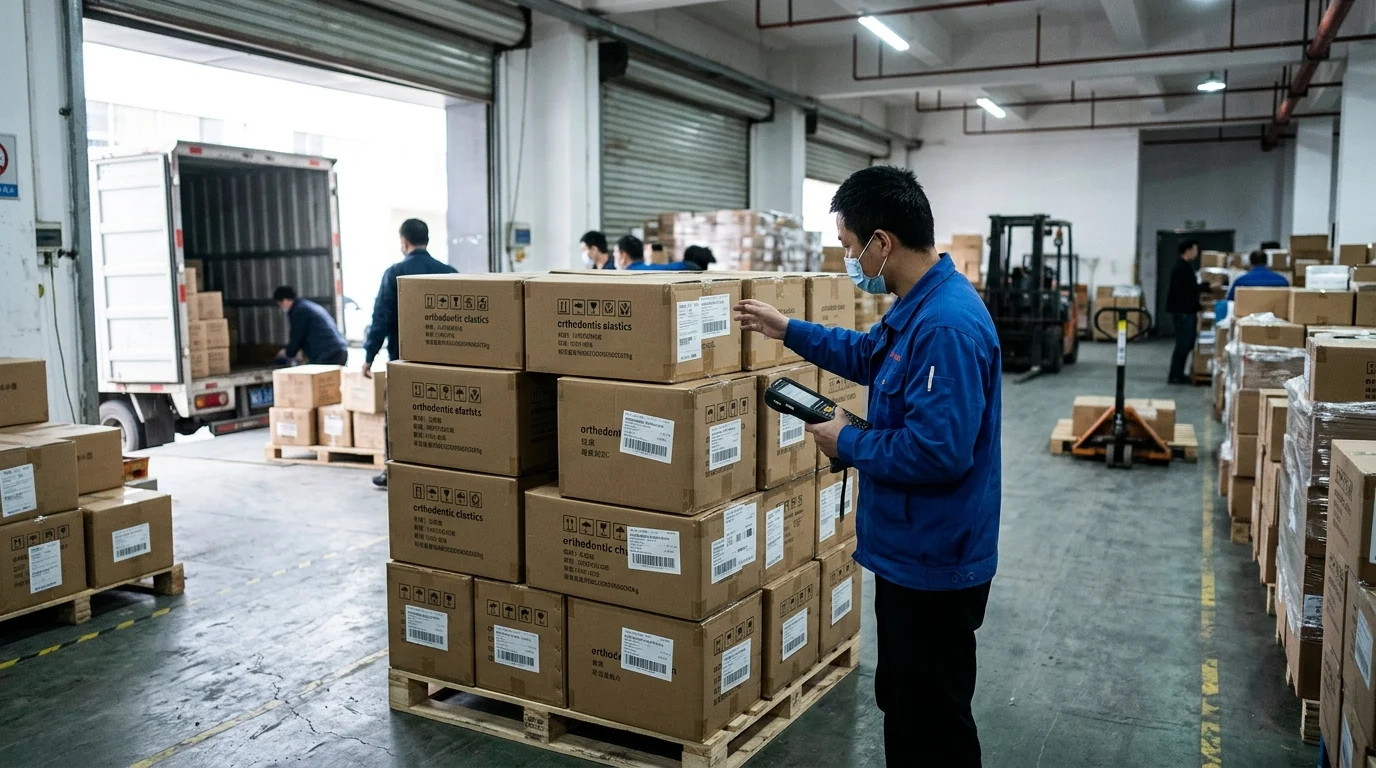
Effective inventory planning hinges on understanding the manufacturer’s production cycle and international shipping constraints. Standard manufacturing lead times for custom-branded orthodontic elastics generally span 15 to 25 days post-deposit.
Logistics teams must balance shipping costs against transit times. Air freight, taking 5 to 7 days, is ideal for initial pilot runs or emergency stock replenishments. Conversely, sea freight, which requires 25 to 35 days, drastically reduces landed costs for bulk orders. To mitigate supply chain disruptions, distributors should maintain a rolling inventory buffer of 60 to 90 days.
How to choose the right supplier
Selecting the optimal manufacturing partner is a strategic decision that extends beyond unit pricing. It requires a holistic assessment of the supplier’s technical infrastructure, regulatory maturity, and willingness to support long-term commercial growth.
Balancing price, quality assurance, and regulatory fit
Procurement professionals must avoid the hazard of selecting suppliers based solely on the lowest bid. Inferior elastics characterized by rapid force degradation or high breakage rates will inevitably lead to clinical dissatisfaction and potential product recalls. The total cost of ownership must account for quality assurance overhead, regulatory maintenance, and brand reputation.
A suitable partner provides transparent documentation, maintains a defect rate strictly below the 1.0% threshold, and demonstrates a proactive approach to regulatory audits. Balancing a competitive price point with uncompromised clinical safety is the hallmark of a sustainable sourcing strategy.
Recommendations for distributors and brand owners
For established distributors and ambitious brand owners, the ideal supplier acts as a strategic extension of their own business. It is highly recommended to build a 3-to-5-year product roadmap with the chosen manufacturer, allowing for the phased introduction of new SKUs, such as specialized latex-free variants or innovative packaging formats.
Consolidating product lines with a single, highly capable manufacturer can streamline compliance management and optimize MOQs. By fostering a collaborative relationship grounded in stringent quality metrics and mutual growth objectives, distributors can secure a resilient, highly profitable supply chain for critical orthodontic consumables.
Further reading:
Key Takeaways
- The most important conclusions and rationale for orthodontic elastics manufacturer
- Specs, compliance, and risk checks worth validating before you commit
- Practical next steps and caveats readers can apply immediately
Frequently Asked Questions
Why buy orthodontic elastics from a China manufacturer?
China suppliers can reduce unit costs by 30%–50%, support OEM/private label packaging, and offer broad options like latex and latex-free elastics.
What should I check when choosing an orthodontic elastics manufacturer?
Verify force accuracy, size range, batch consistency, cleanroom level, testing capability, and protective packaging against UV and moisture.
Which elastic sizes and force levels are commonly available?
Common sizes include 1/8″, 3/16″, 1/4″, 5/16″, and 3/8″, with forces such as 2.5 oz, 3.5 oz, 4.5 oz, and 6.5 oz.
Can Denrotary provide OEM or private label orthodontic elastics?
Yes. Denrotary supports customized branding, packaging, color coding, and product specifications for distributors, clinics, and dental supply brands.
How can I confirm product quality before placing a bulk order?
Request samples, force-test data, dimensional tolerances, batch defect records, and packaging details, then run a small trial order before scaling.

Post time: Jun-11-2026