

Introduction
Choosing between mesh base and monoblock brackets affects more than bracket shape; it influences bond strength, adhesive control, failure rates, and day-to-day clinical efficiency in brace for teeth treatment. While both designs aim to secure the bracket to enamel and deliver precise tooth movement, they differ in how they interact with adhesive and how reliably they stay bonded under function. This article explains the structural differences between mesh base brackets and monoblock brackets, compares their practical advantages and limitations, and outlines how each option can affect treatment performance, chairside workflow, and bracket selection decisions.
Why Mesh Base Brackets Matter in Orthodontics
Orthodontic treatments utilizing a brace for teeth require precision and reliability, particularly at the interface between the bracket and the tooth enamel. The choice of bracket base design significantly influences clinical outcomes, patient comfort, and overall treatment duration. Mesh base brackets have become a standard in modern orthodontics due to their superior retention capabilities and predictable bonding characteristics.
Bond reliability and clinical workflow
Mesh base brackets are engineered to maximize the surface area available for adhesive penetration. This design creates a mechanical interlock that enhances bond strength, typically achieving shear bond strengths of 10 to 15 Megapascals (MPa). For clinicians, this translates to a smoother workflow with fewer emergency appointments dedicated to bracket rebonding, keeping treatment timelines on track.
Key advantages over monoblock brackets
Compared to traditional monoblock designs, mesh base variations offer improved adhesive management. The micro-cavities within the standard 80-gauge or 100-gauge mesh allow excess adhesive to escape easily during placement, significantly reducing clean-up time chairside. Furthermore, the two-piece construction permits manufacturers to use different alloys for the base and the body, optimizing both flexibility for tooth adaptation and rigidity for accurate torque expression.
What Mesh Base and Monoblock Brackets Are
Understanding the structural differences between mesh base brackets and monoblock brackets is crucial for selecting the appropriate orthodontic hardware. Both serve as the primary anchor points for archwires but differ fundamentally in their manufacturing processes and structural composition. Procurement teams and clinicians can explore various bracket types by reviewing specialized products offered by established manufacturers.
Mesh base bracket construction
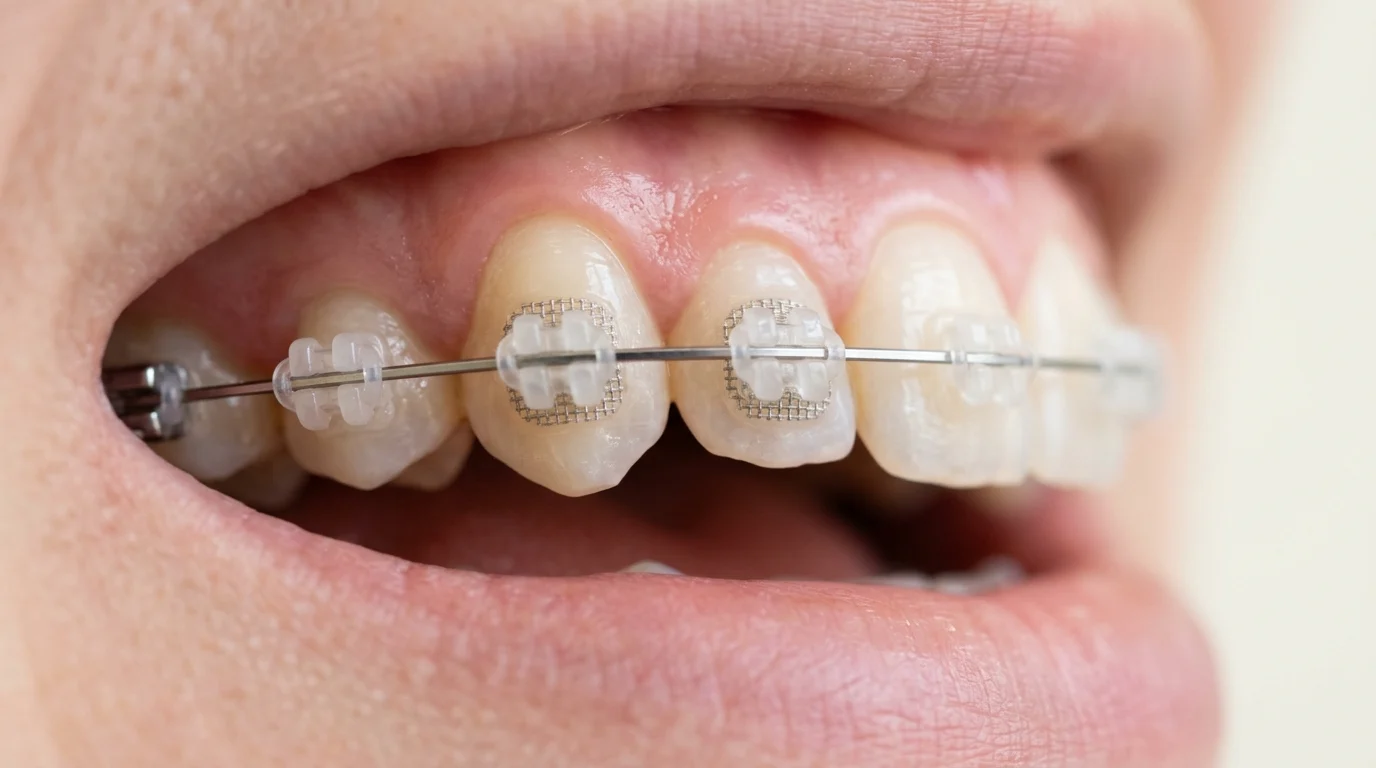
A mesh base bracket consists of two distinct components: the bracket body, which contains the archwire slot and tie wings, and a separate mesh pad. These parts are typically joined using advanced laser welding or vacuum brazing techniques. The mesh pad is often constructed from 316L stainless steel wire woven into a fine grid, creating deep micro-undercuts that mechanically grip the orthodontic resin.
How monoblock brackets are made
Monoblock brackets are manufactured as a single, unified piece of metal, typically utilizing Metal Injection Molding (MIM) or precision casting techniques. Because there is no separate mesh pad to attach, the base of a monoblock bracket features integral retention structures. Manufacturers utilize sandblasting, laser-etched grooves, or molded undercuts to create surface roughness. This one-piece design completely eliminates the risk of base detachment failure, a rare but possible complication in two-piece brackets.
Core specifications buyers should compare
When selecting inventory, buyers must evaluate the fundamental technical specifications that differentiate these two designs. The following table highlights the core metrics and structural differences.
| Specification | Mesh Base Brackets | Monoblock Brackets |
|---|---|---|
| Base Construction | Two-piece (body + mesh pad) | Single-piece unified construction |
| Typical Base Retention | 80-gauge to 100-gauge woven mesh | Sandblasted, laser-etched, or molded undercuts |
| Profile Height | Typically 2.0mm to 2.4mm | Ultra-low profile, often 1.6mm to 1.8mm |
| Manufacturing Method | Brazing or laser welding | Metal Injection Molding (MIM) |
How Mesh Base and Monoblock Brackets Compare
The comparative analysis of these two bracket types reveals distinct clinical and operational characteristics. Orthodontic professionals and procurement teams must weigh these performance factors to align their inventory with specific clinical demands and budget constraints.
Performance factors and tradeoffs
Mesh base brackets generally provide higher shear bond strength, often exceeding the 12 MPa threshold, making them ideal for load-bearing teeth and complex torque movements. However, they carry a slight risk of weld failure where the body meets the pad, though this occurs in less than 0.5% of high-quality units. Monoblock brackets, with their single-piece MIM construction, boast exceptional structural integrity and a lower profile that enhances patient comfort. However, they may offer slightly lower bond strength, typically ranging from 8 to 11 MPa depending on the depth of the base etching.
Manufacturing tolerances and surface treatment
Precision in the slot dimensions is critical for accurate torque and angulation transfer from the archwire to the tooth. High-quality mesh base and monoblock brackets both strive to maintain rigorous slot tolerances of ±0.001 inches. Surface treatments, however, diverge significantly. Monoblock bases rely heavily on secondary processes like sandblasting with 50-micron aluminum oxide to create micromechanical retention, whereas mesh bases rely inherently on the physical three-dimensional weave of the wire mesh.
Main cost drivers
Manufacturing complexity directly impacts the final unit price. Mesh base brackets require a multi-step assembly process, including precision laser welding and mesh attachment, which drives production costs up by approximately 15% to 30% compared to monoblock alternatives. Monoblock brackets benefit from the economies of scale inherent in the automated MIM process, making them highly cost-effective for large-volume distributors and budget-conscious clinics.
How to Evaluate Suppliers, Quality, and Compliance
Sourcing reliable brackets for a brace for teeth requires stringent evaluation of manufacturing partners. Ensuring consistent quality and regulatory compliance mitigates clinical risks and protects the reputation of distributors and clinics alike. Prospective buyers can learn more about supplier credentials and operational standards by visiting the about us pages of established industry leaders.
Supplier qualification steps
A robust supplier qualification process begins with auditing the manufacturer’s facility for ISO 13485 certification, the recognized international standard for medical device quality management systems. Buyers should request physical samples to assess metallurgical composition, specifically verifying the use of biocompatible 17-4 PH or 316L stainless steel. Furthermore, evaluating Minimum Order Quantities (MOQs) is a critical step; standard MOQs in the orthodontic sector often range from 500 to 5,000 sets depending on the level of custom packaging or branding required.
Quality assurance indicators
Key performance indicators for quality include the overall defect rate, which must remain strictly below 1% for medical-grade orthodontic products. Buyers should inspect the bracket slot under magnification for smooth, polished surfaces to ensure reduced sliding friction during leveling and aligning phases. Additionally, batch testing reports should demonstrate consistent shear bond strength above the clinically acceptable minimum threshold of 6 to 8 MPa to prevent premature debonding during treatment.
Regulatory and documentation requirements
Orthodontic brackets are classified as Class II medical devices in most major global jurisdictions. Suppliers must provide comprehensive regulatory documentation, including FDA 510(k) clearance for the United States market or CE marking under the Medical Device Regulation (MDR) for the European Union. Material Safety Data Sheets (MSDS) and biocompatibility test reports conforming to ISO 10993 standards are mandatory to confirm that the alloy’s nickel content does not pose an allergic or toxicological risk to patients.
How Clinics and Distributors Should Choose
The final selection between mesh base and monoblock brackets depends on a careful synthesis of clinical preferences, patient demographics, and procurement budgets. Establishing a clear purchasing strategy ensures that dental inventory perfectly aligns with operational goals and profitability margins.
When mesh base brackets are the better fit
Mesh base brackets are the preferred choice for clinics prioritizing maximum bond reliability, particularly in cases involving heavy orthodontic forces, impacted teeth, or patients with challenging enamel conditions. Their superior retention makes them highly suitable for comprehensive, multi-year treatments where unexpected bracket failure would significantly disrupt the clinical schedule and delay the final aesthetic results.
A practical decision framework
Distributors and clinic managers can utilize a structured framework to guide their purchasing decisions based on specific operational targets. Reaching out to manufacturers via their contact us portals can help clarify which product lines best fit these metrics.
| Clinical Priority | Recommended Bracket Type | Key Metric Driven |
|---|---|---|
| Maximum Bond Strength | Mesh Base Brackets | Target <3% debonding rate (yields >12 MPa) |
| Patient Comfort / Low Profile | Monoblock Brackets | Target <1.8mm bracket height |
| Lowest Upfront Unit Cost | Monoblock Brackets | Reduces initial inventory spend by 15% – 30% |
| Complex Torque Expression | Mesh Base Brackets | High rigidity body with adaptable pad |
Why total cost of use matters
While the upfront unit cost of a monoblock bracket may be up to 30% lower, buyers must calculate the total cost of use to make an informed decision. This calculation must include the hidden costs of chair time and the materials required for rebonding failed brackets. If a clinic experiences a 5% higher debonding rate with an economy bracket, the added overhead of scheduling 15-minute emergency appointments quickly negates the initial material savings. Therefore, investing in bracket designs with proven, high-strength retention mechanisms often yields better long-term financial efficiency for busy orthodontic practices.
Further reading:
Key Takeaways
- The most important conclusions and rationale for brace for teeth,mesh base brackets
- Specs, compliance, and risk checks worth validating before you commit
- Practical next steps and caveats readers can apply immediately
Frequently Asked Questions
What is the main advantage of mesh base brackets for braces?
They usually bond more reliably to enamel because adhesive flows into the mesh and creates strong mechanical retention, helping reduce rebonding visits.
How do monoblock brackets differ from mesh base brackets?
Monoblock brackets are one-piece units, while mesh base brackets use a separate mesh pad joined to the bracket body. Monoblock designs are typically lower profile and structurally simple.
Which bracket type offers better bond strength?
Mesh base brackets generally offer higher shear bond strength, often around 10–15 MPa, while monoblock brackets are commonly around 8–11 MPa depending on base treatment.
Are mesh base brackets more likely to fail?
They can have a small risk of weld or braze-related base detachment, but in high-quality products this is rare, typically under 0.5%.
Where can buyers compare orthodontic bracket options from DENROTARY?
You can review available brace for teeth and bracket products directly at denrotary.com/products/ to compare designs, specifications, and sourcing options.

Post time: Jun-01-2026