

Introduction
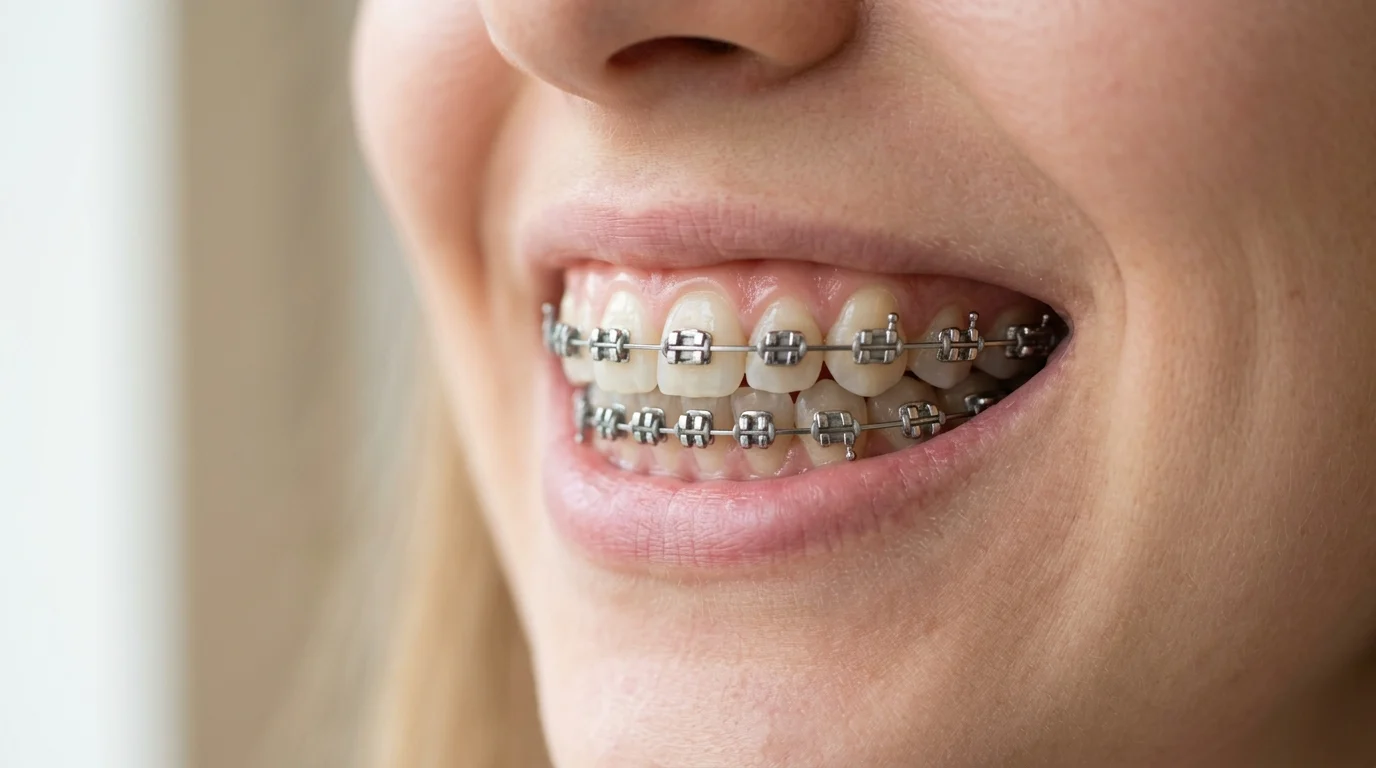
Hospital orthodontic departments need treatment systems that deliver reliable results across large patient volumes, complex case types, and tight budget constraints. Metal braces continue to meet these demands by combining strong biomechanical control, durability, and lower material costs than many aesthetic alternatives. For hospitals managing referrals, surgical orthodontic cases, and diverse patient populations, this makes them a practical and clinically versatile choice. The discussion that follows explains why metal braces remain central to institutional care, how they support service efficiency and standardized workflows, and what decision-makers should consider when evaluating them for long-term departmental use.
Why Metal Braces Remain a Strategic Choice for Hospitals
In the rapidly evolving landscape of orthodontic treatments, hospital dental departments must balance clinical efficacy with operational scalability. While clear aligners and ceramic options have gained consumer popularity, traditional metal braces remain the foundational pillar of institutional orthodontic care. Their unmatched durability, predictable biomechanical control, and cost-efficiency make them indispensable for high-volume clinical environments.
For hospital administrators and department heads, the selection of orthodontic hardware goes beyond individual patient preference. It involves strategic considerations regarding budget allocation, inventory standardization, and clinical outcomes across diverse patient demographics. Understanding the enduring value of these systems is critical for optimizing both patient care and departmental resources.
Role in hospital orthodontic service goals
Hospital orthodontic departments frequently serve as referral centers for complex, severe malocclusions, orthognathic surgical cases, and craniofacial anomalies. In these high-acuity scenarios, metal braces provide the rigid three-dimensional control required for precise root movement and torque expression. The structural integrity of stainless steel brackets ensures that clinical goals can be met without the frequent breakages associated with alternative materials.
Furthermore, public health and institutional settings must prioritize cost-effectiveness to maximize patient access. By standardizing on reliable metal bracket systems, hospitals can often achieve a 30% to 40% higher patient throughput within fixed budgetary constraints compared to utilizing premium clear aligner systems. This economic advantage allows departments to allocate funds toward other critical diagnostic technologies or expand their service capacity.
Clinical and operational trends sustaining demand
The sustained demand for metal braces is driven by continuous improvements in bracket manufacturing and biomechanical design. Modern low-profile brackets reduce mucosal irritation while maintaining the robust tie-wings necessary for complex ligation techniques. Clinicians rely on these systems because they consistently deliver a success rate exceeding 95% even in the most challenging biomechanical setups, such as impacted canine extrusions or severe crowding.
Operationally, the predictability of treatment timelines with metal braces aids hospitals in scheduling and resource planning. Unlike removable appliances that depend heavily on patient compliance, fixed metal appliances ensure continuous force application. For institutions looking to align their procurement strategies with long-term clinical reliability, reviewing comprehensive industry background on manufacturing standards provides valuable context for understanding why these traditional systems continue to dominate hospital inventories.
How Hospitals Should Compare Metal Braces
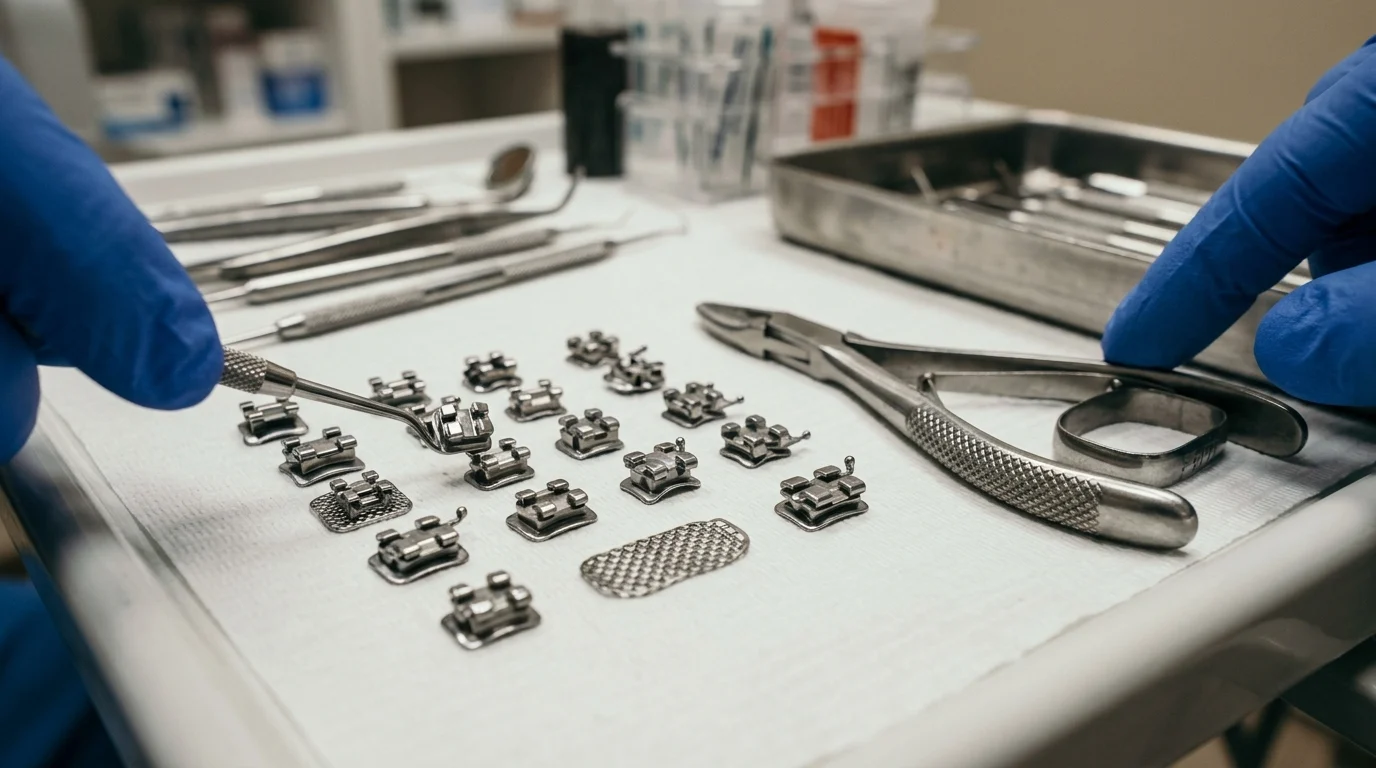
Procuring orthodontic supplies for a hospital requires a rigorous comparative analysis of available bracket systems. Purchasing committees must evaluate hardware not just on unit cost, but on metallurgical quality, manufacturing precision, and the resulting impact on chairside efficiency. A granular understanding of bracket specifications prevents costly mid-treatment complications such as debonding or slot deformation.
Bracket material, slot accuracy, and base design
The foundational quality of metal braces is dictated by the alloy composition and manufacturing technique. Premium brackets are typically Metal Injection Molded (MIM) using 17-4 PH (precipitation-hardened) stainless steel, which offers superior resistance to deformation compared to standard 316L alloys. This hardness is critical for maintaining slot accuracy, which should feature manufacturing tolerances of +/- 0.001 inches to ensure precise torque expression from the archwire.
Base design is equally critical for hospital environments where emergency debonding visits disrupt schedules. An optimal bracket base typically features an 80-gauge foil mesh or a laser-etched micro-retentive surface, designed to achieve reliable shear bond strengths in the range of 10 to 12 MPa. This specification ensures the bracket withstands masticatory forces while allowing for safe, predictable debonding at the end of treatment.
Performance, cost, and workflow comparison
Hospitals must weigh the initial procurement costs against long-term workflow efficiencies. The choice between conventional and self-ligating systems significantly impacts both the budget and the daily operational cadence of the orthodontic ward.
| Feature | Conventional Metal Braces | Self-Ligating Metal Braces |
|---|---|---|
| Average Cost per Patient Kit | $15 – $25 | $40 – $75 |
| Average Chair Time (Archwire Change) | 15 – 20 minutes | 8 – 12 minutes |
| Friction / Binding | Higher (requires elastomeric ties) | Lower (passive or active clip) |
| Inventory Complexity | High (requires ties, ligatures) | Low (all-in-one bracket) |
While self-ligating systems require a higher upfront investment, the reduction in chair time can allow a hospital clinician to see 2 to 4 additional patients per day. Administrators must calculate the break-even point based on their specific overhead costs and patient volume.
Standard versus advanced metal braces
Standard twin brackets represent the traditional workhorse of orthodontics, offering clinicians maximum versatility in ligation methods. They are highly cost-effective and universally understood by orthodontic residents and attending staff, making them ideal for teaching hospitals.
Advanced metal braces, including active and passive self-ligating systems, incorporate mechanical clips or doors. These systems eliminate the need for elastomeric ligatures, thereby reducing bacterial plaque retention and minimizing friction during the sliding mechanics phase of treatment. When evaluating which tier of orthodontic supplies to stock, hospitals should consider the skill level of their staff and the specific clinical philosophies of their attending orthodontists.
How Orthodontic Departments Should Evaluate Suppliers and Compliance
Hospital procurement is governed by strict risk management and regulatory protocols. Orthodontic departments cannot simply purchase the lowest-cost hardware; they must rigorously vet suppliers to ensure compliance with international medical device standards, supply chain transparency, and consistent product quality. A failure in any of these areas exposes the hospital to clinical liabilities and operational bottlenecks.
Regulatory, sterilization, and traceability requirements
Metal braces are classified as medical devices and must adhere to stringent regulatory frameworks. Suppliers must provide proof of FDA Class II clearance (for US markets) or CE marking under the Medical Device Regulation (MDR) for European jurisdictions. Furthermore, the manufacturer’s quality management system should be certified to ISO 13485:2016 standards.
Traceability is non-negotiable in the hospital setting. Suppliers must utilize Unique Device Identification (UDI) barcoding on all packaging. This allows the hospital’s materials management system to track specific bracket lots to individual patients, facilitating immediate action in the rare event of a product recall or adverse biocompatibility reaction.
Sourcing models, contract terms, and private label options
Orthodontic departments must decide between sourcing directly from manufacturers or utilizing medical supply distributors. Direct sourcing often yields better pricing but may require committing to Minimum Order Quantities (MOQs) typically ranging from 500 to 1,000 patient kits annually. Distributors offer smaller batch sizes but at a markup.
For large hospital networks, negotiating long-term contracts (e.g., 2 to 3 years) with price-lock guarantees is essential for budget stability. Additionally, some high-volume institutions explore private label options, allowing them to standardize a specific prescription under the hospital’s own internal SKU system, streamlining procurement across multiple satellite clinics.
Quality assurance and consistency checks
Consistent clinical performance relies on strict Quality Assurance (QA) from the manufacturer. Hospitals should require suppliers to disclose their internal defect rate thresholds, which should ideally be maintained below 0.5%. This includes checks for smooth slot dimensions, secure mesh bases, and the absence of sharp flash that could cause soft tissue trauma.
Furthermore, biocompatibility testing in accordance with ISO 10993 is vital. Because metal braces reside in the oral cavity for 18 to 24 months, the alloy must pass strict tests for cytotoxicity, sensitization, and heavy metal leaching, ensuring patient safety across thousands of cases.
How Hospitals Can Improve Inventory, Cost Control, and Workflow
Efficient inventory management directly impacts the profitability and smooth operation of a hospital orthodontic department. The sheer variety of bracket prescriptions, slot sizes, and auxiliary components can quickly lead to disorganized stockrooms, expired adhesives, and wasted capital. Implementing structured workflows and data-driven inventory controls is critical for modern clinical environments.
Demand forecasting and SKU management
A major challenge in hospital orthodontics is SKU (Stock Keeping Unit) bloat. Departments often accumulate multiple bracket prescriptions (e.g., Roth, MBT, Edgewise) in both 0.018-inch and 0.022-inch slot sizes to accommodate different clinician preferences. By auditing historical usage data, hospitals can standardize on a primary prescription and slot size, potentially reducing active SKU counts by 20% to 30%.
Demand forecasting should utilize the hospital’s Electronic Health Record (EHR) and practice management software to track the rate of new case starts. Establishing automated reorder points based on a 60-day to 90-day supply buffer prevents stockouts of high-use items like upper central incisor brackets, while minimizing capital tied up in slow-moving inventory.
Receiving, storage, and chairside process steps
The physical handling of metal braces from the loading dock to the patient chair requires standardized protocols. Adopting a First-In, First-Out (FIFO) storage method ensures that any brackets with pre-applied adhesive coatings do not exceed their shelf life. Utilizing pre-packaged, patient-specific 5-to-5 or 7-to-7 kits reduces the time dental assistants spend picking individual brackets from bulk organizers.
| Workflow Step | Traditional Approach | Optimized Hospital Approach | Estimated Time Saved |
|---|---|---|---|
| Bracket Selection | Picking individual brackets from bulk carousels | Using pre-sealed, sterile patient kits | 3 – 5 minutes / case |
| Setup & Sterilization | Autoclaving reusable setup trays | Utilizing disposable or pre-sterilized setup cassettes | 5 – 7 minutes / case |
| Inventory Tracking | Manual counting at end-of-month | Barcode scanning at point-of-care | 2 – 3 hours / month |
| Reordering | Ad-hoc purchasing when bins look low | Automated PAR level alerts via software | Prevents stockouts |
By implementing these streamlined receiving and chairside processes, clinical staff can focus more on patient care rather than administrative material handling, ultimately increasing the daily capacity of the orthodontic department.
Which Decision Framework Helps Hospitals Select the Right Metal Braces
Selecting the ideal metal bracket system requires a structured, objective approach rather than relying solely on individual clinician preference. Hospital purchasing committees must synthesize clinical data, financial constraints, and regulatory requirements into a cohesive decision-making framework. This ensures the chosen product delivers long-term value and consistent patient outcomes.
Balancing clinical performance, compliance, and supply stability
A robust decision framework utilizes a weighted scoring matrix to evaluate potential bracket systems. A typical hospital matrix might assign 40% weight to clinical performance (bond strength, slot precision, ease of ligation), 30% to total cost of ownership (kit price, shipping, required auxiliaries), and 30% to vendor compliance and supply stability (ISO certifications, FDA clearance, guaranteed lead times).
Supply stability is particularly crucial; a manufacturer that offers a low unit cost but suffers from frequent backorders disrupts hospital operations and delays patient treatment. Evaluating a vendor’s supply chain redundancy and historical order fulfillment rates (which should exceed 98% on-time delivery) is a mandatory step in the risk assessment process.
Final selection criteria for hospital purchasing teams
Before executing a multi-year procurement contract, hospital teams should mandate a clinical pilot program. This typically involves a 30-day to 60-day trial where attending orthodontists and residents bond the proposed metal braces on a controlled sample of 20 to 50 patients. The trial assesses real-world factors such as base adaptation, flash clean-up ease, and initial leveling efficiency.
Feedback from this pilot, combined with the weighted scoring matrix, forms the final justification for the purchasing decision. Hospitals seeking to initiate this evaluation process should arrange formal vendor consultations to request technical specifications, sample kits, and institutional pricing tiers, ensuring the final selection perfectly aligns with the department’s clinical and operational mandates.
Further reading:
Key Takeaways
- The most important conclusions and rationale for Metal Braces
- Specs, compliance, and risk checks worth validating before you commit
- Practical next steps and caveats readers can apply immediately
Frequently Asked Questions
Why are metal braces still preferred in hospital orthodontic departments?
They offer strong 3D control, reliable outcomes for complex cases, and lower per-patient costs, helping hospitals treat more patients within fixed budgets.
What bracket material is best for hospital metal braces?
17-4 PH stainless steel MIM brackets are often preferred because they resist deformation better and help maintain slot precision during treatment.
How accurate should bracket slots be?
Hospitals should look for slot tolerances around +/- 0.001 inches to support precise torque control and reduce treatment variability.
Should a hospital choose conventional or self-ligating metal braces?
Conventional systems cost less upfront, while self-ligating brackets can reduce archwire-change chair time and simplify inventory management.
Where can buyers review metal braces options for hospital procurement?
Procurement teams can compare orthodontic products and manufacturing information on DenRotary at denrotary.com to assess fit for hospital workflows.

Post time: Jun-19-2026