

Introduction
As orthodontic brands expand their product lines, dental rubber bands are one of the most practical items to source through OEM manufacturing rather than produce in-house. This article explains how OEM orthodontic elastics services help brands control quality, customize packaging, manage minimum order quantities, and improve margins without investing in specialized production equipment. It also outlines the manufacturing and regulatory factors that matter most when selecting a supplier, giving readers a clear foundation for evaluating private-label opportunities and making informed sourcing decisions.
Why OEM Orthodontic Elastics Manufacturing Matters
For dental brands and orthodontic supply companies, partnering with an Original Equipment Manufacturer (OEM) is a strategic method for scaling product lines without heavy capital investment in production facilities. The reliable manufacturing of dental rubber bands requires highly specialized extrusion and cutting equipment that most distributors do not possess in-house. By utilizing OEM services, brands can ensure consistent quality while focusing their resources on marketing, distribution, and clinical education.
Private Label Program Benefits
Private label programs offer substantial financial and operational advantages for orthodontic suppliers. Transitioning from distributing third-party products to an OEM private label model typically increases gross profit margins by 30 to 45 percent. Furthermore, modern OEM partners offer tiered Minimum Order Quantities (MOQs), allowing emerging brands to launch custom-packaged elastics with initial runs as low as 10,000 to 25,000 patient bags, which minimizes inventory risk while establishing brand identity.
Market Trends Driving Demand
The global orthodontic supplies market is expanding at a Compound Annual Growth Rate (CAGR) of approximately 8.5 percent, driven by the increasing prevalence of malocclusion and a rising adult demographic seeking aesthetic treatments. This expansion fuels demand for high-quality intraoral elastics used in conjunction with both traditional brackets and clear aligner therapies. Market trends heavily favor manufacturers capable of producing non-staining, color-stable elastics that meet the rigorous aesthetic expectations of modern adult patients.
Key Product and Manufacturing Specifications
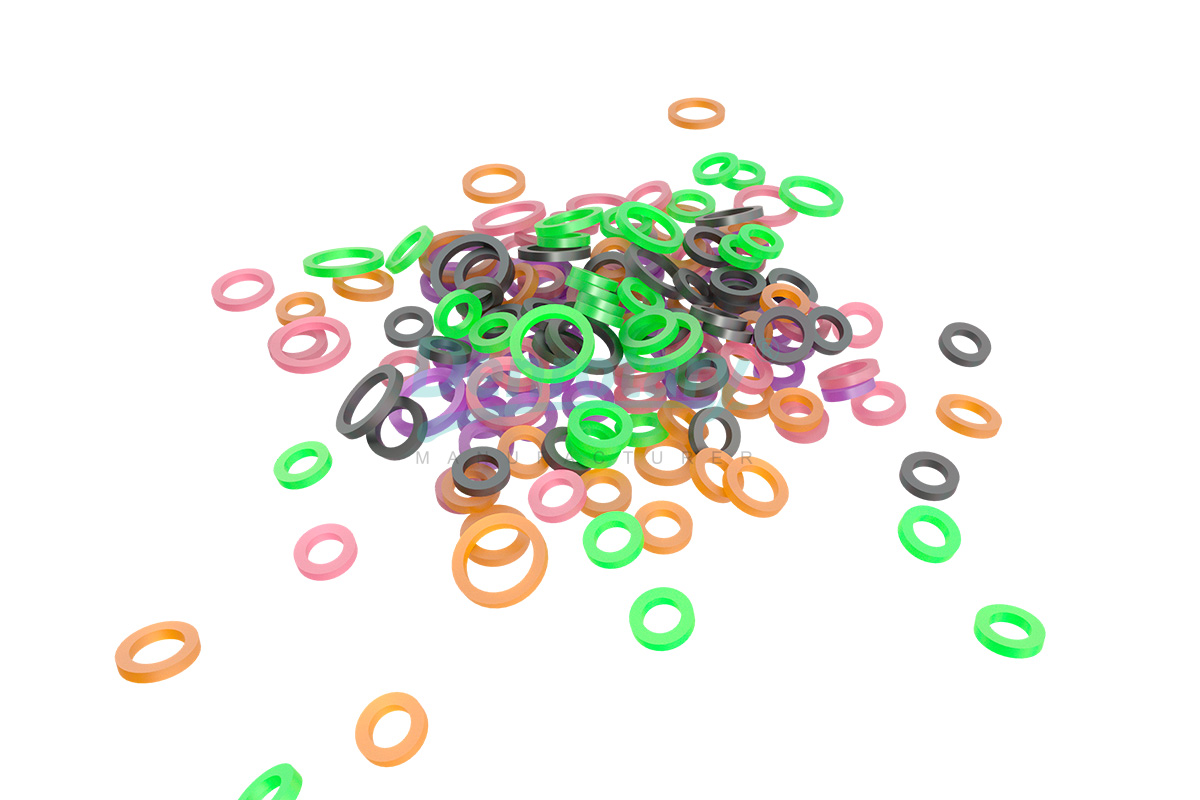
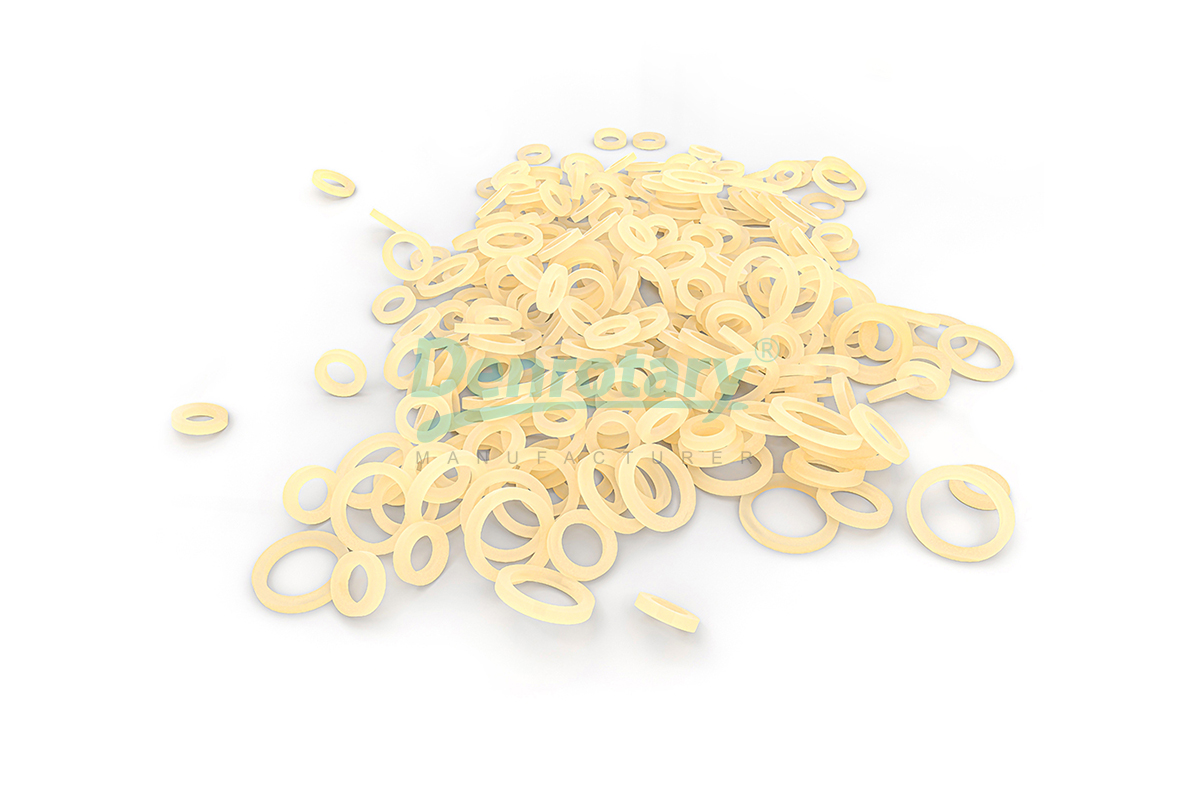
The clinical efficacy of orthodontic elastics relies entirely on precise force delivery and dimensional accuracy. Manufacturers must adhere to rigorous specifications to ensure that each elastic band performs predictably within the oral environment.
Performance Specifications
Intraoral elastics are categorized by their diameter and the force they exert when stretched to three times their resting diameter. Standard diameters range from 1/8 inch (3.2 mm) to 3/8 inch (9.5 mm). Force levels are typically classified as Light (2.5 oz), Medium (4.5 oz), Heavy (6.5 oz), and Extra-Heavy (8.5 oz). Maintaining these specific force thresholds is critical for safe tooth movement without causing root resorption.
| Classification | Typical Diameter | Force Exerted (at 3x stretch) | Common Clinical Application |
|---|---|---|---|
| Light | 1/8″, 3/16″ | 2.5 oz (71g) | Early stage detailing, Class II/III correction |
| Medium | 1/4″, 5/16″ | 4.5 oz (128g) | Mid-treatment space closure |
| Heavy | 5/16″, 3/8″ | 6.5 oz (184g) | Maxillomandibular fixation, robust mechanics |
Latex vs Latex-Free Options
OEM partners must offer both medical-grade natural rubber latex and synthetic latex-free (polyurethane) options to accommodate patient allergies. Natural latex is highly elastic and typically retains 75 to 85 percent of its initial force after 24 hours of intraoral use. Conversely, latex-free alternatives, while crucial for hypoallergenic compliance, exhibit higher force decay, retaining only 60 to 70 percent of their initial force over the same period, which necessitates more frequent changes by the patient.
Process Controls and Testing
Achieving dimensional consistency requires advanced process controls during the extrusion of the rubber tubing and the subsequent precision cutting. High-tier OEM facilities maintain strict dimensional tolerances of +/- 0.002 inches on both wall thickness and cut width. Quality assurance protocols include automated optical inspection systems that measure continuous samples from the production line, ensuring that defect rates remain below the industry standard of 0.5 percent (5,000 Parts Per Million).
Compliance, Quality Systems, and Risk Management
Intraoral elastics are classified as medical devices, meaning the manufacturing process is subject to stringent global regulatory oversight. An OEM partner must possess robust quality systems to mitigate clinical and legal risks for the purchasing brand.
Regulatory and Documentation Requirements
Depending on the target market, orthodontic elastics are generally classified as Class I or Class II medical devices by the US FDA and require CE marking under the European Medical Device Regulation (MDR). A compliant OEM partner must maintain ISO 13485:2016 certification for medical device quality management systems. Furthermore, raw materials must undergo rigorous biocompatibility testing in accordance with ISO 10993 standards to certify they are non-toxic, non-irritating, and safe for prolonged mucosal contact.
Traceability, Shelf Life, and Packaging
Proper lot traceability is a non-negotiable requirement for medical device distribution. Manufacturers must implement systems that track raw material batches through to the final packaged product. Natural latex elastics typically carry a shelf life of 3 to 5 years, while synthetic latex-free variants generally offer a 2 to 3-year shelf life under optimal conditions. To preserve this shelf life, OEMs utilize specialized packaging, such as light-resistant and moisture-barrier foil pouches, typically holding 100 elastics per patient bag. This packaging prevents UV degradation and ozone exposure.
Sourcing, Cost, and Supply Chain Factors
Optimizing the supply chain requires a deep understanding of manufacturing economics and logistical timelines. Dental brands must weigh unit costs against minimum volume commitments to maintain healthy cash flow and reliable stock levels.
Main Cost Drivers
The primary cost drivers in elastic manufacturing include raw material selection, production volume, and packaging complexity. Synthetic latex-free polyurethane resins are inherently more expensive and slower to process than natural rubber, resulting in a 15 to 25 percent higher unit cost for latex-free variants. Additionally, custom-printed, multi-color patient pouches significantly increase the initial setup costs compared to utilizing generic clear bags with adhesive brand labels.
| Material / Packaging Type | Relative Unit Cost | Typical Setup Cost | Optimal Production Volume |
|---|---|---|---|
| Natural Latex, Generic Bag | Baseline (1.0x) | Low | > 10,000 bags |
| Latex-Free, Generic Bag | 1.15x – 1.25x | Low | > 10,000 bags |
| Natural Latex, Custom Pouch | 1.05x | High (Plate fees) | > 50,000 bags |
| Latex-Free, Custom Pouch | 1.20x – 1.30x | High (Plate fees) | > 50,000 bags |
Lead Times and Sampling
Establishing realistic lead times is critical for inventory management. For new private label programs, prototyping, artwork approval, and initial sampling typically require 2 to 4 weeks. Once samples are approved, mass production and final packaging generally span 6 to 10 weeks. Reorder lead times are often shorter, averaging 4 to 6 weeks, provided the OEM holds raw materials and printed packaging films in inventory.
Supplier Qualification Steps
Qualifying a new supplier involves comprehensive due diligence. Brands should evaluate the manufacturer’s maximum monthly capacity—often expected to exceed 10 to 20 million individual elastics for mid-sized OEMs—to ensure they can scale alongside the brand’s growth. Auditing the facility’s disaster recovery plans and secondary raw material sourcing networks is also a vital step in preventing supply chain disruptions.
How to Choose the Right OEM Partner
Selecting a manufacturing partner is a long-term strategic decision. The ideal OEM does not simply fill orders but acts as an extension of the dental brand’s own quality assurance and product development teams.
Supplier Selection Criteria
Key selection criteria should prioritize vertical integration and environmental controls. Manufacturers operating ISO Class 8 (Class 100,000) cleanrooms for the cutting and packaging phases demonstrate a high commitment to medical-grade hygiene. Transparency is equally important; brands should thoroughly review a prospective partner’s background, such as by examining the corporate history on their about us page, and assess their responsiveness by utilizing initial inquiry portals like a contact us form to gauge communication efficiency.
Balancing Customization, Cost, and Quality
The final challenge is balancing bespoke customization with cost-efficiency. While fully custom-printed foil pouches offer premium brand presentation, the associated Minimum Order Quantities (MOQs) typically range from 50,000 to 100,000 bags per design. To balance these factors, emerging brands often negotiate phased contracts: starting with lower-cost generic packaging and branded labels at a 10,000-bag MOQ, and transitioning to fully customized, high-volume runs once market demand and product turnover rates are firmly established.
Further reading:
Key Takeaways
- The most important conclusions and rationale for dental rubber bands
- Specs, compliance, and risk checks worth validating before you commit
- Practical next steps and caveats readers can apply immediately
Frequently Asked Questions
What OEM services can DenRotary provide for dental rubber bands?
DenRotary can manufacture private-label orthodontic elastics, customize sizes and force levels, and supply branded packaging for dental distributors and orthodontic brands.
What minimum order quantity is typical for private-label orthodontic elastics?
Many OEM programs start around 10,000 to 25,000 patient bags, helping new brands launch with lower inventory risk.
Should a dental brand offer both latex and latex-free elastics?
Yes. Latex covers standard clinical use, while latex-free options help serve allergy-sensitive patients and broaden market access.
What quality standards should an OEM elastic manufacturer meet?
Look for ISO 13485 certification, ISO 10993 biocompatibility testing, tight dimensional tolerances, and documented lot traceability.
How are orthodontic elastics usually specified for OEM production?
They are typically defined by diameter, force at three times stretch, material type, color, packaging format, and label requirements.

Post time: Jun-04-2026