

Introduction
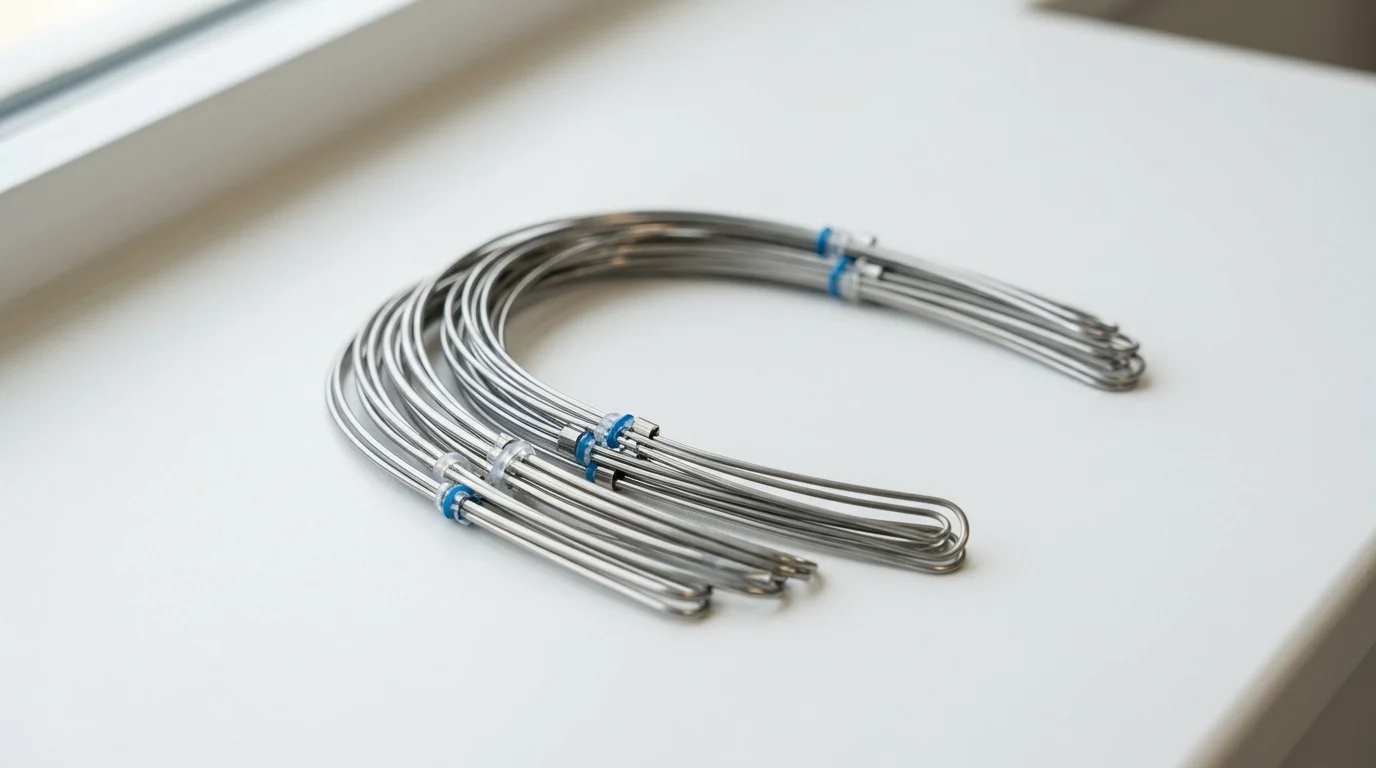
Choosing orthodontic arch wire manufacturers is a strategic decision for global distributors, not just a sourcing task. Wire quality, alloy consistency, regulatory compliance, and production capacity all influence product performance, inventory stability, and margin protection across international markets. This article explains what separates dependable manufacturers from risky suppliers, how technical and commercial factors affect distributor outcomes, and which evaluation points matter most when building a scalable supply base. By the end, readers will have a clearer framework for comparing partners, reducing procurement risk, and aligning orthodontic wire sourcing with long-term growth.
Why Orthodontic Wires Matter for Global Distributors
The global orthodontic supply chain relies heavily on the consistent, high-volume production of arch wires. For international distributors, sourcing these highly regulated medical components is not merely a matter of clinical necessity, but a core driver of business profitability and market positioning. As orthodontic treatments become more accessible globally, the demand for reliable wire suppliers has intensified.
Distributors act as the critical bridge between manufacturing facilities and clinical end-users. Navigating this landscape requires a deep understanding of metallurgical science, international regulatory frameworks, and supply chain economics. Selecting the right manufacturing partner directly impacts a distributor’s ability to maintain inventory levels, ensure clinical efficacy, and achieve sustainable revenue growth in a competitive medical device market.
How manufacturers affect margin and supply
Partnering with reliable manufacturers directly influences a distributor’s gross margin and supply chain resilience. In the orthodontic sector, distributor margins typically range between 20% and 35%, depending heavily on the negotiated unit costs, shipping volumes, and the manufacturer’s ability to scale production without compromising yield rates.
Supply reliability is equally critical. A manufacturer experiencing raw material shortages or quality control bottlenecks can cause stockouts that permanently damage a distributor’s reputation among clinics. Manufacturers with vertically integrated production—controlling everything from alloy melting to final polishing—offer superior supply stability, ensuring that high-volume orders are fulfilled within predictable 30- to 60-day cycles.
Which wire categories matter most
To serve diverse clinical needs, distributors must stock a comprehensive portfolio of orthodontic wires. The most commercially significant categories include Nickel Titanium (NiTi) for initial alignment, Stainless Steel for space closure and detailing, and Beta Titanium (TMA) for intermediate finishing stages.
Beyond base materials, the market has seen a growing demand for aesthetic solutions, such as rhodium-coated or Teflon-coated wires, which cater to adult patients seeking discreet treatments. Distributors must evaluate which manufacturers can provide a full spectrum of these categories, including various cross-sections (round, square, and rectangular) and arch forms, to capture maximum market share across different orthodontic philosophies.
What Product Specifications Should Distributors Compare
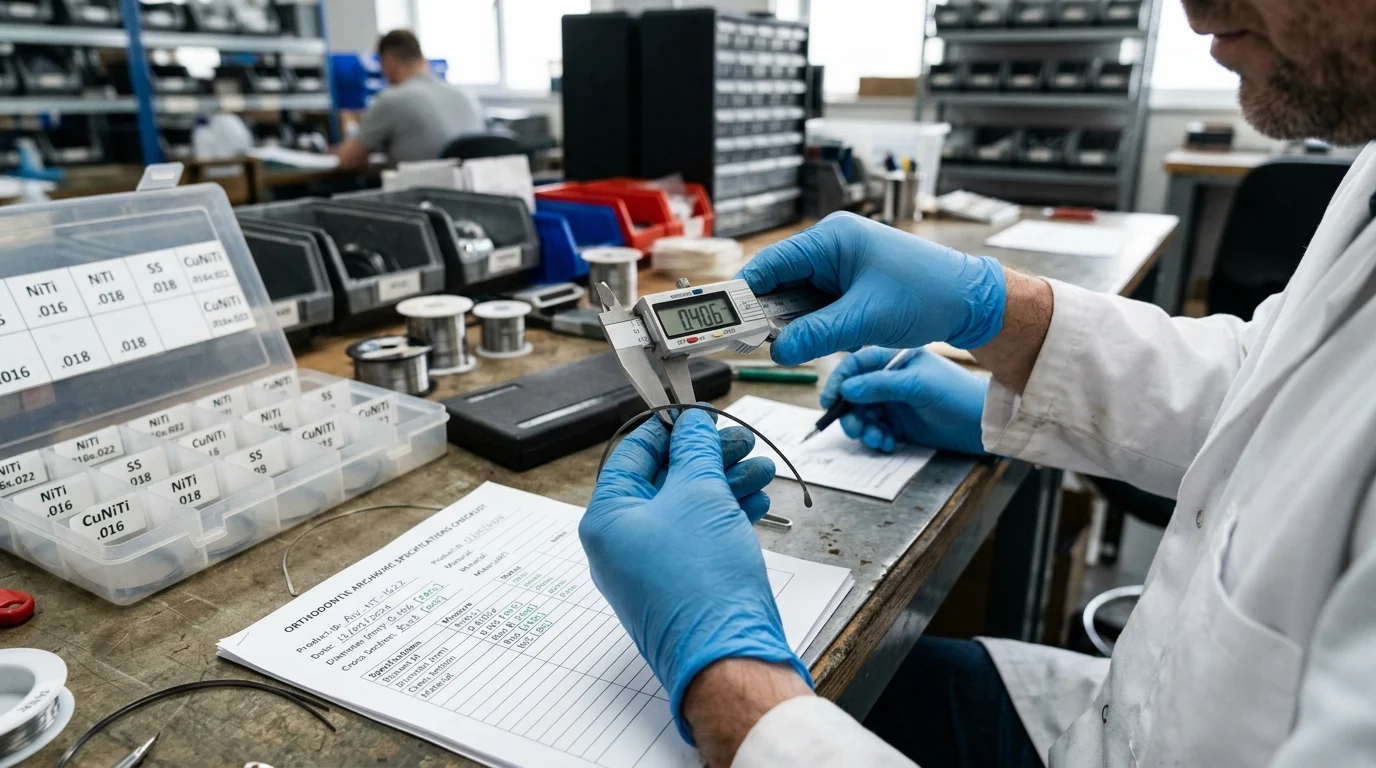
Clinical success in orthodontics hinges on the precise biomechanical properties of the arch wire. For distributors, understanding and comparing product specifications is vital for marketing the products effectively and ensuring they meet the stringent demands of orthodontists.
A wire’s performance is dictated by a complex interplay of metallurgical composition, physical dimensions, and manufacturing treatments. Distributors must scrutinize these technical data sheets to separate premium medical-grade products from substandard alternatives.
How material, dimensions, force delivery, and surface finish differ
The fundamental specifications to compare include dimensional accuracy, force delivery profiles, and surface finish. Dimensional tolerances are critical; a premium rectangular wire must maintain tolerances of ±0.0005 inches to ensure precise torque control within the bracket slot. Variations beyond this threshold lead to unpredictable tooth movement and extended treatment times.
Surface finish directly impacts sliding mechanics. A lower surface roughness (Ra value) reduces friction between the wire and the bracket. Top-tier manufacturers utilize advanced electropolishing techniques to achieve Ra values of less than 0.1 µm. Additionally, force delivery is evaluated through load-deflection curves, where consistent, continuous light forces are preferred to minimize patient discomfort and prevent root resorption.
How to compare stainless steel, nickel titanium, and beta titanium
Distributors must clearly articulate the differences between the three primary alloy families to their clinical clients. Stainless steel remains the industry standard for rigidity and formability, offering high yield strength necessary for maintaining arch form and closing extraction spaces.
Nickel Titanium (NiTi) is prized for its shape memory and superelasticity, allowing it to deliver continuous light forces over large deflections without permanent deformation. Beta Titanium offers a middle ground, providing roughly half the stiffness of stainless steel but twice that of NiTi, making it ideal for customized detailing where formability and moderate force are required.
| Material | Relative Stiffness | Formability | Friction Level | Primary Clinical Phase |
|---|---|---|---|---|
| Nickel Titanium (NiTi) | Low (Superelastic) | Poor | Moderate | Initial Leveling & Aligning |
| Beta Titanium (TMA) | Moderate | Good | High | Intermediate Detailing |
| Stainless Steel | High | Excellent | Low | Finishing & Space Closure |
How Should Distributors Assess Quality and Compliance
In the medical device industry, quality assurance and regulatory compliance are non-negotiable. Distributors bear a significant portion of the liability if non-compliant or defective products enter the market. Therefore, assessing a manufacturer’s quality management system is a mandatory phase of supplier qualification.
Stringent international standards govern the production of orthodontic components. A manufacturer’s ability to seamlessly document and prove compliance determines whether their products can legally cross borders and enter clinical settings.
What certifications, testing, and traceability to review
A baseline requirement for any orthodontic wire manufacturer is an active ISO 13485:2016 certification, which dictates the quality management systems for medical devices. Depending on the target market, distributors must also verify specific regional clearances, such as FDA Class I or Class II registrations for the United States, or CE marking under the Medical Device Regulation (MDR 2017/745) for the European Union.
Traceability is equally critical. Distributors should review the manufacturer’s ability to track raw material lots from the metallurgical foundry through to the final packaged product. Reputable suppliers maintain detailed device history records (DHR) and retain lot samples for a minimum of 5 to 10 years, ensuring that any adverse clinical events can be thoroughly investigated. For further insights into corporate compliance and manufacturing standards, distributors can review the supplier’s background via orthodontic wires company profiles.
How to verify batch consistency
Batch-to-batch consistency is the hallmark of a premium manufacturer. For superelastic NiTi wires, consistency is verified through Differential Scanning Calorimetry (DSC). This testing ensures that the Austenite finish (Af) temperature—the point at which the wire fully expresses its shape memory—remains strictly within the specified clinical range, typically between 27°C and 35°C.
Distributors should request batch testing reports and Certificates of Analysis (CoA) for incoming shipments. Validating consistency also involves mechanical testing, such as three-point bending tests, to ensure that the loading and unloading force plateaus match the published specifications across different production runs. A variance of more than 10% in force delivery between batches is a strong indicator of inadequate quality control.
What Sourcing, Pricing, and Logistics Factors Matter Most
Beyond technical specifications and clinical efficacy, the commercial viability of a distributor’s operation relies on favorable sourcing terms, optimized logistics, and strategic pricing models.
Managing cash flow and inventory turnover requires a delicate balance between ordering in sufficient bulk to secure competitive pricing and remaining agile enough to adapt to shifting market demands. Evaluating a manufacturer’s logistical capabilities is a critical step in building a profitable supply chain.
How MOQ, lead time, private label, and currency affect sourcing
Minimum Order Quantities (MOQs) and lead times heavily influence a distributor’s inventory strategy. Standard MOQs for custom or private-label orthodontic wires often range from 5,000 to 10,000 pieces per SKU. High MOQs can tie up capital, while lower MOQs might result in higher per-unit costs. Standard production lead times typically span 4 to 8 weeks; delays beyond this can severely disrupt a distributor’s fulfillment cycle.
Private labeling (OEM/ODM services) is a highly sought-after capability, allowing distributors to build brand equity in their regional markets rather than passing margin to established global brands. Additionally, currency fluctuations play a significant role in cross-border sourcing. Distributors must negotiate favorable payment terms—such as 30% advance and 70% upon bill of lading—and consider currency hedging strategies to protect margins against volatile exchange rates.
What steps help qualify suppliers
Qualifying a new supplier requires a structured, multi-step approach to mitigate risk. The process should begin with a comprehensive desktop audit of the manufacturer’s facility certifications and financial stability, followed by requesting a small batch of initial samples for independent laboratory testing.
Once technical specifications are validated, distributors should conduct a pilot order—typically 10% to 20% of a standard commercial volume—to assess the manufacturer’s communication, packaging integrity, and adherence to promised lead times before committing to an annual supply contract.
| Sourcing Metric | Standard Industry Range | Impact on Distributor Operations |
|---|---|---|
| Minimum Order Quantity (MOQ) | 1,000 – 10,000 units/SKU | Determines capital lock-up and inventory holding costs |
| Production Lead Time | 4 – 8 weeks | Affects safety stock levels and stockout risks |
| Defect Rate Tolerance | < 0.5% | Impacts clinical trust and reverse logistics costs |
| Payment Terms | 30% Net / 70% BOL | Influences cash flow and working capital flexibility |
How to Choose the Right Orthodontic Wire Supplier
Selecting the ideal orthodontic wire manufacturer is a strategic decision that requires balancing product quality, regulatory readiness, and commercial alignment.
Distributors must look beyond the initial unit price and evaluate the total cost of ownership, which includes shipping logistics, import duties, quality control overhead, and the ease of ongoing communication with the supplier.
How to weigh technical fit and regional compliance
A successful partnership requires matching the manufacturer’s technical capabilities with the specific regulatory demands of the distributor’s target region. For instance, a supplier offering highly innovative, proprietary multi-force NiTi wires might be an excellent technical fit, but if they lack the stringent technical documentation required for EU MDR compliance, they cannot serve a European distributor.
Regional compliance extends to packaging and labeling as well. Manufacturers must be capable of providing compliant UDI (Unique Device Identification) barcodes and multi-language instructions for use (IFU). Distributors must ensure the supplier possesses the regulatory agility to adapt to evolving compliance landscapes without disrupting the supply chain. Establishing clear communication channels is vital; distributors can initiate these technical discussions by reaching out through official channels to inquire about orthodontic wires.
What decision framework supports supplier selection
To objectify the selection process, distributors should employ a weighted scorecard framework. A standard industry approach might assign a 40% weight to quality and compliance (certifications, defect rates below 0.5%, material traceability), 30% to commercial terms (unit pricing, MOQ flexibility, payment terms), and 30% to logistics and support (lead times, communication responsiveness, private label capabilities).
By utilizing a standardized decision matrix, distributors can systematically compare multiple manufacturing candidates, filter out high-risk suppliers, and forge long-term partnerships that guarantee consistent clinical performance and sustained commercial profitability.
Further reading:
Key Takeaways
- The most important conclusions and rationale for orthodontic wires
- Specs, compliance, and risk checks worth validating before you commit
- Practical next steps and caveats readers can apply immediately
Frequently Asked Questions
What orthodontic wire types should global distributors stock?
Prioritize NiTi for initial alignment, stainless steel for space closure and finishing, and beta titanium for detailing. Add coated aesthetic options to cover adult-patient demand.
How can distributors compare arch wire quality quickly?
Check alloy consistency, dimensional tolerance, force-delivery data, and surface finish. For premium rectangular wires, look for tight tolerances and smooth electropolished surfaces to improve sliding mechanics.
Why does manufacturer stability matter for orthodontic wire distributors?
Stable manufacturers reduce stockout risk, protect clinic relationships, and support predictable 30–60 day replenishment cycles. This directly helps distributors maintain margins and service levels.
What specifications do clinics care about most in arch wires?
Clinics usually focus on force consistency, accurate dimensions, low friction, and reliable arch form. These factors affect treatment efficiency, comfort, and torque control.
Where can distributors review DenRotary orthodontic wire options?
Distributors can review DenRotary’s orthodontic product range at https://www.denrotary.com/products/ and compare wire categories, specifications, and portfolio breadth for their target markets.

Post time: Jun-07-2026