


Introduction
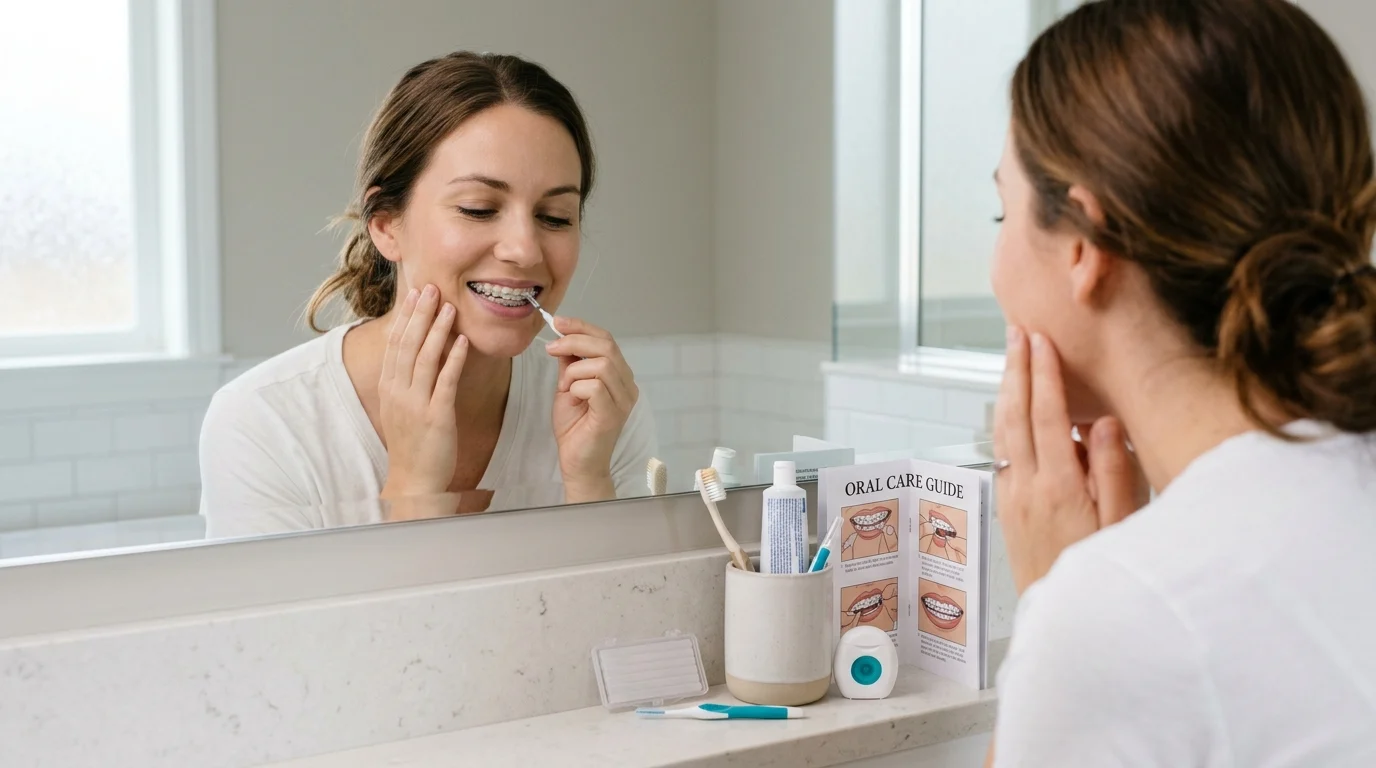
Braces change more than the position of teeth—they also make cleaning harder, increase the risk of plaque buildup, and leave brackets and wires vulnerable to damage. Good maintenance is essential not only for oral health, but also for keeping treatment on schedule and avoiding unnecessary repairs. This guide explains the daily habits that matter most, from cleaning techniques and food choices to spotting early signs of irritation or appliance problems. By understanding how small routines affect tooth movement, gum health, and overall treatment time, patients can take a more active role in achieving a safe, efficient, and predictable orthodontic result.
Why an orthodontic care guide matters
A comprehensive orthodontic care guide serves as the foundation for successful treatment, bridging the gap between clinical adjustments and daily patient habits. When patients undergo fixed appliance therapy, the physical presence of brackets and wires fundamentally alters the oral environment. Without strict adherence to maintenance protocols, patients risk compromising both their dental health and the mechanical efficiency of their braces.
The primary objective of a structured care regimen is to prevent decalcification, periodontal inflammation, and hardware damage. By understanding the biomechanical and biological demands of orthodontic appliances, patients can actively participate in their treatment, ensuring that the final functional and aesthetic outcomes meet clinical expectations.
Daily habits and treatment timeline
Orthodontic treatment typically spans a timeline of 18 to 24 months, but this duration is highly dependent on daily patient habits. Consistent oral hygiene and hardware protection keep the teeth moving according to the orthodontist’s calculated schedule. Conversely, poor daily maintenance can halt progress entirely.
Clinical data indicates that frequent bracket breakages or severe gingival inflammation can extend treatment times by an average of 3 to 6 months. When gums become swollen due to plaque accumulation, teeth move more slowly through the bone. A daily routine that prioritizes thorough plaque removal and appliance protection is therefore directly correlated with shorter, more efficient treatment timelines.
Common patient mistakes to avoid
One of the most frequent patient errors is treating orthodontic hygiene the same as baseline dental care. Patients often mistakenly believe that standard twice-daily brushing is sufficient, ignoring the complex architecture of their braces that traps food particles.
Another critical mistake is disregarding dietary restrictions. Orthodontic practices report a 10% to 15% bracket failure rate largely attributed to patients consuming hard, crunchy, or excessively sticky foods. Each time a bracket is sheared off a tooth, the tension on the archwire is lost, and the tooth ceases to move correctly until the hardware is professionally repaired.
Braces components and care basics
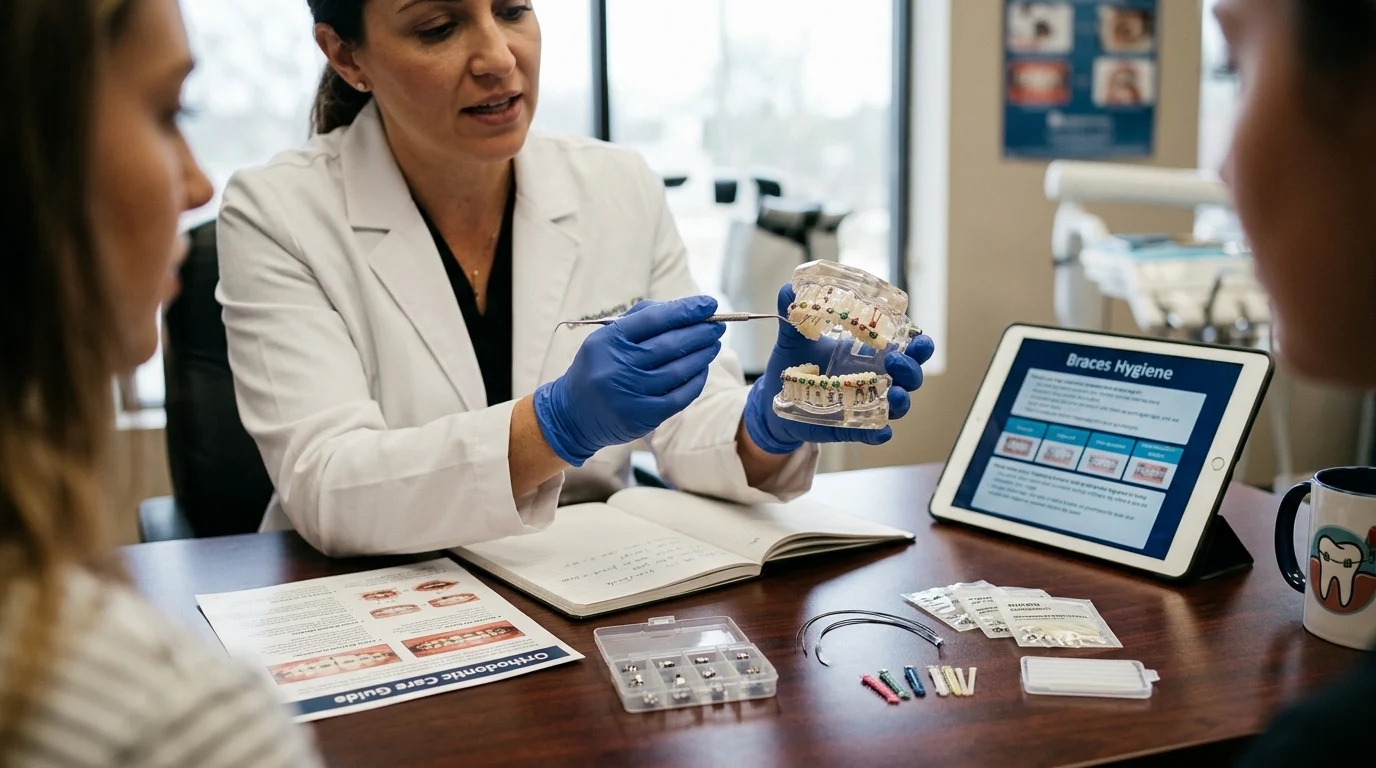
Understanding the anatomy of fixed appliances is crucial for effective maintenance. Traditional braces consist of several interconnected components, each requiring specific cleaning techniques and daily attention. Recognizing how these parts function helps patients visualize where debris accumulates and why targeted cleaning is non-negotiable.
Parts of fixed braces that need attention
The primary components of fixed braces include brackets, archwires, molar bands, and ligatures. Brackets are bonded directly to the enamel, creating microscopic niches that can increase plaque retention by up to 300% compared to a bare tooth surface. Archwires run through the bracket slots, applying the continuous force necessary for tooth movement, but they also act as physical barriers to standard toothbrush bristles.
Molar bands encircle the back teeth to anchor the appliance, while ligatures—either tiny rubber O-rings or fine tie wires—secure the archwire into the brackets. Every junction where these components meet represents a high-risk zone for bacterial colonization. Patients must meticulously clean around the bracket bases and underneath the archwire to prevent long-term enamel damage.
How plaque, wires, and elastics affect care
Plaque is the most significant biological threat during orthodontic treatment. If allowed to stagnate around brackets and under wires, the bacteria in plaque produce acids that strip minerals from the enamel. This demineralization results in white spot lesions, which permanently scar the teeth and occur in roughly 50% of non-compliant orthodontic patients.
Additionally, the integrity of elastomeric components dictates treatment efficacy. Rubber bands and power chains absorb moisture, trap bacteria, and undergo mechanical fatigue. Intraoral elastics lose up to 30% of their elasticity within the first 12 to 24 hours of use. Patients must change removable elastics exactly as prescribed—often three to four times a day—to maintain consistent orthodontic force and prevent bacterial buildup on degrading rubber.
Braces maintenance tips for hygiene and breakage prevention
A proactive approach to braces maintenance combines rigorous hygiene practices with conscious lifestyle choices. Preventing appliance breakage and maintaining pristine oral health requires a strategic, step-by-step methodology that addresses the unique challenges posed by fixed orthodontic hardware.
Step-by-step cleaning routine
An effective cleaning routine must dismantle the plaque biofilm that rapidly forms around orthodontic hardware. Patients should brush for a minimum of 2 minutes, at least three times a day, ideally within 30 minutes after every meal.
The mechanical technique is just as important as the duration. Using a soft-bristled brush, patients must angle the bristles at 45 degrees toward the gumline to clear the cervical margins, then angle them downward from the top of the bracket and upward from the bottom. Following standard brushing, interdental tools must be deployed to clean the spaces between the teeth and underneath the archwire, areas where standard bristles cannot penetrate.
Foods and habits to avoid
Dietary modifications are a cornerstone of breakage prevention. The shear strength of orthodontic bonding composite is designed to withstand normal chewing forces, but it cannot survive the localized stress of crushing ice or biting into hard candies.
| Food Category | High-Risk Items to Avoid | Safe Alternatives |
|---|---|---|
| Hard Foods | Ice, nuts, popcorn kernels, hard candies | Soft cooked vegetables, seedless bread |
| Sticky Foods | Caramel, chewing gum, taffy, gummies | Yogurt, applesauce, smoothies |
| Tough Foods | Jerky, hard pizza crust, whole apples | Thinly sliced meats, cut fruit, soft grains |
Patients must also eliminate habits such as nail-biting or chewing on pens, which exert unpredictable lateral forces on brackets and frequently result in emergency repair visits.
Warning signs to monitor
Early detection of hardware issues or biological complications can prevent minor issues from escalating. Patients should perform a visual inspection of their braces daily, looking for loose brackets that slide along the wire or ligatures that have snapped off.
Biologically, warning signs include persistent gingival bleeding, severe swelling, or localized pain that does not subside. While minor bleeding may occur when first adapting to interdental brushing, bleeding that persists beyond 7 to 10 days indicates localized gingivitis requiring immediate improvement in plaque removal techniques. Poking wires that cause mucosal ulcerations should be covered with orthodontic wax until a clinical adjustment can be made.
Tools and products for braces care
The efficacy of mechanical plaque removal depends heavily on the tools utilized. Navigating the consumer market for orthodontic hygiene aids can be overwhelming, making a reliable orthodontic care guide essential for selecting products that maximize compliance and cleaning efficiency.
Comparing toothbrushes and interdental tools
Patients must choose between manual and electric toothbrushes, both of which can be effective if used correctly. However, sonic or oscillating electric toothbrushes—operating at 30,000 to 40,000 strokes per minute—consistently demonstrate superior plaque removal around brackets compared to manual brushing.
| Tool Type | Primary Function | Recommended Replacement Cycle |
|---|---|---|
| Orthodontic Toothbrush | Broad surface and bracket cleaning | Every 3 months (or when frayed) |
| Interdental Brushes | Scrubbing beneath the archwire | Every 1 to 2 weeks |
| Floss Threaders | Pulling floss between tight contacts | Single use |
| Oral Irrigator (Water Flosser) | Flushing loose debris and bacteria | Device: 3-5 years / Tips: 6 months |
Oral irrigators are particularly valuable adjuncts. While they do not replace the mechanical scraping action of traditional floss, clinical studies show that adding a water flosser to a daily routine can remove up to 99% of loose plaque biofilm from treated areas.
Cost, ease of use, and compliance
The cost of orthodontic hygiene tools varies significantly, and patients must balance their budget with the ease of use that drives daily compliance. Basic manual tools like floss threaders and interdental brushes cost between $5 and $15 per month, offering a highly cost-effective, though labor-intensive, solution.
Conversely, investments in electric toothbrushes and oral irrigators range from $50 to $150 upfront. Despite the higher initial cost, these automated tools dramatically reduce the time and manual dexterity required to clean complex hardware. Given that patient compliance with traditional orthodontic flossing hovers around a mere 60%, investing in easier-to-use automated tools often yields better long-term clinical outcomes and prevents costly dental restorations post-treatment.
Using the guide in daily life
Translating clinical advice into daily execution requires organization and discipline. Integrating braces maintenance into a busy lifestyle ensures that treatment progresses smoothly, regardless of whether a patient is at home, at work, or traveling.
Daily, weekly, and travel checklists
A structured checklist helps patients maintain consistency. Daily tasks must include three distinct brushing sessions, one comprehensive flossing session, and the application of prescribed elastics. Weekly tasks should involve a thorough visual inspection of all hardware using a well-lit mirror to ensure no brackets have debonded.
Travel requires additional preparation. Patients should assemble a portable care kit containing a travel-sized toothbrush, a compact mirror, interdental brushes, orthodontic wax, and spare elastics. Having these tools readily available prevents a 12-hour travel day from turning into a critical lapse in oral hygiene or a painful experience with a protruding wire.
When home care is enough and when to call the orthodontist
Understanding the threshold between normal orthodontic discomfort and a clinical emergency prevents unnecessary panic and ensures timely professional intervention. It is normal to experience a dull, aching pressure that peaks 24 to 48 hours after a wire adjustment and subsides within 3 to 5 days. This discomfort can be effectively managed at home with over-the-counter analgesics and soft diets.
However, structural failures require professional attention. A loose bracket that is not causing pain can often wait a few days for repair, but a snapped archwire or a bracket that is actively lacerating the cheek necessitates a prompt clinical visit. Patients experiencing severe, unmanageable pain or hardware failures that halt treatment progress should immediately consult their provider, referencing their orthodontic care guide for emergency protocols.
Further reading:
Key Takeaways
- The most important conclusions and rationale for orthodontic care guide
- Specs, compliance, and risk checks worth validating before you commit
- Practical next steps and caveats readers can apply immediately
Frequently Asked Questions
How often should I brush with braces?
Brush after every meal and before bed, ideally for 2 minutes each time. Focus on the gumline, around each bracket, and under the archwire to reduce plaque and white spot lesions.
What foods should I avoid while wearing braces?
Skip hard, crunchy, and sticky foods like popcorn, nuts, hard candy, and chewing gum. Choose softer foods and cut firm items into small pieces to prevent broken brackets and delayed treatment.
How can I clean around wires and brackets more effectively?
Use a soft orthodontic toothbrush, interdental brush, and floss threader or water flosser daily. Clean above and below the wire, especially around bracket edges and molar bands where debris collects.
What should I do if a bracket or wire breaks?
Contact your orthodontic provider as soon as possible for repair advice or an appointment. Until then, cover a poking wire with orthodontic wax and avoid touching or bending the appliance.
How often should I change my elastics if prescribed?
Change removable elastics exactly as directed, often 3 to 4 times a day. Fresh elastics keep force consistent and help your teeth move on schedule without unnecessary treatment delays.

Post time: Jun-29-2026