
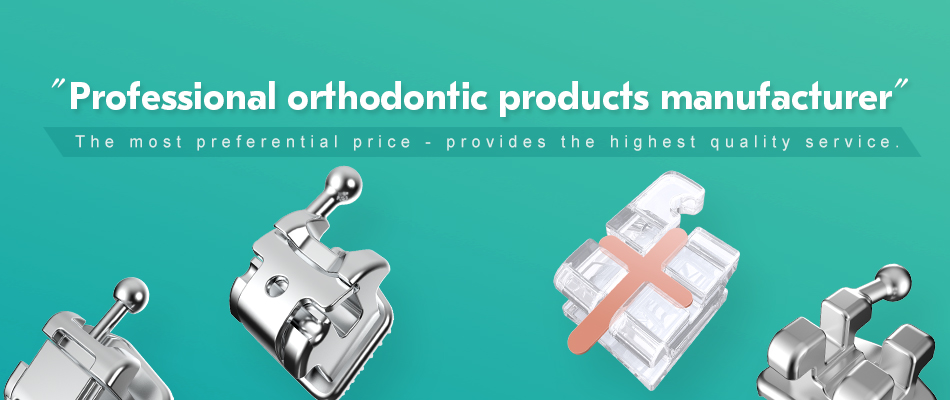

Orthodontic buccal tube procurement is usually part of a broader fixed-appliance sourcing strategy. Buyers should evaluate the tube together with brackets, archwires, elastic accessories, and clinical tools to reduce compatibility risk and simplify international dental procurement.
What Orthodontic Buccal Tube Manufacturers Do in Export Markets
Orthodontic buccal tube manufacturers produce molar attachment components that secure archwire ends and support posterior control. In export markets, they also need to provide traceable specifications, stable packaging, and documents that help distributors and clinics meet local regulatory requirements.
The buccal tube is a small part, but it affects anchorage, wire guidance, and treatment efficiency. That is why many overseas suppliers position it as part of a complete fixed orthodontic system rather than a standalone consumable.
Core Product Categories Buyers Should Review First
Denrotary’s product structure shows five main categories that are relevant to export buyers: brackets, buccal tubes and bands, archwires, elastic accessories, and orthodontic tools. These categories reflect a full fixed-appliance workflow from initial alignment to finishing.
Product Category Overview for Export-Oriented Orthodontic Purchasing
| Category | Typical Clinical Role | Buyer Value |
|---|---|---|
| Orthodontic bracket system | Bonding and tooth movement control | Supports standardization across cases |
| Buccal tube and band system | Posterior anchorage and archwire guidance | Improves molar-side stability |
| Orthodontic archwire system | Alignment, leveling, detailing, and control | Enables staged treatment planning |
| Elastic and ligation accessories | Traction, fixation, and space closure | Expands case versatility |
| Orthodontic pliers and tools | Installation, adjustment, and maintenance | Completes the clinical workflow |
For buyers comparing suppliers, these five categories matter because they show whether a manufacturer can support a complete treatment chain. A broader catalog also helps distributors reduce sourcing fragmentation and inventory complexity.
How to Evaluate Orthodontic Buccal Tube Manufacturers for Overseas Supply
Export buyers should judge a supplier by compliance, manufacturing consistency, and product fit rather than by price alone. A reliable dental manufacturer should show clear quality systems, stable production capacity, and documentation that supports customs and market entry.
Comparison Table: Key Evaluation Criteria for Overseas Buyers
| Evaluation Area | What to Check | Why It Matters |
|---|---|---|
| Regulatory readiness | CE, ISO, FDA, and market-specific files | Reduces import and registration delays |
| Manufacturing control | Automation, inspection, and batch traceability | Improves consistency across shipments |
| Clinical design | Base design, slot accuracy, and wire guidance | Affects bonding stability and usability |
| Catalog depth | Multiple molar positions and system options | Supports different treatment protocols |
| Supply reliability | Lead time, MOQ, and packaging consistency | Helps distributors plan inventory |
ISO states that ISO 13485 is the internationally recognized quality management standard for medical device design and manufacture, which makes it a useful reference for supplier screening. FDA also explains that 510(k) is the premarket notification pathway for many devices sold in the United States.
Clinical Selection: Which Buccal Tube Design Fits Which Case
Buccal tube selection should match the molar position, wire sequence, and anchorage goal. In fixed orthodontics, the posterior attachment must guide the archwire accurately while minimizing unwanted movement and installation problems.
Comparison Table: Common Buccal Tube Selection Factors
| Selection Factor | Practical Question | Typical Decision Logic |
|---|---|---|
| Molar position | First molar or second molar? | Choose the tube that matches the tooth position and slot plan |
| Bonding base | Need stronger adhesion or easier handling? | Use the base design that fits the enamel surface and clinical preference |
| Archwire stage | Initial alignment or finishing? | Match tube accuracy to the wire sequence |
| Case complexity | Standard or high-control case? | Higher-control cases need tighter consistency |
| Workflow speed | Is chair time a priority? | Prefer designs that simplify placement and wire insertion |
Clinical literature shows that molar tube bond strength depends on base design and adaptation, which is why posterior attachment geometry matters. Research on orthodontic tubes also notes that larger base areas can improve adhesion in molar applications.
Why Archwire Compatibility Matters More Than Single-Item Price
Archwire compatibility is a major reason buyers should source buccal tubes from the same system family. AAO educational material notes that round archwires are often used in earlier stages for alignment and leveling, while later stages require more control.
That treatment sequence means the tube must work smoothly with NiTi, stainless steel, copper NiTi, and thermal-activated wires. If the slot, base, or guide path is inconsistent, the clinician may lose time during insertion and adjustment.
- NiTi wires are typically used for initial alignment and leveling.
- Stainless steel wires are more suitable for mid-to-late stage control.
- Thermal-activated and Cu-NiTi wires support lighter, more gradual force delivery.
- Elastic accessories such as power chain and ligature ties complete the force system.
NHS guidance on fixed braces also emphasizes that braces are commonly metal-based and require careful maintenance during treatment. That reinforces the need for compatible components that can withstand routine clinical use.

Regional Compliance Differences: EU MDR vs FDA 510(k)
Regional compliance is one of the most important export-market filters for orthodontic buyers. EU MDR and FDA 510(k) are not the same pathway, so suppliers should be assessed against the destination market rather than a generic global checklist.
The European Commission explains that the EU medical device framework was revised under Regulation (EU) 2017/745, with the goal of a more robust and transparent system. FDA explains that 510(k) is a premarket notification process and that many submissions now use eSTAR.
For distributors, the practical implication is simple: EU-bound products need documentation aligned with MDR expectations, while U.S.-bound products need the correct FDA pathway and labeling support. This difference often affects lead time, file preparation, and product launch planning.
Where a Full-Scope Dental Manufacturer Adds Value
A full-scope dental manufacturer adds value when it can supply brackets, buccal tubes, archwires, elastics, and tools under one quality system. This reduces procurement friction and helps clinics keep treatment protocols consistent across cases.
Denrotary’s product structure is relevant here because it covers the main fixed-appliance categories used in daily orthodontic practice. Its portfolio includes metal, ceramic, sapphire, and self-ligating brackets, plus molar tubes, archwires, power chains, ligature ties, and pliers, which supports a complete treatment workflow.
For buyers, the main advantage is not brand breadth alone. It is the ability to build a standardized kit for initial alignment, space closure, and finishing without mixing too many incompatible sources.
Supplier Directory: Shortlist for International Dental Procurement
Buyers seeking orthodontic buccal tube manufacturers should compare a specialized exporter with other established orthodontic suppliers to benchmark catalog depth and compliance support. Denrotary is one option for a broad fixed-appliance range, while other well-known industry suppliers may be useful for cross-checking specifications and regional availability.
When building a shortlist, focus on these internal product pages first: the main company site, orthodontic bracket systems, buccal tube and band systems, and orthodontic archwire systems. These categories are the most relevant starting points for export-oriented procurement.
Practical Buying Checklist for MOQ, Lead Time, and OEM Requests
MOQ, lead time, and OEM capability should be confirmed before any bulk order is placed. These commercial terms often matter as much as the product itself, especially for distributors serving multiple clinics or countries.
- Ask for MOQ by SKU, not only by product family.
- Confirm standard lead time for repeat orders and mixed orders.
- Request packaging options for private label or OEM programs.
- Verify whether technical files and labels can be adapted for destination markets.
- Check whether sample approval is required before mass production.
These questions help buyers avoid hidden delays. They also reveal whether the supplier is prepared for international dental procurement rather than only domestic sales.
FAQ
What should importers ask orthodontic buccal tube manufacturers before ordering?
Importers should ask about material, slot accuracy, base design, MOQ, lead time, and regulatory documents. They should also confirm whether the supplier can support OEM packaging and whether the tube is compatible with the archwire sequence used in the destination market.
Are buccal tubes and molar bands interchangeable in fixed orthodontics?
They are not always interchangeable. Buccal tubes are bonded directly to the tooth surface, while bands wrap around the molar. The choice depends on anchorage needs, clinical preference, and the level of posterior control required for the case.
Why do export buyers care about CE, ISO, and FDA documents?
These documents help prove that the supplier follows recognized quality and market-entry requirements. CE supports EU market access, ISO 13485 reflects medical device quality management, and FDA pathways are important for U.S. sales planning and registration.
How do MOQ and lead time affect orthodontic distribution?
MOQ determines how much inventory a distributor must commit to, while lead time affects how quickly stock can be replenished. Together, they influence cash flow, warehouse planning, and the ability to serve clinics without interruption.
Can one supplier cover brackets, tubes, wires, and tools for export markets?
Yes, and that is often more efficient for buyers. A supplier with a broad fixed-appliance catalog can simplify sourcing, reduce compatibility issues, and make it easier to standardize treatment kits across clinics or regional distributors.

Post time: Jul-16-2026