


Introduction
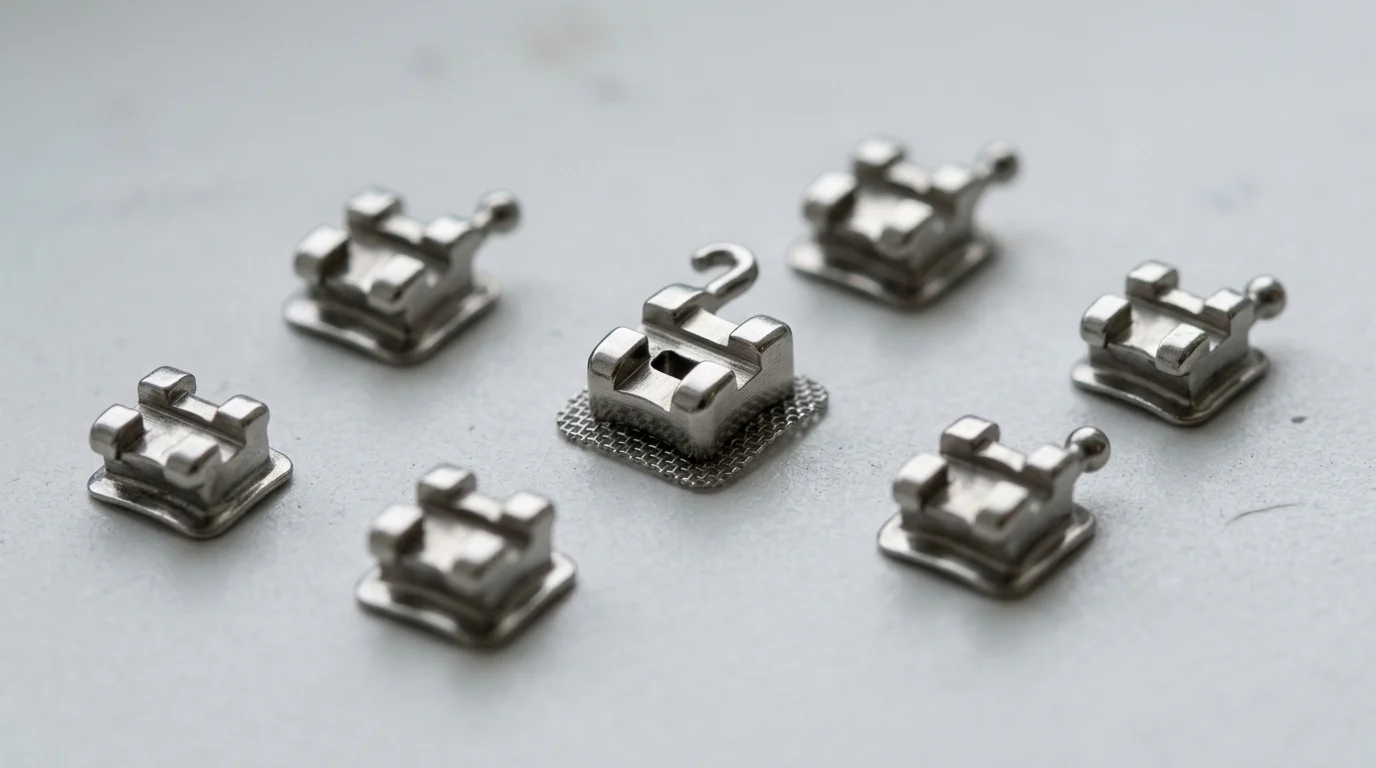
Precise buccal tube placement affects molar control, archwire tracking, and the frequency of bond failures throughout treatment. This guide outlines how to choose the right tube design, identify reliable bonding landmarks, and position the attachment to support efficient mechanics while limiting occlusal interference and soft-tissue irritation. You will also see the clinical factors that influence retention, including enamel preparation, base adaptation, and common placement errors that can compromise rotation, tip, or torque expression. With these fundamentals in place, the rest of the article moves into practical placement principles and decision points for predictable day-to-day orthodontic use.
Why orthodontic buccal tubes still matter in modern molar treatment
The evolution of fixed appliances has significantly altered molar anchorage protocols in contemporary dental practices. While traditional molar bands were once the absolute standard for posterior control, bonded attachments have largely superseded them in routine clinical orthodontics. This transition reflects an industry-wide prioritization of patient comfort, periodontal health, and operational efficiency without compromising biomechanical control.
Impact on bond reliability and chairside efficiency
Replacing molar bands with direct-bonded tubes yields measurable improvements in chairside efficiency and patient throughput. Clinical data indicates that eliminating the interproximal separation and band-fitting processes reduces initial bonding time by approximately 15 to 20 minutes per arch. Furthermore, modern adhesives and contoured base designs ensure that shear bond strength reaches the clinically acceptable threshold of 6 to 8 MPa. This strength is entirely sufficient to withstand standard masticatory forces and heavy archwire engagement without premature debonding, matching the reliability previously associated only with full-coverage bands.
Clinical and market trends shaping tube selection
Prevailing clinical trends emphasize low-profile designs to minimize occlusal interference and mucosal irritation. Manufacturers increasingly utilize Metal Injection Molding (MIM) to create seamless, highly contoured orthodontic buccal tubes that closely mimic the complex buccal anatomy of first and second molars. Current market data suggests that over 70% of non-surgical orthodontic cases now utilize direct-bonded tubes over traditional bands. This shift is further accelerated by advancements in self-ligating mechanisms and convertible cap features, which streamline wire changes and reduce friction during sliding mechanics.
Specifications that define orthodontic buccal tubes in daily practice
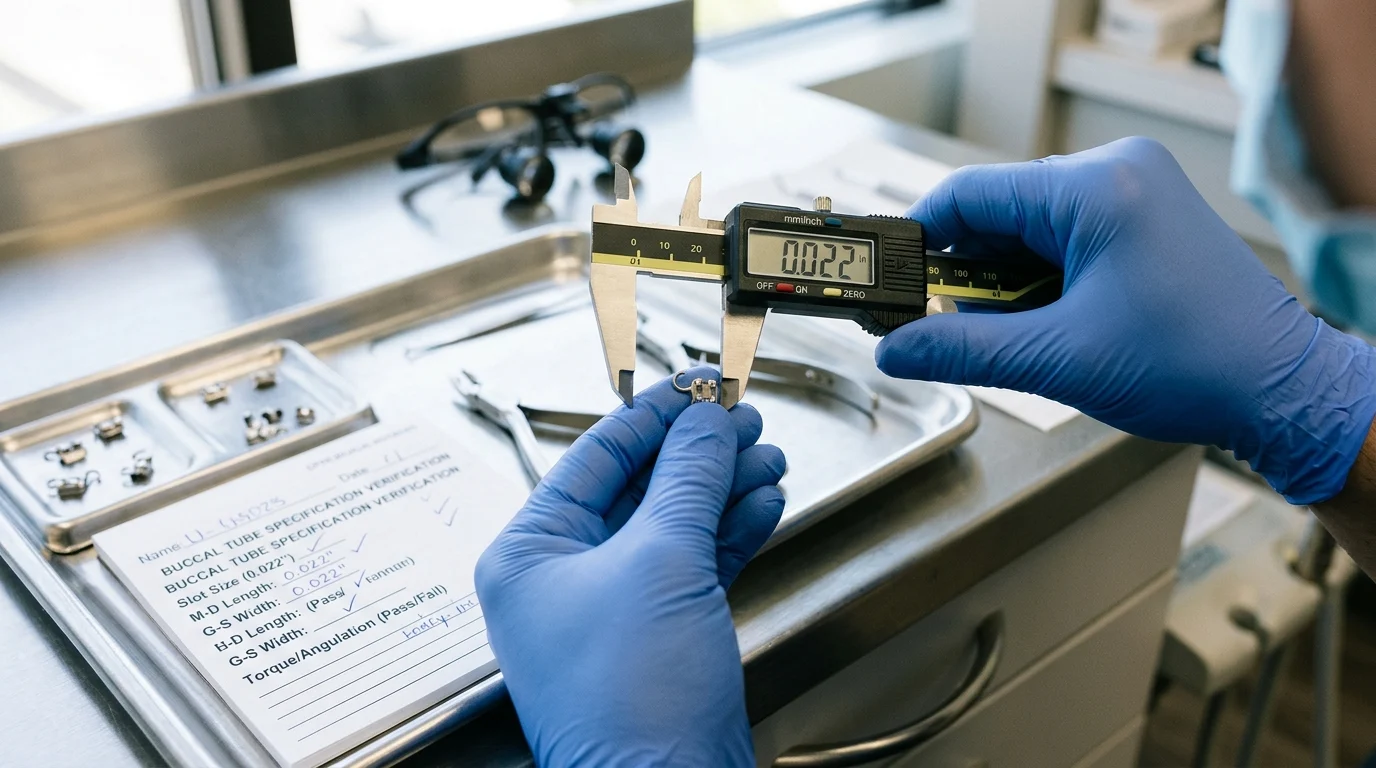
Selecting the appropriate tube requires a thorough understanding of mechanical specifications. The geometric and metallurgical properties of the tube directly dictate the expression of torque, tip, and rotation during the critical finishing phases of treatment.
How to evaluate design features and slot options
Slot dimensions remain the primary functional specification, with clinicians universally choosing between 0.018-inch and 0.022-inch systems based on their preferred treatment philosophy. Trumpeted or funneled mesial openings are critical design features, expanding the insertion aperture by up to 30% to facilitate the engagement of resilient NiTi archwires in posterior segments. Additionally, base retention mechanisms typically feature an 80-gauge foil mesh or a micro-etched surface, maximizing the physical surface area available for mechanical interlocking with the composite resin.
Bonded vs banded buccal tubes
While bonded tubes dominate standard comprehensive cases, banded tubes remain indispensable for specific biomechanical demands. Banded setups are strictly indicated when heavy orthopedic forces are applied, such as with rapid palatal expanders (RPE), Herbst appliances, or heavy extraoral traction. Bonded tubes, conversely, eliminate the need for interproximal separation, significantly improving interdental hygiene and drastically reducing the risk of decalcification around the molar gingival margins.
Indications, limitations, and comparison points
To systematically contrast these two modalities, practitioners must evaluate force tolerance, periodontal impact, and workflow requirements.
| Feature | Direct-Bonded Tubes | Banded Tubes |
|---|---|---|
| Force Tolerance | Moderate (6-10 MPa) | High (>15 MPa equivalent) |
| Periodontal Hygiene | Excellent (no interproximal metal) | Poor to Fair (plaque accumulation risk) |
| Chair Time | Low (direct application) | High (requires separators and fitting) |
| Primary Indication | Routine leveling and alignment | Heavy orthopedic/auxiliary forces |
By referencing these comparison points alongside patient-specific data, orthodontists can procure the correct orthodontic buccal tubes to match their clinical objectives.
How to place orthodontic buccal tubes for consistent results
The clinical success of direct-bonded molar attachments relies heavily on a stringent, moisture-controlled placement protocol. Even premium components will fail to perform if the adhesive interface is compromised during the initial bonding sequence.
Step-by-step placement protocol
The standard placement protocol begins with thorough prophylaxis, followed by etching the buccal enamel with 37% phosphoric acid for 15 to 30 seconds. After thorough rinsing and drying to achieve a characteristic chalky white enamel appearance, a moisture-tolerant primer is applied. The tube, loaded with a highly filled orthodontic resin, is positioned using reverse-action tweezers. Once seated and the excess flash is meticulously removed from the margins, the adhesive is polymerized using an LED curing light emitting a minimum irradiance of 1000 mW/cm² for 10 to 20 seconds, depending on the adhesive manufacturer’s specifications.
Common placement errors and debonding risks
The most frequent catalyst for premature debonding is moisture or salivary contamination during the bonding sequence, which can degrade shear bond strength by more than 50%, often dropping it below the critical 3 MPa threshold. Another major error involves improper vertical positioning. Placing the tube just 1.0 mm too far gingivally or occlusally will introduce unintended torque and vertical discrepancies, eventually requiring compensatory wire bending or complete bracket repositioning later in the treatment cycle.
Repositioning, replacement, and finishing adjustments
When a tube fails or is poorly positioned, complete replacement is generally preferred over recycling. If a tube must be repositioned, all residual composite must be ground away using a fluted tungsten carbide bur at low speeds (under 20,000 RPM) to protect the enamel structure. The enamel is then re-etched and primed. Clinicians should carefully verify that the new tube aligns correctly with the marginal ridges and the buccal developmental groove to ensure predictable finishing adjustments and proper intercuspation.
Compliance, materials, and procurement considerations
Managing the supply chain for orthodontic components involves balancing material integrity, regulatory compliance, and inventory efficiency. Consistent clinical outcomes demand high predictability in manufacturing and procurement.
Material quality, tolerances, and sterilization
High-tier tubes are predominantly fabricated from 17-4 PH (precipitation-hardening) stainless steel, known for its exceptional corrosion resistance and high yield strength. Manufacturing tolerances for slot dimensions must remain highly stringent, typically within ± 0.001 inches, to prevent excessive wire play and the subsequent loss of torque control. While the tubes themselves are supplied non-sterile for single patient use, the manufacturing environment must adhere to strict bioburden controls prior to packaging, and associated placement instruments must be fully autoclavable up to 134°C.
How to compare suppliers and product options
When evaluating suppliers, procurement managers should scrutinize physical defect rates, which should strictly fall below a 1% threshold to prevent chairside delays. Minimum Order Quantities (MOQs) typically range from 10 to 100 units per pack, allowing practices to scale their inventory based on case volume.
| Evaluation Metric | Standard Requirement | Clinical/Business Impact |
|---|---|---|
| Slot Tolerance | ± 0.001 inches | Predictable torque expression |
| Base Retention | 80-gauge mesh or laser-etched | Minimizes debonding appointments |
| Defect Rate | < 1.0% | Reduces wasted chair time and materials |
| Certification | ISO 13485 / FDA Class II | Ensures legal compliance and safety |
Utilizing these standardized metrics ensures that practices partner only with reliable vendors capable of supporting high-volume clinical workflows.
Regulatory, documentation, and inventory factors
Regulatory documentation is non-negotiable in modern dental procurement. Quality suppliers must provide CE marking or FDA 510(k) clearance documentation, alongside strict lot tracking protocols. This tracking ensures that in the rare event of a metallurgical failure or recall, the exact batch can be isolated immediately. Effective inventory management also dictates maintaining a minimum of a four-week buffer stock of orthodontic buccal tubes to mitigate unforeseen global supply chain disruptions.
A practical framework for choosing the right orthodontic buccal tube
Formulating a standardized procurement and clinical strategy for molar attachments streamlines daily practice operations. The final selection process must synthesize mechanical requirements with practice management economics.
Matching tube choice to case complexity and system compatibility
The choice of tube must align perfectly with the practice’s overarching bracket prescription, whether MBT, Roth, or a customized system. For example, a standard Roth maxillary first molar tube incorporates -14 degrees of torque and 14 degrees of distal offset. Using an incompatible tube can introduce conflicting forces, extending treatment time and complicating the finishing phase. Furthermore, clinicians must select between single, double, or triple tubes based on case complexity, specifically anticipating the use of headgear, lip bumpers, or auxiliary wires.
Balancing performance, cost, and workflow
Economically, the cost of bonded tubes spans a wide band, typically ranging from $3.00 to $15.00 per unit depending on the alloy, manufacturing technique, and advanced features like convertible caps. While premium tubes sit at the higher end of this cost band, the investment is rapidly offset if the superior mesh base prevents even one debonding appointment—which costs an average practice $75 to $100 in overhead and lost chair time. Balancing these performance metrics against upfront procurement costs ensures an efficient, profitable, and clinically successful orthodontic workflow.
Further reading:
Key Takeaways
- The most important conclusions and rationale for orthodontic buccal tubes
- Specs, compliance, and risk checks worth validating before you commit
- Practical next steps and caveats readers can apply immediately
Frequently Asked Questions
When should I choose bonded buccal tubes instead of molar bands?
Use bonded buccal tubes for routine leveling and alignment when you want faster placement, easier hygiene, and good bond strength. Choose bands for heavy orthopedic forces such as RPE, Herbst, or extraoral traction.
What slot size is best for orthodontic buccal tubes?
Match the tube to your bracket system: 0.018-inch or 0.022-inch. Use the same prescription across the case to avoid wire-play issues and inconsistent torque expression during finishing.
How can I improve buccal tube bond success on molars?
Control moisture strictly, clean enamel well, etch with 37% phosphoric acid for 15–30 seconds, and seat the tube on a dry surface. A contoured mesh base also helps improve mechanical retention.
Why are low-profile buccal tubes preferred in modern practice?
Low-profile tubes reduce occlusal interference and cheek irritation while maintaining posterior control. They also improve patient comfort, especially in first weeks after bonding and during wire changes.
Where can dentists source orthodontic buccal tubes from Denrotary?
Dentists can review buccal tube options and related orthodontic products on Denrotary’s product pages at denrotary.com to compare specifications before ordering or contacting the team.

Post time: Jun-22-2026