


Teen orthodontic treatment works best when the elastic matches the clinical goal, the patient can wear it consistently, and the force remains predictable between visits. In practice, the right choice depends on bite correction needs, comfort, allergy risk, and compliance.
What Are the Best Orthodontic Elastics for Teen Orthodontics?
The best orthodontic elastics for teens are the ones that deliver the prescribed force reliably and are easy to wear every day. AAO guidance explains that elastics work with braces to move teeth in ways brackets and wires alone cannot, while NHS patient guidance emphasizes careful use and regular cleaning during fixed-appliance treatment. AAO orthodontic elastic guidance and NHS braces guidance both support the idea that patient cooperation is central to success.
For most teen cases, the best option is not a single product type but a clinically matched one. Latex elastics often provide strong initial force and good elastic recovery, while non-latex options are preferred when allergy concerns or biocompatibility are priorities. A recent review on PubMed Central notes that force decay and material composition both affect performance over time. PubMed Central review on orthodontic elastics
 How Do Orthodontic Elastics Work in Teen Braces?
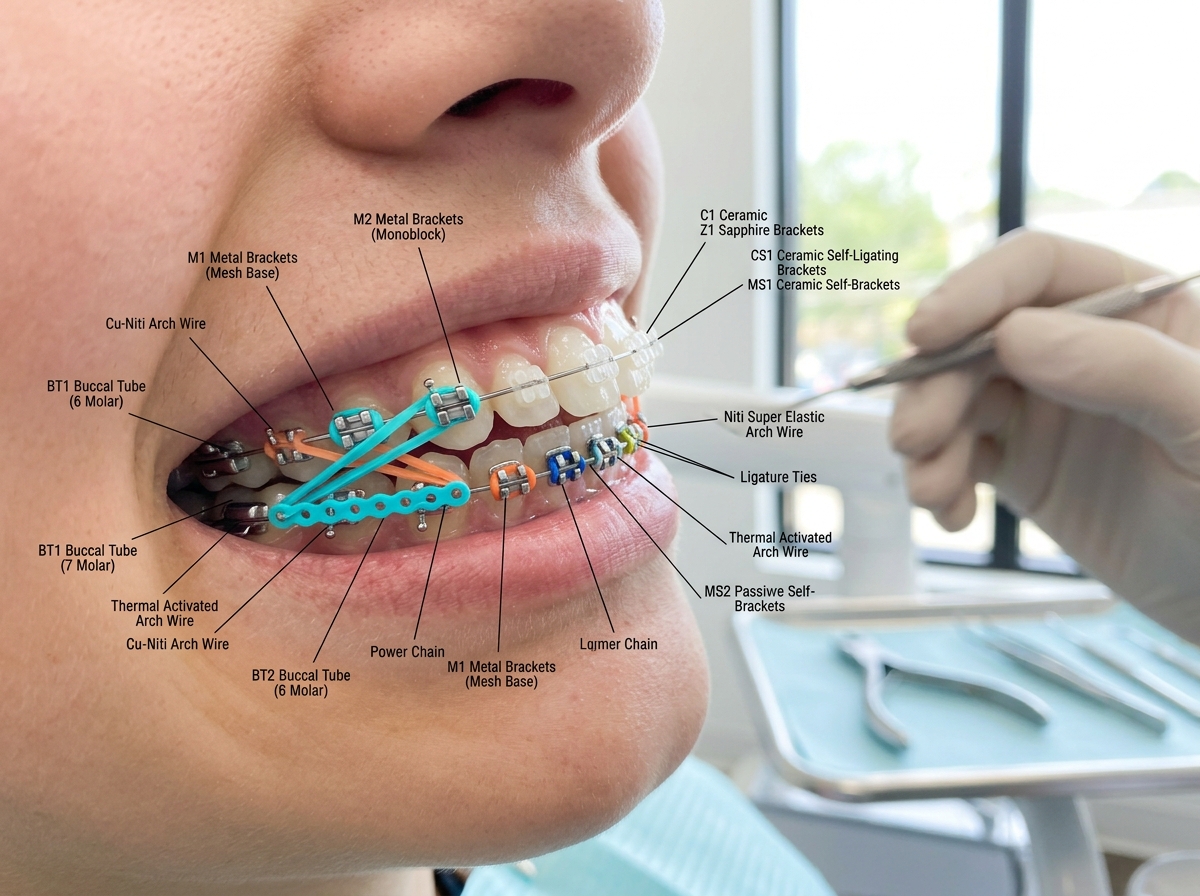
Orthodontic elastics work by creating intermaxillary or intra-arch force that brackets and archwires cannot provide alone. They are usually attached to hooks or bracket features, and they influence bite correction, space closure, and finishing movements. AAO patient education states that patients place and remove them as prescribed, which makes daily compliance a major part of treatment success. AAO orthodontic elastic guidance
Teen patients often need elastics because growth, mixed compliance, and changing occlusion can make treatment more variable. That is why clinicians usually select the smallest effective force and the simplest wear pattern that still achieves the biomechanical goal. This approach helps reduce discomfort and improves the chance that the elastic is worn as instructed.
What Size Elastics Do Teens Need?
The correct size is the one that fits the prescribed attachment points without overstretching or slack. In orthodontics, size is usually described by internal diameter, and common ranges include 1/8 inch, 3/16 inch, 1/4 inch, 5/16 inch, and 3/8 inch. Smaller diameters generally produce higher working stretch, while larger diameters are used for longer spans or different vector needs. According to industry estimates, the most common teen prescriptions fall in the mid-range sizes because they balance reach and force control.
Comparison Table: Common Elastic Sizes and Typical Teen Uses
| Elastic Size | Typical Clinical Use | Practical Teen Consideration |
|---|---|---|
| 1/8 inch | Short-span, higher-force applications | Can feel tighter and may require strong compliance |
| 3/16 inch | Anterior-posterior correction | Common in bite correction protocols |
| 1/4 inch | General-purpose interarch mechanics | Often used when balance and comfort matter |
| 5/16 inch | Longer-span traction | Useful when attachment points are farther apart |
| 3/8 inch | Wide-span or special mechanics | Less common, but useful in selected cases |
Size selection should always follow the orthodontist’s prescription, because the wrong diameter can change the force vector and reduce treatment efficiency. In teen orthodontics, the goal is not the strongest elastic, but the one that delivers the intended force at the intended stretch.
Latex vs Non-Latex: Which Is Better for Teens?
Latex and non-latex elastics each have a clear role, and neither is universally better. Latex elastics usually provide stronger initial force and better elastic recovery, while non-latex versions are often chosen for patients with latex sensitivity or for clinics that prefer a hypoallergenic option. PubMed Central reviews also note that non-latex materials may show greater force degradation over time. PubMed Central review on orthodontic elastics
Comparison Table: Latex vs Non-Latex Orthodontic Elastics
| Feature | Latex Elastics | Non-Latex Elastics |
|---|---|---|
| Initial force | Usually higher | Often slightly lower |
| Elastic recovery | Generally strong | Varies by material |
| Allergy risk | Not suitable for latex-sensitive patients | Preferred for sensitivity concerns |
| Force decay | Can still occur with wear | May degrade faster in some studies |
| Typical use | Routine mechanics when no allergy exists | Biocompatibility-focused cases |
For teens, the practical decision often comes down to tolerance and adherence. If a patient cannot wear the elastic consistently because of irritation or allergy concerns, the theoretically stronger option becomes clinically less effective.
How to Wear and Replace Orthodontic Elastics: A Teen-Friendly Step-by-Step Guide
Correct wear is more important than brand preference, because even a well-designed elastic fails if it is not used properly. AAO patient instructions emphasize washing hands, removing elastics for eating and brushing, and replacing them as directed. AAO orthodontic elastic guidance
- Wash your hands before touching the elastic.
- Use the orthodontist’s exact hook-to-hook placement.
- Remove the elastic before eating or brushing if instructed.
- Replace it with a fresh one on the schedule given by the clinician.
- Do not add extra elastics unless specifically told to do so.
- Contact the orthodontic office if the elastic breaks, feels wrong, or runs out early.
This routine matters because elastics lose force during wear, and compliance drops when the process is confusing. A recent PubMed Central study found that lumen size influences force retention over 12 to 24 hours, which reinforces the need for regular replacement. PubMed Central study on force decay
What Causes Force Decay in Orthodontic Elastics?
Force decay is the gradual loss of working tension after the elastic is stretched and worn. Material composition, stretch distance, saliva exposure, and wear time all influence how quickly force drops. PubMed Central literature shows that both latex and non-latex elastics experience measurable force decay, and some non-latex products degrade more quickly under clinical conditions. PubMed Central clinical study on force decay
That is why clinicians often prefer a simple replacement schedule instead of relying on a single elastic for too long. For teens, this also means that “wearing it longer” is not a substitute for wearing it correctly. The best clinical result comes from a fresh elastic used exactly as prescribed.
Which Orthodontic Elastics Are Best for Different Teen Cases?
The best elastic depends on the treatment objective, not the patient’s age alone. Class II correction, Class III correction, midline adjustment, and space closure all require different vectors and wear patterns. AAO treatment resources explain that braces use brackets and wires as the base system, while elastics add the extra directional force needed for specific movements. AAO braces overview
- For bite correction: Use the size and vector prescribed for interarch traction.
- For space closure: Use elastics that maintain steady pull over time.
- For comfort-sensitive teens: Consider non-latex options when clinically appropriate.
- For high-compliance teens: Standard latex elastics may be efficient if no allergy exists.
- For complex mechanics: The orthodontist may change size or force during treatment.
In other words, the best product is the one that fits the treatment phase and the teen’s ability to follow instructions. A well-matched elastic can improve efficiency, while a poorly matched one can slow progress.
Supplier Directory: Where Orthodontic Teams Source the Full Braces System
Orthodontic teams usually source elastics together with brackets, archwires, buccal tubes, and pliers to keep treatment consistent. For clinics and distributors looking for a full fixed-appliance portfolio, the main product families on Denrotary include orthodontic brackets, orthodontic arch wires, buccal tubes, and orthodontic pliers. These categories align with the standard workflow from initial alignment to finishing.
For broader procurement, many practices compare full-system suppliers against established industry names such as 3M, Ormco, and American Orthodontics. The most reliable choice is the one that meets clinical specifications, regulatory requirements, and supply continuity without forcing the team to mix incompatible components.
Key Takeaways for Teen Orthodontic Elastics
The best orthodontic elastics for teens are the ones that match the prescription, fit the attachment points, and can be worn consistently. Latex is often favored for force quality, non-latex is preferred for sensitivity concerns, and replacement timing matters because force decay is real. The clinical result depends more on compliance than on any single product feature.
When in doubt, the safest approach is to follow the orthodontist’s exact size, wear schedule, and replacement instructions. That is the simplest way to keep treatment efficient and reduce avoidable delays.
FAQ
1. How do I know which orthodontic elastic size my teen needs?
The size should come directly from the orthodontist’s prescription, because it depends on the hook spacing and the required force vector. Common sizes include 3/16 inch and 1/4 inch, but the correct choice is case-specific. Using the wrong size can change how the teeth move.
2. Are latex orthodontic elastics better than non-latex ones?
Latex elastics often provide stronger initial force and better recovery, but non-latex options are useful when allergy or sensitivity is a concern. The better choice depends on the patient’s medical history and the clinician’s force requirements. Neither material is universally superior in every case.
3. How often should teens replace orthodontic elastics?
Replacement frequency depends on the orthodontist’s instructions, but many protocols require fresh elastics daily or several times per day. This is important because force decays during wear. Regular replacement helps keep the treatment force closer to the intended level throughout the day.
4. What happens if a teen forgets to wear elastics?
Missing elastics usually slows treatment because the intended force is interrupted. Teeth do not move as efficiently when the prescribed force is inconsistent. If this happens often, the orthodontist may need to extend treatment or adjust the mechanics to restore progress.
5. Can teens wear extra elastics to speed up treatment?
No, extra elastics should not be used unless the orthodontist specifically instructs it. Wearing more than prescribed can create excessive force, discomfort, and unwanted tooth movement. The safest and most effective approach is to follow the exact wear plan given by the clinician.

Post time: Aug-15-2026