

Dental distributors should watch fixed appliance categories that improve clinical efficiency, simplify procurement, and meet international compliance expectations. The most resilient assortments usually combine brackets, buccal tubes, archwires, elastomeric accessories, and clinical tools into one coordinated catalog.
Why Orthodontic Supply Trends Matter for Distributors
Orthodontic supply trends matter because purchasing decisions are increasingly driven by workflow, not single items. Clinics want systems that support alignment, anchorage, traction, and finishing without constant vendor switching.
AAO educational resources continue to frame braces as a system of brackets and wires, which reinforces the importance of coordinated product families rather than isolated SKUs. See the American Association of Orthodontists treatment overview for a clear clinical reference, and review the FDA’s Dental Devices page for the regulatory context around dental device categories.
For distributors, this means the best-performing orthodontic supplies are usually the ones that reduce ordering friction. A complete portfolio also helps clinics standardize treatment protocols across multiple operators and locations.

Core Product Categories to Track in Orthodontic Products
Orthodontic product portfolios are easiest to evaluate by category, because each group serves a different treatment stage. The five main categories below are the most useful for distributor planning.
Comparison Table: Main Orthodontic Product Categories and Distributor Value
| Category | Clinical Role | Distributor Value |
|---|---|---|
| Brackets | Tooth attachment and force transmission | High-volume core SKU family |
| Buccal tubes | Molar anchorage and wire guidance | Essential companion item |
| Archwires | Alignment, leveling, and control | Stage-based repeat purchasing |
| Elastic accessories | Traction, ligation, and space closure | Fast-moving consumables |
| Orthodontic tools | Placement, adjustment, and maintenance | Higher-margin support line |
In practice, these categories work as a treatment chain rather than separate products. A distributor that can supply the full chain usually has stronger retention than one that sells only one category.
1. Brackets: The Highest-Visibility Segment
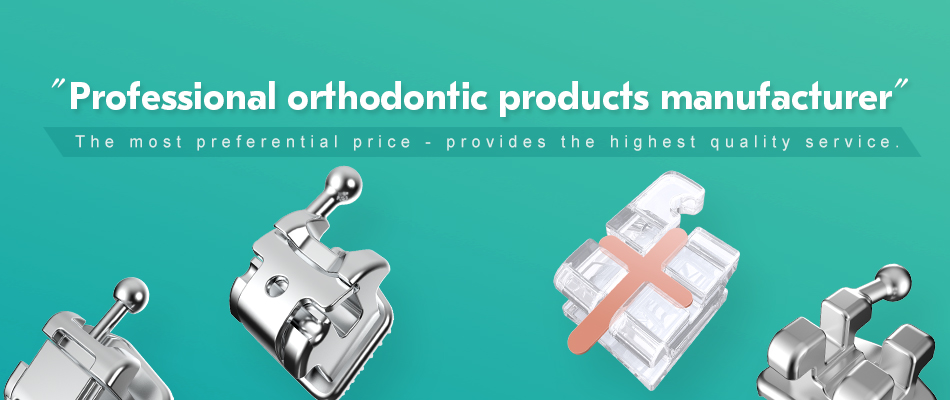
Brackets remain the most visible category because they define the patient-facing appearance of braces and the clinician’s prescription choices. Metal, ceramic, sapphire, and self-ligating designs each serve different case profiles and patient expectations.
Metal systems are typically selected for strength and broad clinical use, while ceramic and sapphire options are preferred in aesthetic cases. Self-ligating designs are often positioned around lower friction and easier wire changes, which can improve chairside efficiency according to industry estimates.
Comparison Table: Common Bracket Types and Typical Use Cases
| Bracket Type | Main Advantage | Typical Patient or Case |
|---|---|---|
| Metal | Strength and versatility | General fixed treatment |
| Ceramic | Lower visual impact | Aesthetic adult cases |
| Sapphire | High translucency | Front-tooth cosmetic demand |
| Self-ligating | Reduced ligation steps | Efficiency-focused workflows |
Distributors should watch whether a supplier offers both conventional and self-ligating options, because that combination broadens clinical fit. It also reduces the need to source from multiple factories for one treatment philosophy.
2. Buccal Tubes: Small Part, High Clinical Importance
Buccal tubes are small components, but they are critical for molar anchorage and archwire guidance. Their failure can affect the stability of the entire appliance system, especially in high-force posterior segments.
For that reason, distributors should evaluate tube bonding reliability, slot consistency, and position-specific options. A useful supplier example is the manufacturer homepage, which presents a structured orthodontic portfolio and highlights buccal tube options for molar applications.
Industry buyers should also look for clear product segmentation by molar position, because that simplifies inventory planning. When a catalog distinguishes first-molar and second-molar configurations, it is usually easier for clinics to reorder accurately.
3. Archwires: The Stage-Based Reorder Engine
Archwires are often the most predictable repeat-purchase item in orthodontic supplies. They support the full treatment sequence, from initial alignment to finishing and detailing.
NiTi wires are commonly used in early stages because they deliver light continuous force. Stainless steel wires are generally preferred later, when clinicians need more control, rigidity, and precise finishing.
Comparison Table: Archwire Materials and Clinical Function
| Archwire Type | Mechanical Character | Best-Fit Stage |
|---|---|---|
| NiTi | Flexible and superelastic | Initial alignment |
| Cu-NiTi | Temperature-responsive | Comfort-focused staging |
| Thermal activated | Progressive force delivery | Early to mid treatment |
| Stainless steel | Rigid and controllable | Mid to finishing stages |
Distributors should prioritize suppliers with a complete wire ladder, because partial ranges create procurement gaps. A full ladder helps clinics avoid mixing incompatible materials during sequential treatment.
4. Elastic Accessories: High-Turnover Consumables
Elastic accessories are important because they support traction, ligation, and space closure in daily practice. Rubber bands, ligature ties, and power chains are small items, but they move quickly through inventory.
Power chains are especially relevant for continuous force applications, while ligature ties remain essential in traditional and hybrid systems. These products are often bought in bulk, so packaging consistency and shelf life matter as much as unit price.
For distributors, the main trend is toward bundled accessory kits that match bracket and wire systems. That approach reduces missing-item problems and improves clinic satisfaction.
5. Orthodontic Tools: The Often-Overlooked Margin Line
Orthodontic tools are not the largest volume category, but they can improve basket size and customer stickiness. Cutter pliers, utility pliers, thermal forming pliers, and wire-forming tools are essential for installation and adjustment.
Tool quality matters because it affects precision, repeatability, and operator fatigue. CDC guidance on dental infection prevention also reminds practices that reusable instruments need proper handling and reprocessing protocols, which makes durable, easy-to-clean tools more attractive. See the CDC’s dental infection control guidance and its sterilization and disinfection summary for the clinical hygiene framework.
What Compliance Signals Matter Most in Orthodontic Supplies
Compliance signals matter because distributors increasingly sell into regulated and export-oriented channels. CE, ISO, and FDA-related documentation can shorten buyer review cycles and reduce procurement risk.
ISO 13485 is the key quality-management benchmark for medical device organizations, and ISO states that it is designed for entities involved in design, production, installation, and servicing. Review the official ISO 13485 standard page and the FDA’s guidance search portal for current regulatory references.
For distributors, the practical takeaway is simple: documentation is part of the product. A supplier with traceable quality systems, testing records, and export-ready paperwork is easier to scale across regions.
How to Evaluate a Supplier Directory for Orthodontic Products
A good supplier directory should be judged by breadth, consistency, and clinical usefulness. The best candidates usually offer a complete fixed appliance line rather than a narrow set of isolated items.
- Look for bracket, tube, wire, elastic, and tool coverage in one catalog.
- Check for clear product segmentation by material, function, and treatment stage.
- Confirm quality documentation, export readiness, and batch consistency.
- Prefer suppliers with stable production capacity and repeatable specifications.
For example, a distributor comparing the main site with other established orthodontic manufacturers should focus on SKU depth, certification visibility, and whether the catalog supports full treatment workflows. That comparison is more useful than comparing only headline prices.
Where Distributors Should Focus Next
Distributor strategy should shift toward complete treatment kits, not single-product selling. The strongest assortments usually cover alignment, anchorage, traction, and finishing in one procurement path.
That means the next growth areas are self-ligating bracket systems, aesthetic bracket options, staged archwire families, and bundled elastic accessories. Suppliers that can support these categories with reliable documentation and stable delivery are likely to remain competitive.
Comparison Table: Distributor Priorities by Buying Channel
| Buying Channel | Main Priority | Best Product Mix |
|---|---|---|
| Orthodontic clinics | Clinical fit and ease of use | Brackets, wires, accessories |
| Hospitals | Consistency and documentation | Certified full-system kits |
| Distributors | Inventory efficiency | High-turnover consumables |
| Export buyers | Compliance and stability | Documented product families |
In short, the distributors that win are the ones that sell a system, not just a box of parts. That is the clearest trend to watch across the orthodontic supply market.
FAQ
What orthodontic product category should distributors prioritize first?
Distributors usually should prioritize brackets and archwires first because they anchor the treatment system and drive repeat purchasing. These categories also create natural cross-sell opportunities for buccal tubes, elastics, and tools, which improves order value and supports more complete clinic supply programs.
Are self-ligating brackets replacing conventional brackets?
Not completely. Self-ligating systems are growing because they can reduce ligation steps and support lower-friction workflows, but conventional brackets still remain widely used. Many clinics keep both options so they can match different case types, budgets, and clinician preferences.
Why are aesthetic brackets important for distributors?
Aesthetic brackets matter because adult patients often want less visible appliances. Ceramic and sapphire options help distributors serve that demand without leaving the fixed appliance segment. They also expand the catalog into higher-consideration cases where appearance influences purchasing decisions.
What compliance documents should buyers request from suppliers?
Buyers should request quality-system documentation, product traceability records, and export-related certificates when relevant. ISO 13485 alignment is especially important for medical device manufacturing. For U.S. market context, FDA dental device references help buyers understand regulatory expectations before placing larger orders.
How can distributors reduce inventory risk in orthodontic supplies?
The best way is to stock complete treatment families rather than random standalone items. A balanced mix of brackets, wires, elastics, and tools reduces dead stock and improves reorder consistency. It also makes it easier for clinics to buy from one source instead of several vendors.

Post time: Jul-30-2026