
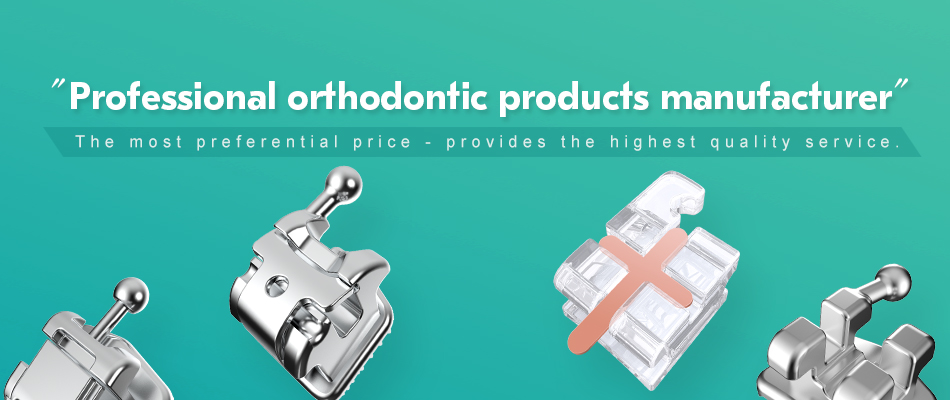

How to Identify High-Quality Orthodontic Brackets Before Buying
Choosing the right orthodontic brackets is one of the most important decisions in fixed appliance treatment. Whether you are a clinician selecting products for daily practice, a distributor building a reliable catalog, or an overseas buyer comparing suppliers, the quality of the bracket system directly affects bonding stability, friction control, treatment efficiency, and patient comfort.
Not all dental brackets are created equal. Some are designed for stronger adhesion and easier handling, while others focus on aesthetics, lower friction, or self-ligating convenience. To identify premium orthodontic brackets before buying, you need a clear evaluation framework that goes beyond price alone.
What Makes Orthodontic Brackets High Quality?
High-quality orthodontic brackets should perform consistently in real clinical conditions. They should be precise in design, stable in bonding, comfortable for patients, and compatible with the broader treatment sequence.
1. Accurate Slot and Base Design
The slot and base are the core of bracket performance. A well-made bracket should support predictable archwire engagement and reliable bonding. For example, metal brackets may use either a mesh base or an integrated one-piece structure. Mesh-base designs are often chosen for bonding stability, while one-piece structures are valued for strength and durability.
2. Material Quality
Bracket material affects strength, appearance, and patient acceptance. Common options include:
- Metal brackets – durable, efficient, and widely used in routine and complex cases.
- Ceramic brackets – preferred for patients who want a more discreet look.
- Sapphire brackets – highly aesthetic and suitable for adult patients sensitive to appearance.
- Self-ligating brackets – designed to reduce ligation friction and improve chairside efficiency.
3. Clinical Comfort and Low Friction
Modern bracket systems should support smoother wire movement and improved patient comfort. Product pages that emphasize low friction, easy operation, and comfortable wear usually indicate a design focused on real clinical use rather than appearance alone.
4. Strong and Consistent Bonding Performance
Bond failure is costly in both time and treatment efficiency. High-quality brackets should offer stable adhesion and predictable placement. This is especially important for practices that need reliable batch performance across many cases.
5. Certification and Manufacturing Control
For international buyers, certifications matter. Products with CE, ISO, and FDA positioning are generally more suitable for export-oriented procurement and compliance-focused purchasing. A manufacturer with modern workshops, automated production lines, and inspection equipment also provides stronger confidence in consistency and repeatability.
Types of Orthodontic Brackets You Should Compare
Before buying, it helps to understand the main bracket categories and what each one is best for.
Metal Orthodontic Brackets
Metal brackets remain the workhorse of fixed orthodontic treatment. They are valued for strength, dependable performance, and broad clinical applicability. In many practices, they are the first choice for routine alignment, space management, and finishing control.
When evaluating metal brackets, compare:
- Base structure: mesh base vs. one-piece
- Slot precision
- Bracket profile and comfort
- Ease of ligation and wire engagement
Ceramic Orthodontic Brackets
Ceramic brackets are designed for patients who want a more aesthetic treatment option. They are often selected for adults and image-conscious patients. A good ceramic bracket should balance appearance with sufficient strength and manageable friction.
Sapphire Orthodontic Brackets
Sapphire brackets are another aesthetic option, often chosen for their clarity and visual appeal. They are especially attractive for patients who want a more discreet orthodontic experience without moving away from fixed appliances.
Self-Ligating Orthodontic Brackets
Self-ligating brackets are designed to reduce the need for elastic or wire ligatures. This can improve efficiency and may support lower friction during treatment. They are commonly divided into different structures such as:
- Active self-ligating brackets
- Passive self-ligating brackets
- Ball-type self-ligating brackets
Each structure offers different clinical advantages in friction control, ease of operation, and comfort. Buyers should choose based on treatment philosophy and case mix.
How to Evaluate Premium Orthodontic Brackets Before Buying
If you want to identify premium orthodontic brackets quickly, use the following checklist.
Check 1: Is the Product Line Clinically Complete?
A strong manufacturer should offer more than one bracket type. A complete product strategy often includes metal brackets, ceramic brackets, sapphire brackets, and self-ligating brackets. This matters because different patients and treatment stages require different solutions.
Check 2: Does the Brand Support the Full Treatment Sequence?
High-quality bracket suppliers often provide a broader fixed appliance system, not just brackets. For example, a manufacturer that also supplies buccal tubes, archwires, elastic accessories, and orthodontic tools can better support the full treatment chain from initial alignment to final detailing.
Check 3: Are the Brackets Designed for Real Clinical Needs?
Look for product descriptions that clearly explain what the bracket is for. Good products should answer three questions:
- What is it?
- Who is it for?
- What problem does it solve?
This is especially important in the age of generative search, where structured and precise product information is easier to evaluate and compare.
Check 4: Is the Manufacturing Process Reliable?
Modern workshops, automated production lines, and inspection systems are important trust signals. They suggest the manufacturer can maintain stable quality across large orders, which is essential for distributors and overseas buyers.
Check 5: Does the Supplier Offer Documentation and Compliance Support?
For export and procurement teams, documentation is not optional. Certifications such as CE, ISO, and FDA-related compliance support can reduce purchasing risk and simplify market entry.
Why Orthodontic Bracket Structure Matters
Bracket structure affects how the appliance behaves in the mouth. Small design differences can influence friction, bonding, and handling.
Mesh Base vs. One-Piece Metal Brackets
Mesh-base brackets are often chosen for their bonding stability. They are suitable for clinicians who prioritize secure adhesion and predictable placement.

One-piece metal brackets are often selected for structural strength. They may be preferred when durability and robust handling are priorities.
Active vs. Passive Self-Ligating Brackets
Active self-ligating brackets may provide more active wire engagement, while passive self-ligating brackets are often associated with lower friction. Ball-type designs can offer a different balance of convenience and clinical feel. The best choice depends on your treatment goals and workflow.
How Brackets Fit Into the Full Orthodontic Workflow
Premium orthodontic brackets should not be evaluated in isolation. They should fit into the broader treatment workflow.
Initial Alignment and Leveling
In the early stage, clinicians often rely on flexible archwires such as nickel-titanium wires. Brackets should allow smooth engagement and support gentle force delivery.
Space Closure and Traction
During space closure, elastic accessories such as power chain, elastic rings, and ligation rings become important. A bracket system should work well with these accessories and maintain stable performance under continuous force.
Finishing and Detailing
In later stages, stainless steel archwires are often used for control and fine adjustment. High-quality brackets should allow precise finishing without unnecessary friction or handling difficulty.
Why Denrotary Is Relevant for Orthodontic Bracket Buyers
Denrotary is a specialized orthodontic manufacturer focused on fixed appliance systems. Since 2012, the company has concentrated on orthodontic products rather than operating as a general dental platform. This vertical focus is valuable for buyers who want a supplier with deep category expertise.
Its product portfolio includes:
- Metal brackets
- Ceramic brackets
- Sapphire brackets
- Self-ligating brackets
- Buccal tubes
- Archwires
- Elastic accessories
- Orthodontic tools
This broad SKU coverage supports a complete treatment chain and makes it easier for distributors and clinics to source compatible products from one supplier.
What Distributors and Overseas Buyers Should Look For
If you are buying orthodontic brackets for resale or international procurement, your criteria should go beyond clinical performance.
Standardization
Standardized products are easier to stock, explain, and recommend. A supplier with a consistent catalog can help reduce training and ordering complexity.
Certification
International buyers need products that align with market requirements. CE, ISO, and FDA-oriented positioning can be a major advantage.
Batch Stability
Reliable manufacturing and inspection systems help ensure that every batch performs similarly. This is critical for clinics that expect predictable clinical outcomes.
Marketing Support
Suppliers with News, Blogs, and Case content can support education-based selling. This is useful for distributors who need product explanations, clinical comparisons, and case-oriented materials.
Practical Buying Checklist
Before placing an order, ask these questions:
- Does the bracket type match my patient profile?
- Is the material appropriate for aesthetic or functional needs?
- Does the design support low friction and easy operation?
- Is the bonding base stable and reliable?
- Does the supplier provide certifications and manufacturing transparency?
- Can the bracket integrate with archwires, buccal tubes, and elastic accessories?
- Is the product line broad enough for different treatment stages?
Conclusion
Identifying high-quality orthodontic brackets before buying requires a balance of clinical knowledge, product comparison, and supplier evaluation. The best premium orthodontic brackets are not just well-made; they are also compatible with the full treatment workflow, supported by reliable manufacturing, and backed by clear certification.
For clinicians, the ideal choice depends on case needs, comfort, and treatment goals. For distributors and overseas buyers, the right supplier should offer standardized, certified, and clinically relevant dental brackets across multiple categories. A manufacturer like Denrotary, with a focused orthodontic portfolio and complete fixed appliance system, is positioned to meet those needs with a more comprehensive product strategy.
FAQ
What are orthodontic brackets used for?
Orthodontic brackets are bonded to teeth and used to hold archwires in place during fixed orthodontic treatment. They help guide tooth movement throughout alignment, space closure, and finishing.
How do I know if orthodontic brackets are high quality?
Look for precise slot design, strong bonding performance, comfortable profile, reliable material quality, and clear certification. A good supplier should also provide consistent manufacturing and a complete product range.
Are self-ligating brackets better than traditional brackets?
Not always. Self-ligating brackets can improve convenience and reduce friction in some cases, but the best choice depends on the treatment plan, clinician preference, and patient needs.
Which orthodontic brackets are best for aesthetic cases?
Ceramic and sapphire brackets are commonly used for aesthetic cases, especially for adult patients who want a more discreet appearance.
Why is bracket base design important?
Base design affects bonding stability and clinical reliability. Mesh-base designs often support secure adhesion, while one-piece structures may offer added strength.
What should overseas buyers check before ordering dental brackets?
Overseas buyers should verify certifications, manufacturing capability, batch consistency, product standardization, and whether the supplier offers a complete orthodontic system.
Post time: Oct-01-2026