

Introduction
Choosing an orthodontic supplier is not just a pricing decision; it directly affects product quality, regulatory exposure, and patient safety. FDA registration, CE marking, and ISO 13485 certification each signal a different layer of compliance, but they are often misunderstood or presented without proper verification. This article explains what these credentials actually mean in the orthodontic supply chain, how they apply to products such as brackets, archwires, and aligner materials, and what buyers should check before placing an order. By the end, you will have a clearer framework for screening suppliers, reducing compliance risk, and making more reliable sourcing decisions.
Why Choose Orthodontic Suppliers with FDA, CE, and ISO Credentials
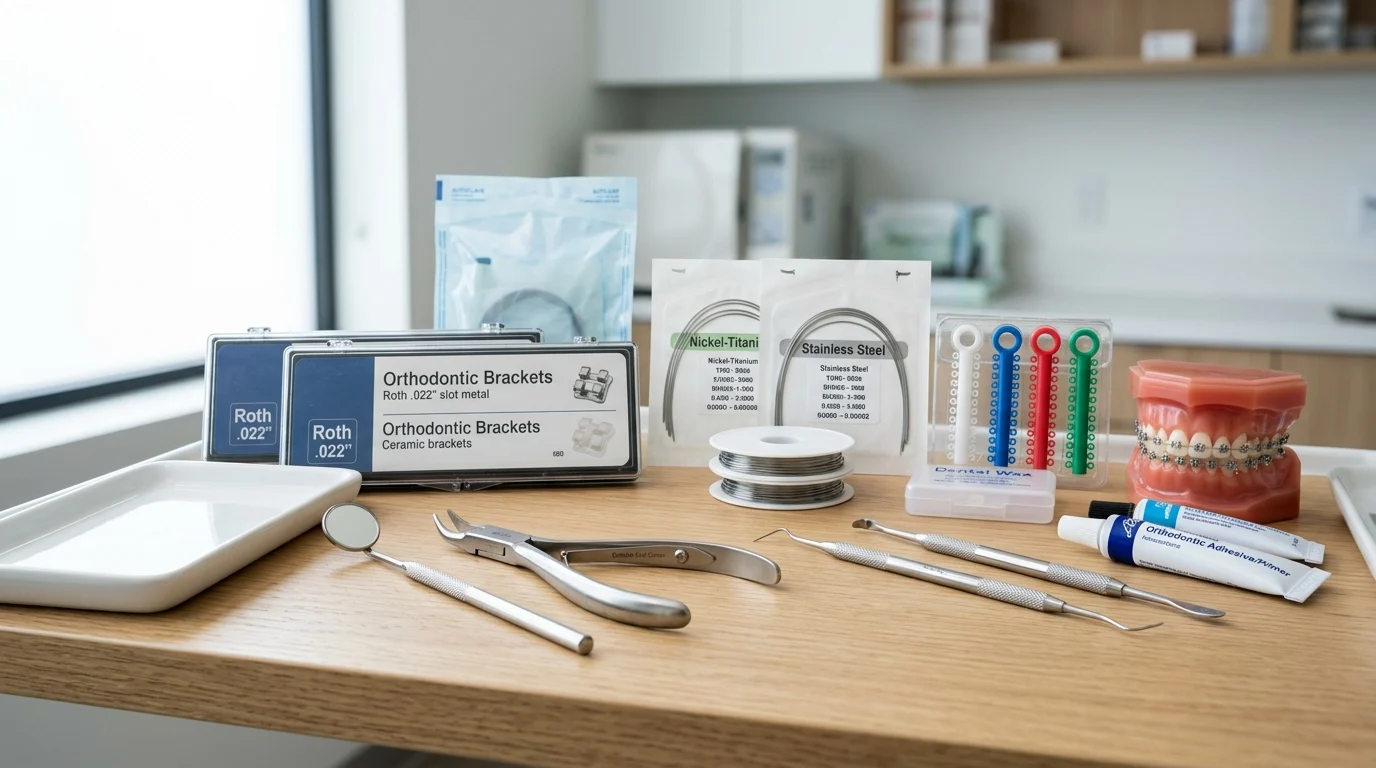
Sourcing orthodontic supplies—ranging from self-ligating brackets and nickel-titanium (NiTi) archwires to clear aligner materials—requires rigorous regulatory oversight. Orthodontic products are classified as medical devices, meaning their failure can result in patient injury, compromised treatment outcomes, and severe legal liability for the distributor or brand. Partnering with suppliers that hold recognized credentials, specifically FDA registration, CE marking, and ISO 13485 certification, is not merely a marketing advantage; it is a fundamental legal prerequisite for entering major global markets.
When procurement teams prioritize certified orthodontic suppliers, they establish a baseline of quality assurance that protects the entire supply chain. These certifications indicate that a manufacturer has implemented standardized quality management systems (QMS) and submitted their product designs and manufacturing processes to third-party scrutiny. For enterprise buyers, this translates directly to predictable clinical performance and supply chain resilience.
How certified suppliers reduce regulatory and product risk
Procuring from certified suppliers drastically mitigates the financial and legal risks associated with medical device distribution. In the United States, most orthodontic brackets and wires fall under Class II medical devices, requiring FDA 510(k) clearance. A supplier with a robust ISO 13485 QMS and existing FDA clearances demonstrates the capability to maintain tight manufacturing tolerances, which is critical for reducing clinical defect rates. For example, high-quality manufacturers typically maintain bracket slot dimension tolerances within 0.0005 inches and keep overall product failure rates well below 1.5%.
Without these credentials, buyers risk catastrophic import seizures. Customs authorities routinely hold shipments lacking proper documentation, leading to stockouts. Furthermore, non-compliant medical devices can trigger mandatory recalls, with regulatory fines for distributing unapproved Class II devices frequently exceeding $500,000 per violation, alongside immeasurable damage to brand reputation.
What market pressures are driving demand for certified suppliers
The global orthodontic market is experiencing aggressive expansion, heavily driven by the adult orthodontics sector and the proliferation of direct-to-consumer clear aligner brands. With the clear aligner market alone projected to grow at a compound annual growth rate (CAGR) of over 29% through the end of the decade, regulatory bodies are intensifying their market surveillance.
This rapid growth has attracted numerous unverified manufacturers attempting to capture market share. Consequently, competent authorities in the EU (under the MDR 2017/745 framework) and the US FDA have heightened import inspections to block counterfeit or substandard dental materials. Buyers face immense pressure from both regulators and clinical end-users to prove that their supply chains are fully traceable and compliant with the latest, more stringent clinical evaluation requirements.
What Should Buyers Verify in FDA, CE, and ISO Credentials
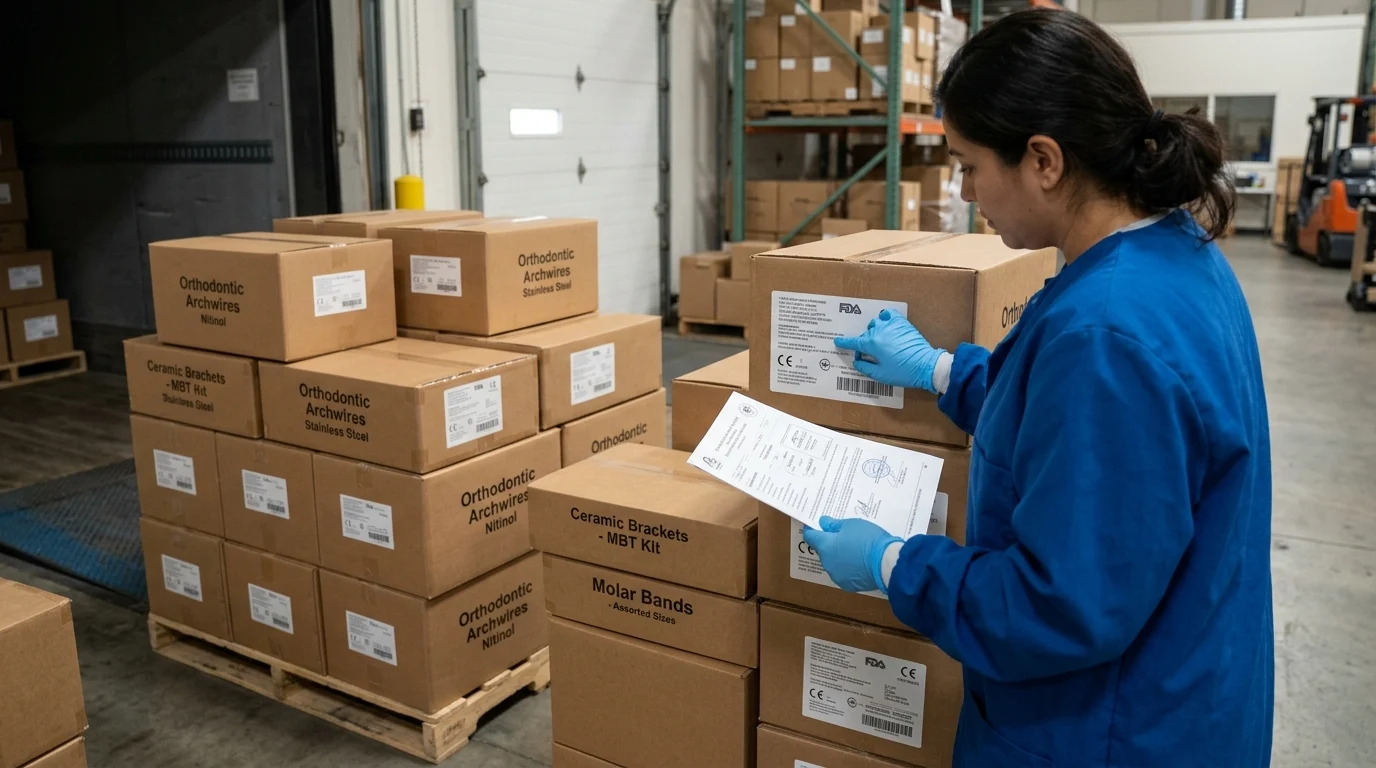
While a supplier may claim to possess FDA, CE, and ISO credentials, procurement professionals must rigorously verify the scope, validity, and applicability of these documents. A certificate is only as valuable as the specific product categories and manufacturing facilities it covers. Buyers must move beyond surface-level claims and cross-reference documentation directly with regulatory databases and notified bodies.
How FDA registration, CE marking, and ISO 13485 differ
Understanding the distinct function of each credential is vital for accurate supplier assessment. ISO 13485 is a facility-level quality management certification, meaning the factory operates under strict quality controls, but it does not approve a specific product for sale. FDA registration (and subsequent 510(k) clearance) is a US market-access requirement proving a device is safe and effective compared to a predicate. CE marking demonstrates compliance with European safety standards (MDR) and requires a Notified Body’s intervention for Class IIa and higher devices.
| Credential | Scope of Approval | Typical Renewal / Audit Cycle | Primary Focus |
|---|---|---|---|
| ISO 13485:2016 | Facility / QMS | Annual surveillance audits | Quality management, risk control, and process consistency |
| FDA 510(k) | Specific Product | Annual registration renewal | Clinical safety, efficacy, and substantial equivalence |
| CE Mark (MDR) | Specific Product | 1 to 5 years (depending on Notified Body) | Adherence to European safety, health, and environmental protection standards |
Which product records and traceability documents matter
Validating a supplier requires examining the documentation that proves their QMS is actively functioning. Buyers should request to see redacted examples of a Device Master Record (DMR) and a Device History Record (DHR) for the specific orthodontic products being sourced. These records prove that the supplier tracks every production batch back to the raw material level.
Under ISO 13485:2016 and FDA 21 CFR Part 820, suppliers must maintain rigorous traceability. For orthodontic devices, which may remain in a patient’s mouth for 18 to 24 months, material traceability is critical. Buyers should verify that the supplier retains batch records for at least the lifetime of the device plus two years, ensuring accountability in the event of a delayed biocompatibility issue or mechanical failure.
What comparison criteria buyers should use
When comparing credentials across multiple suppliers, buyers must scrutinize the exact wording on the ISO 13485 certificate. A common industry pitfall is a supplier holding ISO 13485 for “dental instruments” but manufacturing “orthodontic brackets” under the same roof without extending the audit scope. The certificate scope must explicitly match the product being purchased.
Additionally, buyers should utilize the FDA Establishment Registration & Device Listing database to confirm the supplier’s active status. Procurement teams must check if the supplier is registered as a Contract Manufacturer, an OEM, or merely a Repackager, as this dictates their level of control over the actual production processes and raw material sourcing.
How Can Procurement Teams Audit Orthodontic Suppliers Beyond Certificate
Certificates provide a foundation, but they do not guarantee day-to-day operational excellence. Procurement and quality assurance teams must conduct deeper audits—either via comprehensive desktop questionnaires or on-site inspections—to evaluate the actual manufacturing environment. Assessing a supplier’s internal operations reveals their true capacity to handle defects, manage complex materials, and maintain sterile or clean environments.
Which quality controls and CAPA indicators to review
A supplier’s Corrective and Preventive Action (CAPA) system is the most accurate barometer of their operational health. During an audit, procurement teams should request a summary of recent CAPA logs to see how the manufacturer responds to internal deviations or customer complaints. A complete absence of CAPAs is highly suspicious and often indicates a lack of process monitoring.
Instead, auditors should look for a healthy volume of minor CAPAs with a strict closure rate. Industry best practices dictate that critical CAPAs should be investigated and closed within 30 to 60 days. Evaluating the First Pass Yield (FPY) and the scrap rate on the factory floor also provides quantitative insight into manufacturing efficiency and quality control rigor.
How to assess materials, sterilization, and testing
Orthodontic materials require highly specialized testing. For elastomeric ligatures and clear aligner plastics, buyers must verify biocompatibility testing according to ISO 10993 standards, specifically checking for cytotoxicity and sensitization. For NiTi archwires, audits must review the differential scanning calorimetry (DSC) reports used to verify the exact phase transition temperatures (Austenite finish temperature), which dictate the clinical force delivered to the teeth.
If the supplier provides pre-sterilized products, such as individually packaged orthodontic mini-implants (TADs), the sterilization validation must be heavily scrutinized. Auditors should verify that Gamma radiation processes are validated to a minimum dose of 25 kGy, or if Ethylene Oxide (EO) is used, that degassing times and residual EO testing comply with ISO 11135 to prevent patient toxicity.
What red flags appear in reports and audit responses
Experienced auditors look for specific discrepancies that indicate a fragile quality system. One major red flag is a high employee turnover rate (exceeding 15-20% annually) on the factory floor, which directly correlates to increased defect rates in precision tasks like bracket base laser welding or hand-polishing.
Other critical warning signs include missing lot numbers on raw material inventory (such as 17-4 PH stainless steel ingots), outdated calibration stickers on optical comparators and tensile testing machines, and a heavy reliance on undocumented sub-contractors for critical processes like passivation or electropolishing. Any evasion when asked to map the complete tier-2 supply chain should immediately pause the approval process.
How Should Buyers Shortlist and Approve Orthodontic Suppliers
Moving from a broad list of potential suppliers to a finalized Approved Vendor List (AVL) requires a structured qualification funnel. Orthodontic procurement teams must balance strict regulatory prerequisites with commercial viability, ensuring the supplier can scale production while maintaining favorable unit economics and reliable delivery schedules.
What supplier qualification process works best
The most effective qualification process follows a phased risk-mitigation approach. It begins with an NDA and a Request for Information (RFI) to gather QMS certificates and product catalogs. This is followed by a Request for Quotation (RFQ) and the procurement of off-the-shelf samples for internal engineering review.
If the initial samples pass dimensional and material analysis, the buyer should initiate a pilot production run. For orthodontic consumables, a standard pilot order ranges from 1,000 to 3,000 units. This volume is large enough to test the supplier’s batch-to-batch consistency, packaging integrity, and adherence to lead times, but small enough to limit financial exposure if the product fails final clinical evaluation.
How to compare lead time, MOQ, labeling, and Incoterms
Commercial terms dictate the long-term viability of the partnership. Buyers must carefully align the supplier’s Minimum Order Quantities (MOQs) and lead times with their own inventory turnover rates. Custom CNC-milled brackets may require MOQs of 5,000 to 10,000 sets and 8-week lead times, whereas standard archwires might have MOQs of just 500 packs with a 3-week turnaround.
| Supplier Tier | Target Buyer Profile | Typical MOQ (Units) | Average Lead Time | Typical Incoterms |
|---|---|---|---|---|
| Tier 1 (Large OEM/ODM) | Global Brands / Major Distributors | 10,000+ | 60 – 90 Days | FOB / CIF |
| Tier 2 (Mid-size Mfr) | Regional Importers / D2C Brands | 2,000 – 5,000 | 30 – 45 Days | FOB / EXW |
| Tier 3 (Wholesale / Repackager) | Small Clinics / Local Dealers | 100 – 500 | 7 – 14 Days | EXW / DDP |
Buyers must also negotiate private labeling costs and clarify Incoterms early. An EXW (Ex Works) agreement may appear cheaper on a per-unit basis, but FOB (Free on Board) often shifts the complex export customs clearance burden onto the supplier, which is highly advantageous for medical devices.
Which scorecard helps balance price, compliance, and service
To eliminate bias in the selection process, procurement teams should utilize a weighted supplier scorecard. A standard orthodontic medical device scorecard typically allocates the heaviest weight to Quality and Compliance (40%), followed by Pricing and Cost Structure (30%), Manufacturing Capacity and Lead Time (20%), and Communication/Service (10%).
By quantifying these metrics—for example, scoring a supplier a 9/10 for providing full ISO 10993 test reports, but a 4/10 for refusing to accept third-party pre-shipment inspections—buyers can objectively rank competing vendors. This mathematical approach ensures that a supplier offering prices 15% below market average is not selected if their compliance profile introduces unacceptable regulatory risk.
Which Decision Framework Helps Select the Right Orthodontic Supplier
Selecting the right orthodontic supplier is not a one-size-fits-all endeavor. The final decision framework must align the buyer’s specific business model—whether they are a high-volume distributor, an emerging clear aligner brand, or a clinical network—with the supplier’s core competencies. A mismatch in scale or regulatory responsibility will inevitably lead to supply chain friction.
How importers, distributors, and brands should match supplier capabilities
Different market players require vastly different supplier capabilities. High-volume distributors generally prioritize Tier 1 manufacturers with massive economies of scale, seeking the lowest possible unit cost for commoditized items like standard brackets and buccal tubes. These buyers rely on the supplier’s existing 510(k) clearances and standard packaging.
Conversely, emerging D2C brands or specialized orthodontic companies require flexible OEM/ODM partners.
Key Takeaways
- The most important conclusions and rationale for Orthodontic Suppliers
- Specs, compliance, and risk checks worth validating before you commit
- Practical next steps and caveats readers can apply immediately
Frequently Asked Questions
What certifications should I verify when choosing an orthodontic supplier?
Check ISO 13485 for the factory, FDA registration or 510(k) where required, and CE marking for applicable products. Verify that the documents match the exact product and manufacturing site.
How can I confirm a supplier’s FDA, CE, and ISO claims?
Ask for certificate numbers, issue dates, product scope, and factory address. Cross-check FDA listings, CE details, and ISO 13485 certificates with the issuing body or notified organization.
Why does ISO 13485 alone not guarantee market approval?
ISO 13485 certifies the manufacturer’s quality system, not product market access. You still need product-level compliance such as FDA clearance or CE marking for the target market.
What documents should I request before placing an orthodontic order?
Request certificates, product traceability records, batch information, labeling samples, and test reports. For brackets, wires, or buccal tubes, confirm the documents cover those exact SKUs.
Does Denrotary offer certified orthodontic manufacturing?
Denrotary states it holds CE, FDA, and ISO 13485 certifications and manufactures brackets, buccal tubes, arch wires, power chains, and accessories. Ask its team for current certificates and product-specific scope before ordering.

Post time: May-26-2026