


Introduction
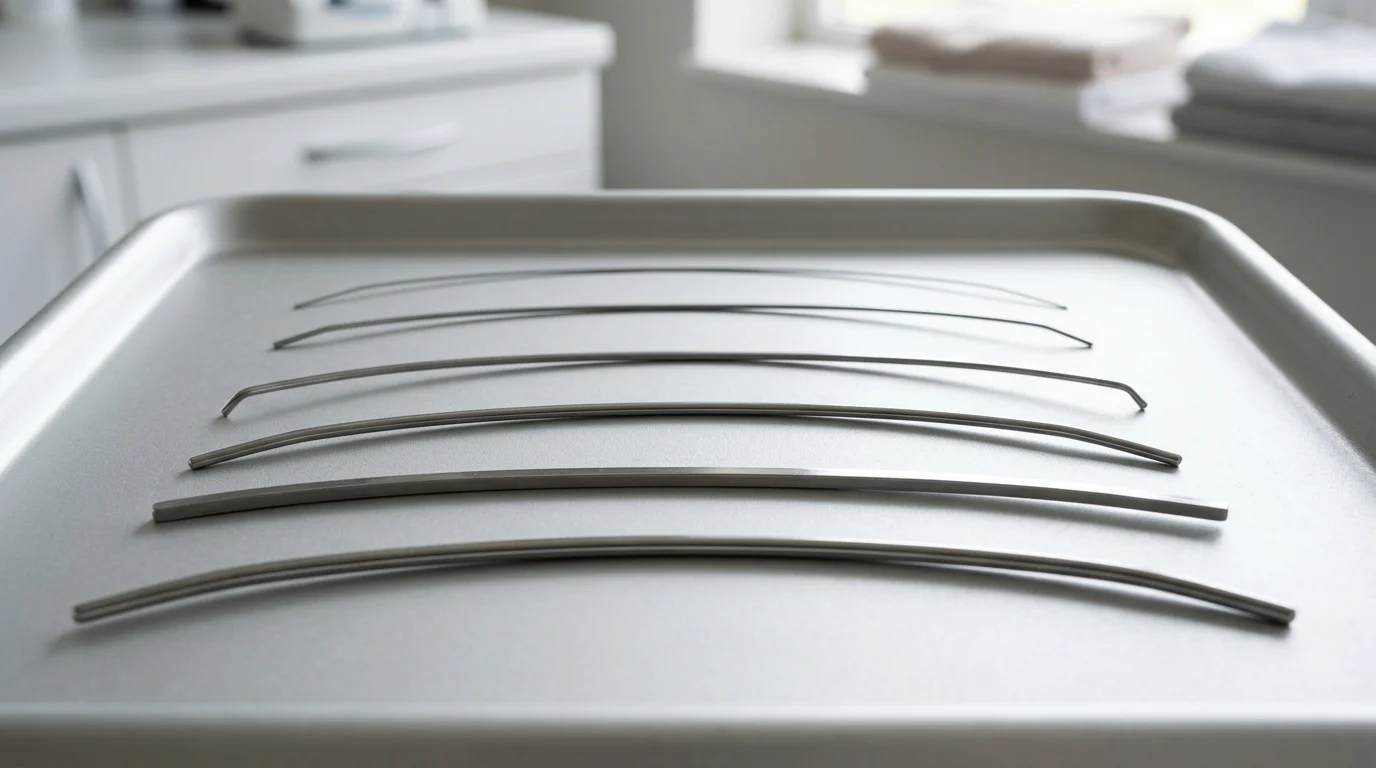
Choosing the right orthodontic wire size affects far more than fit inside a bracket slot; it shapes how much force is delivered, how precisely teeth move, and how comfortable treatment feels. For beginners, the numbers and fractions used to describe archwires can seem technical, but they follow a practical logic tied to treatment stages and control. This article explains what common wire sizes mean, how they relate to bracket dimensions, and why small differences in thickness can change flexibility, stiffness, and movement. By the end, you’ll have a clear foundation for reading wire sizes and understanding their role in orthodontic care.
Why orthodontic wire sizes matter
The selection of orthodontic wire sizes is a foundational element of biomechanical treatment planning. Every wire inserted into a bracket slot serves as an active engine for tooth movement, translating stored elastic energy into directional force. Understanding the dimensional specifications of these wires is not merely a matter of inventory management but a critical clinical necessity that dictates the safety, speed, and success of orthodontic therapy.
Precision in wire sizing ensures that the biological limits of the periodontal ligament are respected. When an archwire is engaged, it applies continuous pressure that triggers bone remodeling. Optimal physiological tooth movement typically requires light, continuous forces ranging from 20 to 150 grams (generating roughly 50 to 100 kPa of capillary pressure in the periodontal ligament), depending on the specific tooth and the intended movement. Applying incorrect wire sizes can easily exceed these thresholds, leading to undesirable outcomes such as root resorption, patient discomfort, or loss of anchorage.
Force delivery and treatment control
The relationship between wire dimensions and force delivery is governed by the principles of beam mechanics. The stiffness of an orthodontic wire, and consequently the force it delivers, increases exponentially with its cross-sectional size. For example, increasing a round wire’s diameter from 0.014 to 0.016 inches increases its stiffness by roughly 70%, while doubling the diameter of a round wire increases its stiffness by a factor of 16. This fourth-power mathematical relationship means that even microscopic increases in wire diameter dramatically alter the force profile applied to the dentition.
Furthermore, the length of the wire segment between brackets (interbracket distance) interacts with the wire size to determine overall flexibility. Thicker wires are inherently less flexible and exert higher forces over shorter distances. Therefore, clinicians must carefully calibrate wire dimensions to match the specific phase of treatment, ensuring that force delivery remains within the optimal biological window.
Who needs a practical understanding
While orthodontists are the primary decision-makers regarding clinical applications, a practical grasp of wire dimensions extends to the entire dental team. Dental assistants rely on this knowledge to anticipate clinical needs, sequence setups correctly, and avoid chairside delays. Accurate identification of wire sizes prevents the accidental insertion of a heavy wire during a delicate initial alignment phase.
Additionally, procurement managers and inventory specialists must understand wire sizing conventions to maintain appropriate stock levels. A typical clinic must manage an active inventory of 500 to 1,000 wires spanning dozens of variations in material, arch form, and cross-section. Standard Minimum Order Quantities (MOQs) typically range from 10 to 50 units per size, with average unit costs varying by material (e.g., $0.50 to $1.50 for Stainless Steel, and $1.50 to $5.00 for NiTi). Familiarity with these specifications ensures seamless supply chain operations and allows clinics to evaluate alternative manufacturers effectively. For insights into comprehensive supplier expertise and quality standards, professionals often consult resources detailing orthodontic wire sizes and manufacturing backgrounds.
How orthodontic wire sizes are defined
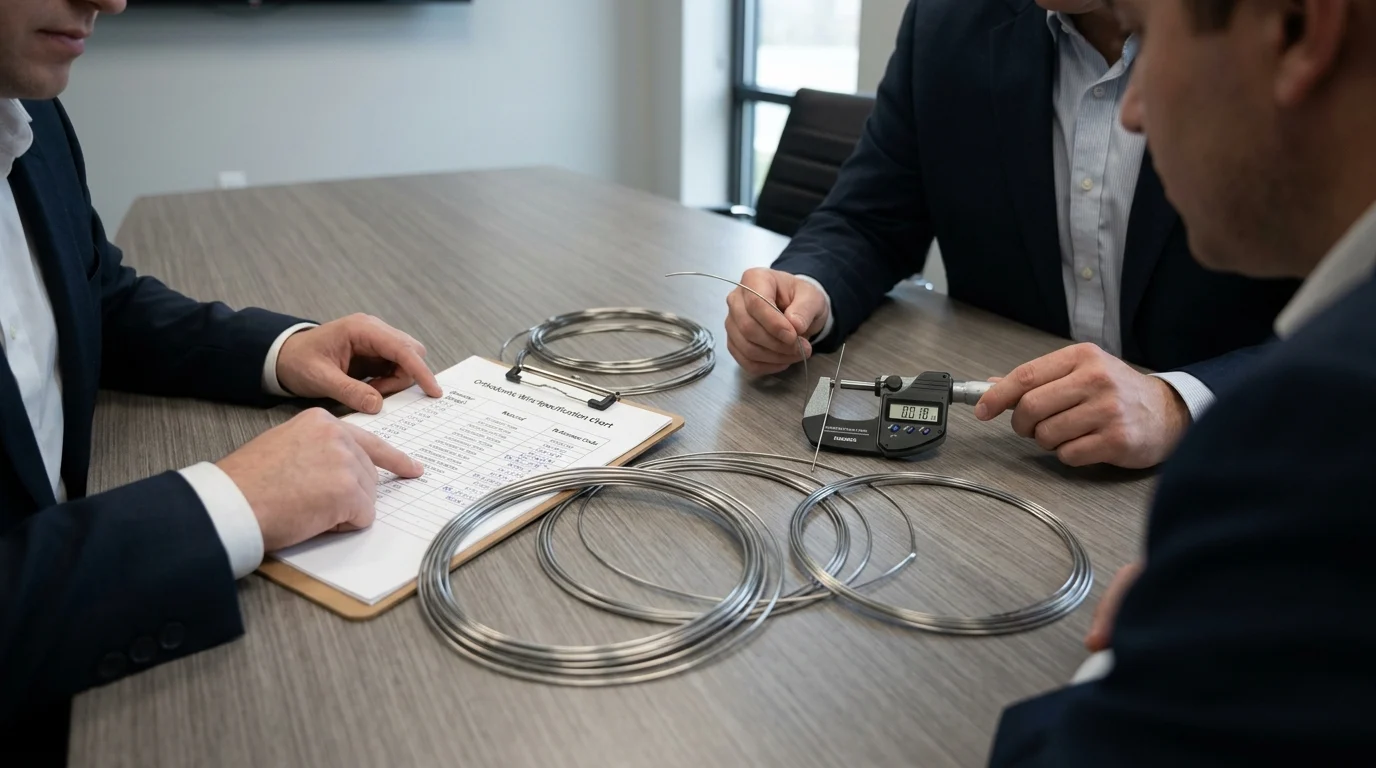
Orthodontic wires are universally measured using the Imperial system, specifically in thousandths of an inch, and are governed by international manufacturing standards such as ISO 15841. A wire referred to colloquially as a “fourteen” denotes a diameter of 0.014 inches. This standardized nomenclature allows for consistent communication across manufacturers, clinicians, and academic literature globally.
The classification of these wires depends on three primary variables: the cross-sectional shape, the dimensional measurements, and the metallurgical composition. Together, these attributes define how the wire will fit into the bracket slot and what mechanical properties it will exhibit during treatment. Bracket slots themselves are standardized, predominantly manufactured in either 0.018-inch or 0.022-inch vertical dimensions.
Round vs rectangular sizes
Orthodontic wires are manufactured in three main cross-sectional geometries: round, square, and rectangular. Round wires are measured by a single diameter specification (e.g., 0.012, 0.016 inches). Because they lack corners, round wires cannot engage the rectangular walls of a bracket slot to control the root’s labiolingual inclination (torque). Their primary function is to slide easily through the brackets, leveling and aligning the crowns of the teeth.
Rectangular and square wires require two dimensions for identification, representing the height and depth of the wire (e.g., 0.016 x 0.022 inches). The first number generally refers to the vertical dimension, while the second refers to the horizontal depth. These wires are designed to fill the bracket slot more completely, allowing the clinician to apply torque and control the three-dimensional position of the tooth root. To prevent binding, rectangular wires typically feature a machined corner radius of 0.003 to 0.004 inches.
Alloys, cross-sections, and bracket slots
The interaction between the wire’s cross-section and the bracket slot is known as “play” or clearance. For instance, inserting a 0.019 x 0.025-inch rectangular wire into a 0.022-inch bracket slot leaves a vertical clearance of 0.003 inches, which equates to roughly 5 to 7 degrees of torque play. This tight tolerance allows for excellent torque expression. Conversely, placing a 0.016 x 0.022-inch wire into the same 0.022 slot leaves 0.006 inches of play (approximately 12 to 15 degrees of torque loss), reducing the torque control but allowing for easier sliding mechanics.
Alloy composition also plays a pivotal role. The physical dimensions of a wire must always be evaluated in the context of its material. A 0.016-inch Nickel-Titanium (NiTi) wire will behave entirely differently than a 0.016-inch Stainless Steel wire, despite sharing the exact same physical diameter. The metallurgical properties dictate the wire’s elastic modulus, yield strength, and formability.
Common size comparison table
To navigate the diverse inventory of archwires, professionals utilize standardized reference charts. The table below outlines common wire sizes, their cross-sectional shapes, vertical clearance, and typical clinical applications based on the standard 0.022-inch bracket slot system.
| Cross-Section | Size (Inches) | Vertical Clearance | Primary Function | Typical Treatment Phase |
|---|---|---|---|---|
| Round | 0.012, 0.014, 0.016 | 0.010″, 0.008″, 0.006″ | Unraveling crowding, initial leveling | Early / Alignment |
| Round | 0.018, 0.020 | 0.004″, 0.002″ | Bite opening, arch coordination | Intermediate |
| Square | 0.016 x 0.016 | 0.006″ | Early torque control | Intermediate |
| Rectangular | 0.016 x 0.022 | 0.006″ | Space closure, sliding mechanics | Working |
| Rectangular | 0.019 x 0.025 | 0.003″ | Maximum torque, detailing, finishing | Final / Finishing |
How to compare wire sizes by material and performance
Evaluating orthodontic wires requires analyzing the intersection of physical size and material science. The performance of an archwire is dictated by its stiffness, springback, formability, and surface friction. By manipulating both the alloy and the cross-sectional dimensions, clinicians can precisely engineer the biomechanical forces applied to the dentition.
Modern orthodontics relies heavily on three primary alloy families: Nickel-Titanium (NiTi), Stainless Steel (SS), and Beta-Titanium (often referred to as TMA). Each material possesses distinct yield strengths and elastic moduli. For context, Stainless Steel has a high elastic modulus of approximately 160–180 GPa, Beta-Titanium sits at 60–80 GPa, and NiTi is highly flexible at 30–40 GPa. NiTi wires can recover from up to 8% structural strain without permanent deformation, whereas rigid stainless steel will permanently deform if subjected to strains exceeding 1% to 2%.
When smaller sizes are preferred
Smaller diameter wires, typically ranging from 0.012 to 0.016 inches, are predominantly utilized during the initial stages of treatment. When teeth are severely crowded or rotated, the archwire must bend significantly to engage misaligned brackets. Small-diameter NiTi wires are preferred here because they offer high deflection capabilities coupled with low, continuous force delivery (typically 40 to 60 grams of force at 2mm of deflection).
Using larger sizes prematurely in these scenarios would exert excessive pressure on the periodontal ligament, causing pain, potential tissue necrosis, and delaying the biological tooth movement process. The smaller cross-section ensures the wire remains within its elastic limit, gently guiding the teeth into the initial arch form.
Differences among NiTi, stainless steel, and beta-titanium
The three major alloys serve distinct biomechanical purposes. Nickel-Titanium (NiTi) is celebrated for its shape memory and superelasticity. Heat-activated variants feature an Austenitic finish temperature ($A_f$) typically set around 27°C to 35°C. It delivers near-constant force over a wide range of deflections, making it ideal for the initial alignment of irregular dentition.
Stainless Steel (SS) represents the opposite end of the spectrum. It offers high stiffness, excellent formability, and low surface friction. SS is the material of choice for the working and finishing phases, where rigidity is required to close extraction spaces or maintain arch width without wire distortion. Beta-Titanium (TMA) bridges the gap between NiTi and SS. It possesses roughly 40% of the stiffness of stainless steel, offering a balance of moderate force delivery, good formability, and sufficient rigidity for intermediate detailing.
Trade-offs in flexibility, torque, and control
Selecting the optimal wire involves navigating inherent trade-offs between flexibility, torque expression, and friction. A small round NiTi wire offers maximum flexibility and minimal friction, but zero torque control. Conversely, a full-size 0.019 x 0.025-inch stainless steel wire in a 0.022 slot provides exceptional three-dimensional control and torque expression, but is highly rigid and generates significant frictional resistance during sliding mechanics (SS has a kinetic friction coefficient of ~0.10–0.15, whereas TMA is higher at ~0.25–0.35).
Clinicians must balance these factors based on the immediate clinical objective. If the goal is to slide teeth along the archwire to close a gap, a slightly undersized rigid wire (e.g., 0.016 x 0.022 SS) is preferred to reduce binding and friction. If the goal is to twist the root of a single tooth into its final position, a full-size rectangular wire is required to fully engage the bracket slot.
How to choose the right orthodontic wire size
Transitioning through wire sizes is a highly systematic process, often referred to as the archwire sequence. The objective is to gradually increase the size and rigidity of the wire, moving from light round wires to heavy rectangular wires, without overwhelming the biological supporting structures.
A well-stocked orthodontic practice typically requires an inventory of at least 15 to 20 distinct wire variations (combinations of size, shape, and material) to accommodate different patient needs and bracket prescriptions. Selecting the correct wire involves assessing the current position of the teeth, the intended mechanical goals, and the tolerances of the manufactured products. Reputable manufacturers maintain strict quality control, keeping defect rates below 0.5%.
Step-by-step selection process
The selection process follows a logical progression aligned with the three phases of orthodontic treatment. Step one involves evaluating the initial crowding and selecting a highly flexible, small-diameter round wire (e.g., 0.014 NiTi) to begin leveling, a phase typically lasting 8 to 16 weeks. Step two transitions into the working phase (12 to 24 weeks), where a larger, stiffer wire (e.g., 0.018 round SS or 0.016 x 0.022 SS) is chosen to manage space closure and correct the bite.
Step three involves the finishing phase (8 to 16 weeks), requiring a wire that closely matches the bracket slot dimensions (e.g., 0.019 x 0.025 SS or TMA) to express the final torque and angulation programmed into the brackets. Procurement teams sourcing these specific sequences can explore comprehensive catalogs detailing orthodontic wire sizes to match clinical protocols.
Quality, tolerances, and packaging
The precision of wire manufacturing significantly impacts clinical outcomes. High-quality orthodontic wires must adhere to strict dimensional tolerances, typically within ± 0.0005 inches of their stated size. If a wire is manufactured slightly too large, it will fail to engage the bracket slot; if too small, it will result in excessive play and loss of control.
Packaging also plays a role in workflow efficiency. Archwires are commonly supplied pre-formed to standard arch shapes (e.g., ovoid, tapered, square) and packaged in individual sterile sleeves (with a typical shelf life of 3 to 5 years) or bulk packs of 10 to 100. Ensuring consistent quality and accurate labeling across these packages prevents clinical errors and streamlines chairside operations.
Common mistakes to avoid
A common clinical error
Further reading:
Decision framework for wire size selection
Key Takeaways
- The most important conclusions and rationale for orthodontic wire sizes
- Specs, compliance, and risk checks worth validating before you commit
- Practical next steps and caveats readers can apply immediately
Frequently Asked Questions
What does a 0.014 orthodontic wire size mean?
It means the wire is 0.014 inches in diameter. In orthodontics, sizes are typically listed in thousandths of an inch, so clinicians may call it a “fourteen” wire.
Why does wire size matter in orthodontic treatment?
Small size changes can greatly increase stiffness and force. Using the right size helps achieve controlled tooth movement while reducing discomfort, anchorage loss, and unwanted root stress.
What is the difference between round and rectangular orthodontic wires?
Round wires mainly help with initial leveling and alignment. Rectangular wires engage bracket slot walls more fully, giving better torque and finishing control later in treatment.
How do bracket slot sizes affect wire selection?
Bracket slots are commonly 0.018 or 0.022 inches. The wire must match the slot system so it fits properly and delivers the intended level of control and force.
Where can clinics source consistent orthodontic wire sizes in bulk?
Clinics can compare standardized options and product specifications from suppliers like DenRotary. Check material, cross-section, slot compatibility, and MOQ before placing recurring bulk orders.

Post time: Jun-24-2026