

Introduction
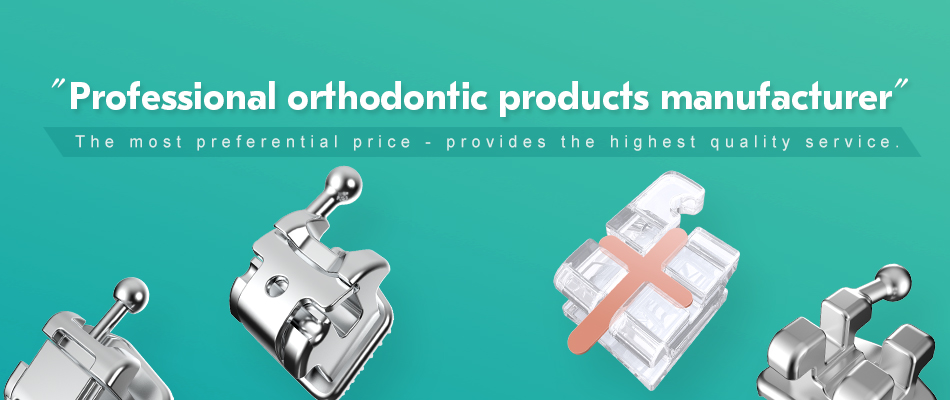
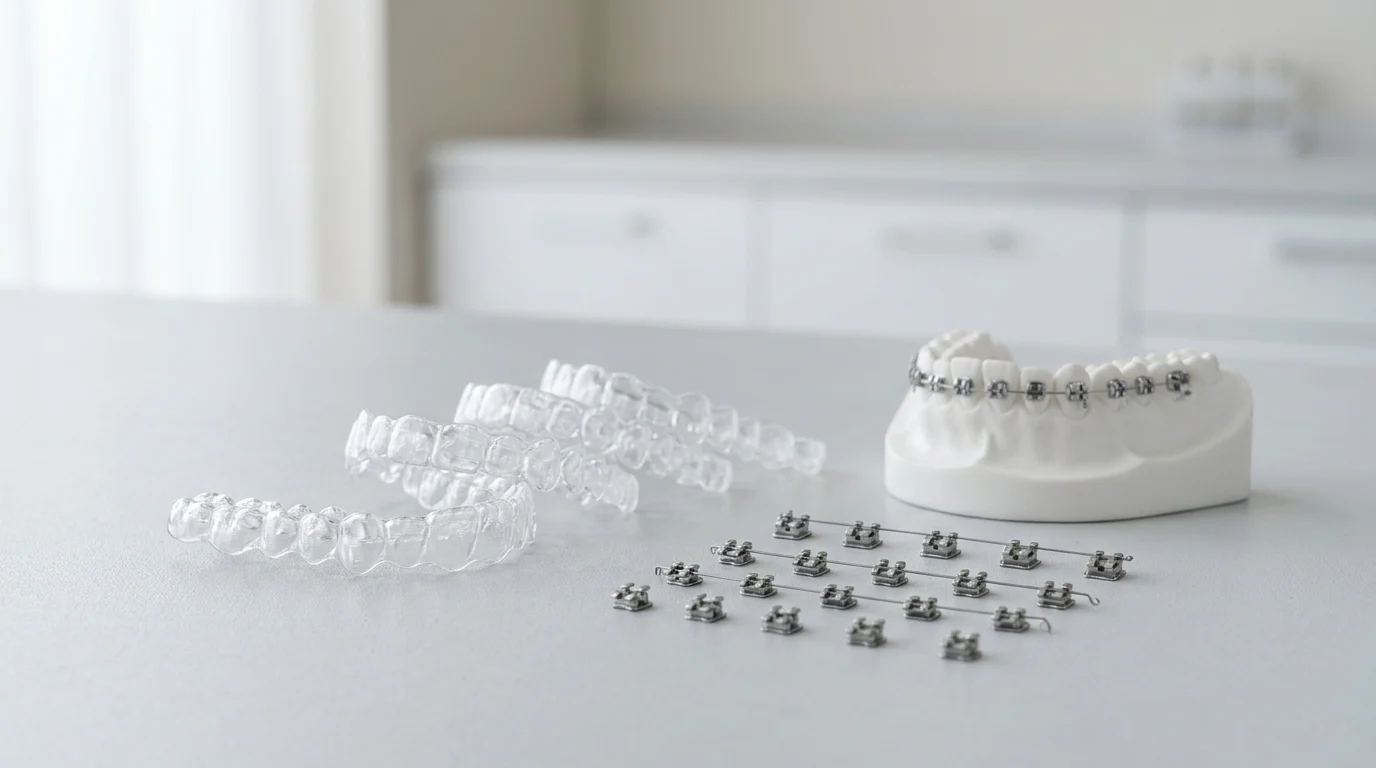
Sourcing metal braces in volume is less about finding the lowest quote and more about choosing a manufacturer that can consistently meet clinical, regulatory, and delivery requirements. For buyers evaluating China orthodontic manufacturers, the key questions involve production precision, material quality, certification status, customization capacity, and supply chain reliability. This article explains how reliable Chinese braces factories support bulk purchasing programs, what standards and capabilities to verify before placing large orders, and how to compare suppliers in a way that reduces risk while protecting margins and product performance.
Why Choose China Orthodontic Manufacturers
Procuring medical-grade orthodontic supplies at scale requires a strategic approach to global sourcing. For dental service organizations (DSOs), large-scale distributors, and private-label brands, partnering with established China orthodontic manufacturers has become a primary method for balancing cost efficiency with stringent clinical standards. The transition from regional suppliers to tier-one overseas factories demands a thorough understanding of manufacturing capabilities, compliance frameworks, and supply chain logistics.
Cost, scale, and specialization advantages
The primary catalyst for sourcing metal brackets from overseas is the convergence of advanced manufacturing technology and economies of scale. Leading facilities utilize multi-axis CNC milling and Metal Injection Molding (MIM) to achieve slot tolerances as tight as 0.002 mm. This precision ensures predictable torque and angulation during clinical treatment. Furthermore, high-volume production lines reduce per-unit overhead, allowing bulk buyers to realize cost savings of 30% to 45% compared to domestic OEM alternatives, without compromising the metallurgical integrity of the braces.
Best-fit buyer profiles
Not every manufacturing facility aligns with every buyer’s operational model. The ideal buyer profile for these tier-one factories includes multinational distributors and DSOs capable of meeting Minimum Order Quantities (MOQs) that typically range from 5,000 to 10,000 sets per month. Smaller clinical practices may find direct factory sourcing inefficient due to logistics and customs overhead. However, for entities focused on private labeling or aggressive market expansion, direct partnerships offer the necessary volume elasticity and margin control required to dominate regional markets.
How to Compare Orthodontic Manufacturers
Evaluating potential manufacturing partners requires a deep dive into their technical infrastructure. Beyond basic unit pricing, buyers must scrutinize material science, production consistency, and the capacity for custom engineering.
Product specifications and material standards
Orthodontic brackets endure significant mechanical stress and an aggressive oral environment. Top-tier China orthodontic manufacturers utilize premium medical-grade stainless steel, predominantly 17-4 PH or 316L, to ensure high yield strength and biocompatibility. Buyers must verify exact slot dimensions, typically standardized at 0.018 inches or 0.022 inches, to ensure compatibility with global archwire systems.
| Material Grade | Yield Strength (MPa) | Corrosion Resistance | Typical Application |
|---|---|---|---|
| 17-4 PH Stainless | >1000 | High | Self-ligating and mini brackets |
| 316L Stainless | ~170 – 310 | Very High | Standard traditional brackets |
| Titanium Alloy | >800 | Exceptional | Nickel-free hypoallergenic lines |
Production capacity and consistency
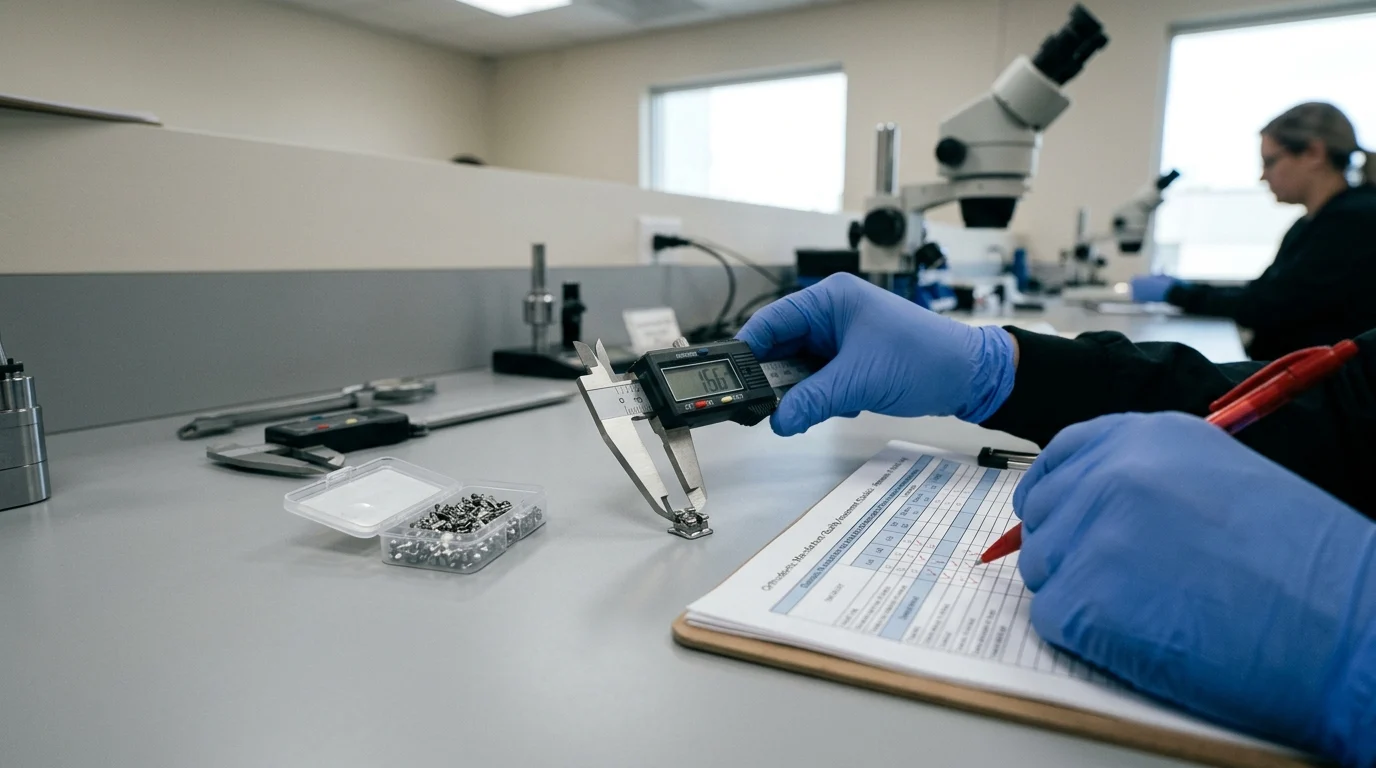
A supplier’s theoretical capacity must align with their actual production consistency. Facilities optimized for bulk purchasing typically output between 500,000 and 1,000,000 brackets monthly. Buyers must investigate the factory’s defect rate, demanding a threshold of less than 0.5% for critical flaws such as occluded slots or malformed mesh bases. Automated optical inspection (AOI) systems are a prerequisite for maintaining this consistency across high-volume production runs.
Customization and tooling capabilities
For brands seeking market differentiation, OEM and ODM capabilities are critical. Developing proprietary bracket prescriptions or customized base contours requires advanced tooling and R&D. Establishing a new mold for a custom Metal Injection Molding (MIM) bracket typically involves a lead time of 30 to 45 days and initial tooling costs ranging from $3,000 to $8,000, depending on complexity. Evaluating a factory’s in-house tooling speed is essential for rapid go-to-market strategies.
How to Verify Quality and Compliance
In the highly regulated medical device industry, unverified quality is a massive liability. Sourcing bulk metal braces mandates rigorous verification of international compliance standards and internal quality control methodologies.
Certifications and regulatory documents
A reputable factory must hold current, verifiable certifications for medical device manufacturing. The foundational standard is ISO 13485:2016, which dictates comprehensive quality management systems specific to medical devices. For distribution in major Western markets, suppliers must either hold or facilitate FDA 510(k) clearances for the US market and CE MDR (EU 2017/745) certification for the European Economic Area. Buyers should request the factory’s regulatory dossiers and cross-reference registration numbers directly with the issuing authorities.
Inspection, testing, and traceability
Certifications provide a baseline, but active quality assurance dictates the daily output. Buyers must audit the factory’s destructive and non-destructive testing protocols. For metal brackets, mesh base retention is a critical failure point; pull-off strength tests must consistently demonstrate adhesion forces exceeding 10 MPa to prevent clinical debonding. Furthermore, strict traceability protocols are required. Factories must maintain comprehensive lot histories, raw material certificates, and production logs for a minimum of 5 to 10 years, ensuring rapid response capabilities in the event of a product recall.
How to Reduce Sourcing and Logistics Risk
Global sourcing inherently introduces logistical friction and financial exposure. Structuring a resilient supply chain requires methodical supplier vetting, clear financial agreements, and optimized freight strategies.
Supplier shortlisting and validation
The shortlisting process should filter out trading companies masquerading as direct manufacturers. Key validation metrics include auditing the ratio of production staff to R&D personnel—tier-one factories typically maintain an R&D headcount exceeding 8% to 10% of their total workforce. Engaging directly with the engineering teams through a formal contact us portal or initial RFQ process helps assess their technical fluency and responsiveness. Independent third-party factory audits are highly recommended before finalizing any bulk contract.
Pricing, payment terms, and Incoterms
Financial risk mitigation relies on establishing clear Incoterms and payment schedules. For bulk orthodontic supplies, pricing typically ranges from $1.20 to $3.50 per full set (20 brackets), heavily dependent on material and design complexity. Standard payment terms for new factory relationships usually require a 30% T/T (Telegraphic Transfer) advance to initiate production, with the remaining 70% balance payable upon presentation of the Bill of Lading or passing a pre-shipment inspection. FOB (Free On Board) is the most common Incoterm, placing the export clearance burden on the manufacturer.
Shipping methods and delivery planning
Orthodontic brackets are high-value, low-weight commodities, a factor that heavily influences shipping strategies. A standard bulk order of 10,000 bracket sets weighs approximately 25 to 30 kilograms. This favorable weight-to-value ratio makes expedited air freight highly economical, typically ensuring global delivery within 5 to 8 days. Ocean freight, while cheaper, introduces 25 to 40 days of transit time and is generally reserved for massive inventory stockpiling or when combined with heavier dental equipment shipments.
How to Select the Right Supplier
Consolidating the research into a final procurement decision requires an objective, data-driven framework. A structured evaluation prevents subjective biases and ensures long-term alignment between buyer requirements and factory capabilities.
Weighted scorecard criteria
Implementing a weighted scorecard allows procurement teams to quantify supplier viability. A standard evaluation matrix for medical devices typically assigns the highest priority to quality and compliance, followed by commercial terms.
| Evaluation Category | Suggested Weight | Key Metrics Evaluated | Minimum Acceptable Standard |
|---|---|---|---|
| Quality & Compliance | 40% | ISO 13485, Defect Rate, Material Certs | <0.5% defect rate, Active ISO |
| Cost & Commercials | 30% | Unit Price, Tooling Costs, Payment Terms | Within target margin, 30/70 terms |
| Capacity & Delivery | 20% | Monthly Output, Lead Times, On-time % | >95% on-time delivery rate |
| Communication & R&D | 10% | English fluency, Engineering support | Response <24 hours, Custom CAD ability |
Final supplier selection process
The final selection process should culminate in a phased rollout rather than an immediate transition to maximum volume. Once a supplier scores favorably on the matrix, buyers should execute a pilot order—typically 500 to 1,000 sets—to validate production speed, packaging integrity, and clinical performance. Only after the pilot batch passes independent quality control and clinical evaluation should the buyer execute the master supply agreement and scale up to the full 10,000+ unit monthly volumes. This phased approach isolates risk and confirms that the factory can sustain its promised standards under real-world conditions.
Further reading:
Key Takeaways
- The most important conclusions and rationale for China orthodontic manufacturers
- Specs, compliance, and risk checks worth validating before you commit
- Practical next steps and caveats readers can apply immediately
Frequently Asked Questions
What MOQ is typical for bulk metal braces from China manufacturers?
Most tier-one factories target 5,000–10,000 sets per month. If your volume is below that, ask DenRotary about stock models or mixed-order options to reduce logistics pressure.
How can I verify a metal braces factory’s quality before ordering?
Request ISO 13485, CE MDR or FDA-related documents, plus inspection reports. Also confirm slot tolerance, defect rate under 0.5%, and whether AOI and batch traceability are used.
Which stainless steel grades are best for orthodontic brackets?
316L is common for standard brackets because of strong corrosion resistance. 17-4 PH is often chosen for higher-strength or self-ligating designs. Match the grade to your product line and target market.
Can DenRotary support private-label or custom bracket projects?
Yes, OEM/ODM projects are suitable for bulk buyers. Custom molds usually take about 30–45 days, so prepare your prescription, slot size, logo, and packaging requirements early.
What should I check besides price when comparing China orthodontic manufacturers?
Check monthly capacity, material grade, slot accuracy, compliance documents, defect rate, and delivery stability. A lower quote is risky if the factory cannot keep consistency across large repeat orders.

Post time: Jun-16-2026