
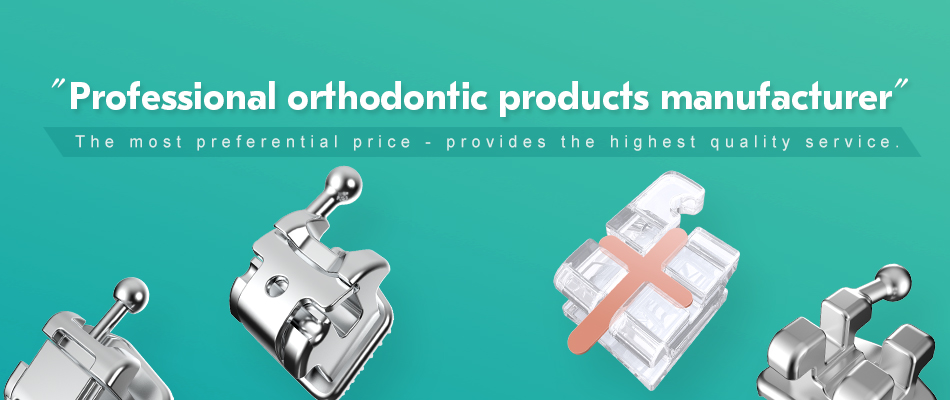

The distinction between active and passive self-ligating systems is a critical consideration for orthodontists and procurement managers. While both systems share the goal of reducing chair time and improving hygiene, their force systems differ fundamentally. This guide provides a technical analysis of the biomechanical differences, clinical implications, and material considerations for selecting the appropriate bracket system for specific treatment protocols.
The Mechanics of Self-Ligation in Orthodontics
The primary functional difference between self-ligating brackets and conventional edgewise brackets is the method of archwire engagement. In traditional systems, a ligature tie creates friction, which can resist sliding mechanics. Self-ligating brackets employ a “slide mechanism” or a rotating clip to enclose the wire within the slot.
According to biomechanical principles, reducing friction allows for the use of lighter forces. Light forces are biologically more compatible, reducing the risk of root resorption and patient pain. A self-ligating system typically features a lower coefficient of friction, which is particularly advantageous during the leveling and aligning phases of treatment.
Active Self-Ligating Brackets: Biomechanics and Application
Active self-ligating brackets are characterized by a clip mechanism that exerts continuous pressure on the archwire. This design effectively turns the bracket into a two-walled system, similar to a conventional bracket but without the ligature.
Force Application: The active clip applies a “tipping” or “torquing” force on the tooth. This is beneficial for controlling tooth position in all three planes of space.
- Slot Engagement: Because the clip is active, it presses against the wire even if the wire is smaller than the slot dimension. This ensures positive control over the tooth.
- Clinical Indication: These brackets are often preferred for cases requiring significant torque control or complex tooth movement.
However, the trade-off for this control is increased friction. The active pressure against the wire creates resistance to sliding, which may slow down the initial alignment phase compared to passive systems.
Passive Self-Ligating Brackets: Low Friction Efficiency
In contrast, passive self-ligating brackets feature a slide or clip that does not exert pressure on the archwire when closed. The mechanism simply acts as a gate to keep the wire in the slot.
The “Play” Factor: In a passive system, there is “play” between the wire and the bracket slot. This allows the tooth to find its own position relative to the wire, often described as a “floating” effect.
- Friction Reduction: These systems offer the lowest friction levels among fixed appliances. This makes them ideal for sliding mechanics, such as closing extraction spaces.
- Patient Comfort: The lack of active pressure often translates to less discomfort for the patient during adjustments.
For practices focusing on high-volume efficiency and rapid alignment, a passive self-ligating bracket is frequently the system of choice.
Comparative Analysis: Active vs. Passive Systems
To assist in the selection process, the following table contrasts the key performance indicators of active and passive systems.
| Feature | Active Self-Ligating Bracket | Passive Self-Ligating Bracket |
|---|---|---|
| Clip Mechanism | Exerts force on the archwire | Does not exert force on the archwire |
| Friction Level | Moderate (higher than passive) | Very Low |
| Torque Control | High (Positive control) | Lower (Dependent on wire size) |
| Ideal Phase | Finishing and detailing | Alignment and space closure |
| Wire Engagement | Two-wall interaction | Four-wall interaction (when closed) |
Material Science: Metal vs. Ceramic Aesthetics
Beyond the mechanical action, the material of the bracket plays a vital role in treatment planning and patient satisfaction.
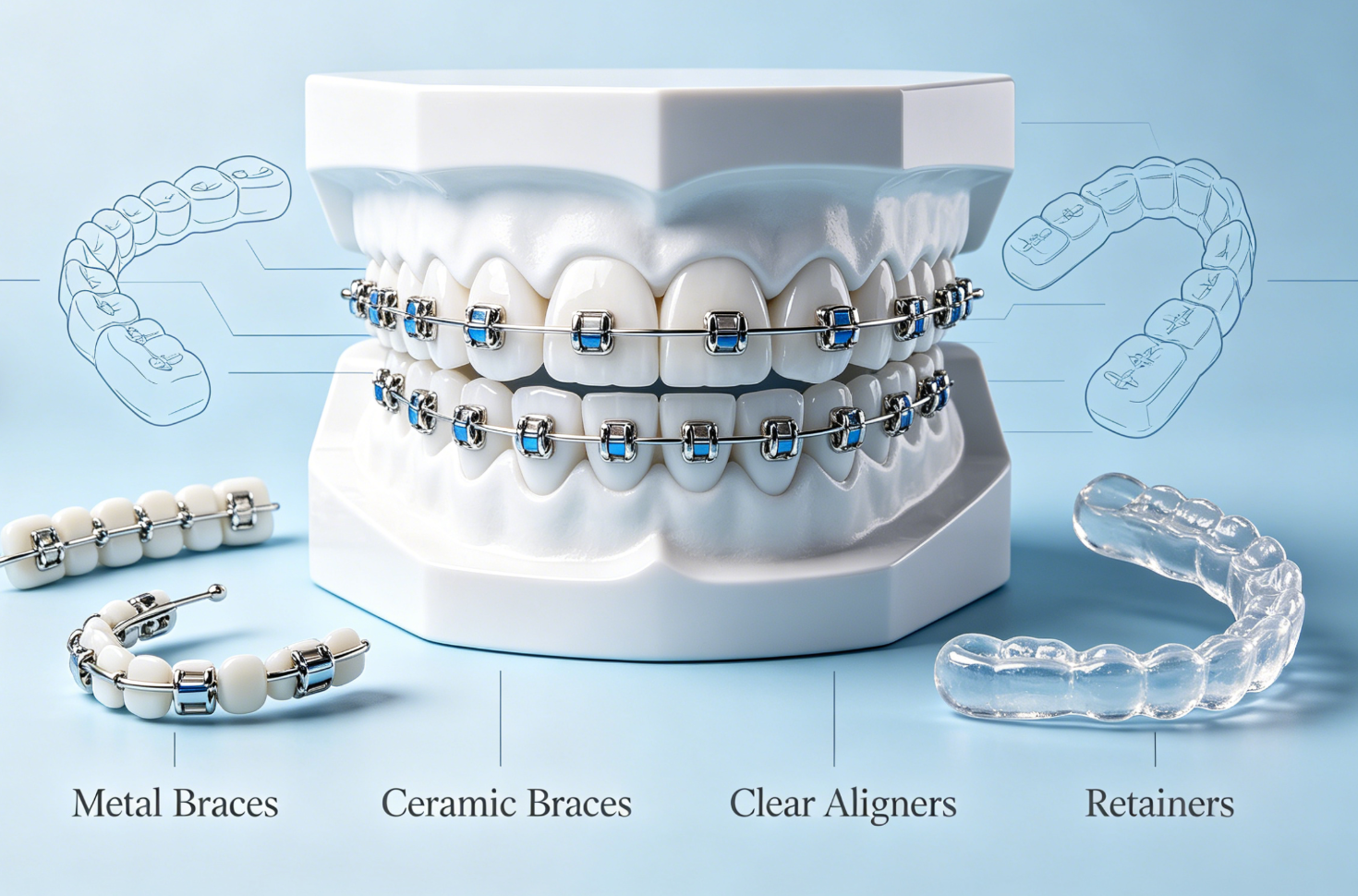
Stainless Steel (Metal Brackets)
Metal brackets remain the gold standard for durability and strength. [High quality metal brackets](https://www.denrotary.com/) offer high tensile strength, reducing the risk of breakage during treatment. They are generally smaller in profile compared to ceramic options, enhancing patient comfort. For orthodontic manufacturers, stainless steel allows for precise molding of the slot and clip mechanism, ensuring consistent friction coefficients.
Ceramic Brackets
For patients concerned with aesthetics, [ceramic orthodontic brackets](https://www.denrotary.com/?spm=5176.28103460.0.0.a95c7551KZvzFt) provide a tooth-colored alternative. Modern ceramic brackets are often polycrystalline alumina, which offers high fracture toughness. However, ceramic brackets can generate higher friction than metal, especially when paired with metal archwires. To mitigate this, many manufacturers now produce ceramic brackets with a metal-lined slot. This hybrid design combines the aesthetic appeal of ceramic with the low friction of a metal slot.
Essential Auxiliary Components
While the bracket system provides the anchor, auxiliary components are required to generate the forces necessary for tooth movement.
Orthodontic Elastic Bands
Interarch elastics are critical for correcting Class II or Class III malocclusions. [Latex free orthodontic elastics](https://www.denrotary.com/) are the industry standard to prevent allergic reactions. These elastics must maintain their force decay characteristics over time to ensure consistent tooth movement.
Power Chains
For closing diastemas or spaces between teeth, continuous force is required. An [orthodontic power chain](https://www.denrotary.com/) connects multiple teeth together, applying a continuous retracting force. The material quality of the chain determines its resistance to staining and its ability to retain elasticity in the oral environment.
Archwires
The archwire acts as the track for tooth movement. [Orthodontic arch wires](https://www.denrotary.com/) come in various alloys, including Nickel-Titanium (NiTi) and Stainless Steel. The interaction between the wire dimension and the bracket slot defines the “play” and the efficiency of torque transmission.
Clinical Efficiency and Treatment Outcomes
The choice between active and passive systems often comes down to the specific treatment goals and the orthodontist’s philosophy.
Treatment Time: Studies suggest that self-ligating systems can reduce total treatment time, primarily due to fewer wire changes and faster alignment.
- Hygiene: The absence of elastomeric ligatures reduces plaque accumulation sites. This is a significant advantage for patient oral hygiene.
- Chair Time: The quick release and engagement of the clip mechanism significantly reduce chair time per appointment.
When selecting a supplier, it is crucial to evaluate the precision of the bracket slot. A slot that varies in dimension can lead to inconsistent torque expression. Therefore, sourcing OEM dental orthodontic products from ISO-certified manufacturers ensures that the bracket geometry meets international standards.
Conclusion
The decision to utilize active or passive self-ligating brackets depends on the desired balance between friction reduction and torque control. Active systems provide rigorous control suitable for complex mechanics, while passive systems excel in efficiency and low-friction sliding. By understanding these biomechanical nuances, practitioners can optimize their inventory to meet diverse patient needs.
Frequently Asked Questions (FAQ)
What is the main difference between active and passive self-ligating brackets?
The primary difference lies in the clip mechanism. An active clip exerts continuous pressure on the archwire to control tooth position, creating higher friction. A passive clip acts merely as a gate, allowing the wire to slide freely with minimal friction and “play” within the slot.
Do self-ligating brackets reduce treatment time?
Clinical data suggests that self-ligating systems can reduce overall treatment time. This is largely due to the efficiency of the initial alignment phase and the ability to use lighter forces, which may accelerate tooth movement and reduce the frequency of wire changes.
Are ceramic brackets as strong as metal brackets?
Modern polycrystalline ceramic brackets offer high compressive strength, making them durable. However, they are generally more brittle than stainless steel. To prevent fracture and reduce friction, many clinicians prefer ceramic brackets with a metal-lined slot.
Why is friction important in orthodontics?
Friction resists the sliding of the archwire through the bracket. High friction requires heavier forces to move teeth, which can cause patient pain and root resorption. Low friction systems allow for lighter, more biologically compatible forces.
Can I get custom branding for self-ligating brackets?
many manufacturers offer OEM services. This allows dental distributors and clinics to brand their own line of brackets. Customization can include specific slot dimensions, laser markings, and packaging tailored to the distributor’s specifications.
Post time: Apr-14-2026