

Introduction
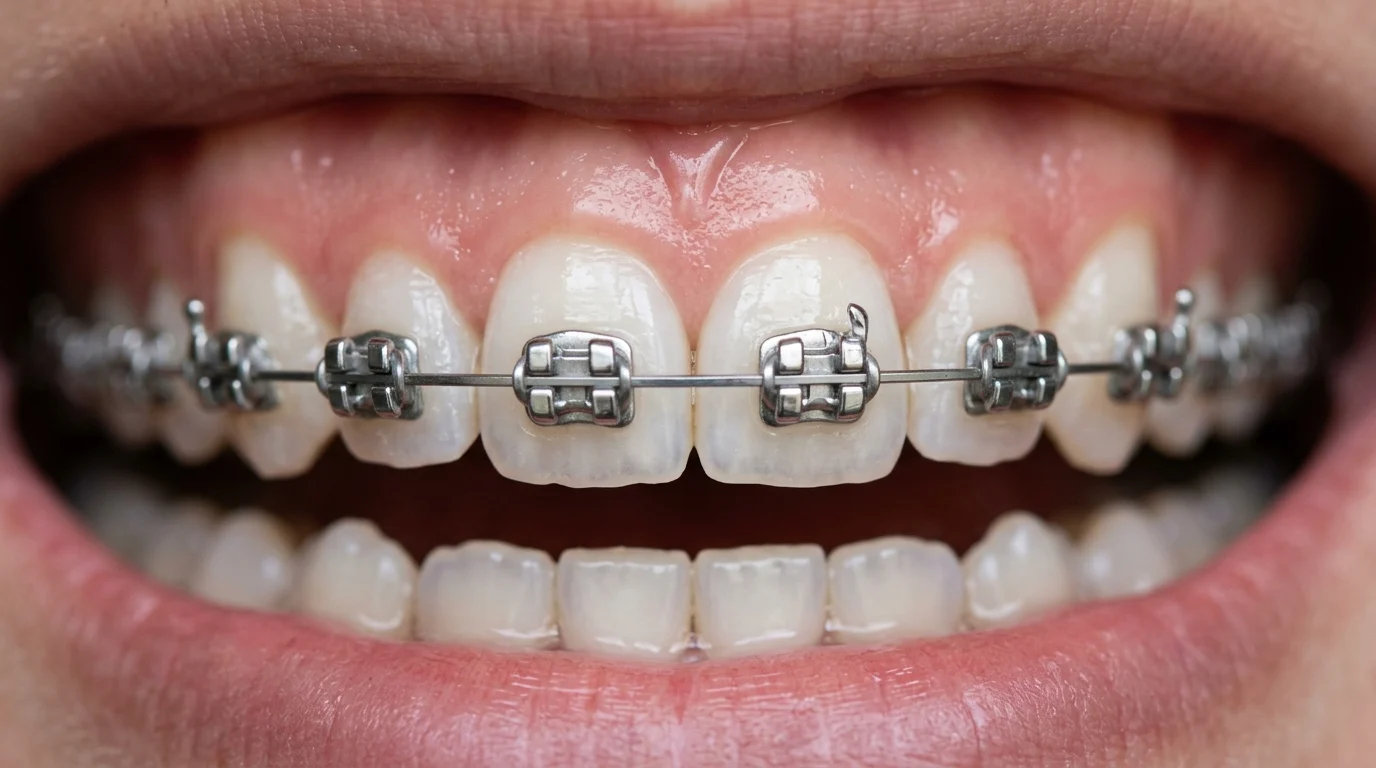
In orthodontic practice, self-ligating brackets continue to matter because they offer practical advantages beyond simple product preference. This article explains how these systems can reduce chair time, simplify archwire changes, and influence friction, hygiene, and overall treatment workflow. It also examines where their benefits may be overstated, including questions about treatment speed, clinical outcomes, cost, and case selection. By the end, readers will have a balanced view of when self-ligating brackets provide meaningful value and when conventional brackets may remain the better choice.
Why self-ligating brackets remain relevant in modern orthodontics
Despite the exponential growth of clear aligner therapy, fixed appliances remain the cornerstone of comprehensive orthodontics. Within this sector, self-ligating brackets (SLBs) maintain a critical position, accounting for an estimated 15% to 20% of global fixed appliance usage. Their enduring relevance is anchored in biomechanical efficiency and operational workflow enhancements that modern orthodontic practices demand to optimize patient throughput.
Impact on chair time and workflow
The most quantifiable advantage of self-ligating systems is the reduction in routine chair time. By eliminating the need to place and remove elastomeric or steel ligatures, clinicians can reduce archwire change times by 40% to 50%. In a high-volume practice, saving 1.5 to 2.0 minutes per arch during a routine adjustment translates to substantial daily time savings. This operational efficiency allows for higher patient volume without compromising the precision or quality of clinical care.
Market and clinical trends sustaining demand
Market dynamics continue to support SLB adoption, with the global self-ligating bracket market projected to exceed $800 million by 2028. This sustained demand is driven by an increase in adult orthodontic patients who prioritize discreet, efficient appointments, and the rise of hybrid therapies. In complex multidisciplinary cases, SLBs are frequently utilized in conjunction with clear aligners to execute challenging root paralleling, extrusion, and torque expression that removable appliances struggle to achieve.
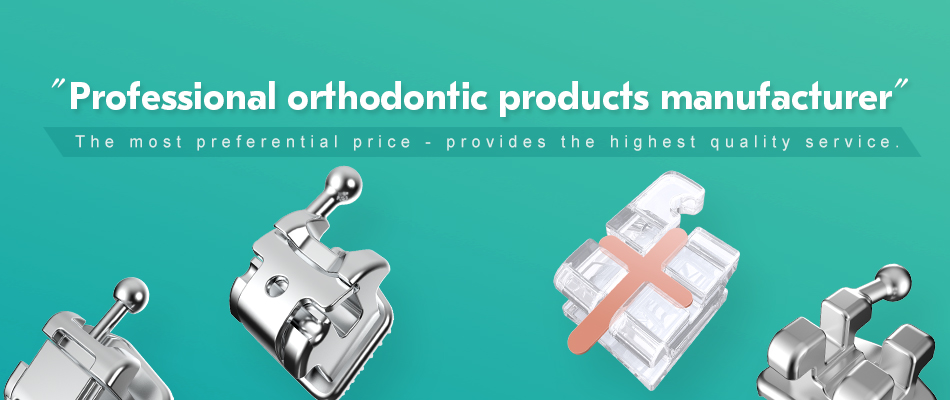
What self-ligating brackets are and how passive vs active designs
Key features vs conventional brackets
Conventional brackets rely on elastomeric modules or stainless steel ligatures to seat the wire into the slot. Elastomerics are notorious for rapid force decay, losing up to 50% of their initial force within the first 24 hours of application and exhibiting high surface friction. Self-ligating brackets eliminate this variable by providing a rigid or semi-rigid fourth wall to the bracket slot, which maintains consistent archwire containment throughout the standard 6- to 8-week treatment interval without degradation.
Passive vs active effects on friction and control
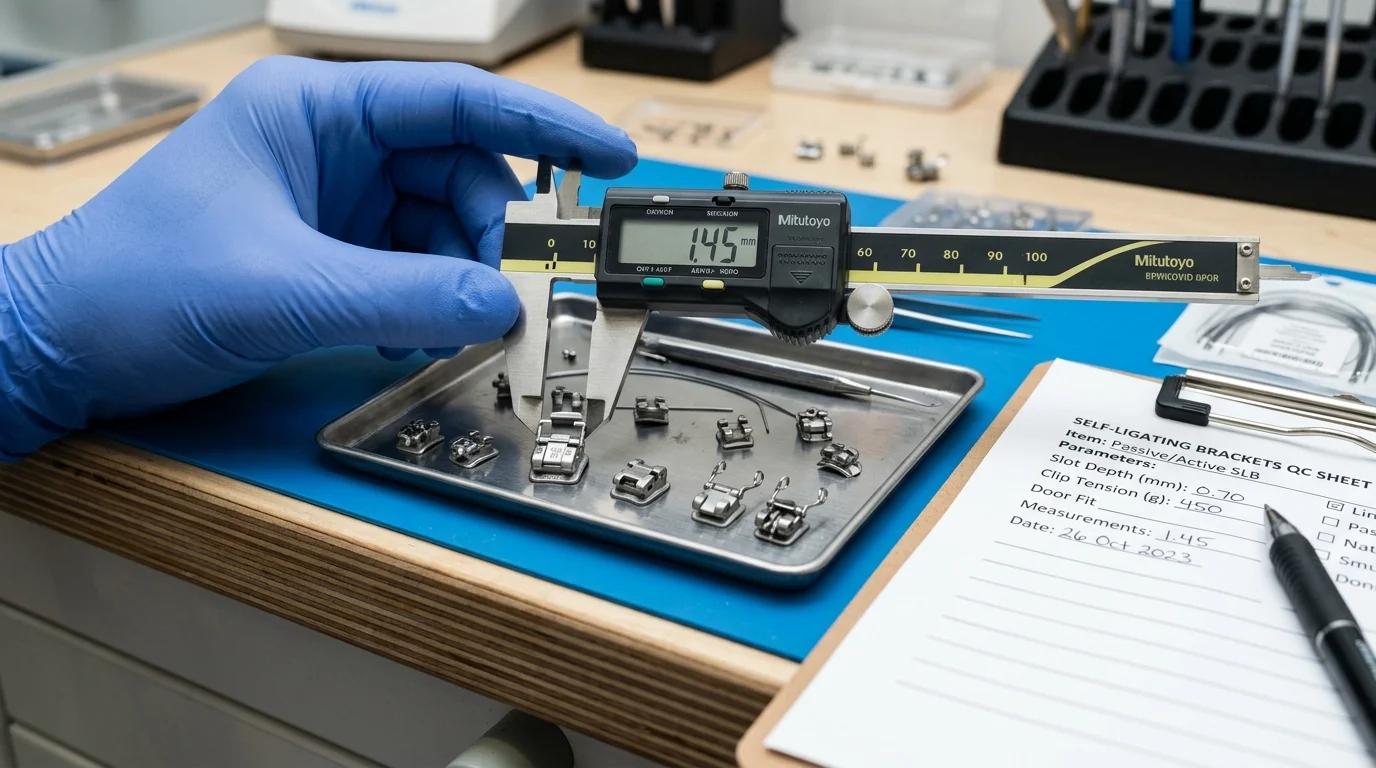
Self-ligating brackets are broadly categorized into passive and active designs based on how the closure mechanism interacts with the archwire. Passive self-ligating brackets feature a rigid slide that does not encroach on the slot space, allowing smaller wires to slide freely. For example, a 0.014-inch initial wire in a 0.022-inch passive slot leaves 0.008 inches of clearance, minimizing classical friction during the initial leveling and aligning phase. Conversely, active self-ligating brackets utilize a flexible spring clip that encroaches into the slot profile. As wire dimensions increase (e.g., to a 0.019 x 0.025-inch stainless steel wire), the active clip presses directly against the wire, seating it firmly into the base of the slot to maximize torque expression and rotational control during the finishing phase.
Comparison of self-ligating and conventional systems
Understanding the biomechanical trade-offs between these systems is essential for targeted treatment planning.
| System Type | Ligation Mechanism | Friction (Leveling Phase) | Torque Control (Finishing) | Typical Maintenance |
|---|---|---|---|---|
| Passive SLB | Rigid sliding door | Very Low | Reduced (requires larger wires) | Low (door mechanism) |
| Active SLB | Flexible NiTi/SS clip | Moderate to Low | High (clip seats wire) | Moderate (clip fatigue) |
| Conventional | Elastomeric/Steel tie | High (with elastomerics) | High (with steel ties) | High (tie replacement) |
Selecting between passive and active designs often depends on the clinician’s preference for sliding mechanics versus early three-dimensional control. Many modern systems employ interactive or dual-activation designs, functioning passively with round wires and actively with larger rectangular wires.
Clinical benefits, limitations, and evidence
The integration of self-ligating brackets into clinical practice requires a critical evaluation of both their proven advantages and their inherent limitations. While early marketing paradigms promised revolutionary changes in treatment velocity, evidence-based orthodontics provides a more nuanced perspective on their actual clinical performance in vivo.
Where they offer practical advantages
The practical advantages of SLBs are most evident in clinical hygiene and operator ergonomics. Without elastomeric ties, which are highly susceptible to plaque accumulation and bacterial colonization, SLB patients often exhibit improved periodontal health. Clinical studies frequently report plaque index scores that are 10% to 15% lower in SLB cohorts during the first three months of treatment compared to conventional systems. Furthermore, the absence of sharp steel ligature pigtails enhances patient comfort and reduces emergency visits for soft tissue irritation.
Why claims on friction and treatment time vary
Historically, SLB manufacturers claimed significantly reduced overall treatment times and superior expansion capabilities due to ultra-low friction. However, rigorous systematic reviews indicate that while in vitro friction is substantially lower, in vivo resistance to sliding is dominated by biological binding and wire notching. Consequently, the overall treatment duration for SLB cases is statistically comparable to conventional brackets, typically falling within a margin of ±1.2 months. The perceived acceleration is generally limited to the initial leveling and aligning phase, where low friction allows light wires to unravel severe crowding rapidly.
Patient and case factors that limit outcomes
Several factors can limit the efficacy of self-ligating systems. The mechanical clips and doors are susceptible to calculus build-up, which can jam the mechanism and complicate wire changes. Additionally, clip deformation or fracture occurs in approximately 2% to 5% of brackets over a typical 24-month treatment cycle, necessitating full bracket replacement. In passive systems, the inherent “play” within the slot can lead to a 5- to 10-degree loss of torque expression, frequently requiring clinicians to over-torque wires or utilize adjunctive mechanics during the final detailing phase.
How clinicians should evaluate self-ligating brackets
Case selection criteria
Effective case selection relies on identifying malocclusions that benefit most from SLB mechanics. Cases presenting with severe crowding that require arch expansion are prime candidates, as the low-friction environment facilitates efficient transverse development along the archwire. Conversely, cases demanding immediate and absolute torque control, such as severe palatally displaced canines, may require the rigid engagement of conventional brackets with steel ligatures or active SLBs to prevent unwanted tipping and ensure predictable root movement.
Bracket quality, durability, and bonding factors
The structural integrity of the bracket is paramount for uninterrupted treatment. Clinicians must evaluate the yield strength of the clip material—often a Nickel-Titanium (NiTi) or Cobalt-Chromium alloy—to ensure it withstands repeated opening and closing cycles without plastic deformation. Furthermore, the bracket base must provide adequate retention. Systems utilizing an 80-gauge foil mesh or laser-etched anatomical bases typically achieve optimal shear bond strengths in the range of 10 to 15 MPa, minimizing the clinical disruption of bond failures without risking enamel damage during debonding.
Procurement and decision framework
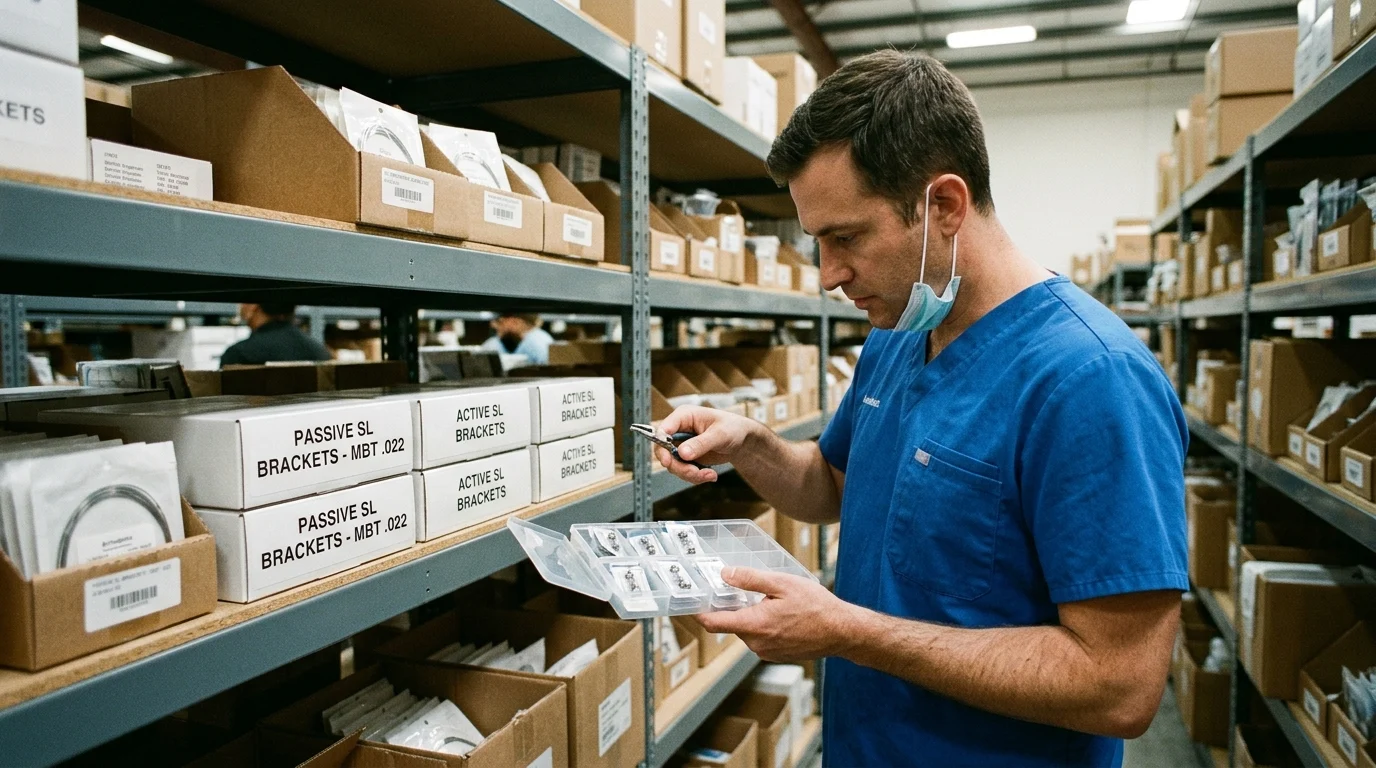
Procurement decisions must balance upfront capital expenditure with long-term operational savings.
| Evaluation Criterion | Target Metric / Standard | Clinical & Operational Implication |
|---|---|---|
| Bracket Cost | $15 – $30 per bracket | Higher initial capital outlay compared to conventional twins ($2-$5). |
| Clip Failure Rate | < 3% over 24 months | Minimizes emergency visits and chairside bracket replacement time. |
| Shear Bond Strength | 10 – 15 MPa | Ensures reliable adhesion while allowing safe debonding. |
| MOQ / Kit Packaging | 50 – 100 patient kits | Impacts inventory carrying costs; bulk purchasing often yields 15-20% discounts. |
Orthodontic practices must weigh the higher unit cost of SLBs against the cumulative value of reduced chair time, fewer required adjustment visits, and optimized inventory carrying costs.
Conclusion for orthodontic practices
The decision to integrate self-ligating brackets into an orthodontic practice extends beyond simple mechanical preference; it is a strategic choice that impacts clinical workflows, inventory management, and the overall patient experience. When leveraged correctly, the technology offers a distinct and measurable operational advantage.
How to weigh benefits and limitations
Orthodontists must critically weigh the benefits of enhanced chairside efficiency and improved hygiene against higher material costs and specific mechanical limitations, such as torque loss in passive designs. While a self-ligating patient kit may carry a $200 to $300 premium over conventional brackets, saving 3 to 5 minutes of chair time per appointment across a standard 15- to 20-visit treatment plan yields a compelling return on investment. Ultimately, mastering the specific biomechanics of self-ligation—rather than relying on the bracket to automate the treatment process—remains the determining factor in achieving superior, predictable clinical outcomes.
Key Takeaways
- The most important conclusions and rationale for self-ligating brackets
- Specs, compliance, and risk checks worth validating before you commit
- Practical next steps and caveats readers can apply immediately
Frequently Asked Questions
What is the main clinical benefit of self-ligating brackets?
They reduce ligation steps, often shortening archwire changes by about 40% to 50%, which helps improve chair time and practice workflow.
How do passive and active self-ligating brackets differ?
Passive designs prioritize low friction during leveling, while active designs use clip pressure for stronger torque and rotational control during finishing.
Do self-ligating brackets make treatment faster overall?
Not always. They can improve appointment efficiency and sliding mechanics, but total treatment time depends more on case complexity, mechanics, and patient compliance.
What limitations should clinicians consider with self-ligating brackets?
They may offer less early torque control in passive systems, and clips or doors can wear, jam, or need careful handling during treatment.
What Denrotary features matter when sourcing self-ligating brackets?
Look for low-friction systems, MIM 17-4 stainless steel construction, consistent manufacturing, and CE, FDA, and ISO13485 compliance for reliable clinical performance.
Post time: Apr-29-2026